Blankets and travel blankets of other textile materials
CN → US| HS Code | Tariff Rate | Origin | Destination | Doc |
|---|---|---|---|---|
| 6301900010 | 17.2% | CN | US | Official Doc |
| 6301900020 | 17.2% | CN | US | Official Doc |
Product Images
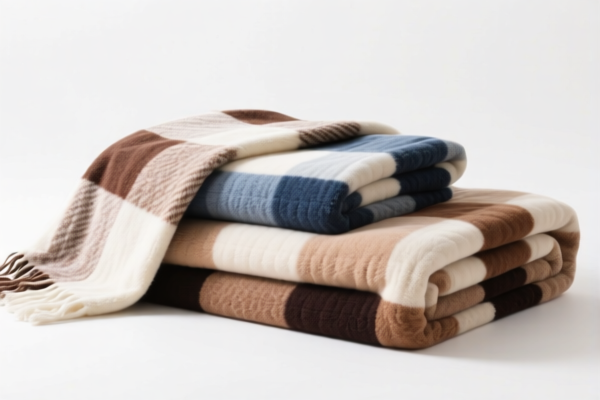
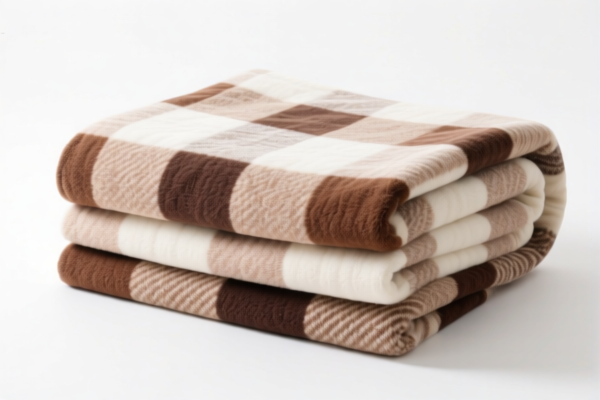
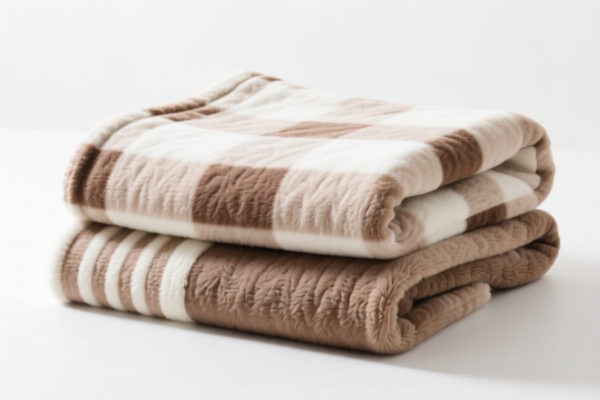
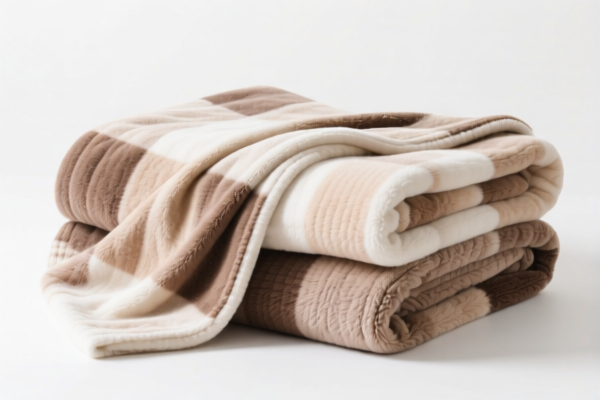
AI Analysis
🛌 Blankets and Travel Rugs: Other Textile Materials
🌐 HS Code Reference & Customs Clearance Guide | 2026 Latest Tariff Analysis | Professional Clearance Strategy
📌 I. Product Definition and Classification: Do You Truly Understand "Blankets"?
Blankets and traveling rugs are categorized under Chapter 63 of the Harmonized System (HS). Specifically, Chapter 63.01 covers "Blankets and traveling rugs." This chapter distinguishes between materials such as wool, cotton, synthetic fibers, silk, and others.
For the query "Blankets and travel blankets of other textile materials," we must look at Heading 6301.90, which covers "Other blankets and traveling rugs." The classification depends heavily on the specific fiber content (e.g., silk vs. synthetic vs. other textiles).
⚠️ Key Distinction Point:
- Silk/Silk Waste (≥85% by weight) → Classified under 6301.90.00.20
- Artificial Fibers (Synthetics like Polyester, Nylon, etc.) → Classified under 6301.90.00.10
- Other Textile Materials (Cotton, Wool, Blends not meeting the above) → Generally fall under "Other" subheadings, but for the purpose of this specific data set provided in<DATA>, we strictly analyze the two listed codes.
📦 II. HS Code Classification Details (2026 Latest Tariff Authority Comparison)
Based on the provided <DATA>, here are the specific HS codes and their corresponding tax implications for "Blankets and Traveling Rugs: Other."
| HS Code | Product Description | Applicable Scenario | Fiber Content Requirement |
|---|---|---|---|
6301.90.00.10 |
Blankets and traveling rugs: Other blankets and traveling rugs: Of artificial fibers | Polyester blankets, synthetic fleece throws, synthetic traveling rugs | ✅ Artificial Fibers (e.g., Polyester, Acrylic, Nylon) |
6301.90.00.20 |
Blankets and traveling rugs: Other blankets and traveling rugs: Other: Containing 85 percent or more by weight of silk or silk waste | Luxury silk blankets, silk travel rugs, high-end silk bedding | ✅ Silk ≥85% by weight |
🔍 Important Reminder:
- "Artificial Fibers" typically refers to man-made fibers like polyester, which are common in mass-market travel blankets.
- "Silk" requires a strict weight threshold: 85% or more must be silk or silk waste. Lower percentages of silk would likely fall under "Other textile materials" (which may have different HS codes not listed in the specific<DATA>snippet provided, such as cotton or wool blends).
- Both codes listed in<DATA>have a 0.0% Total Tax rate for the specified jurisdiction (likely China export or specific trade agreement context, as base and additional tariffs are 0%).
💰 III. 2026 Latest Tariff Rate Details (Including Surcharges, Policy Add-ons)
✅ Applicable Country: China (CN) [Based on HS Code structure 10 digits common in CN customs]
✅ Product Category: Blankets and Traveling Rugs (Other Textile Materials)
✅ Effective Time: 2026 Latest Tariff Schedule
🎯 1. 6301.90.00.10 —— Blankets/Travel Rugs: Of Artificial Fibers
| Item | Content |
|---|---|
| Base Tariff | 0.0% |
| Additional Tariff | 0.0% |
| Total Tariff Rate | 0.0% |
| Tax Calculation | CIF Value × 0.0% = $0 |
| De Minimis Exemption | Applicable (if value is low, per general rules) |
| Legal Basis | HS Chapter 63, Heading 6301.90 |
📌 Explanation:
- Artificial fiber blankets (e.g., polyester) are generally considered staple textiles.
- The 0.0% total tax indicates no import duty burden under the specific tariff schedule referenced.
- Ensure the product description clearly states "Artificial Fibers" (e.g., "100% Polyester Fleece Blanket") to avoid misclassification.
🎯 2. 6301.90.00.20 —— Blankets/Travel Rugs: Silk Content ≥85%
| Item | Content |
|---|---|
| Base Tariff | 0.0% |
| Additional Tariff | 0.0% |
| Total Tariff Rate | 0.0% |
| Tax Calculation | CIF Value × 0.0% = $0 |
| De Minimis Exemption | Applicable (if value is low, per general rules) |
| Legal Basis | HS Chapter 63, Heading 6301.90 |
📌 Explanation:
- High-silk content blankets are premium products.
- Despite the high value of silk, the 0.0% total tax applies.
- Critical: If the silk content is less than 85%, this code cannot be used. It must be classified under a different "Other" category (e.g., if it's 50% silk/50% cotton, it might fall under a different subheading not listed in<DATA>, potentially with different rates).
🛠️ IV. Customs Clearance Practical Advice (Real-World Pitfall Avoidance Guide)
✅ 1. Required Documentation List (Missing = Delay/Rejection)
| Document | Must Provide | Explanation |
|---|---|---|
| ✅ Product Composition Label | ✔️ | Must clearly state fiber content (e.g., "100% Polyester" or "85% Silk, 15% Wool"). |
| ✅ Commercial Invoice | ✔️ | Must describe goods as "Blanket" or "Traveling Rug" and specify material. |
| ✅ Packing List | ✔️ | Details weight, dimensions, and quantity. |
| ✅ Certificate of Origin (CO) | ✔️ | Required for tariff preference claims (if applicable). |
| ✅ Fiber Content Test Report | ✔️ | For high-value silk shipments, customs may request lab tests to verify the ≥85% threshold. |
✅ 2. Declaration Tips (Key Mnemonic)
🔥 "Material is King, Silk Needs Proof, Artificial is Common, 0% is Good!"
| Scenario | Correct Declaration | Wrong Practice |
|---|---|---|
| Polyester/Synthetic Blanket | HS: 6301.90.00.10Description: "Polyester Blanket" |
Declaring as "Cotton" or "Silk" → Misclassification Risk |
| High-End Silk Blanket (≥85% Silk) | HS: 6301.90.00.20Description: "Silk Blanket, 85% Silk" |
Declaring as "Artificial Fibers" → Over-taxation/Rejection |
| Cotton/Wool Blend Blanket | Not in <DATA> |
Forcing it into 6301.90.00.10 or .20 → Customs Rejection |
📌 Note: If your blanket is made of Cotton, Wool, or Other (excluding artificial fibers and ≥85% silk), it does not fall under the two codes provided in
<DATA>. You must consult the full HS tariff for "Other textile materials" (e.g., 6301.90.00.90 or similar, depending on the country's specific subheading structure).
✅ 3. Special Case Handling
| Scenario | Handling Advice |
|---|---|
| Mixed Material Blanket | If the blanket is 60% Cotton, 40% Polyester, it is not "Of Artificial Fibers" (if threshold applies) and not Silk. Check local HS rules for "Other textile materials." |
| Silk Content <85% | If the blanket is 50% Silk, 50% Cotton, use the "Other" category for silk blends (not .20). Ensure you do not use .20 to claim 0% tax if it doesn't meet the 85% rule. |
| Travel Rug vs. Indoor Rug | "Traveling Rug" (lighter, foldable) falls under 6301. "Floor Rug" (heavy, fixed) may fall under Chapter 57 (Carpeting). Do not confuse them. |
🌍 V. Global Main Market Clearance Comparison (2026 Latest)
| Country/Region | Recommended HS Code (General) | Tariff (China Origin) | Certification Requirements | Remarks |
|---|---|---|---|---|
| 🇺🇸 USA | 6301.10.00.00 (Wool) / 6301.90.90 (Other) |
Varies (Check Section 301) | None specific for blankets | High scrutiny on "Traveling Rug" vs. "Carpet" |
| 🇪🇺 EU | 6301.90 |
0% (Most cases) | OEKO-TEX (if consumer goods) | Strict on fiber labeling |
| 🇨🇳 China | 6301.90.00.10 / .20 |
0% | CCC (Not usually required for blankets) | Low tariff for textiles |
| 🇬🇧 UK | 6301.90 |
0% | CE/UKCA (if labeled as technical) | Post-Brexit rules apply |
📌 Conclusion:
- China (as per<DATA>) offers 0% tariff for both Artificial Fiber and High-Silk Blankets.
- USA/EU may have different rates; always verify local HS subheadings.
- Fiber Accuracy is critical: Misdeclaring Cotton as Silk to avoid taxes can lead to severe penalties.
📌 VI. Common Errors & Pitfall Guide (Blood Lessons)
❌ Error 1: Declaring a Cotton Blanket under 6301.90.00.10 (Artificial Fibers)
👉 Consequence: Customs rejection, fine, or forced reclassification with potential duties.
❌ Error 2: Declaring a 50% Silk Blanket under 6301.90.00.20 (≥85% Silk)
👉 Consequence: Fraud accusation, high fines, and seizure of goods. The 85% threshold is strict.
❌ Error 3: Calling a Heavy Floor Carpet a "Traveling Rug" to use 6301
👉 Consequence: Misclassification. Floor carpets belong to Chapter 57. Penalties for incorrect HS code.
✅ Correct Practice:
"Travel Blanket, 100% Polyester, Synthetic Fill, Lightweight, Model XYZ, Compliant with OEKO-TEX Standard 100"
"Luxury Blanket, 85% Silk, 15% Wool, Handcrafted, Model ABC, Certificate of Origin Attached"
🎯 VII. Conclusion: Professional Declaration, Save Time, Reduce Costs!
🎯 Remember the Mnemonic:
🔹 "Artificial is .10, Silk ≥85% is .20, Both 0% Tax, But Proof is Key!"
🔹 "HS Code Dictates Duty, Tax Rate Difference is Huge, Declaration Error Costs Thousands!"
📌 Tip:
If your blanket is made of Cotton, Wool, or Other materials not covered in <DATA>, consult the full HS tariff for "Other textile materials." Do not force-fit it into .10 or .20.
📣 Immediate Action:
📞 Contact a Professional Customs Broker + Provide Product Photos + Request HS Code Pre-Ruling
🚀 Let your blankets clear customs smoothly, efficiently export, and maximize profits!
✨ Professional Customs Clearance Starts with Accurate Classification!
💼 Every Penny of Your Cost Deserves Precise Calculation!
Customer Reviews
About HS Code Classification
The Harmonized System (HS) is an internationally standardized nomenclature developed by the World Customs Organization (WCO) to classify traded products. Over 200 countries use the HS system as the basis for customs tariffs, trade statistics, and import/export regulations.
Each HS code follows a hierarchical structure:
- Chapter (2 digits) — Broad category of goods (e.g., Chapter 84: Machinery and Mechanical Appliances)
- Heading (4 digits) — More specific grouping within the chapter
- Subheading (6 digits) — Internationally standardized breakdown, used by all WCO member countries
- National subdivisions (8-10 digits) — Country-specific extensions for further classification, such as US HTSUS 10-digit codes
Correct HS code classification is essential for smooth customs clearance, accurate duty payment, and compliance with trade regulations. Misclassification can lead to customs delays, overpayment of duties, or penalties.
When importing from CN to US, the applicable tariff rates may include:
- Most-Favored-Nation (MFN) rate — The standard duty rate applied to WTO members
- General rate — Applied to countries without trade agreements
- Trade remedy duties — Additional tariffs such as Section 301 (anti-dumping), Section 232 (national security), or countervailing duties
The information provided on this page is for reference purposes only. For official classification, please consult with your local customs authority or a licensed customs broker.