Bleached Fabric
CN → US| HS Code | Tariff Rate | Origin | Destination | Doc |
|---|---|---|---|---|
| 5212126090 | 42.8% | CN | US | Official Doc |
| 5407410030 | 48.6% | CN | US | Official Doc |
| 5407691010 | 49.9% | CN | US | Official Doc |
| 5212226090 | 42.8% | CN | US | Official Doc |
| 5208212040 | 43.4% | CN | US | Official Doc |
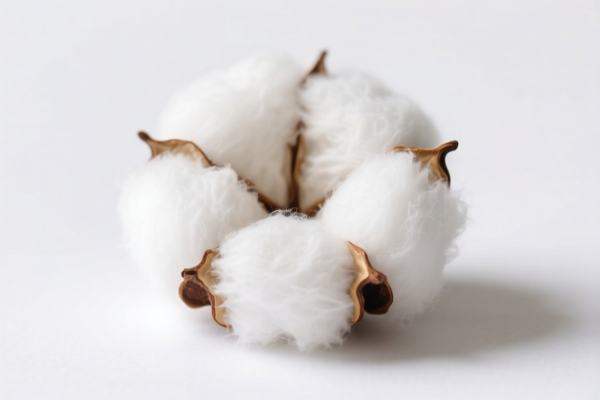
Product Images



AI Analysis
🧵 Bleached Fabric: The Ultimate HS Code & Tariff Guide (2026 Edition)
🌐 Global Trade Compliance | 2026 Duty Breakdown | Expert Clearing Strategy
📌 I. Product Definition: What is "Bleached Fabric"?
Bleached Fabric refers to textile materials (woven or knitted) made from natural fibers (like cotton), chemical fibers (like polyester), or blends, which have undergone a chemical or physical process to whiten or brighten the original color.
In international trade, classification depends heavily on the base fiber type and weaving structure. Misclassification can lead to massive tariff shocks, especially with the current US-China trade war tariffs (Section 301 + Section 122).
⚠️ Critical Distinction:
- Cotton-Based (e.g., Plain Weave, 52xx series) vs. Synthetic-Based (e.g., Polyester, 54xx series).
- Woven (52xx/54xx) vs. Knitted (61xx) – Note: Our data focuses on Woven types.
- Pure Fiber vs. Blend – affects the specific HS Code subheading.
📦 II. HS Code Classification Matrix (2026 Tariff Schedule)
Based on the provided data, here are the 5 specific HS Codes for Bleached Fabrics, covering Cotton and Synthetic fibers, along with their total tax implications.
| # | HS Code | Product Summary | Fiber Composition | Key Characteristic |
|---|---|---|---|---|
| 01 | 5212.12.60.90 |
Bleached Fabric, inferred Cotton/Cellulose Woven | Cotton (or Cellulose) | Weight > 200g/m² (Typically) |
| 02 | 5407.41.00.30 |
Bleached Fabric, Synthetic Woven | Synthetic (General) | Based on fiber attribute classification |
| 03 | 5407.69.10.10 |
Bleached Fabric, Inferred Polyester Filament | Polyester (Long Filament) | Synthetic, filament yarn specific |
| 04 | 5212.22.60.90 |
Bleached Fabric, "Other" Fiber Woven | Mixed/Other Fibers | Fallback category for other cellulose/bleached |
| 05 | 5208.21.20.40 |
Bleached Cotton Plain Weave | Cotton (100%) | Plain weave structure, specific cotton sub-category |
🔍 Classification Logic:
- 52xx Series: Indicates Cotton based.
- 54xx Series: Indicates Chemical/Synthetic (Polyester, etc.) based.
- .12, .22, .08, .41, .69: Specific sub-codes for weight, weave type, or fiber composition.
💰 III. 2026 Tariff Rate Deep Dive (US Import from China)
✅ Target Market: United States (US)
✅ Origin: China (CN)
✅ Applicable Period: Current 2026 Trade Policy (Post-2025 Adjustments)
All listed items are subject to a Triple-Stack Tariff Structure: 1. Basic Tariff (Most Favored Nation - MFN) 2. Section 301 Tariff (25% punitive tariff on US-China trade) 3. Section 122 Tariff (10% retaliatory tariff)
🎯 1. Cotton-Based Bleached Fabrics (5212.12.60.90, 5212.22.60.90, 5208.21.20.40)
| Item | HS Code | Basic Tariff | Section 301 (Add-on) | Section 122 (Retaliation) | TOTAL DUTY RATE |
|---|---|---|---|---|---|
| A | 5212.12.60.90 |
7.8% | +25.0% | +10.0% | 42.8% |
| B | 5212.22.60.90 |
7.8% | +25.0% | +10.0% | 42.8% |
| C | 5208.21.20.40 |
8.4% | +25.0% | +10.0% | 43.4% |
📌 Interpretation:
- Cotton fabrics face a ~43% total tax burden.
- Section 301 (25%) is the largest component, mandated by the US Trade Representative.
- Section 122 (10%) is an additional layer specific to China-origin goods in certain categories.
- Calculation:CIF Value × 42.8%(or 43.4%) is payable upon entry.
🎯 2. Synthetic/Polyester-Based Bleached Fabrics (5407.41.00.30, 5407.69.10.10)
| Item | HS Code | Basic Tariff | Section 301 (Add-on) | Section 122 (Retaliation) | TOTAL DUTY RATE |
|---|---|---|---|---|---|
| D | 5407.41.00.30 |
13.6% | +25.0% | +10.0% | 48.6% |
| E | 5407.69.10.10 |
14.9% | +25.0% | +10.0% | 49.9% |
📌 Interpretation:
- Synthetic fabrics face an ~49% total tax burden, slightly higher than cotton.
- Basic tariffs are higher for synthetics (13.6% vs 7.8%) due to different base rates.
- De Minimis Exemption? ❌ NO. All these HS Codes are explicitly subject to Section 301 and 122; they are not exempt from the $800 threshold for low-value shipments.
🛠️ IV. Customs Clearance & Risk Mitigation Strategy
✅ 1. Essential Documentation Checklist
To avoid audits and delays, prepare these before shipping:
| Document | Purpose | Critical Detail |
|---|---|---|
| Technical Data Sheet | Fiber Verification | Must explicitly state 100% Cotton vs. 100% Polyester vs. Blend. |
| Weave Pattern Diagram | HS Code Validation | Prove if it is "Plain Weave" (5208) or "Other Woven" (5212/5407). |
| Bleaching Certificate | Process Confirmation | Document the chemical/physical bleaching process (critical for "Bleached" definition). |
| Bill of Materials (BOM) | Origin Tracing | Trace yarn origin; ensure no circumvention of tariffs via third countries. |
| Commercial Invoice | Valuation | Must include HS Code, Duty Liability Clause (DDP/DDU), and Country of Origin. |
✅ 2.申报 Strategy (Declaration Tactics)
🔥 Rule #1: Be Specific on Fiber
- Do NOT declare as generic "Fabric".
- CORRECT: "100% Cotton Bleached Plain Woven Fabric, 200gsm".
- CORRECT: "100% Polyester Bleached Filament Woven Fabric".
- WRONG: "Bleached Textile Material" → Risk: Customs will re-classify, potentially leading to higher duties or fines.🔥 Rule #2: Avoid "De Minimis" Abuse
- Many try to ship small bleached fabrics under Section 321 (de minimis) to avoid duties.
- WARNING: If the HS Code is flagged for Section 301/122, even low-value shipments may be seized or taxed retroactively. Do not rely on the $800 exemption for these codes.
✅ 3. Special Case Handling
| Scenario | Recommended Action |
|---|---|
| Cotton vs. Blend | If >50% Cotton, use 52xx. If >50% Polyester, use 54xx. Do not misclassify a blend to get a lower rate. |
| Semi-Bleached | If not fully bleached, the "Bleached Fabric" description is false. Re-classify under "Unbleached" (lower tax, but requires proof). |
| Sample Shipments | Even samples of these high-tariff fabrics require proper declaration; do not send as "No Commercial Value". |
| Origin Fraud | NEVER misdeclare origin as Vietnam/Mexico unless the substantial transformation occurred there. US CBP aggressively checks fabric origin. |
🌍 V. Global Market Comparison (2026)
| Region | Typical Duty (Base) | US Section 301 | US Section 122 | Total Effective Rate |
|---|---|---|---|---|
| 🇺🇸 USA | 7.8% ~ 14.9% | +25.0% | +10.0% | 42.8% ~ 49.9% |
| 🇪🇺 EU | 7.0% ~ 12.0% | N/A | N/A | 7.0% ~ 12.0% |
| 🇨🇳 China | 7.0% ~ 10.0% | N/A | N/A | 7.0% ~ 10.0% |
| 🇻🇳 Vietnam | 0% (GSP eligible) | N/A | N/A | 0% ~ 5% (If origin verified) |
📌 Strategic Insight:
The US market is the most expensive for bleached fabrics due to the 35% cumulative punitive tariffs (25% + 10%).
Recommendation: If targeting the US, consider sourcing from Vietnam, Cambodia, or Mexico (if origin rules are met) to bypass Section 301/122.
⚠️ VI. Common Pitfalls & "Don'ts"
❌ Pitfall 1: Vague Descriptions
Declaring "Bleached Fabric" without fiber content.
👉 Result: Customs demands detailed specs → Delay + Storage Fees.
❌ Pitfall 2: Ignoring the "122" Clause
Assuming only the 25% Section 301 applies.
👉 Result: Underpaid duties (missing the 10% "122" tax) → Back taxes + Penalties.
❌ Pitfall 3: Wrong Weave Classification
Claiming "Plain Weave" (5208) when it's actually "Twilled" or "Satin".
👉 Result: Misclassification audit → 43.4% vs. higher rate.
🎯 VII. Conclusion: Secure Your Shipment
Bleached Fabric imports to the US are high-risk, high-cost due to the ~43%~49% total duty rate.
Success Formula:
1. Precise Fiber ID (Cotton vs. Polyester).
2. Exact HS Code (52xx vs. 54xx).
3. Full Duty Budgeting (Include the 35% punitive taxes in your P&L).
4. Strict Documentation (Prove origin and process).
🚀 Final Tip:
Before shipping, apply for an Advance Ruling from US CBP. It costs nothing but provides legal certainty on your HS Code and avoids surprise audits.
✨ Smart Trade, Lower Risk, Higher Profit!
💼 Don't let tariffs eat your margins. Classify correctly, clear smoothly!
Customer Reviews
About HS Code Classification
The Harmonized System (HS) is an internationally standardized nomenclature developed by the World Customs Organization (WCO) to classify traded products. Over 200 countries use the HS system as the basis for customs tariffs, trade statistics, and import/export regulations.
Each HS code follows a hierarchical structure:
- Chapter (2 digits) — Broad category of goods (e.g., Chapter 84: Machinery and Mechanical Appliances)
- Heading (4 digits) — More specific grouping within the chapter
- Subheading (6 digits) — Internationally standardized breakdown, used by all WCO member countries
- National subdivisions (8-10 digits) — Country-specific extensions for further classification, such as US HTSUS 10-digit codes
Correct HS code classification is essential for smooth customs clearance, accurate duty payment, and compliance with trade regulations. Misclassification can lead to customs delays, overpayment of duties, or penalties.
When importing from CN to US, the applicable tariff rates may include:
- Most-Favored-Nation (MFN) rate — The standard duty rate applied to WTO members
- General rate — Applied to countries without trade agreements
- Trade remedy duties — Additional tariffs such as Section 301 (anti-dumping), Section 232 (national security), or countervailing duties
The information provided on this page is for reference purposes only. For official classification, please consult with your local customs authority or a licensed customs broker.