Bleached Fabric for Garments
CN → US| HS Code | Tariff Rate | Origin | Destination | Doc |
|---|---|---|---|---|
| 5212126090 | 42.8% | CN | US | Official Doc |
| 5407810090 | 49.9% | CN | US | Official Doc |
| 5408312090 | 49.9% | CN | US | Official Doc |
| 5408312050 | 49.9% | CN | US | Official Doc |
| 5212226090 | 42.8% | CN | US | Official Doc |
Product Images
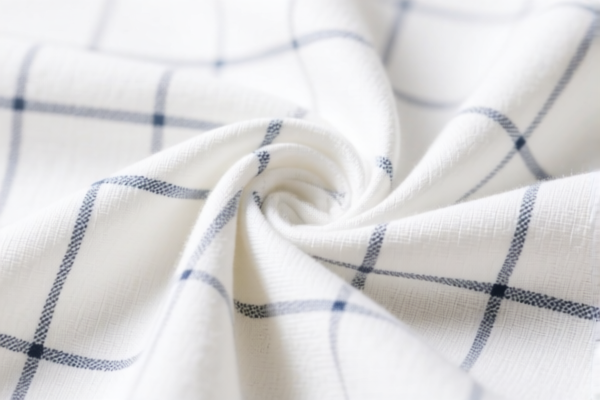
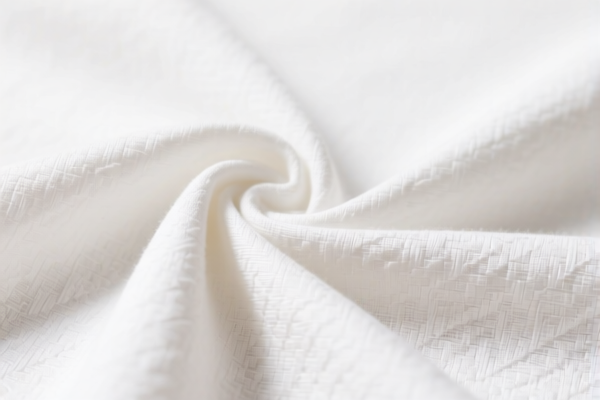
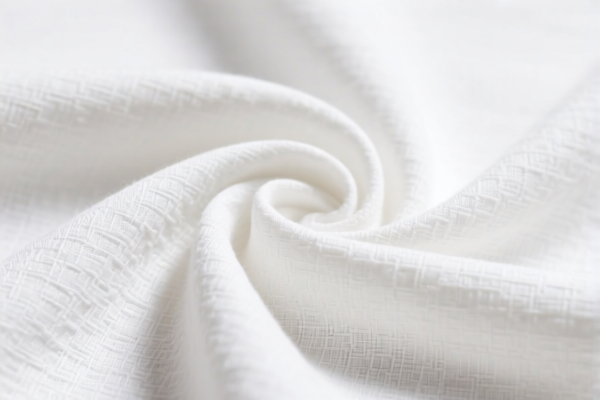
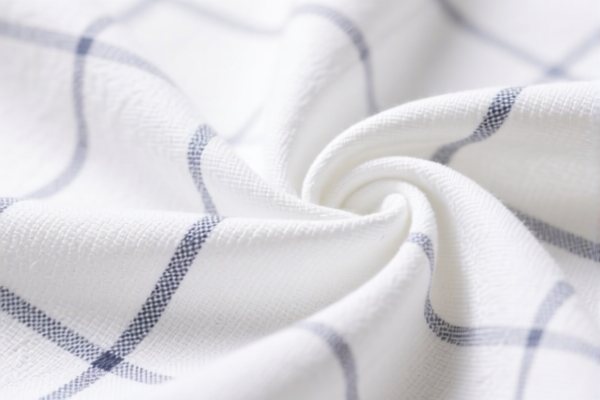
AI Analysis
🧵 Bleached Fabric for Garments
🌐 HS Code Reference & Customs Clearance Guide | 2026 Latest Tariff Full Analysis | Professional Grade Clearance Strategy
📌 I. Product Definition & Classification: Do You Really Understand "Bleached Fabric"?
Bleached fabric, widely used in the garment industry, refers to textile materials (primarily cotton or synthetic fibers) that have undergone bleaching processes to remove natural pigments and achieve a bright white appearance. In international trade, the HS Code classification strictly depends on the material composition and fabric structure.
The provided data highlights two main categories based on material inference:
Cotton-based Bleached Fabrics: Inferred from the summary "material consistent with cotton fabric." These typically fall under Chapter 52 (Cotton).
Synthetic/Other Fibers Bleached Fabrics: Inferred from summaries like "no material conflict" or "core features match," typically falling under Chapter 54 (Synthetic Filaments/Artificial Filaments).
⚠️ Key Distinction Point:
- If the fabric is Cotton: Look for HS Codes starting with 5212.xx.
- If the fabric is Synthetic (Polyester, Nylon, etc.): Look for HS Codes starting with 5407.xx or 5408.xx.
- Critical Note: Misclassification between cotton and synthetic fabrics leads to significant tariff discrepancies due to different base duties.
📦 II. HS Code Classification Details (2026 Latest Tariff Authority Comparison)
Based on the provided <DATA>, here are the specific HS Codes, their summaries, and associated tax details.
| HS Code | Summary / Description | Material Inference | Total Tax Rate |
|---|---|---|---|
5212.12.60.90 |
Bleached Other Woven Fabric | Cotton-based inferred | 42.8% |
5212.22.60.90 |
Bleached Other Woven Fabric (Machine-woven) | Cotton-based inferred; high alignment in form and category | 42.8% |
5407.81.00.90 |
Bleached and Other Category Fabrics | Synthetic/Other; No material or form conflict | 49.9% |
5408.31.20.90 |
Bleached Other Fabrics | Synthetic/Other; Core characteristics fully match | 49.9% |
5408.31.20.50 |
Bleached Other Fabrics | Synthetic/Other; Sub-item correspondence consistent | 49.9% |
🔍 Focus Reminder:
- Cotton vs. Synthetic: The tax rate difference is 7.1% (49.9% vs 42.8%).
- Chapter 52 (Cotton) generally has a lower base tariff (7.8%) compared to Chapter 54 (Synthetic) (14.9%).
- All listed codes are subject to Additional Tariffs (See Section III).
💰 III. 2026 Latest Tariff Rate Details (Including Supplementary Taxes, Policy Add-ons)
✅ Applicable Country: United States (US)
✅ Origin: China (CN)
✅ Effective Time: Current (Including subsequent imports under existing trade measures)
🎯 1. 5212.12.60.90 & 5212.22.60.90 —— Cotton-Based Bleached Fabrics
| Item | Content |
|---|---|
| Base Tariff | 7.8% (Ad Valorem) |
| Section 301 Additional Tariff | +25.0% |
| Section 122 Tariff | +10.0% |
| Total Tariff Rate | 42.8% |
| Tax Calculation | CIF Value × 42.8% |
| De Minimis Eligibility | ❌ Not Applicable (High-value textile imports are generally scrutinized) |
| Legal Basis Path | HTSUS:5212.xx → Section 301: Footnote 9903.88.01 → Section 122: IEEPA/Trade Act |
📌 Explanation:
- "Base Tariff 7.8%": Standard US MFN rate for cotton woven fabrics.
- "Section 301 +25%": Standard additional tariff on Chinese goods.
- "Section 122 +10%": Specific additional tariff applicable to certain textile/apparel imports (often related to trade remedy actions or specific legislative clauses).
- Total 42.8%: This is a high-cost structure. Importers must accurately declare the cotton content to avoid overpayment if synthetic, or underpayment penalties if misdeclared.
🎯 2. 5407.81.00.90, 5408.31.20.90, 5408.31.20.50 —— Synthetic/Other Fiber Bleached Fabrics
| Item | Content |
|---|---|
| Base Tariff | 14.9% (Ad Valorem) |
| Section 301 Additional Tariff | +25.0% |
| Section 122 Tariff | +10.0% |
| Total Tariff Rate | 49.9% |
| Tax Calculation | CIF Value × 49.9% |
| De Minimis Eligibility | ❌ Not Applicable |
| Legal Basis Path | HTSUS:5407/5408 → Section 301: Footnote 9903.88.01 → Section 122: IEEPA/Trade Act |
📌 Explanation:
- "Base Tariff 14.9%": Higher than cotton, reflecting the synthetic fiber classification.
- "Section 301 +25%": Same as above.
- "Section 122 +10%": Same as above.
- Total 49.9%: This is the highest bracket in the provided data. Importers should verify if any duty-free exemptions apply (e.g., specific free trade agreements, though limited for China).
🛠️ IV. Customs Clearance Practical Advice (实战避坑指南)
✅ 1. Documentation Checklist (All Required)
| Document | Must Provide | Description |
|---|---|---|
| ✅ Commercial Invoice | ✔️ | Must clearly state: "Bleached Fabric," Material Composition (% Cotton/% Synthetic), Width, Weight, and Price. |
| ✅ Packing List | ✔️ | Detailed roll/package details, dimensions, and gross/net weight. |
| ✅ Material Composition Certificate | ✔️ | CRITICAL: Must be issued by a third-party lab or manufacturer stating exact fiber content (e.g., "100% Cotton" or "100% Polyester"). |
| ✅ Bill of Lading / Air Waybill | ✔️ | Proof of shipment. |
| ✅ Customs Bond | ✔️ | Continuous or single-entry bond required for US entry. |
| ✅ Form 7501 (Entry Summary) | ✔️ | Filed by customs broker. |
| ✅ Section 301 Exclusion Proof (if applicable) | ✔️ | If an exclusion was granted prior to import, provide the Exclusion Number. |
✅ 2. Declaration Tips (Key Mnemonics)
🔥 “Material Determines Chapter, Bleaching Defines Subheading, Accuracy Saves Money!”
| Scenario | Correct Declaration | Wrong Practice | Consequence |
|---|---|---|---|
| 100% Cotton | 5212.12.60.90 or 5212.22.60.90 |
Declaring as Synthetic (5407...) |
Underpayment Penalty + Back Taxes + Interest |
| 100% Polyester | 5407.81.00.90 or 5408.31.20.xx |
Declaring as Cotton (5212...) |
Overpayment (Lose 7.1% profit margin unnecessarily) |
| Blended Fabric | Needs precise % breakdown | Guessing "Other" | Customs Rejection or Ruling by CBP |
| "Bleached" vs "Whitened" | Use "Bleached" in description | Vague terms like "White Fabric" | Customs Query for further classification |
✅ 3. Special Situations Handling
| Situation | Handling Advice |
|---|---|
| Mixed Containers (Cotton + Synthetic) | Must Split Declaration. Do not mix codes. Each code has a different base rate. |
| OEM Garment Fabrics | Ensure the invoice matches the PO. Discrepancies lead to audits. |
| Section 122 Tariff | Verify if the specific HS Code is still subject to Section 122. This clause can change based on administrative updates. |
| Pre-Ruling Application | For large shipments, apply for a CBP Pre-Ruling to lock in the HS Code and avoid disputes. |
🌍 V. Global Major Market Clearance Comparison (2026 Latest)
| Country/Region | Recommended HS Code | Base Tariff | Additional Tariffs (China) | Notes |
|---|---|---|---|---|
| 🇺🇸 USA | 5212.xx or 5407/5408.xx |
7.8% - 14.9% | +35% (25% Sec 301 + 10% Sec 122) | Highest Total Cost |
| 🇨🇳 China | 5212.xx or 5407/5408.xx |
~5% - 10% | None | Import to China |
| 🇪🇺 EU | 5208.xx or 5407/5408.xx |
~6% - 9% | None (Usually) | Verify CE/RoHS if finished garments |
| 🇬🇧 UK | 5208.xx or 5407/5408.xx |
~6% - 9% | None | Post-Brexit rules apply |
📌 Conclusion:
- USA is the most expensive market due to the combination of Section 301 and Section 122 tariffs.
- Total Tax Rates (42.8% - 49.9%) are prohibitive.
- Strategy: Consider sourcing from countries with FTA agreements (e.g., Vietnam, Cambodia) if possible, or negotiate price adjustments with suppliers to absorb the duty.
📌 VI. Common Errors & Pitfalls (Lessons Learned)
❌ Error 1: Declaring "Fabric" without specifying material
👉 Consequence: CBP will assume the highest duty rate or hold the shipment for inspection.
❌ Error 2: Confusing "Bleached" with "White"
👉 Consequence: "White" may refer to dyeing status, not chemical bleaching. Misclassification leads to penalties.
❌ Error 3: Ignoring Section 122 Tariff
👉 Consequence: Budgeting for only Section 301 (25%) but facing ~43%+ total cost. Cash flow crisis.
❌ Error 4: Using "Cotton" for Synthetic Fabrics to Save Tax
👉 Consequence: If lab tests reveal synthetic fibers, you face Fraud Penalties (3x the duty owed).
✅ Correct Practice:
"Bleached Woven Fabric, 100% Cotton, 60” Width, Roll Form, For Garment Manufacturing, HS 5212.12.60.90"
🎯 VII. Conclusion: Professional Declaration, Cost Control, Efficiency!
🎯 Remember the Mantra:
🔹 "Material First, Bleaching Second, Tariff Third!"
🔹 "Cotton 42.8%, Synthetic 49.9%, Don't Guess, Test!"
🔹 "Section 122 is Real, Add 10%, Budget Accordingly!"
📌 Pro Tip:
- If your fabric is blended (e.g., 65% Polyester, 35% Cotton), consult a customs broker immediately. The classification may follow the primary material, but this requires precise lab verification.
- Recommendation: Apply for a Binding Tariff Ruling from CBP if you are importing large volumes. This provides legal certainty and protects against future audits.
📣 Immediate Action:
📞 Contact a Licensed Customs Broker + Provide Lab Test Reports + Apply for Pre-Ruling
🚀 Ensure Your Bleached Fabric Passes US Customs Smoothly, Minimizes Duty, and Maximizes Profit!
✨ Professional Clearance Starts with Precise Classification!
💼 Every Percent of Tariff Saved is Direct Profit Added!
Customer Reviews
About HS Code Classification
The Harmonized System (HS) is an internationally standardized nomenclature developed by the World Customs Organization (WCO) to classify traded products. Over 200 countries use the HS system as the basis for customs tariffs, trade statistics, and import/export regulations.
Each HS code follows a hierarchical structure:
- Chapter (2 digits) — Broad category of goods (e.g., Chapter 84: Machinery and Mechanical Appliances)
- Heading (4 digits) — More specific grouping within the chapter
- Subheading (6 digits) — Internationally standardized breakdown, used by all WCO member countries
- National subdivisions (8-10 digits) — Country-specific extensions for further classification, such as US HTSUS 10-digit codes
Correct HS code classification is essential for smooth customs clearance, accurate duty payment, and compliance with trade regulations. Misclassification can lead to customs delays, overpayment of duties, or penalties.
When importing from CN to US, the applicable tariff rates may include:
- Most-Favored-Nation (MFN) rate — The standard duty rate applied to WTO members
- General rate — Applied to countries without trade agreements
- Trade remedy duties — Additional tariffs such as Section 301 (anti-dumping), Section 232 (national security), or countervailing duties
The information provided on this page is for reference purposes only. For official classification, please consult with your local customs authority or a licensed customs broker.