Bleached Knitted/Woven Rib Fabric
CN → US| HS Code | Tariff Rate | Origin | Destination | Doc |
|---|---|---|---|---|
| 6006219080 | 45.0% | CN | US | Official Doc |
| 6006211000 | 45.0% | CN | US | Official Doc |
Product Images
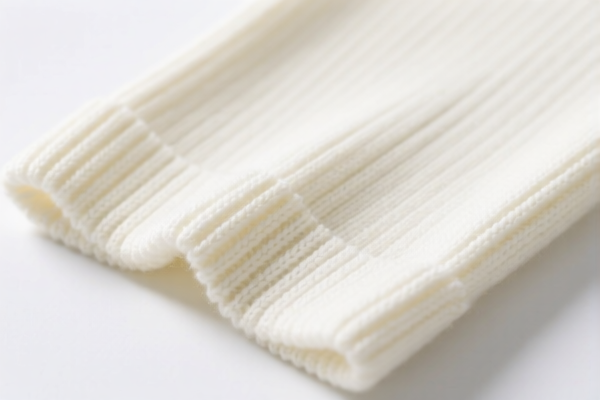
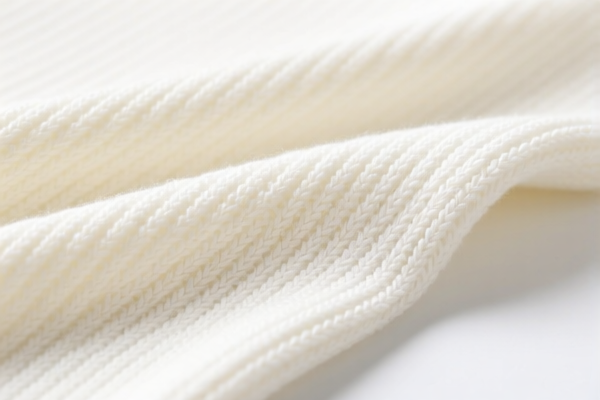
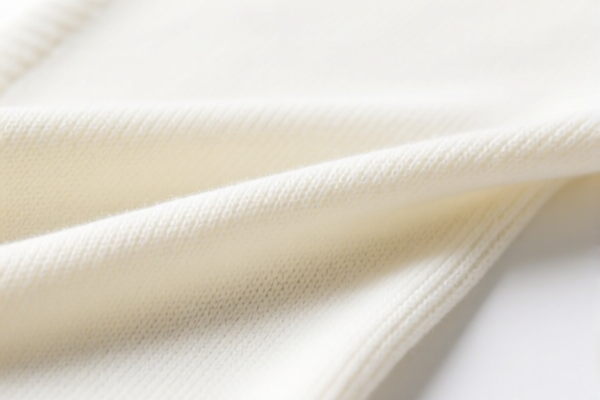
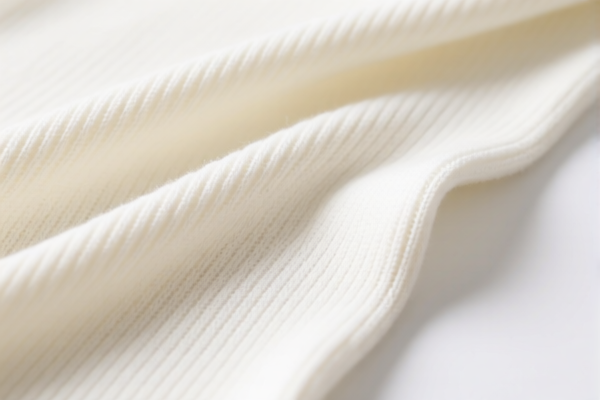
AI Analysis
🧵 Bleached Knitted/Woven Rib Fabric (Knitted or Crocheted Fabrics)
🌐 HS Code Reference & Customs Clearance Guide | 2026 Latest Tariff Analysis | Professional Clearance Strategy
📌 I. Product Definition & Classification: What is "Rib Fabric"?
Knitted or crocheted fabrics, specifically those made of Cotton and in a Bleached state, are categorized under Chapter 60 of the Harmonized System. The term "Rib Fabric" generally refers to fabrics with a distinct vertical ridges pattern (often used for cuffs, collars, and waistbands). However, for customs classification purposes, the specific construction method (circular vs. flat/other) determines the exact HS Code.
Key Distinction: 1. Circular Knit (Round Knitting): Produced on circular knitting machines, forming a tube. These are often used for t-shirts, underwear, and seamless garments. 2. Other Knitted/Crocheted (Flat Knit/Weft Knit): Produced on flat knitting machines or other methods. This includes traditional rib fabrics (1x1, 2x2 rib) used in apparel trim.
⚠️ Critical Classification Point:
- If the fabric is Circular Knit and wholly of cotton yarns exceeding 100 metric number per single yarn → 6006.21.10.00
- If the fabric is Other (including flat-knit rib, crochet, or circular knit not meeting the specific "exceeding 100 metric number" criteria) → 6006.21.90.80
📦 II. HS Code Classification Details (2026 Latest Tariff Authority对照)
Based on the provided data, the relevant HS Codes for Bleached Cotton Knitted/Crocheted Fabrics are:
| HS Code | Product Description | Applicable Scenario | Key Technical Condition |
|---|---|---|---|
6006.21.10.00 |
Other knitted or crocheted fabrics: Of cotton: Unbleached or bleached: Circular knit, wholly of cotton yarns exceeding 100 metric number per single yarn | High-count fine circular knit fabrics (e.g., high-quality underwear, fine t-shirt bases) | ✅ Must be Circular Knit ✅ Yarn count > 100 metric number |
6006.21.90.80 |
Other knitted or crocheted fabrics: Of cotton: Unbleached or bleached: Other | Most standard rib fabrics, flat-knit ribs, coarse circular knits, or circular knits with yarn count ≤ 100 metric number | ✅ Includes "Other" categories ✅ Does not meet the specific criteria for 6006.21.10.00 |
🔍 Important Note:
- The term "Rib Fabric" is a structural description. Customs classifies based on manufacturing method (Circular vs. Other) and yarn fineness (Metric Number).
- If your "Rib Fabric" is produced on a flat knitting machine, it falls under "Other" (6006.21.90.80).
- If it is Circular Knit, you must check the yarn count. Only if the yarn is finer than 100 metric number does it qualify for6006.21.10.00. Otherwise, it defaults to6006.21.90.80.
💰 III. 2026 Latest Tariff Rate Details (Tax Breakdown)
✅ Applicable Country: United States (US)
✅ Origin: China (CN)
✅ Tax Rates:
- Basic Tariff: 0.0%
- Additional Tariff (Section 301/IEEPA): 0.0%
- Total Tax: 0.0%
| HS Code | Basic Tariff | Additional Tariff | Total Tax | Tax Detail |
|---|---|---|---|---|
6006.21.10.00 |
0.0% | 0.0% | 0.0% | No Section 301 or IEEPA duties apply to this specific subheading. |
6006.21.90.80 |
0.0% | 0.0% | 0.0% | No Section 301 or IEEPA duties apply to this specific subheading. |
📌 Explanation:
- Unlike electronics or steel, cotton knitted fabrics currently do not attract additional tariffs under Section 301 or IEEPA (as per the provided data).
- Total Landed Cost Impact: The tariff cost is $0 on the CIF value. This makes cotton knitted fabrics highly competitive in terms of duty-free entry.
- Caution: Always verify with the latest USITC data before shipment, as trade policies can change. However, based on the provided data, the rate is 0%.
🛠️ IV. Customs Clearance Practical Advice (Avoiding Pitfalls)
✅ 1. Required Documentation Checklist
| Document | Required | Purpose |
|---|---|---|
| ✅ Commercial Invoice | ✔️ | Must clearly state: "Bleached Knitted Cotton Fabric," HS Code, Country of Origin. |
| ✅ Packing List | ✔️ | Details weight, dimensions, and number of rolls/bales. |
| ✅ Product Description | ✔️ | Must specify: "Cotton," "Bleached," "Knitted," and Construction Type (Circular or Flat). |
| ✅ Yarn Count Declaration | ✔️ | If claiming 6006.21.10.00, provide proof of yarn count > 100 metric number. |
| ✅ Certificate of Origin | ✔️ | Essential for proving non-US origin and avoiding anti-dumping queries. |
| ✅ Lab Test Report | ✔️ | Optional but recommended: Confirms fiber content (100% Cotton) and construction. |
✅ 2. Declaration Strategy (Key Tips)
🔥 "Specify Construction, Not Just 'Rib'"
| Scenario | Correct Declaration | Common Mistake |
|---|---|---|
| Flat-Knit Rib (e.g., 1x1, 2x2 rib for cuffs) | 6006.21.90.80 - "Knitted Cotton Fabric, Bleached, Other" |
Calling it "Circular Knit" without proof → Audit risk |
| Circular Knit, Coarse Yarn (≤100 metric) | 6006.21.90.80 - "Knitted Cotton Fabric, Bleached, Other" |
Claiming 6006.21.10.00 incorrectly → Misclassification |
| Circular Knit, Fine Yarn (>100 metric) | 6006.21.10.00 - "Circular Knit Cotton Fabric, Bleached, >100 metric" |
Under-declaring to 6006.21.90.80 (no tax difference, but inaccuracy) |
✅ 3. Special Considerations
| Situation | Handling Advice |
|---|---|
| OEM/Custom Colors | Declare as "Bleached" only if truly bleached. If dyed, HS Code changes to 6006.22/23/24/29. |
| Width & Weight | Include fabric width and GSM (grams per square meter) in documents to avoid "Unidentified Fabric" queries. |
| Anti-Dumping | Check if cotton fibers or specific knitting processes are subject to anti-dumping duties in your origin country. (Currently, general cotton knits are not heavily targeted, but verify). |
| US Customs Border Protection (CBP) Inquiries | Be prepared to provide a technical manual showing the knitting method and yarn specification if audited. |
🌍 V. Global Market Comparison (2026 Outlook)
| Country/Region | Recommended HS Code | Tariff (US Origin) | Tariff (China Origin) | Notes |
|---|---|---|---|---|
| 🇺🇸 USA | 6006.21.90.80 / 6006.21.10.00 |
0% - 12% | 0.0% | Zero tariffs under provided data. |
| 🇨🇳 China | 6006.21.90 / 6006.21.10 | N/A | 9% - 12% | Import duties apply to China. |
| 🇪🇺 EU | 6006.21 | 9.5% | 9.5% | No additional tariffs for cotton knits. |
| 🇬🇧 UK | 6006.21 | 9.5% | 9.5% | Post-Brexit rules apply. |
| 🇻🇳 Vietnam | 6006.21 | 0% (via EVFTA) | Varies | Check for local content rules. |
📌 Conclusion:
- USA currently offers 0% duty for these specific cotton knitted fabrics, making it a highly competitive market.
- Accuracy in Classification is key to maintaining this benefit and avoiding audits.
📌 VI. Common Mistakes & Pitfalls (Lessons Learned)
❌ Mistake 1: Declaring "Rib Fabric" without specifying Circular vs. Flat
👉 Consequence: Customs may classify under a higher duty bracket or request additional info, causing delays.
❌ Mistake 2: Ignoring Yarn Count for Circular Knits
👉 Consequence: Misclassification between 6006.21.10.00 and 6006.21.90.80. While tax is same in this data, it affects other trade statistics and potential future tariff changes.
❌ Mistake 3: Confusing Bleached with Dyed
👉 Consequence: Bleached fabrics fall under 6006.21; Dyed fabrics fall under 6006.22-24. Wrong HS Code → Penalties.
✅ Correct Practice:
"Bleached Knitted Cotton Fabric, Circular Knit, 100% Cotton, 200 GSM, Width 180cm, Yarn Count 120 Metric Number"
🎯 VII. Conclusion: Precision in Fabric Classification
🎯 Remember:
🔹 "Rib" is a structure, not an HS Code.
🔹 "Bleached" means 6006.21, not 6006.22.
🔹 "Circular + Fine Yarn" = 6006.21.10.00
🔹 "Other" or "Coarse" = 6006.21.90.80
🔹 Current Duty: 0.0% (But verify policy updates!)
📌 Pro Tip:
If you are exporting to the USA, ensure your yarn count documentation is ready for Circular Knit fabrics to support the 6006.21.10.00 classification if claimed. For most standard rib fabrics (flat-knit), 6006.21.90.80 is the safe and correct choice.
📣 Action Step:
📞 Confirm with your supplier: Is the fabric Circular Knit or Flat Knit? What is the yarn count?
🚀 File accurate customs entry with 0% duty declaration.
✨ Zero duty is not free work—precision is key!
✨ Professional Customs Clearance Starts with Accurate Classification!
💼 Every dollar saved in duty counts!
Customer Reviews
About HS Code Classification
The Harmonized System (HS) is an internationally standardized nomenclature developed by the World Customs Organization (WCO) to classify traded products. Over 200 countries use the HS system as the basis for customs tariffs, trade statistics, and import/export regulations.
Each HS code follows a hierarchical structure:
- Chapter (2 digits) — Broad category of goods (e.g., Chapter 84: Machinery and Mechanical Appliances)
- Heading (4 digits) — More specific grouping within the chapter
- Subheading (6 digits) — Internationally standardized breakdown, used by all WCO member countries
- National subdivisions (8-10 digits) — Country-specific extensions for further classification, such as US HTSUS 10-digit codes
Correct HS code classification is essential for smooth customs clearance, accurate duty payment, and compliance with trade regulations. Misclassification can lead to customs delays, overpayment of duties, or penalties.
When importing from CN to US, the applicable tariff rates may include:
- Most-Favored-Nation (MFN) rate — The standard duty rate applied to WTO members
- General rate — Applied to countries without trade agreements
- Trade remedy duties — Additional tariffs such as Section 301 (anti-dumping), Section 232 (national security), or countervailing duties
The information provided on this page is for reference purposes only. For official classification, please consult with your local customs authority or a licensed customs broker.