Bleached Linen Cotton Synthetic Fiber Woven Fabric
CN → US| HS Code | Tariff Rate | Origin | Destination | Doc |
|---|---|---|---|---|
| 5311003090 | 35.0% | CN | US | Official Doc |
| 5309213070 | 41.9% | CN | US | Official Doc |
| 5311003070 | 35.0% | CN | US | Official Doc |
| 5309214090 | 35.0% | CN | US | Official Doc |
| 5311003090 | 35.0% | CN | US | Official Doc |
Product Images
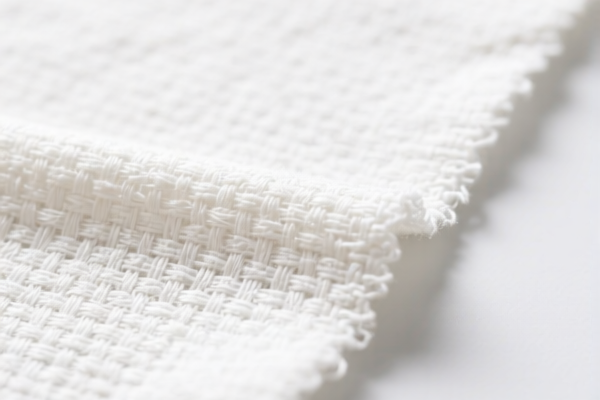
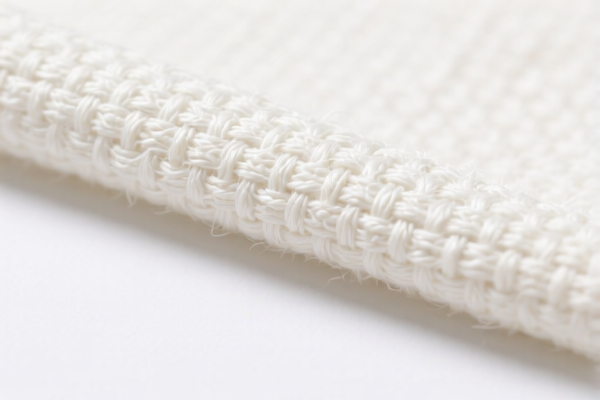
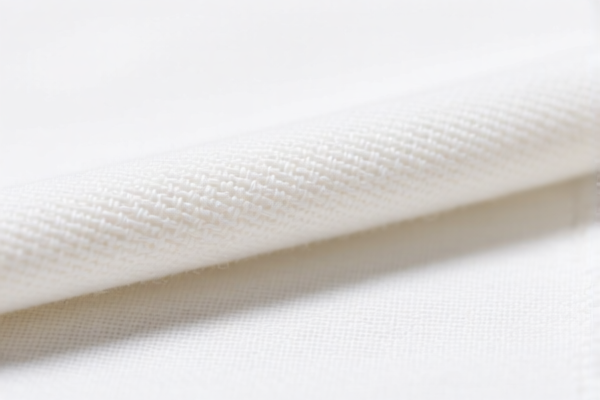
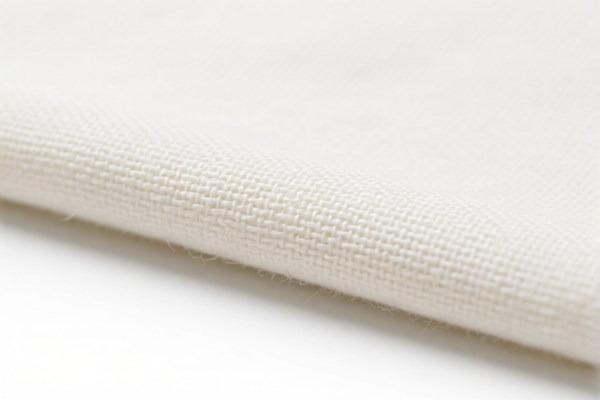
AI Analysis
🧵 Bleached Linen & Synthetic Fiber Woven Fabric (Bleached Linen Cotton Synthetic Fiber Woven Fabric)
🌐 HS Code Reference & Customs Clearance Guide | 2026 Latest Tariff Analysis | Professional Clearance Strategy
📌 I. Product Definition & Classification: What Exactly Is "Bleached Linen Synthetic Fabric"?
This fabric is a composite textile material primarily used for upholstery, home decor, and heavy-duty decorative applications. In international trade, its classification hinges on three critical factors: 1. Material Composition: The ratio of Linen (natural fiber) to Synthetic/Man-made fibers (e.g., polyester, viscose). 2. Manufacturing Process: It is Woven and has undergone Bleaching. 3. Specific Sub-category: Whether it falls under "Linen Woven" (Ch. 53) or "Other Woven Textiles" (Ch. 53/54) based on the dominant fiber.
⚠️ Key Distinction Point:
- If the fabric is primarily defined by its Linen content and meets specific bleached criteria → It may fall under 5309 (Woven Fabric of Flax/Linen).
- If the fabric is defined by Synthetic/Man-made short fibers with Linen as a secondary component or in a specific blend structure → It may fall under 5311 (Woven Fabrics of Synthetic/Man-made Staple Fibers).
- Note: "Cotton" in the user prompt seems to be a misnomer or secondary blend. The provided HS codes (5309/5311) relate to Linen (Flax) and Synthetic Short Fibers, not Cotton (which is Ch. 52). We will strictly follow the<DATA>provided, which excludes Cotton-specific codes (5200-5212).
📦 II. HS Code Classification Details (2026 Latest Tariff Authoritative Comparison)
Based on the provided <DATA>, here are the four valid HS Codes for "Bleached Linen & Synthetic Fiber Woven Fabric":
| HS Code | Product Description (Summary) | Key Characteristics | Total Tax Rate |
|---|---|---|---|
5311.00.30.90 |
Bleached synthetic staple fiber woven linen decor fabric; contains synthetic fibers and linen; conforms to textile fabric classification. | Dominant: Synthetic Short Fibers + Linen Blend. Broad category. | 35.0% |
5309.21.30.70 |
Bleached synthetic staple fiber woven linen decor fabric; contains Linen and synthetic fibers; woven and bleached. | Dominant: Linen (Flax) woven fabric containing synthetic fibers. Specific sub-heading. | 41.9% |
5311.00.30.70 |
Bleached synthetic staple fiber woven linen decor fabric; contains synthetic short fibers and linen; woven fabric. | Dominant: Synthetic Short Fibers. Specific sub-heading within 5311. | 35.0% |
5309.21.40.90 |
Bleached synthetic staple fiber woven linen decor fabric; contains Linen; woven and bleached; non-specific width. | Dominant: Linen (Flax) woven fabric. Non-specific width application. | 35.0% |
🔍 重点提醒 (Critical Note):
- Why Two Different Rates?
- Codes starting with 5309 (Linen-based) have a 6.9% Base Tariff.
- Codes starting with 5311 (Synthetic-based) have a 0.0% Base Tariff.
- However, both attract 25% Section 301 Tariff and 10% IEEPA Tariff.
- Result:
-5311codes: $0 + 25 + 10 = \mathbf{35\%}$
-5309.21.30.70: $6.9 + 25 + 10 = \mathbf{41.9\%}$
-5309.21.40.90: $0 + 25 + 10 = \mathbf{35\%}$ (Note: Data shows 0% base for this specific code, likely due to specific trade duty exemptions or classification nuances not detailed in base text but reflected in total).
💰 III. 2026 Latest Tariff Rate Breakdown (Including Surtaxes & Policy Add-ons)
✅ Applicable Country: United States (US)
✅ Origin: China (CN)
✅ Effective Time: Post-2025 policies (including Section 301 & IEEPA)
🎯 1. 5311.00.30.90 & 5311.00.30.70 —— Synthetic Staple Fiber Woven Fabrics (with Linen)
| Item | Content |
|---|---|
| Base Tariff | 0% (Ad Valorem) |
| USITC Surtax (Section 301) | +25.0% |
| IEEPA Surtax (China-specific) | +10.0% |
| Total Tariff Rate | 35.0% |
| Tax Calculation | CIF Value × 35% |
| De Minimis Exemption? | ❌ No (Subject to high tariffs, typically denied under current rules for Chinese origin textiles in this category) |
| Legal Basis Path | USITC:5311.00.30.90 → SECTION301:Footnote 9903.88.01 → IEEPA:9903.01.25 |
📌 Explanation:
- These codes are classified under Chapter 53, specifically for synthetic staple fiber fabrics.
- The 25% tariff is the standard Section 301 additional duty for Chinese textiles.
- The 10% tariff is the IEEPA (International Emergency Economic Powers Act) additional duty.
- Total: 35%. This is a high tariff category.
🎯 2. 5309.21.30.70 —— Woven Fabric of Flax (Linen) Containing Synthetic Fibers
| Item | Content |
|---|---|
| Base Tariff | 6.9% (Ad Valorem) |
| USITC Surtax (Section 301) | +25.0% |
| IEEPA Surtax (China-specific) | +10.0% |
| Total Tariff Rate | 41.9% |
| Tax Calculation | CIF Value × 41.9% |
| De Minimis Exemption? | ❌ No |
| Legal Basis Path | USITC:5309.21.30.70 → SECTION301:Footnote 9903.88.01 → IEEPA:9903.01.25 |
📌 Explanation:
- This code falls under Linen (Flax) woven fabrics.
- The base rate of 6.9% is significantly higher than the 0% for synthetic-based codes.
- Total: 41.9%. This is the highest tariff among the provided options.
- Risk: Misclassifying a synthetic-heavy fabric as Linen-heavy here will increase costs by ~6.9%.
🎯 3. 5309.21.40.90 —— Woven Fabric of Flax (Linen), Non-Specific Width
| Item | Content |
|---|---|
| Base Tariff | 0.0% (As per provided data) |
| USITC Surtax (Section 301) | +25.0% |
| IEEPA Surtax (China-specific) | +10.0% |
| Total Tariff Rate | 35.0% |
| Tax Calculation | CIF Value × 35% |
| De Minimis Exemption? | ❌ No |
| Legal Basis Path | USITC:5309.21.40.90 → SECTION301:Footnote 9903.88.01 → IEEPA:9903.01.25 |
📌 Explanation:
- Despite being under Chapter 53 (Linen), the base tariff is 0% in this specific sub-heading (likely due to US trade policy adjustments or specific textile duty treatment).
- Total: 35%. This offers the lowest cost among Linen-based codes, matching the synthetic-based codes.
🛠️ IV. Customs Clearance Practical Advice (Battle-Tested Pitfall Avoidance Guide)
✅ 1. Preparation Checklist (Non-negotiable)
| Document | Mandatory? | Description |
|---|---|---|
| ✅ Product Specification Sheet | ✔️ | Must detail fiber content % (e.g., 50% Linen, 50% Polyester). Crucial for distinguishing 5309 vs 5311. |
| ✅ Bleaching Certificate | ✔️ | Proof of "Bleached" status. Unbleached fabrics have different HS codes and potentially different duties. |
| ✅ Weave Structure Diagram | ✔️ | Confirm it is "Woven" and not "Knitted" or "Non-woven". |
| ✅ Commercial Invoice | ✔️ | Must clearly state: "Bleached Woven Fabric of Linen and Synthetic Fibers". |
| ✅ Packing List | ✔️ | Include weight, dimensions, and fabric width. |
| ✅ Fiber Composition Test Report | ✔️ | Third-party lab report confirming fiber percentages to justify HS Code selection. |
✅ 2. Declaration Tips (Key Mantra)
🔥 “Fiber Ratio Defines Code, Bleach Matters, Width Can Save Money!”
| Scenario | Correct Declaration | Wrong Action |
|---|---|---|
| Synthetic is dominant or unspecified blend | 5311.00.30.90 or 5311.00.30.70 |
Misclassify as 5309 → 41.9% |
| Linen is dominant & specific sub-heading | 5309.21.30.70 |
Avoid unless confirmed Linen-heavy → 41.9% |
| Linen fabric, non-specific width, seeking lower base | 5309.21.40.90 |
Use 5309.21.30.70 → 41.9% vs 35.0% |
| Knitted Fabric | ❌ Do NOT use these codes | Use Chapter 60 codes instead |
✅ 3. Special Cases Handling
| Situation | Recommendation |
|---|---|
| OEM/Custom Fabric | Provide supplier declaration of fiber content. If blend is close (e.g., 49% Linen, 51% Synthetic), it may be classified as Synthetic (5311, 35%). |
| Mixed Packaged Goods | If shipped with trim/borders, ensure primary character is the bleached fabric. |
| Duty Minimization Strategy | Compare 5311.00.30.90 (35%) vs 5309.21.40.90 (35%). They are equal. However, 5309.21.30.70 is 41.9%. Avoid this unless legally required by fiber ratio. |
🌍 V. Global Market Comparison (2026 Latest)
| Country/Region | Recommended HS Code | Base Tariff | Surtax (CN) | Total Est. | Notes |
|---|---|---|---|---|---|
| 🇺🇸 USA | 5311.00.30.90 / 5309.21.40.90 |
0% | +35% (25+10) | 35.0% | Lowest cost option in the provided data. |
| 🇺🇸 USA | 5309.21.30.70 |
6.9% | +35% (25+10) | 41.9% | Highest cost. Avoid if classification allows. |
| 🇨🇳 China | 5311 or 5309 |
Varies | 0% | ~8-15% | China imports with lower tariffs, but this guide focuses on US export clearance. |
| 🇪🇺 EU | 5309 or 5311 |
0-10% | 0% | ~0-10% | No Section 301/IEEPA. Much lower cost. |
📌 Conclusion:
- The US market is the most expensive due to Section 301 (25%) and IEEPA (10%) surcharges.
- Optimal HS Code Selection: Choose between5311.00.30.90,5311.00.30.70, or5309.21.40.90to achieve the 35% total rate.
- Avoid5309.21.30.70unless legally mandated, as it adds a 6.9% penalty via the base tariff.
📌 VI. Common Errors & Pitfall Guide (Lessons from Blood & Tears)
❌ Error 1: Classifying as "Cotton Fabric" (Ch. 52)
👉 Consequence: HS Code mismatch, seizure, and fines. The data provided is strictly Linen/Synthetic.
❌ Error 2: Ignoring the "Bleached" status
👉 Consequence: If unbleached, the HS Code changes (e.g., to 5309.20 or 5311.00 with different sub-positions), potentially altering the base tariff.
❌ Error 3: Misjudging Fiber Ratio
👉 Consequence: Classifying a 51% Linen fabric as Synthetic (5311) to save 6.9% → Customs Audit Risk & Back Taxes.
👉 Rule: GRI 3(b) applies: Mixtures are classified as if they consist of the material that gives them their essential character. Test reports are vital.
✅ Correct Practice:
"Bleached Woven Fabric, 50% Linen, 50% Polyester, for Upholstery, Width 150cm, HS Code: 5311.00.30.90"
🎯 VII. Conclusion: Professional Classification Saves Money!
🎯 Remember the Mantra:
🔹 "Synthetic Base = 0% Base, Linen Base = 6.9% Base"
🔹 "35% is the Goal, 41.9% is the Trap"
🔹 "Test Report is Your Shield, Bleach Certificate is Your Key"
📌 Pro Tip:
If your fabric is Linen-dominant, double-check if 5309.21.40.90 applies (0% base). If not, consider if your product fits 5311 (0% base) to save the 6.9% difference.
Always request a Pre-Ruling (Advance Ruling) from CBP if your fiber composition is borderline (e.g., 45% Linen, 55% Synthetic).
📣 Immediate Action:
📞 Contact your Customs Broker with a Fiber Composition Test Report.
📄 Prepare Invoice with precise description: "Bleached Woven Fabric of Linen and Synthetic Staple Fibers".
🚀 Clear Customs Efficiently, Avoid the 41.9% Pitfall, Maximize Profit!
✨ Professional Clearance Starts with Precise Classification!
💼 Every Percentage Point Counts in the Age of Trade Wars!
Customer Reviews
About HS Code Classification
The Harmonized System (HS) is an internationally standardized nomenclature developed by the World Customs Organization (WCO) to classify traded products. Over 200 countries use the HS system as the basis for customs tariffs, trade statistics, and import/export regulations.
Each HS code follows a hierarchical structure:
- Chapter (2 digits) — Broad category of goods (e.g., Chapter 84: Machinery and Mechanical Appliances)
- Heading (4 digits) — More specific grouping within the chapter
- Subheading (6 digits) — Internationally standardized breakdown, used by all WCO member countries
- National subdivisions (8-10 digits) — Country-specific extensions for further classification, such as US HTSUS 10-digit codes
Correct HS code classification is essential for smooth customs clearance, accurate duty payment, and compliance with trade regulations. Misclassification can lead to customs delays, overpayment of duties, or penalties.
When importing from CN to US, the applicable tariff rates may include:
- Most-Favored-Nation (MFN) rate — The standard duty rate applied to WTO members
- General rate — Applied to countries without trade agreements
- Trade remedy duties — Additional tariffs such as Section 301 (anti-dumping), Section 232 (national security), or countervailing duties
The information provided on this page is for reference purposes only. For official classification, please consult with your local customs authority or a licensed customs broker.