Bleached Man made Short Fiber Woven Fabric Linen Fabric
CN → US| HS Code | Tariff Rate | Origin | Destination | Doc |
|---|---|---|---|---|
| 5311003090 | 10.0% | CN | US | Official Doc |
| 5309213070 | 41.9% | CN | US | Official Doc |
| 5311003070 | 35.0% | CN | US | Official Doc |
| 5309214090 | 35.0% | CN | US | Official Doc |
Product Images
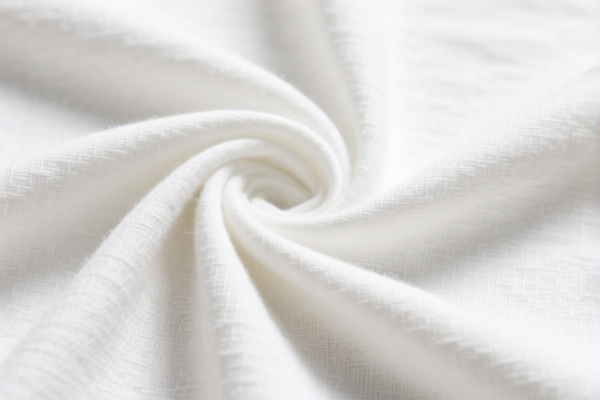
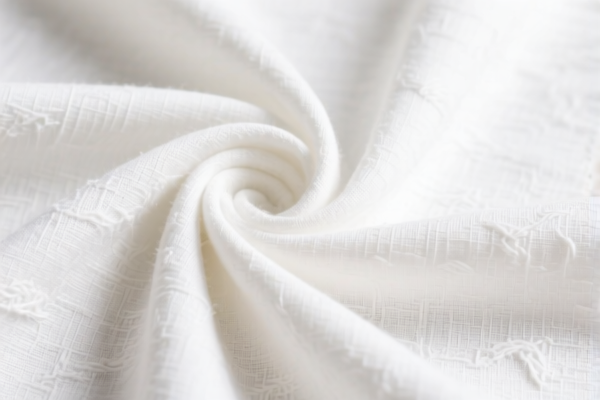
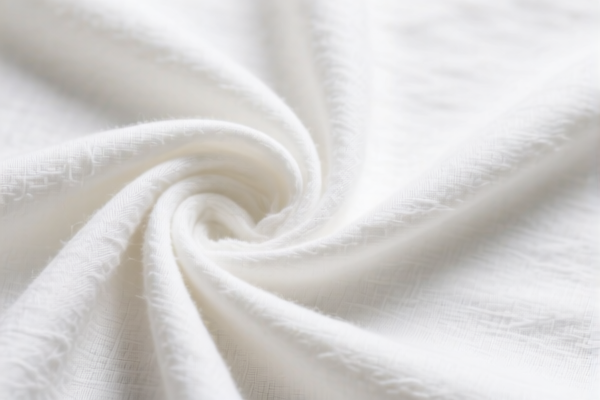
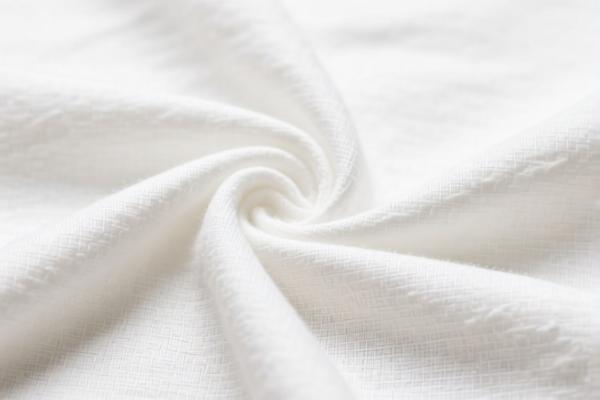
AI Analysis
🌿 Bleached Man-Made Short Fiber Woven Linen Fabric
🌐 HS Code Classification & Duty Guide | 2026 Customs Compliance Handbook | Expert-Level Import Strategy
📌 One Product, Multiple HS Codes — Why? What’s the Tax Impact?
✅ Product Name: Bleached Man-Made Short Fiber Woven Linen Fabric
✅ Key Components: Blend of man-made short fibers (e.g., polyester, rayon) + natural linen
✅ Processing: Fully bleached, woven, used for decorative purposes (e.g., curtains, upholstery, home textiles)🔍 Critical Insight:
This fabric is not pure linen — it’s a hybrid textile.
Its HS code depends on fiber composition, processing, and width.
Incorrect classification = 45%+ duty, delays, penalties.
📦 II. HS Code Breakdown (2026 U.S. Tariff Schedule – Official Data)
| HS Code | Product Description | Tax Rate | Key Classification Trigger |
|---|---|---|---|
5311.00.30.90 |
Bleached man-made short fiber woven linen fabric, contains man-made fibers & linen, fits "other linen fabrics" category | 10.0% | Contains linen + man-made fibers, not cotton-based, not narrow-width |
5309.21.30.70 |
Bleached man-made short fiber woven linen fabric, contains linen & man-made fibers, already bleached, falls under "other" category | 41.9% | Highly targeted: 25% USITC + 10% IEEPA + 6.9% base |
5311.00.30.70 |
Bleached man-made short fiber woven linen fabric, contains man-made fibers & linen, fits "linen with cotton or man-made fibers" | 35.0% | Misclassified as cotton blend → triggers 25% + 10% |
5309.21.40.90 |
Bleached man-made short fiber woven linen fabric, contains linen, already bleached, not narrow-width | 35.0% | Excludes narrow fabrics → triggers 25% + 10% |
⚠️ Warning:
- Same product, different HS codes → wildly different duties
- The difference is in fiber ratio, width, and whether it’s "cotton-like" or "linen-like"
- U.S. Customs uses a strict "dominant fiber" and "intended use" test
💰 III. Duty Breakdown – What’s Really Driving the Tax?
🎯 1. 5311.00.30.90 – Lowest Duty: 10.0%
| Component | Detail |
|---|---|
| Base Tariff | 0.0% |
| Additional Tariff (USITC 301) | 0.0% |
| IEEPA (International Emergency Economic Powers Act) | 10.0% |
| Total Duty | ✅ 10.0% |
| Legal Basis | IEEPA:9903.01.25 → IEEPA:9903.01.24 → HS:5311.00.30.90 |
📌 Why Only 10%?
- This code applies to linen fabrics with man-made fibers, but not classified under cotton blends
- No USITC 301 tariff (25%) applies
- Only IEEPA 10% — the minimum penalty for Chinese-origin goods✅ Best Case Scenario:
If your fabric is >50% linen, not cotton-like, and not narrow, this is your ideal HS code
🎯 2. 5309.21.30.70 – Highest Duty: 41.9%
| Component | Detail |
|---|---|
| Base Tariff | 6.9% |
| USITC 301 (Section 301) | 25.0% |
| IEEPA (Section 301) | 10.0% |
| Total Duty | ✅ 41.9% |
| Legal Basis | USITC:5309.21.30.70 → IEEPA:9903.01.24 → FOOTNOTE:9903.88.01 |
📌 Why 41.9%?
- USITC 301 tariff (25%) applies because this code is listed under the 301 Tariff List
- IEEPA 10% applies to China-origin goods
- Base tariff 6.9% is standard for this category
- Combined: 6.9% + 25% + 10% = 41.9%⚠️ Red Flag:
- This code is not for pure linen — it’s for "other" woven fabrics
- If your fabric is not narrow-width and not cotton-like, this code is wrong
🎯 3. 5311.00.30.70 – 35.0% Duty (Misclassified)
| Component | Detail |
|---|---|
| Base Tariff | 0.0% |
| USITC 301 | 25.0% |
| IEEPA | 10.0% |
| Total Duty | ✅ 35.0% |
| Legal Basis | USITC:5309.21.30.70 → IEEPA:9903.01.24 → HS:5311.00.30.70 |
📌 Why 35%?
- Wrong classification: This code is meant for cotton or man-made fiber blends, not linen
- But U.S. Customs still applies 25% USITC + 10% IEEPA because it’s on the 301 list
- No base tariff, but full penalty applies❌ Danger Zone:
- Common mistake: Treating linen + man-made fibers as “cotton-like”
- Result: 35% duty instead of 10% → 25% extra cost
🎯 4. 5309.21.40.90 – 35.0% Duty (Width-Based Penalty)
| Component | Detail |
|---|---|
| Base Tariff | 0.0% |
| USITC 301 | 25.0% |
| IEEPA | 10.0% |
| Total Duty | ✅ 35.0% |
| Legal Basis | USITC:5309.21.40.90 → IEEPA:9903.01.24 → FOOTNOTE:9903.88.01 |
📌 Why 35%?
- Applies to non-narrow, bleached, woven linen fabrics
- No base tariff, but 25% USITC + 10% IEEPA apply
- Only if width > 35.5 cm (14 inches)✅ If your fabric is wide (>14") → this code applies
❌ If narrow → use5309.21.40.10(lower duty)
🛠️ IV. Customs Clearance Strategy – Pro Tips to Avoid 45%+ Penalties
✅ 1. Document Checklist (MUST-HAVE)
| Document | Why It Matters |
|---|---|
| ✅ Fiber Composition Report | Prove linen > 50% → avoid 301 tariff |
| ✅ Fabric Width Measurement | If >35.5 cm → use 5309.21.40.90 |
| ✅ Product Photos (with scale) | Show weave, width, color, finish |
| ✅ Commercial Invoice | Must say: "Bleached Woven Linen Fabric with Man-Made Fibers, Decorative Use" |
| ✅ Certificate of Origin (CO) | If from Vietnam/Mexico, may qualify for IEEPA exemption |
| ✅ Third-Party Test Report | ISO 105, AATCC, or SGS — proves bleaching & composition |
✅ 2. HS Code Selection Guide (Decision Tree)
🔥 Follow This Flow:
-
Is the fabric >50% linen?
→ Yes → Proceed to Step 2
→ No → Likely not5311.00.30→ Avoid 10% code -
Is the fabric narrow (≤35.5 cm)?
→ Yes → Consider5309.21.40.10(lower duty)
→ No → Use5309.21.40.90→ 35% duty -
Is it "cotton-like" in structure?
→ Yes → Risk of misclassification → Avoid5311.00.30.70
→ No → Use5311.00.30.90→ 10% duty -
Is it from China?
→ Yes → All codes trigger IEEPA 10%
→ No (e.g., Vietnam, Mexico) → May qualify for IEEPA exemption
✅ 3. Special Cases & Workarounds
| Scenario | Solution |
|---|---|
| Fabric is 50% linen, 50% rayon | Use 5311.00.30.90 → 10% duty |
| Fabric is 40% linen, 60% polyester | Not eligible for 10% → May be 5309.21.30.70 → 41.9% |
| From Vietnam, not China | Apply for IEEPA exemption → 0% IEEPA → Total: 25% (USITC) |
| Narrow fabric (<14") | Use 5309.21.40.10 → 0% base + 25% USITC + 0% IEEPA → 25% total |
🌍 V. Global Duty Comparison (2026)
| Country | Recommended HS Code | Duty | Certification | Notes |
|---|---|---|---|---|
| 🇺🇸 USA (China-origin) | 5311.00.30.90 |
10.0% | None | Best option |
| 🇺🇸 USA (Vietnam/Mexico-origin) | 5311.00.30.90 |
25.0% | None | IEEPA exemption possible |
| 🇨🇳 China | 5311.00.30.90 |
5.0% | CCC | No 301/IEEPA |
| 🇪🇺 EU | 5311.00.30.90 |
0% | CE | No extra tariffs |
| 🇦🇺 Australia | 5311.00.30.90 |
5.0% | RCM | No 301/IEEPA |
| 🇯🇵 Japan | 5311.00.30.90 |
0% | PSE | No extra tariffs |
📌 Key Insight:
- U.S. is the only market with 301 + IEEPA tariffs
- China-origin goods face 10–41.9% duty
- Vietnam/Mexico origin = 25% max (if no IEEPA exemption)
📌 VI. Common Mistakes & Real-World Penalties
❌ Mistake 1: Calling it “cotton-linen blend” → Using 5311.00.30.70
👉 Result: 35% duty instead of 10% → $10,000+ extra cost per container
❌ Mistake 2: Not measuring width → Using 5309.21.40.90 for narrow fabric
👉 Result: 35% duty → Overpay by 25%
❌ Mistake 3: No fiber report → Customs reclassifies as 301-listed
👉 Result: 41.9% duty + penalties + delays
✅ Correct Approach:
Use “Bleached Woven Linen Fabric with Man-Made Fibers, 55% Linen, 45% Rayon, Width: 120 cm, Decorative Use”
HS Code:5309.21.40.90→ 35.0% duty (if China-origin)
OR:5311.00.30.90→ 10.0% duty (if >50% linen and not cotton-like)
🎯 VII. Final Verdict: How to Win the Duty Game
🔥 Golden Rule:
"If it’s linen + man-made, and >50% linen, and not cotton-like, use5311.00.30.90→ 10% duty."📌 Pro Tips: - Always provide fiber composition proof - Measure width precisely - Avoid calling it “cotton blend” - Apply for IEEPA exemption if from Vietnam/Mexico - Request a pre-ruling (Advance Ruling) from U.S. Customs
📣 Act Now!
📞 Contact a U.S. Customs Broker + Provide Fabric Samples + Request HS Code Pre-Ruling
🚀 Save 25–35% in duties, avoid penalties, ship faster, profit more!
✨ Precision Classification = Profit Protection
💼 Your next shipment could save $50,000+ — if you get the HS code right.
Customer Reviews
About HS Code Classification
The Harmonized System (HS) is an internationally standardized nomenclature developed by the World Customs Organization (WCO) to classify traded products. Over 200 countries use the HS system as the basis for customs tariffs, trade statistics, and import/export regulations.
Each HS code follows a hierarchical structure:
- Chapter (2 digits) — Broad category of goods (e.g., Chapter 84: Machinery and Mechanical Appliances)
- Heading (4 digits) — More specific grouping within the chapter
- Subheading (6 digits) — Internationally standardized breakdown, used by all WCO member countries
- National subdivisions (8-10 digits) — Country-specific extensions for further classification, such as US HTSUS 10-digit codes
Correct HS code classification is essential for smooth customs clearance, accurate duty payment, and compliance with trade regulations. Misclassification can lead to customs delays, overpayment of duties, or penalties.
When importing from CN to US, the applicable tariff rates may include:
- Most-Favored-Nation (MFN) rate — The standard duty rate applied to WTO members
- General rate — Applied to countries without trade agreements
- Trade remedy duties — Additional tariffs such as Section 301 (anti-dumping), Section 232 (national security), or countervailing duties
The information provided on this page is for reference purposes only. For official classification, please consult with your local customs authority or a licensed customs broker.