Bleached Non woven Fabric
CN → US| HS Code | Tariff Rate | Origin | Destination | Doc |
|---|---|---|---|---|
| 5603110070 | 35.0% | CN | US | Official Doc |
| 5603110095 | 35.0% | CN | US | Official Doc |
Product Images
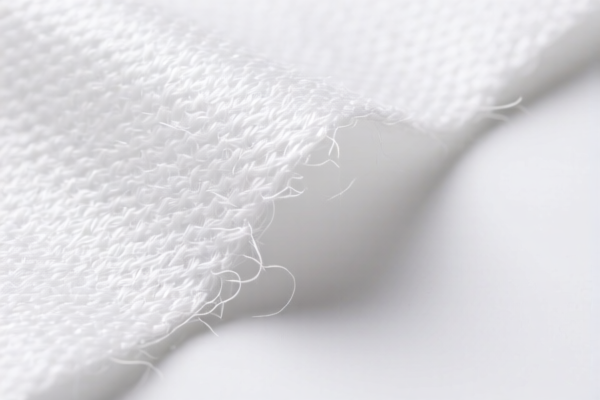
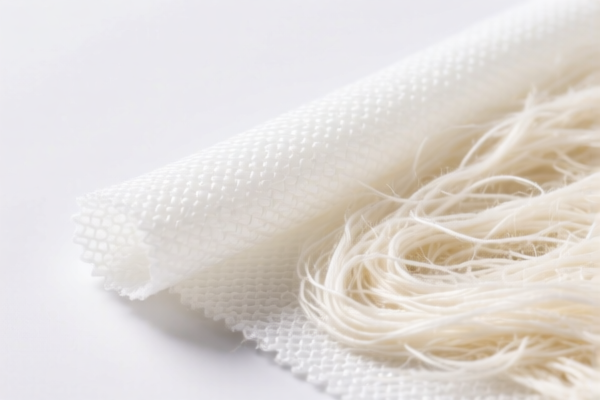
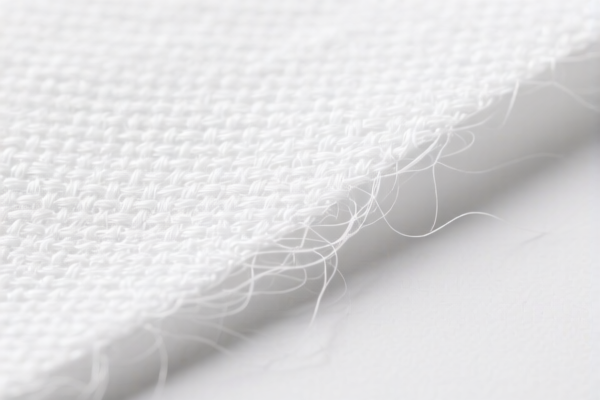
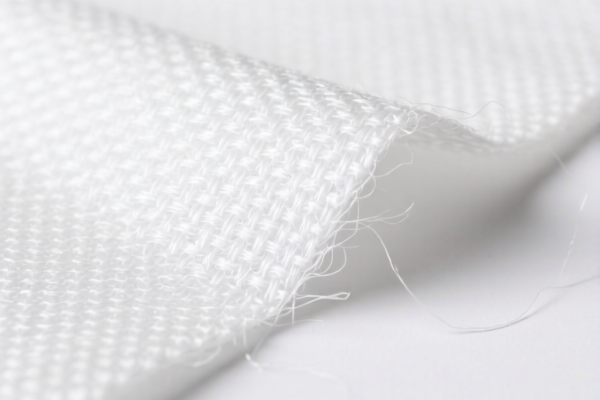
AI Analysis
🧵 Bleached Non-Woven Fabric (Nonwovens, Man-Made Filaments <25 g/m²)
🌐 HS Code Reference & Customs Clearance Guide | 2026 Latest Tariff Analysis | Professional Strategy
📌 Part 1: Product Definition & Classification: What is "Bleached Non-Woven Fabric"?
"Bleached Non-Woven Fabric" refers to fabric structures made from bonded filaments (typically synthetic like polyester, polypropylene, or nylon) that have undergone a bleaching process to remove natural impurities or achieve a bright white appearance. In international trade, the classification hinges on two critical technical parameters: 1. Material: Is it made from man-made filaments (synthetic continuous fibers)? 2. Weight: Is the basis weight not more than 25 g/m²?
⚠️ Critical Distinction:
- If the fabric weighs more than 25 g/m², it falls under HS5603.12–5603.14.
- If it is made from staple fibers (short fibers) rather than filaments, it falls under HS5603.91–5603.94.
- Only if it is man-made filaments AND ≤ 25 g/m² does it belong to the codes below.
📦 Part 2: HS Code Classification Details (2026 Official Tariff)
Based strictly on the provided , the product is classified under HS Chapter 56 (Nonwovens). Specifically, it falls under the subheading for man-made filaments weighing ≤ 25 g/m².
| HS Code | Product Description | Key Attributes | Applicable Scenario |
|---|---|---|---|
5603.11.00.70 |
Nonwovens, man-made filaments ≤ 25 g/m²: Nonwoven articles, ready for use, packaged for industrial, institutional, or retail sale (223) | ✅ Finished Goods ✅ Packaged ✅ Industrial/Retail Ready |
Medical masks, wipes, sanitary products, retail packs of nonwovens |
5603.11.00.95 |
Nonwovens, man-made filaments ≤ 25 g/m²: Other (223) | ✅ Raw Material/Intermediate ✅ Bulk or Not Fully Packaged |
Bulk rolls for conversion, unfinished sheets, industrial raw stock |
🔍 Key Insight:
-5603.11.00.70: Use this if the product is sold as a final item (e.g., "pack of wet wipes," "pack of facial tissues," or "industrial cleaning cloths") or is clearly prepared for direct sale/use.
-5603.11.00.95: Use this if the product is a bulk roll or sheet intended for further manufacturing (e.g., a factory buying large rolls to cut into shapes).
- Both codes apply to bleached nonwovens made of man-made filaments under 25 g/m².
💰 Part 3: 2026 Tariff Rate Breakdown (US Market Focus)
✅ Applicable Country: United States (US)
✅ Country of Origin: China (CN)
✅ Effective Date: Current trade restrictions apply
🎯 1. 5603.11.00.70 & 5603.11.00.95 – Bleached Non-Woven Fabric (<25 g/m²)
| Item | Detail |
|---|---|
| Base Tariff | 0.0% (Most Favored Nation rate for nonwovens of this type) |
| Section 301 Additional Duty | +25.0% (List 3 / List 4A applicable to many textiles/nonwovens) |
| Total Effective Tax Rate | 25.0% |
| Tax Calculation Basis | CIF Value (Cost, Insurance, Freight) × 25% |
| De Minimis Exemption? | ❌ No (Section 301 duties apply regardless of value) |
| Legal Reference Path | HTSUS: 5603.11.00 → USITC: Footnote 9903.88.01 (or equivalent Section 301 listing) |
📌 Explanation:
- Although the base tariff is 0%, the 25% additional duty significantly impacts cost.
- This 25% is not a standard tariff; it is a retaliatory/additional duty imposed under Section 301 of the Trade Act.
- No exemptions are available for standard commercial shipments of this type from China.
🛠️ Part 4: Customs Clearance Practical Advice (Avoid Pitfalls)
✅ 1. Required Documentation Checklist
| Document | Required? | Notes |
|---|---|---|
| Commercial Invoice | ✅ Yes | Must clearly state: "Bleached Non-Woven Fabric, Man-Made Filaments, Weight ≤ 25 g/m²" |
| Packing List | ✅ Yes | Specify net/gross weight and dimensions to verify g/m² calculation if challenged |
| Product Specification Sheet | ✅ Yes | Must confirm: 1. Material composition (e.g., 100% Polyester Filament) 2. Basis weight (g/m²) 3. Processing (Bleached) |
| Certificate of Origin | ✅ Yes | Essential for proving origin; if from China, 25% duty applies |
| Import License | ❌ Usually No | Nonwovens generally do not require special licenses, but check for sanitary/medical end-uses |
✅ 2. Classification Tips
🔥 "Weight is King, Fiber is Queen!"
- Check the Grammage: If your fabric is 26 g/m² or higher, the duty rate may differ (though often still 0% base, verify Section 301 lists for higher weight nonwovens).
- Check the Fiber Type: If the fabric is made from staple fibers (short fibers), it does NOT fall under5603.11. It would fall under5603.91(man-made staple fibers ≤ 25 g/m²). Ensure the spec sheet says "Filament" not "Staple."
- Bleaching: Bleaching does not change the HS code but must be declared to confirm it is not a chemically treated medical device (which might require FDA clearance if used for medical purposes).
✅ 3. Special Cases
| Scenario | Recommendation |
|---|---|
| Medical Use (e.g., N95 Masks) | If the nonwoven is the material for masks, classify the fabric as above. If importing finished masks, they may have different HS codes and FDA requirements. |
| Retail Packs | Use 5603.11.00.70. Ensure packaging is labeled as "Ready for Retail Sale." |
| Bulk Rolls | Use 5603.11.00.95. Declare as "Raw Material" or "Intermediate Good." |
| Origin Transshipment | Do NOT declare non-Chinese origin if produced in China. Misdeclaration leads to seizure and fines. |
🌍 Part 5: Global Market Comparison (2026)
| Country/Region | HS Code | Base Duty | Additional Duty | Total Effective Duty | Notes |
|---|---|---|---|---|---|
| 🇺🇸 USA | 5603.11.00.70 / .95 |
0% | +25% | 25% | Section 301 applies |
| 🇨🇳 China | 5603.11.00 |
0–6%* | None | 0–6% | Import duty varies by exact subheading; VAT (13%) applies |
| 🇪🇺 EU | 5603.11 |
~6.5% | None | 6.5% | No additional sanctions |
| 🇬🇧 UK | 5603.11 |
~6.5% | None | 6.5% | Post-Brexit tariff regime |
| 🇦🇺 Australia | 5603.11 |
5% | None | 5% | FTA may apply for some origins |
📌 Conclusion:
- The 25% duty in the US is the primary cost driver for Chinese-origin bleached nonwovens.
- Diversify Sourcing: Consider sourcing from Vietnam, India, or Bangladesh to avoid Section 301 duties (verify local rules of origin).
📌 Part 6: Common Errors & Pitfalls
❌ Error 1: Misidentifying Staple Fiber as Filament
👉 Consequence: Incorrect HS code, potential duty underpayment/overpayment, and delays.
✅ Fix: Confirm material spec: "Filament" (long continuous strands) vs. "Staple" (short chopped fibers).
❌ Error 2: Ignoring the 25 g/m² threshold
👉 Consequence: If weight is >25 g/m², it falls under different subheadings (5603.12, etc.), which may have different duty rates or Section 301 applicability.
✅ Fix: Provide certified lab test reports for basis weight.
❌ Error 3: Failing to Declare Bleaching
👉 Consequence: Customs may classify as "Raw/Grey" nonwovens, which might have different environmental or safety compliance requirements.
✅ Fix: Explicitly state "Bleached" on the invoice.
❌ Error 4: Assuming De Minimis Exemption Applies
👉 Consequence: Many importers mistakenly think small shipments are duty-free. Section 301 duties apply to all imports, regardless of value.
✅ Fix: Pay the 25% duty on every shipment, even low-value samples.
🎯 Part 7: Conclusion – Professional Clearance, Cost Control
🎯 Key Takeaways:
🔹 "Filament + <25 g/m² + Bleached = 5603.11"
🔹 "US Duty = 25% (Additional) on top of 0% Base"
🔹 "Packing Determines Code: 70 (Retail/Ready) vs. 95 (Other/Bulk)"
📌 Pro Tip:
If you are importing large volumes, consider Bonded Warehouses or FTZs (Free Trade Zones) to defer duty payments until the goods are sold in the US. For medical-grade nonwovens, ensure additional FDA registration and 510(k) clearance if applicable.
📣 Immediate Action:
📞 Consult a Licensed Customs Broker for pre-classification rulings.
📄 Verify Lab Reports for weight and fiber type.
💰 Factor in the 25% Additional Duty into your CIF pricing model.
✨ Precision in Classification Saves Dollars in Duties!
💼 Stay Compliant, Stay Competitive in 2026!
Customer Reviews
About HS Code Classification
The Harmonized System (HS) is an internationally standardized nomenclature developed by the World Customs Organization (WCO) to classify traded products. Over 200 countries use the HS system as the basis for customs tariffs, trade statistics, and import/export regulations.
Each HS code follows a hierarchical structure:
- Chapter (2 digits) — Broad category of goods (e.g., Chapter 84: Machinery and Mechanical Appliances)
- Heading (4 digits) — More specific grouping within the chapter
- Subheading (6 digits) — Internationally standardized breakdown, used by all WCO member countries
- National subdivisions (8-10 digits) — Country-specific extensions for further classification, such as US HTSUS 10-digit codes
Correct HS code classification is essential for smooth customs clearance, accurate duty payment, and compliance with trade regulations. Misclassification can lead to customs delays, overpayment of duties, or penalties.
When importing from CN to US, the applicable tariff rates may include:
- Most-Favored-Nation (MFN) rate — The standard duty rate applied to WTO members
- General rate — Applied to countries without trade agreements
- Trade remedy duties — Additional tariffs such as Section 301 (anti-dumping), Section 232 (national security), or countervailing duties
The information provided on this page is for reference purposes only. For official classification, please consult with your local customs authority or a licensed customs broker.