Bleached Sulfate Pulp (Non coniferous)
CN → US| HS Code | Tariff Rate | Origin | Destination | Doc |
|---|---|---|---|---|
| 4702000040 | 35.0% | CN | US | Official Doc |
| 4703290040 | 35.0% | CN | US | Official Doc |
| 4703290020 | 35.0% | CN | US | Official Doc |
Product Images
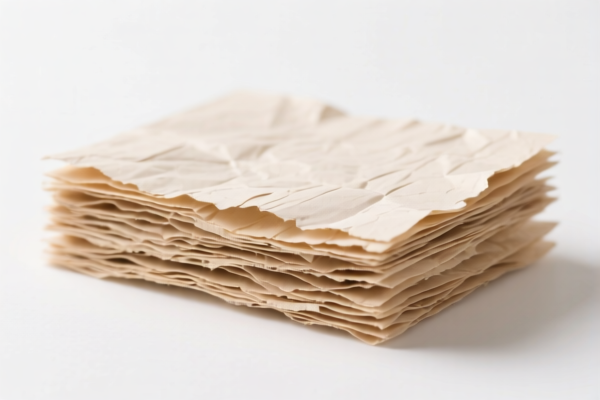
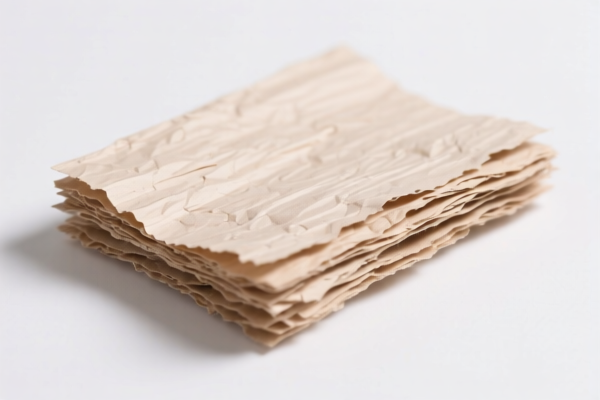
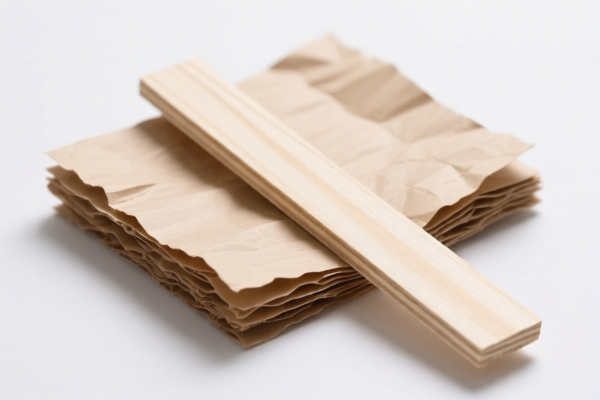
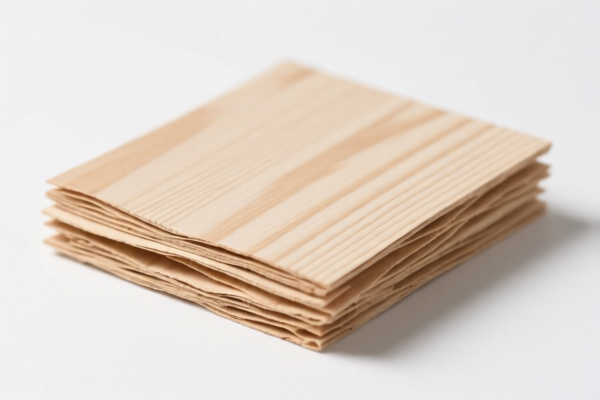
AI Analysis
🌲 Bleached Sulfate Pulp (Non-coniferous)
🌐 HS Code Reference & Customs Clearance Guide | 2026 Latest Tariff Analysis | Professional-Level Customs Strategy
📌 Part 1: Product Definition & Classification: Do You Really Understand "Non-coniferous Bleached Pulp"?
Bleached sulfate pulp (also known as bleached kraft pulp) is a high-quality wood pulp processed via the chemical sulfate (kraft) method, followed by bleaching to achieve high whiteness. In international trade, it is categorized based on the source of the wood (coniferous vs. non-coniferous) and the bleaching status.
Non-coniferous Wood Pulp (Hardwood Pulp): Derived from deciduous trees such as eucalyptus, birch, poplar, or beech. This type is prized for its high density and short fibers, often blended with coniferous pulp for strength and opacity.
Coniferous Wood Pulp (Softwood Pulp): Derived from pine, spruce, fir, etc., providing long fibers for strength.
Bleached vs. Unbleached: Bleached pulp is whiter and purer, suitable for printing papers, tissue, and high-grade packaging. Unbleached (brown) kraft pulp is stronger and cheaper.
⚠️ Key Distinction Points:
- If the pulp is made from non-coniferous trees (e.g., eucalyptus) and is bleached → Classify under 4703.29.00.40 or 4703.29.00.20.
- If the pulp is non-coniferous but the specific chemical process isn't strictly "sulfate" or if it's a generic summary matching "Wood Pulp, Chemical" without specifying the coniferous/non-coniferous bleed details properly, it might fall under 4702.00.00.40 (though less precise for bleached sulfate).
- Critical Note: "Sulfate" implies a chemical process. If the description "Non-coniferous" is explicitly stated, 4703 is generally more accurate than 4702, which often covers unbleached or less specific categories. However, based on the provided data, we will analyze all three potential HS codes.
📦 Part 2: HS Code Classification Details (2026 Latest Tariff Authority Comparison)
| HS Code | Product Description | Applicability Scenario | Coniferous? | Bleached? | Chemical Process? |
|---|---|---|---|---|---|
4702.00.00.40 |
Non-coniferous wood pulp (bleached), matching material category | Generic summary; "Non-coniferous attribute does not conflict with chemical wood pulp" | ✅ No | ✅ Yes | ✅ Chemical (General) |
4703.29.00.40 |
Non-coniferous chemical wood pulp (bleached) | Precise Match: Material and processing degree fully match. Specific to non-coniferous chemical pulp. | ✅ No | ✅ Yes | ✅ Sulfate/Kraft |
4703.29.00.20 |
Non-coniferous wood pulp (bleached), same category different spec | Same as above, different specification/code variant within the same subheading. | ✅ No | ✅ Yes | ✅ Sulfate/Kraft |
🔍 Important Reminder:
- 4703.29.00.40 and 4703.29.00.20 are the most accurate classifications for "Bleached Sulfate Pulp (Non-coniferous)" because they explicitly cover chemical wood pulp from non-coniferous sources that is bleached.
- 4702.00.00.40 is a broader category. While it includes non-coniferous bleached pulp, it is less specific. Use this only if the specific "sulfate" identity is unclear or if customs documentation groups it under a general "chemical wood pulp" header.
- Do not confuse with Coniferous Pulp (4703.21/4703.22): If the pulp is from pine/spruce, the HS code would start with4703.21or4703.22, which may have different tax treatments.
💰 Part 3: 2026 Latest Tariff Rate Details (Including Surcharges & Policy Add-ons)
✅ Applicable Country: United States (US)
✅ Country of Origin: China (CN)
✅ Effective Date: As per current trade policies (Section 301 & IEEPA surcharges apply)
🎯 1. 4702.00.00.40 —— Non-coniferous Wood Pulp (Generic/Bleached)
| Item | Details |
|---|---|
| Base Tariff | 0.0% |
| Section 301 Surcharge | +25.0% (USITC Footnote for chemical wood pulp) |
| Section 122 Surcharge | +10.0% (Specific USITC provision for certain Chinese goods) |
| Total Tariff Rate | 35.0% |
| Tax Calculation | CIF Value × 35% |
| De Minimis Exemption | ❌ Not Applicable (High tariff rate excludes it from $800 de minimis relief) |
| Legal Basis Path | USITC:4702.00.00.40 → SECTION301:4702 → SECTION122:4702 |
📌 Explanation:
- Base Tariff 0%: Most wood pulp imports have a low base duty.
- Section 301 (25%): This is the primary tariff under the "Section 301 Investigation" targeting Chinese goods, including chemical wood pulp.
- Section 122 (10%): An additional surcharge applied to specific categories of Chinese imports.
- Total 35%: A significant cost factor that must be factored into pricing.
🎯 2. 4703.29.00.40 & 4703.29.00.20 —— Non-coniferous Chemical Wood Pulp (Bleached)
| Item | Details |
|---|---|
| Base Tariff | 0.0% |
| Section 301 Surcharge | +25.0% |
| Section 122 Surcharge | +10.0% |
| Total Tariff Rate | 35.0% |
| Tax Calculation | CIF Value × 35% |
| De Minimis Exemption | ❌ Not Applicable |
| Legal Basis Path | USITC:4703.29.00.40/20 → SECTION301:4703 → SECTION122:4703 |
📌 Note:
- Both4703.29.00.40and4703.29.00.20share the exact same tax structure as the generic code.
- Why two codes?4703.29.00.20and.40may represent different physical specifications (e.g., brightness level, viscosity, or fiber length) within the same chemical category. Ensure your product's technical sheet matches the specific code you choose.
- Key Takeaway: Regardless of whether you use.40or.20, the 35% total tariff remains unchanged for US-bound shipments from China.
🛠️ Part 4: Customs Clearance Practical Advice (Battle-Tested Pitfall Avoidance Guide)
✅ 1. Required Documentation Checklist (All or Nothing)
| Document | Mandatory? | Notes |
|---|---|---|
| ✅ Product Specification Sheet | ✔️ | Must specify: Tree species (e.g., Eucalyptus), Bleaching level (ISO brightness %), Viscosity, Tear Index. |
| ✅ Chemical Process Confirmation | ✔️ | Explicitly state "Sulfate/Kraft Process" to justify HS Code 4703 vs. 4702. |
| ✅ Commercial Invoice | ✔️ | Must clearly state "Bleached Non-coniferous Chemical Wood Pulp" and origin: China. |
| ✅ Packing List | ✔️ | Include net/gross weight, number of bales, and bale dimensions. |
| ✅ Certificate of Origin (CO) | ✔️ | Mandatory for Section 301/122 tariff application. |
| ✅ Bill of Lading/Air Waybill | ✔️ | Match HS code and description precisely. |
| ✅ Safety Data Sheet (SDS) | ❌ (Optional) | Usually not required for wood pulp unless requested by customs for safety checks. |
✅ 2. Declaration Tips (Key Mantras)
🔥 "Chemical Process Must Be Stated, Non-coniferous Must Be Clear, HS Code 4703 Preferred for Accuracy!"
| Scenario | Correct Declaration | Wrong Practice |
|---|---|---|
| Bleached Eucalyptus Sulfate Pulp | 4703.29.00.40 - Bleached Chemical Wood Pulp, Non-coniferous |
Misdeclare as 4701 (Mechanical Pulp) → Higher scrutiny |
| Unspecified Pulp | 4702.00.00.40 - Non-coniferous Wood Pulp (Bleached) |
Vague description "Wood Pulp" → Customs may detain for classification review |
| Coniferous Pulp | 4703.21.00.00 (Example) |
Declare as Non-coniferous → Misclassification Penalty |
| Bale Packaging | Declare as "Baled Pulp" | Declare as "Loose Pulp" → Weight verification issues |
✅ 3. Special Situation Handling
| Situation | Handling Advice |
|---|---|
| Mixed Species Pulp | If the pulp is a blend of coniferous and non-coniferous, declare based on the majority component. If unclear, use the more specific code (4703) but be prepared for customs verification. |
| Re-imported Pulp | If the pulp was previously exported from China and re-imported, ensure the Certificate of Origin clearly states China. Re-imports do not automatically qualify for duty drawbacks without proper documentation. |
| Customs Audit | If customs questions the "Sulfate" process, provide laboratory test reports confirming the chemical cooking process (kappa number, brightness). |
| Tariff Exemption Claims | No exemption is currently available for Chinese-origin wood pulp under standard trade agreements due to Section 301. Do not attempt to claim preferential rates from ASEAN or other FTAs. |
🌍 Part 5: Global Market Customs Comparison (2026 Latest)
| Country/Region | Recommended HS Code | Tariff (China Origin) | Certification Requirements | Notes |
|---|---|---|---|---|
| 🇺🇸 USA | 4703.29.00.40 |
35% (Base 0% + 25% Sec 301 + 10% Sec 122) | None specific | High tariff burden. Consider supply chain diversification. |
| 🇨🇳 China | 4703.29.00.40 |
0% (Import Tariff) | None | Major importer of wood pulp. |
| 🇪🇺 EU | 4703.29.00.40 |
0% (General Tariff) | FSC/PEFC Certification (Recommended) | No Section 301/122 equivalents. Competitive market. |
| 🇯🇵 Japan | 4703.29.00.40 |
0% | None | Strong demand for eucalyptus pulp. |
| 🇬🇧 UK | 4703.29.00.40 |
0% | None | Post-Brexit, aligned with global norms. |
📌 Conclusion:
- USA is the only major market with significant surcharges (35%) on Chinese wood pulp.
- EU, Japan, and UK offer 0% tariff on the same product, making them more cost-effective for Chinese suppliers.
- Strategy: If selling to the US, consider cost absorption or price negotiation with buyers to offset the 35% tariff. For other markets, highlight the 0% tariff advantage.
📌 Part 6: Common Mistakes & Pitfall Guide (Lessons Learned)
❌ Mistake 1: Declaring "Bleached Pulp" without specifying Non-coniferous
👉 Consequence: Customs may classify under 4703.21.00.00 (Coniferous), leading to documentation mismatch and potential delays.
👉 Fix: Always specify "Non-coniferous" or "Eucalyptus/Birch" in the description.
❌ Mistake 2: Confusing Sulfate (Kraft) with Sulfite Pulp
👉 Consequence: HS Code 4703 is for Sulfate/Soda/Antisols processes. Sulfite pulp falls under 4704 or 4705. Misclassification leads to incorrect tariff assessment.
👉 Fix: Confirm the chemical process. If it's "Sulfate," use 4703.
❌ Mistake 3: Ignoring Section 122 in Tariff Calculation
👉 Consequence: Underestimating total landed cost. Only accounting for 25% Section 301 leaves 10% unaccounted.
👉 Fix: Always calculate 35% total tariff for US shipments from China.
❌ Mistake 4: Using Generic "Wood Pulp" in Invoice
👉 Consequence: Customs may assign their own HS code, which could be less favorable or trigger additional inspections.
👉 Fix: Use precise description: "Bleached Non-coniferous Chemical Wood Pulp (Sulfate)".
🎯 Part 7: Conclusion: Precise Classification, Cost Control, and Efficient Clearance!
🎯 Remember the Mantra:
🔹 "Non-coniferous + Bleached + Sulfate = HS 4703.29"
🔹 "US Tariff = 35% (0% Base + 25% Sec 301 + 10% Sec 122)"
🔹 "Document the Process, Specify the Tree Species, Avoid Misclassification Penalties!"
📌 Pro Tip:
- If your product is not from China (e.g., Brazil, Canada, Finland), the Section 301 and 122 surcharges do not apply. The tariff may be 0% or subject to standard MFN rates. Always verify the Country of Origin on the certificate.
- For US shipments, consider applying for an Exclusion if applicable (though exclusions for Section 301 on pulp are rare), or explore supply chain adjustments to mitigate the 35% tariff burden.
📣 Immediate Action:
📞 Verify your product's chemical process and wood species before declaring.
🚀 Calculate the 35% total tariff for US shipments in your pricing model.
📄 Prepare detailed specification sheets to support the HS Code4703.29.00.40classification.
✨ Professional Customs Clearance Starts with Accurate Classification!
💼 Every Percent of Tariff Counts – Optimize Your Landed Cost Today!
Customer Reviews
About HS Code Classification
The Harmonized System (HS) is an internationally standardized nomenclature developed by the World Customs Organization (WCO) to classify traded products. Over 200 countries use the HS system as the basis for customs tariffs, trade statistics, and import/export regulations.
Each HS code follows a hierarchical structure:
- Chapter (2 digits) — Broad category of goods (e.g., Chapter 84: Machinery and Mechanical Appliances)
- Heading (4 digits) — More specific grouping within the chapter
- Subheading (6 digits) — Internationally standardized breakdown, used by all WCO member countries
- National subdivisions (8-10 digits) — Country-specific extensions for further classification, such as US HTSUS 10-digit codes
Correct HS code classification is essential for smooth customs clearance, accurate duty payment, and compliance with trade regulations. Misclassification can lead to customs delays, overpayment of duties, or penalties.
When importing from CN to US, the applicable tariff rates may include:
- Most-Favored-Nation (MFN) rate — The standard duty rate applied to WTO members
- General rate — Applied to countries without trade agreements
- Trade remedy duties — Additional tariffs such as Section 301 (anti-dumping), Section 232 (national security), or countervailing duties
The information provided on this page is for reference purposes only. For official classification, please consult with your local customs authority or a licensed customs broker.