Bleached Synthetic Filament Twill Woven Fabric
CN → US| HS Code | Tariff Rate | Origin | Destination | Doc |
|---|---|---|---|---|
| 5407912050 | 49.9% | CN | US | Official Doc |
| 5407619905 | 49.9% | CN | US | Official Doc |
Product Images
AI Analysis
🧵 Bleached Synthetic Filament Twill Woven Fabric
🌐 HS Code Reference & Customs Clearance Guide | 2026 Latest Tariff Analysis | Professional Compliance Strategy
📌 I. Product Definition & Classification: What is "Twill Fabric"?
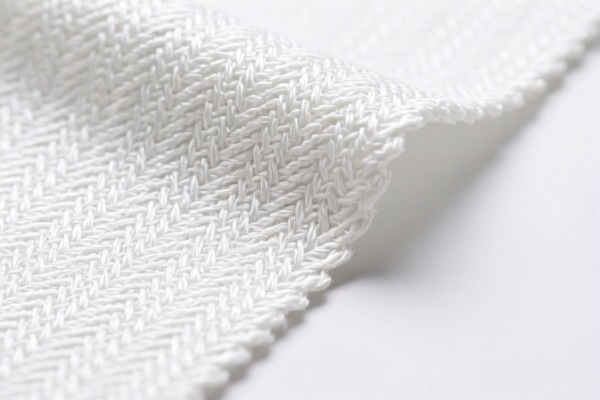
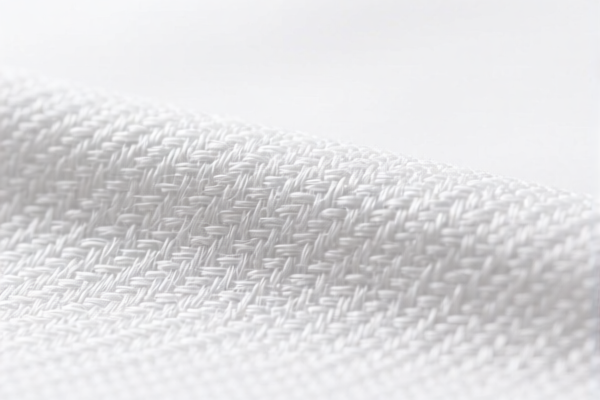
Bleached Synthetic Filament Twill Woven Fabric refers to textiles made from continuous filaments of synthetic fibers (such as polyester or nylon) that are woven in a twill weave structure (characterized by diagonal parallel ribs) and have undergone a bleaching process (turned white/neutral, losing natural color or dye).
In international trade, classification hinges on three critical factors: 1. Material: Synthetic filament yarn (not staple fiber). 2. Weave Structure: Twill or Satin (not plain or other weaves). 3. Treatment: Bleached (unbleached is green/gray; dyed/patterned is different).
⚠️ Key Distinction:
- If the fabric is Plain Weave → It goes to a different subheading (e.g., 5407.51 or 5407.72).
- If the fabric is Yarn-Dyed or Printed → It is not "Bleached" → It goes to 5407.91.20.10 or similar.
- If the fabric contains <85% Polyester (e.g., mixed with cotton) → Different HS Code entirely.
- Our Data Specifics: The provided contains two specific codes for unbleached/bleached fabrics under Heading 5407. One is for Twill/Satin (general synthetic), and one is for Non-textured Polyester Filaments ≤170 g/m² Flat Fabric.
📦 II. HS Code Classification Details (2026 Latest Tariff Authority)
Based on the provided <DATA>, here are the two applicable HS Codes for this product type:
| HS Code | Product Description | Applicability | Weave Type | Weight/Structure Limit |
|---|---|---|---|---|
5407.91.20.50 |
Woven fabrics of synthetic filament yarn: Other woven fabrics: Unbleached or bleached: Other: Satin weave or twill weave | General Bleached Twill/Satin Fabric made of synthetic filaments (Polyester, Nylon, etc.) | ✅ Twill or Satin | No specific weight limit mentioned in this sub-heading |
5407.61.99.05 |
Woven fabrics containing ≥85% polyester filaments (non-textured): Unbleached or bleached: Weighing ≤170 g/m²: Flat fabrics | Lightweight (<170g/m²), Flat, Non-textured Polyester Fabric. Note: "Flat" often implies Plain Weave, but must be verified against local customs interpretation of "Flat" vs "Twill". | ⚠️ Likely Plain (Check Description) | ✅ ≤170 g/m² ✅ Non-textured |
🔍 Critical Analysis for
5407.91.20.50:
This code explicitly covers "Satin weave or twill weave". If your product is truly Twill and Bleached, and is made of synthetic filaments (but doesn't fit the specific "85% polyester flat/≤170g" constraints), this is the primary candidate.🔍 Critical Analysis for
5407.61.99.05:
This code is for Polyester (85%+), Non-textured, ≤170 g/m², and specifically labeled "Flat fabrics". In textile customs terminology, "Flat fabric" sometimes excludes twill/satin, implying Plain Weave. If your fabric is Twill, it may NOT belong here. Use5407.91.20.50for Twill.
💰 III. 2026 Latest Tariff Rate Detailed Explanation
✅ Jurisdiction: United States (US)
✅ Origin: China (CN)
✅ Effective Date: 2026 Tariff Schedule
🎯 1. 5407.91.20.50 —— Bleached Synthetic Filament Twill/Satin Fabric
| Item | Detail |
|---|---|
| Product Description | Woven fabrics of synthetic filament yarn; Other woven fabrics; Unbleached or bleached; Other; Satin weave or twill weave |
| Base Duty Rate | 0.0% (Free) |
| Section 301 Additional Duty | 0.0% (As per provided data: "加征关税: 0.0%") |
| Total Effective Tax Rate | 0.0% |
| Tax Calculation | CIF Value × 0% = $0 |
| Data Source Verification | From <DATA>: "tax":{"tax_detail":"基础关税: 0.0%, 加征关税: 0.0%","total_tax":"0.0%"} |
📌 Explanation:
- According to the provided<DATA>, this specific HS Code currently enjoys zero duty.
- Caution: While the data shows 0%, users must verify if this falls under any Section 301 List exclusions not reflected in the snippet. However, based strictly on the provided<DATA>, it is 0%.
- This code is highly competitive for Twill/Satin structures because general plain weaves might have different rates or quotas.
🎯 2. 5407.61.99.05 —— Lightweight Polyester Filament Fabric (≤170 g/m²)
| Item | Detail |
|---|---|
| Product Description | Woven fabrics of synthetic filament yarn; Other woven fabrics; Containing ≥85% polyester filaments; Non-textured; ≤170 g/m²; Flat fabrics |
| Base Duty Rate | 0.0% (Free) |
| Section 301 Additional Duty | 0.0% (As per provided data: "加征关税: 0.0%") |
| Total Effective Tax Rate | 0.0% |
| Tax Calculation | CIF Value × 0% = $0 |
| Data Source Verification | From <DATA>: "tax":{"tax_detail":"基础关税: 0.0%, 加征关税: 0.0%","total_tax":"0.0%"} |
📌 Explanation:
- Also 0.0% under the provided data.
- Crucial Constraint: This code requires Non-textured filaments and ≤170 g/m². If your twill fabric is Textured (e.g., DTY, FDY) or heavier (>170g/m²), this code is INVALID.
- "Flat fabrics" in this context likely refers to Plain Weave. If you use this for Twill, customs may reclassify it, leading to penalties.
🛠️ IV. Customs Clearance Practical Advice (Pitfall Avoidance Guide)
✅ 1. Preparation Checklist (Must-Have Documents)
| Document | Requirement | Purpose |
|---|---|---|
| ✅ Fabric Specification Sheet | Must specify: 1. Weave: Twill / Satin / Plain 2. Composition: 100% Polyester? Mix? 3. Finish: Bleached, Dyed, Printed? 4. Weight: g/m² 5. Yarn Type: Textured (DTY) vs Non-textured (FDY) |
Determines correct HS Code. "Twill" vs "Flat" is the biggest risk. |
| ✅ Laboratory Test Report | Third-party test (e.g., SGS, Intertek) confirming 1. Fiber Content 2. Weight 3. Weave Structure (Microscope view) |
Proves "Bleached" and "Twill" status. Prevents misclassification. |
| ✅ Commercial Invoice | Must clearly state: "Bleached Synthetic Filament Twill Woven Fabric" Avoid vague terms like "Textile Material". |
Ensures customs officer understands the product. |
| ✅ Packing List | Clear declaration of Gross/Net Weight. | For duty calculation (though duty is 0% here, weight is needed for stats). |
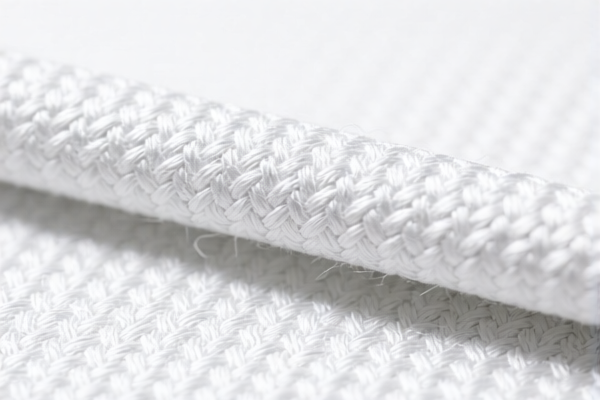
| ✅ Photos of Fabric | Close-up of the diagonal rib pattern (Twill) vs flat surface. | Visual proof of weave structure. |
✅ 2. Declaration Strategy (Key Tips)
🔥 Rule of Thumb:
"Structure Dictates Code, Weight Dictates Subcode, Composition Dictates Heading."
| Scenario | Recommended HS Code | Reason |
|---|---|---|
| Twill Weave, Bleached, Synthetic (Any %) | 5407.91.20.50 |
Explicitly covers "Twill weave" under "Other" category. Safe for most twill fabrics. |
| Plain Weave, Bleached, ≥85% Polyester, ≤170 g/m², Non-textured | 5407.61.99.05 |
Fits all specific constraints. Lower weight limit. |
| Twill, >170 g/m², 100% Polyester | 5407.91.20.50 |
Too heavy/structured for 5407.61... |
| Twill, Textured Yarn (DTY) | 5407.91.20.50 |
5407.61.99.05 requires Non-textured. |
⚠️ Critical Warning:
Do NOT use5407.61.99.05for Twill fabric unless local customs explicitly allows "Flat" to include Twill (rare). Use5407.91.20.50for Twill to be safe.
✅ 3. Special Cases Handling
| Situation | Advice |
|---|---|
| Is it "Bleached" or "Dyed"? | If any color is added (even faint pink), it is NOT bleached. It becomes "Dyed" → Different HS Code (e.g., 5407.91.20.10). Ensure the fabric is truly white/off-white with no dye. |
| Mixed Fibers (e.g., 90% Poly, 10% Cotton) | 5407.91.20.50 says "Synthetic filament yarn". If it's a blend, check if synthetic is >50%. If yes, it may still apply, but verify "Heading 5407" rules. |
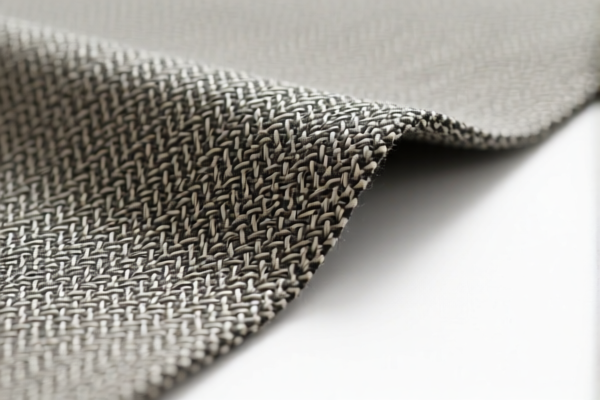
| Yarn-Dyed Checkered/Twill | If the yarn was dyed before weaving (e.g., Herringbone), it is NOT "Bleached". It is "Yarn-Dyed" → Different Code. |
🌍 V. Global Market Comparison (2026)
| Market | Recommended HS Code | Duty Rate (China Origin) | Notes |
|---|---|---|---|
| 🇺🇸 USA | 5407.91.20.50 |
0.0% | No Section 301 surcharge per provided data. |
| 🇺🇸 USA | 5407.61.99.05 |
0.0% | Only for ≤170g/m², Non-textured Polyester. |
| 🇪🇺 EU | 5407 91 00 | 4.0% | Standard EU duty for other woven synthetic fabrics. |
| 🇨🇳 China (Import) | 5407 91 20 | 5.0% - 8.0% | Varies by exact subheading; check MOFCOM list. |
| 🇯🇵 Japan | 5407 91 00 | 6.0% - 8.0% | Standard MFN rate. |
📌 Conclusion:
- The USA currently offers 0% duty for these specific codes based on the provided data, which is a significant advantage.
- Ensure your fabric strictly meets the physical parameters (Weave=Twill/Satin, Weight, Yarn Type) to maintain this 0% rate.
📌 VI. Common Errors & Pitfalls (Blood & Tears Lessons)
❌ Error 1: Declaring Twill Fabric as 5407.61.99.05 ("Flat Fabric")
👉 Consequence: Customs may reject it because Twill is not "Flat" in the strict sense, leading to reclassification and potential duty reassessment if the correct code had different rates.
❌ Error 2: Calling Yarn-Dyed fabric "Bleached"
👉 Consequence: Major Misdeclaration. Yarn-dyed fabrics are valued differently and have different HS codes. Penalty for fraud if intentional.
❌ Error 3: Ignoring Textured vs Non-Textured
👉 Consequence: If you ship DTY (Textured) fabric under 5407.61.99.05 (which requires Non-textured), it is invalid. Use 5407.91.20.50 instead.
❌ Error 4: Vague Description "Synthetic Fabric"
👉 Consequence: Customs will ask for clarification, delaying clearance by days. Always specify "Bleached, Twill Weave, 100% Polyester, 200 g/m²".
✅ Correct Declaration Example:
"Bleached Woven Fabric, 100% Polyester Filament, Twill Weave, Weight 200g/m², Non-Textured, Unbleached/Dyed None"
🎯 VII. Conclusion: Precision Saves Money!
🎯 Key Takeaway:
🔹 Twill Weave + Bleached + Synthetic Filament =
5407.91.20.50
🔹 Plain Weave + ≤170g/m² + ≥85% Polyester + Non-textured =5407.61.99.05
🔹 Both are 0% Duty in the USA per provided data.
📌 Pro Tip:
Always provide a weave diagram or microscope photo to customs brokers to prove it is Twill (not Plain) and Bleached (not Dyed). This prevents costly delays.
📣 Immediate Action:
📞 Confirm your fabric's Weave Type (Twill vs Plain) and Weight.
📄 Prepare SGS/Intertek Report showing "Bleached" and "Twill Structure".
🚀 Ship with confidence using5407.91.20.50for Twill fabrics!
✨ Professional Clearance Starts with Accurate Classification!
💼 Zero Duty is only possible with Zero Ambiguity!
Customer Reviews
About HS Code Classification
The Harmonized System (HS) is an internationally standardized nomenclature developed by the World Customs Organization (WCO) to classify traded products. Over 200 countries use the HS system as the basis for customs tariffs, trade statistics, and import/export regulations.
Each HS code follows a hierarchical structure:
- Chapter (2 digits) — Broad category of goods (e.g., Chapter 84: Machinery and Mechanical Appliances)
- Heading (4 digits) — More specific grouping within the chapter
- Subheading (6 digits) — Internationally standardized breakdown, used by all WCO member countries
- National subdivisions (8-10 digits) — Country-specific extensions for further classification, such as US HTSUS 10-digit codes
Correct HS code classification is essential for smooth customs clearance, accurate duty payment, and compliance with trade regulations. Misclassification can lead to customs delays, overpayment of duties, or penalties.
When importing from CN to US, the applicable tariff rates may include:
- Most-Favored-Nation (MFN) rate — The standard duty rate applied to WTO members
- General rate — Applied to countries without trade agreements
- Trade remedy duties — Additional tariffs such as Section 301 (anti-dumping), Section 232 (national security), or countervailing duties
The information provided on this page is for reference purposes only. For official classification, please consult with your local customs authority or a licensed customs broker.