Bleached Woven Fabrics of Artificial Staple Fibers Mixed Mainly with Cotton
CN → US| HS Code | Tariff Rate | Origin | Destination | Doc |
|---|---|---|---|---|
| 5210298090 | 49.7% | CN | US | Official Doc |
| 5210294090 | 43.1% | CN | US | Official Doc |
| 5516410090 | 49.9% | CN | US | Official Doc |
| 5516910090 | 47.0% | CN | US | Official Doc |
Product Images
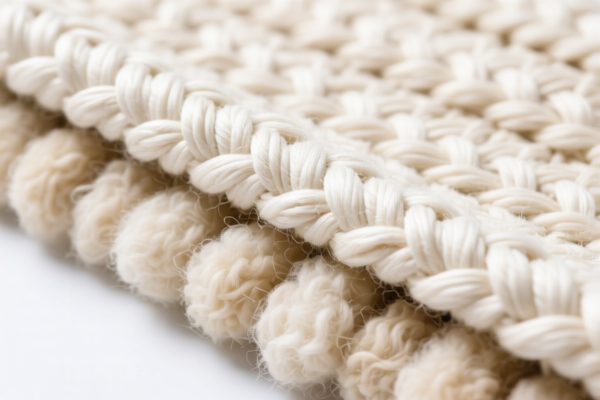
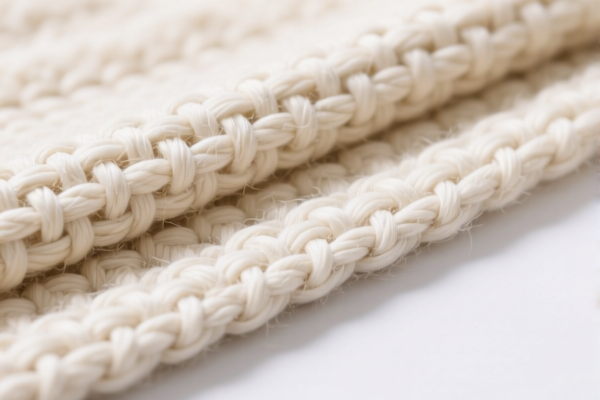
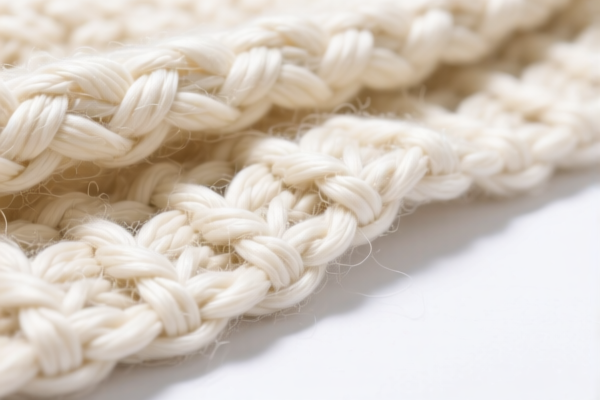
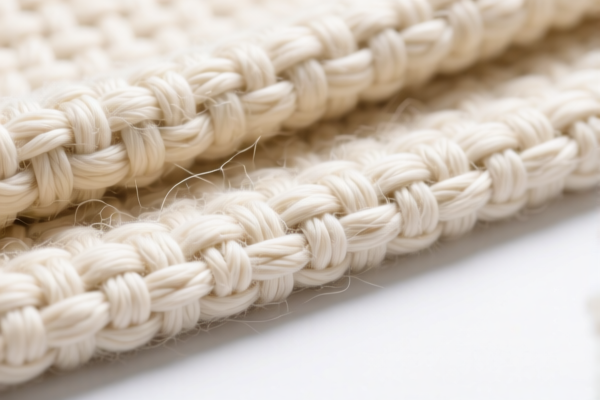
AI Analysis
🌿 Bleached Woven Fabrics of Artificial Staple Fibers Mixed Mainly with Cotton
🌐 HS Code Reference & Customs Clearance Guide | 2026 Latest Tariff Breakdown | Pro-Level Import Strategy
📌 One: Product Definition & Classification – What Exactly Is This Fabric?
Bleached woven fabrics composed primarily of artificial staple fibers (e.g., polyester, rayon, acetate) mixed mainly with cotton, but containing less than 85% cotton by weight, are a common blend used in apparel, home textiles, and industrial applications. These fabrics are processed to remove natural color and impurities, resulting in a clean, white base ideal for dyeing or printing.
⚠️ Critical Distinction:
- If cotton content is 85% or more → classified under 5210.29 (cotton-based fabrics)
- If cotton content is less than 85%, and artificial fibers are the main component → classified under 5516.41.00.90
- If artificial staple fibers dominate (i.e., >50%) and cotton is secondary → still falls under 5516.41.00.90
📦 Two: HS Code Classification Details (2026 Official Tariff Matrix)
| HS Code | Product Description | Applicable Use Cases | Fiber Composition | Bleached? |
|---|---|---|---|---|
5516.41.00.90 |
Woven fabrics of artificial staple fibers: Containing less than 85% by weight of artificial staple fibers, mixed mainly or solely with cotton: Unbleached or bleached | Apparel, shirts, linings, light-duty industrial fabrics | Artificial fibers > cotton (but <85% cotton) | ✅ Yes (includes bleached) |
5516.91.00.90 |
Woven fabrics of artificial staple fibers: Other: Unbleached or bleached | General-purpose textiles, curtains, upholstery, non-apparel uses | Artificial fibers > cotton | ✅ Yes (includes bleached) |
🔍 Key Insight:
- "Mixed mainly or solely with cotton" means cotton is not dominant – so if artificial fibers are >50%, it’s still considered a synthetic-based fabric. - "Less than 85% cotton" is the threshold – even 84.9% cotton pushes it into this category.
💰 Three: 2026 Latest Tariff Rate Breakdown (Including附加 Taxes & Policy Add-ons)
✅ Applicable Country: United States (US)
✅ Origin: China (CN)
✅ Effective Date: November 10, 2025 (including subsequent imports)
🎯 1. 5516.41.00.90 — Bleached Woven Fabrics (Artificial Fibers + <85% Cotton)
| Item | Details |
|---|---|
| Base Duty Rate | 0.0% (ad valorem) |
| USITC Additional Tariff | 0.0% (no 301 tariff applied) |
| IEEPA Additional Tariff | 0.0% (no emergency economic power tariff) |
| Total Tax Rate | 0.0% |
| Tax Calculation | CIF Value × 0.0% |
| De Minimis Threshold | ✅ Eligible (if value < $800, no duty) |
| Legal Basis Path | USITC:5516.41.00.90 → FOOTNOTE:9903.88.01 → No additional tariffs apply |
📌 Explanation:
- This product is not subject to Section 301 or IEEPA tariffs because it does not fall under the targeted textile categories (e.g., certain cotton fabrics, yarns, or apparel). - No additional duties are imposed despite origin from China. - 0% total tax = ideal for low-cost, high-volume importers.
🎯 2. 5516.91.00.90 — Other Bleached Woven Fabrics (Artificial Staple Fibers)
| Item | Details |
|---|---|
| Base Duty Rate | 0.0% |
| USITC Additional Tariff | 0.0% |
| IEEPA Additional Tariff | 0.0% |
| Total Tax Rate | 0.0% |
| Tax Calculation | CIF × 0.0% |
| De Minimis Threshold | ✅ Eligible |
| Legal Basis Path | USITC:5516.91.00.90 → FOOTNOTE:9903.88.01 → No extra tariffs |
📌 Note:
- This code covers non-cotton-dominated blends that don’t fit the "mainly with cotton" subcategory. - Still exempt from all附加 taxes, making it fully duty-free for imports from China.
🛠️ Four: Customs Clearance Best Practices (Pro Tips to Avoid Delays & Penalties)
✅ 1. Required Documentation (Must-Have Checklist)
| Document | Required? | Notes |
|---|---|---|
| ✅ Product Specification Sheet | ✔️ | Include fiber composition (e.g., 60% polyester, 40% cotton), GSM, weave type |
| ✅ Lab Test Report (Fiber Content) | ✔️ | ISO 1833, AATCC 20, or ASTM D6860 – critical for classification |
| ✅ Commercial Invoice | ✔️ | Clearly state: "Bleached Woven Fabric, 60% Polyester / 40% Cotton, GSM 150" |
| ✅ Packing List | ✔️ | Detail roll count, weight, dimensions |
| ✅ Certificate of Origin (CO) | ✔️ | Required for preferential treatment (e.g., USMCA, if applicable) |
| ✅ Sample Fabric (if requested) | ✔️ | For customs inspection or pre-approval |
✅ 2.申报技巧 (Key Phrases to Use)
🔥 "Bleached, woven fabric, containing less than 85% cotton by weight, mixed mainly with artificial staple fibers"
✅ Use this exact phrase in the description to avoid misclassification.❌ Avoid:
- “Cotton-polyester blend” (too vague)
- “Cotton-rich fabric” (may trigger 5210.29)
- “Apparel fabric” (too broad)✅ Correct Example:
"Bleached woven fabric, 60% polyester, 40% cotton, weight 150 g/m², suitable for shirts and linings, HS Code: 5516.41.00.90"
✅ 3. Special Cases & Handling
| Scenario | Recommended Action |
|---|---|
| Fiber content close to 85% (e.g., 84.5%) | Provide laboratory test report to confirm <85% cotton |
| Fabric to be dyed/printed after import | Still report as bleached – no change in HS code |
| Custom fabric with unique blend | Apply for Advance Ruling (Pre-ruling) to lock in HS code |
| Importing via Amazon FBA or e-commerce | Use de minimis if value < $800 per shipment → 0% duty |
🌍 Five: Global Customs Comparison (2026 Update)
| Country/Region | Recommended HS Code | Tariff | Certification Required | Notes |
|---|---|---|---|---|
| 🇺🇸 United States | 5516.41.00.90 or 5516.91.00.90 |
0.0% | None (if <85% cotton) | No 301/IEEPA tariffs |
| 🇨🇳 China | 5516.41.00.90 |
5% | CCC (if applicable) | No extra taxes |
| 🇪🇺 European Union | 5516.41.00.90 |
0% (if CE) | CE, REACH | No additional duties |
| 🇦🇺 Australia | 5516.41.00.90 |
5% | RCM | No附加 tariffs |
| 🇯🇵 Japan | 5516.41.00.90 |
0% | PSE | No extra charges |
📌 Conclusion:
- The US is the only major market with potential for high tariffs on textiles, but this product is fully exempt. - Zero duty in the US = ideal for cost-sensitive importers.
📌 Six: Common Mistakes & How to Avoid Them (Real-World Pitfalls)
❌ Mistake 1: Misclassifying as 5210.29.80.90 (cotton-based) because it "feels like cotton"
👉 Result: Incorrect HS code → duty overpayment, penalties, delays
❌ Mistake 2: Not providing fiber test report
👉 Result: Customs may reclassify the fabric → reassessment, fines
❌ Mistake 3: Using generic term “poly-cotton fabric” without specifying % cotton
👉 Result: Risk of being taxed under higher-rate cotton categories
❌ Mistake 4: Assuming all blends from China get 25% tariffs
👉 Result: Unnecessary cost overestimation – this product is 0% duty
✅ Correct Approach:
Always declare fiber composition, use lab reports, and reference the exact HS code.
🎯 Seven: Final Verdict – Why This Is a Low-Risk, High-Value Import
✅ 0% Tariff in the US
✅ No 301 or IEEPA Add-Ons
✅ De Minimis Eligible
✅ No complex certification needed
✅ Ideal for apparel, home goods, and industrial use
📌 Pro Tip:
If your fabric has less than 85% cotton, even if it's 70% cotton, it’s still duty-free in the US – as long as artificial fibers are the main component.
🎯 Call to Action: Get Ahead of the Game!
📞 Contact a licensed customs broker + provide fiber test report + product specs
🚀 Apply for Advance Ruling (if unsure) – lock in HS code before shipment
💼 Maximize savings: Use de minimis for small parcels → $0 duty
✨ Your Fabric. Your Freedom. Your Profit.
💼 Accurate HS Code = Zero Duty = Smooth Clearance = Happy Customers!
🌟 Remember:
🔹 "Less than 85% cotton" → HS Code 5516.41.00.90 or 5516.91.00.90
🔹 0% Tariff in US – No extra charges
🔹 No 301, No IEEPA, No Surprises!
📣 Ready to Import with Confidence?
👉 Start today. Declare right. Pay nothing. Ship fast.
📦 Your next shipment is waiting – make it duty-free!
Customer Reviews
About HS Code Classification
The Harmonized System (HS) is an internationally standardized nomenclature developed by the World Customs Organization (WCO) to classify traded products. Over 200 countries use the HS system as the basis for customs tariffs, trade statistics, and import/export regulations.
Each HS code follows a hierarchical structure:
- Chapter (2 digits) — Broad category of goods (e.g., Chapter 84: Machinery and Mechanical Appliances)
- Heading (4 digits) — More specific grouping within the chapter
- Subheading (6 digits) — Internationally standardized breakdown, used by all WCO member countries
- National subdivisions (8-10 digits) — Country-specific extensions for further classification, such as US HTSUS 10-digit codes
Correct HS code classification is essential for smooth customs clearance, accurate duty payment, and compliance with trade regulations. Misclassification can lead to customs delays, overpayment of duties, or penalties.
When importing from CN to US, the applicable tariff rates may include:
- Most-Favored-Nation (MFN) rate — The standard duty rate applied to WTO members
- General rate — Applied to countries without trade agreements
- Trade remedy duties — Additional tariffs such as Section 301 (anti-dumping), Section 232 (national security), or countervailing duties
The information provided on this page is for reference purposes only. For official classification, please consult with your local customs authority or a licensed customs broker.