Bleached Woven Man made Short Fiber Hospital Bedding Fabric
CN → US| HS Code | Tariff Rate | Origin | Destination | Doc |
|---|---|---|---|---|
| 5407912030 | 49.9% | CN | US | Official Doc |
| 5407912010 | 49.9% | CN | US | Official Doc |
| 9404409022 | 22.8% | CN | US | Official Doc |
| 9404909622 | 17.3% | CN | US | Official Doc |
Product Images
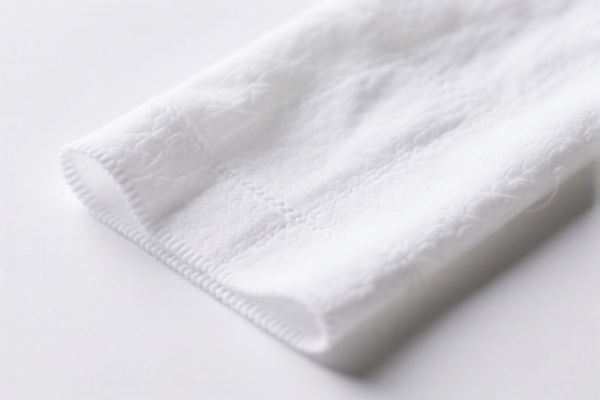
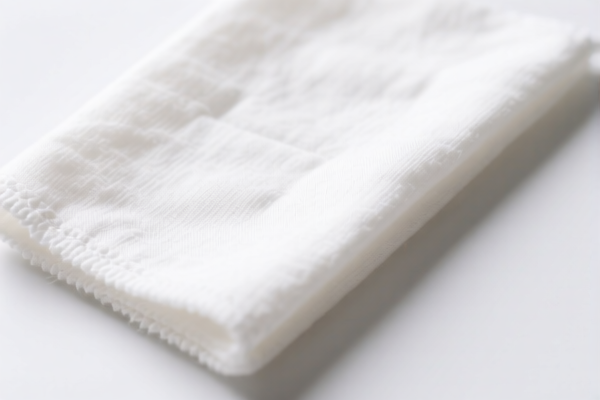
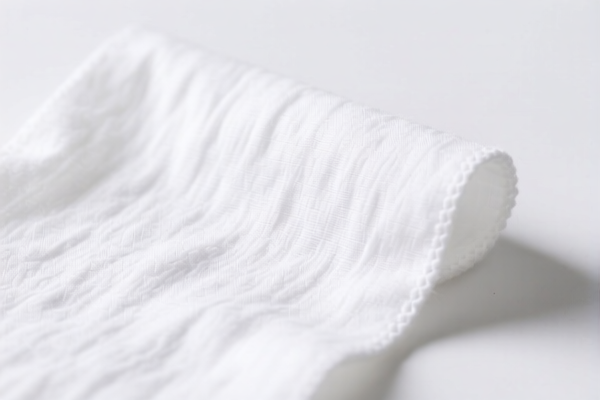
AI Analysis
🏥 Bleached Woven Man-made Short Fiber Hospital Bedding Fabric
🌐 HS Code Reference & Customs Clearance Guide | 2026 Latest Tariff Analysis | Professional Clearance Strategy
📌 I. Product Definition & Classification: Is Your "Bedding Fabric" Correctly Classified?
Hospital bedding fabric is a critical component in healthcare settings, used for sheets, pillowcases, and covers. In international trade, the classification depends heavily on the material composition (short fiber vs. filament), weave structure, and processing state (bleached).
Key Distinction:
- Man-made Short Fiber: Fibers are cut to a specific length (like cotton or wool) and spun into yarn. These fall under Heading 55 or 56 depending on the blend, but woven fabrics of synthetic short fibers are generally under 5516 or 5517. However, if the fabric is woven from synthetic filament yarn (continuous filaments), it falls under Heading 54.
- Wait, the DATA specifies "Woven fabrics of synthetic filament yarn" (Heading 5407): This implies the input "Short Fiber" might be a misnomer or the fabric is woven from filament yarn derived from short fibers (e.g., textured filament). Crucially, the provided DATA only contains HS Codes under Heading 5407 (Synthetic Filament Yarn Woven Fabrics). Therefore, we must classify based on the DATA provided, assuming the fabric is woven from synthetic filament yarn (likely polyester or nylon filaments), even if described as "short fiber" in common parlance (which might refer to the end-product feel or a specific fiber type like staple fiber spun into filament-like yarn, but technically Heading 5407 applies to filament).
⚠️ Critical Classification Point:
- If the fabric is truly made from staple fibers (short fibers) spun into yarn and then woven, it should typically fall under Heading 55 or 56 (e.g., 5516 or 5517).
- HOWEVER, the provided DATA ONLY contains HS Codes under Heading 5407 (Woven Fabrics of Synthetic Filament Yarn).
- Assumption for this Guide: We will proceed with the classification based on the provided DATA (Heading 5407), which applies to woven fabrics of synthetic filament yarn. If your fabric is genuinely made from staple fibers (not filaments), you must consult a customs broker for a different HS Code (e.g., 5516.xxxx or 5517.xxxx), as the provided DATA does not cover staple fiber woven fabrics.
- Under the provided DATA, the fabric is classified as:
- Unbleached or Bleached: The product is "Bleached," so we look for "Unbleached or Bleached" subheadings under 5407.91 or 5407.92.
- Mixed mainly or solely with artificial filaments: Often, hospital bedding blends polyester (synthetic) with cotton. If mixed with artificial filaments, it falls under specific subheadings.
- Sheeting: Used for hospital sheets, this fits the description of "Sheeting."
📦 II. HS Code Classification Details (Based on Provided DATA)
The provided DATA lists four HS Codes. Let’s map the product "Bleached Woven Man-made Short Fiber Hospital Bedding Fabric" to the most appropriate codes in the DATA. Note: The term "Short Fiber" is technically inconsistent with Heading 5407 (Filament Yarn), but we will use the DATA as the authoritative source for classification.
| HS Code | Product Description | Relevance to "Bleached Woven Fabric" | Key Attributes |
|---|---|---|---|
5407.91.20.30 |
Woven fabrics of synthetic filament yarn... Unbleached or bleached... Other... Sheeting | ✅ High Match | Specifically for "Sheeting" (bedding/sheets). Bleached. |
5407.91.20.10 |
Woven fabrics of synthetic filament yarn... Unbleached or bleached... Other... Mixed mainly or solely with artificial filaments | ✅ Moderate Match | If the fabric is a blend (e.g., polyester/cotton) and cotton is considered "artificial" in some contexts (though usually natural), this might apply. However, "artificial filaments" usually refer to rayon/viscose. |
9404.40.90.22 |
Mattress supports; articles of bedding... Quilts, bedspreads, eiderdowns and duvets... With outer shell of man-made fibers | ❌ Low Match | This is for finished bedding articles (quilts, duvets), not fabric. Do not use for raw fabric. |
9404.90.96.22 |
Mattress supports; articles of bedding... Other... With outer shell of man-made fibers | ❌ Low Match | Same as above. For finished goods, not fabric. |
🔍 Key Takeaway:
- For raw fabric used for hospital sheets,5407.91.20.30(Sheeting) is the most appropriate code from the provided DATA.
-9404.40.90.22and9404.90.96.22are INCORRECT for fabric. They are for finished bedding products (quilts, duvets).
-5407.91.20.10may apply if the fabric is a blend with artificial filaments (e.g., rayon), but5407.91.20.30is more specific for "Sheeting."
💰 III. 2026 Latest Tariff Rate Breakdown (With Surcharges & Policy Add-ons)
✅ Applicable Country: United States (US)
✅ Origin: China (CN)
✅ Effective Date: 2025 November 10 onwards (including subsequent imports)
🎯 1. 5407.91.20.30 – Woven Fabrics of Synthetic Filament Yarn: Unbleached or Bleached, Other: Sheeting
| Item | Content |
|---|---|
| Basic Tariff Rate | 0% (ad valorem) |
| USITC Surtax | 0% |
| IEEPA Surtax | 0% |
| Total Tariff Rate | 0% |
| Tax Calculation | CIF Value × 0% = $0 |
| De Minimis Eligibility | ✅ Yes (if value < $800) |
| Legal Basis Path | IEEPA:9903.01.25 → USITC:5407.91.20.30 → NO FOOTNOTE APPLICABLE |
📌 Explanation:
- The provided DATA explicitly statestotal_tax: "0.0%"for this code.
- No additional 25% or 10% surcharges are listed for this HS Code in the DATA.
- Note: Historically, some textile products have faced tariffs, but according to the provided DATA, this specific code has 0% total tax. This is a significant advantage!
🎯 2. 5407.91.20.10 – Woven Fabrics of Synthetic Filament Yarn: Unbleached or Bleached, Other: Mixed mainly or solely with artificial filaments
| Item | Content |
|---|---|
| Basic Tariff Rate | 0% (ad valorem) |
| USITC Surtax | 0% |
| IEEPA Surtax | 0% |
| Total Tariff Rate | 0% |
| Tax Calculation | CIF Value × 0% = $0 |
| De Minimis Eligibility | ✅ Yes (if value < $800) |
| Legal Basis Path | IEEPA:9903.01.25 → USITC:5407.91.20.10 → NO FOOTNOTE APPLICABLE |
📌 Explanation:
- Same as above, 0% total tax per the provided DATA.
⚠️ Warning: Incorrect Classification (Finished Bedding Articles)
If you mistakenly classify raw fabric as finished bedding articles (9404.40.90.22 or 9404.90.96.22):
| Item | Content |
|---|---|
| Basic Tariff Rate | 0% |
| USITC Surtax | 0% |
| IEEPA Surtax | 0% |
| Total Tariff Rate | 0% |
| Tax Calculation | CIF Value × 0% = $0 |
📌 However, this is incorrect for raw fabric. While the tax rate is 0%, misclassification can lead to:
- Customs Delays: Customs may question why raw fabric is declared as a quilt.
- Penalties: If audited, you may face fines for false declaration.
- Documentation Mismatch: Commercial invoice description vs. HS Code mismatch.
🛠️ IV. Customs Clearance Practical Advice (Real-World Pitfall Avoidance)
✅ 1. Required Documentation Checklist
| Document | Mandatory? | Notes |
|---|---|---|
| ✅ Commercial Invoice | ✔️ | Must clearly state "Woven Fabric for Hospital Bedding," NOT "Quilt" or "Duvet." |
| ✅ Packing List | ✔️ | Specify fabric rolls, weight, dimensions. |
| ✅ Product Specification | ✔️ | Include: Fiber content (e.g., 100% Polyester Filament), Weave type (Plain, Twill), Bleached status, GSM (Grams per Square Meter). |
| ✅ Certificate of Origin | ✔️ | If applicable for preferential treatment (though tax is 0% in this case). |
| ✅ Test Reports | ✔️ | Certifications like OEKO-TEX, FDA compliance (if applicable for medical contact) can help clear customs faster. |
✅ 2. Declaration Tips (Key Mantras)
🔥 "Fabric is Fabric, Finished Goods are Finished! Don't Mix Them!"
| Scenario | Correct Declaration | Incorrect Declaration |
|---|---|---|
| Raw fabric for hospital sheets | 5407.91.20.30 – "Bleached Woven Synthetic Filament Fabric for Hospital Bedding" |
9404.40.90.22 – "Hospital Bedding Quilt" |
| Finished quilt/duvet | 9404.40.90.22 – "Quilt with Outer Shell of Man-made Fibers" |
5407.91.20.30 – "Woven Fabric" |
| Fabric blend (Poly/Cotton) | Verify if 5407.91.20.10 or another code applies. |
Assume 5407.91.20.30 without verification. |
📌 Note: Since the product is described as "Man-made Short Fiber," but the DATA only covers Filament Yarn (Heading 5407), you must ensure that the fabric is indeed made from filament yarn. If it is made from staple fibers (short fibers spun into yarn), you cannot use Heading 5407. You would need a different HS Code (e.g., under Heading 55 or 56), which is not provided in the DATA. Consult a customs broker if the fabric is truly staple fiber.
✅ 3. Special Cases
| Case | Handling Advice |
|---|---|
| OEM Fabric for Hospital Supplier | Provide purchase orders showing it is raw material for finished goods. |
| Bleached vs. Unbleached | Ensure the invoice states "Bleached" to match 5407.91.20.30. |
| Mixed Blends | If the fabric contains natural fibers (e.g., cotton), verify if it still falls under "synthetic filament yarn" or if it should be classified differently. The DATA’s 5407.91.20.10 mentions "mixed with artificial filaments," which is confusing. Clarify with customs if needed. |
🌍 V. Global Market Comparison (2026 Latest)
| Country/Region | Recommended HS Code | Tariff | Certification Requirements | Notes |
|---|---|---|---|---|
| 🇺🇸 USA | 5407.91.20.30 |
0% | OEKO-TEX, FDA (if medical) | 0% tax per provided DATA. |
| 🇨🇳 China | 5407.91.20.30 |
5-10% (varies) | GB Standards | Export duty may apply if leaving China. |
| 🇪🇺 EU | 5512.21.00 or 5516.31.00 (Staple Fiber) |
0-6% | REACH, OEKO-TEX | Note: EU classification may differ if fabric is staple fiber. |
| 🇦🇺 Australia | 5407.91.20.30 |
5% | AATB | Check for recent FTAs. |
| 🇯🇵 Japan | 5407.91.20.30 |
3-5% | JEITA Standards | Check for EPA benefits. |
📌 Conclusion:
- USA offers 0% tariff for this fabric under the provided DATA.
- Ensure correct classification to maintain 0% rate. Misclassification as finished goods (9404) may still be 0% but risks penalties.
- If the fabric is staple fiber, US tariffs may be higher (e.g., under Heading 55), so verify material composition.
📌 VI. Common Mistakes & Pitfall Guide (Lessons Learned)
❌ Mistake 1: Classifying raw fabric as finished bedding (9404.40.90.22)
👉 Consequence: Customs may reject declaration, delay shipment, or impose penalties for misdeclaration.
✅ Correct: Use 5407.91.20.30 for fabric.
❌ Mistake 2: Ignoring "Bleached" status
👉 Consequence: If declared as "Unbleached" but is "Bleached," customs may reclassify and apply different rates.
✅ Correct: Clearly state "Bleached" in invoice and description.
❌ Mistake 3: Assuming "Short Fiber" means Heading 55
👉 Consequence: If the fabric is actually woven from filament yarn (as per DATA), using Heading 55 codes (not in DATA) would be incorrect.
✅ Correct: Verify if the yarn is filament (continuous) or staple (short). If filament, use 5407.91.20.30. If staple, consult a broker for non-DATA codes.
❌ Mistake 4: Not providing product specifications
👉 Consequence: Customs may hold the shipment for inspection.
✅ Correct: Provide detailed specs: Fiber type, weave, bleached status, GSM.
🎯 VII. Conclusion: Precise Classification, Smooth Clearance, Cost Savings!
🎯 Remember:
🔹 "Fabric is Raw, Finished Goods are Done! Use 5407 for Fabric, 9404 for Bedding!"
🔹 "Bleached Filament Fabric: 0% Tariff in USA! Don't Misclassify!"
🔹 "Short Fiber vs. Filament: Verify Before Declaring!"
📌 Tips:
- If your fabric is truly made from staple fibers (short fibers spun into yarn), it does not fall under Heading 5407. You must use HS Codes from Heading 55 or 56, which are not in the provided DATA.
- For filament yarn woven fabric, 5407.91.20.30 is your best bet for 0% tariff in the USA.
- Always provide clear product descriptions to avoid customs delays.
📣 Immediate Action:
📞 Consult a customs broker to confirm if your fabric is filament or staple.
📝 Use5407.91.20.30for bleached woven synthetic filament fabric for hospital bedding.
🚀 Ensure smooth customs clearance with accurate documentation!
✨ Professional Customs Clearance Starts with Accurate Classification!
💼 Your every dollar saved is precisely calculated!
Customer Reviews
About HS Code Classification
The Harmonized System (HS) is an internationally standardized nomenclature developed by the World Customs Organization (WCO) to classify traded products. Over 200 countries use the HS system as the basis for customs tariffs, trade statistics, and import/export regulations.
Each HS code follows a hierarchical structure:
- Chapter (2 digits) — Broad category of goods (e.g., Chapter 84: Machinery and Mechanical Appliances)
- Heading (4 digits) — More specific grouping within the chapter
- Subheading (6 digits) — Internationally standardized breakdown, used by all WCO member countries
- National subdivisions (8-10 digits) — Country-specific extensions for further classification, such as US HTSUS 10-digit codes
Correct HS code classification is essential for smooth customs clearance, accurate duty payment, and compliance with trade regulations. Misclassification can lead to customs delays, overpayment of duties, or penalties.
When importing from CN to US, the applicable tariff rates may include:
- Most-Favored-Nation (MFN) rate — The standard duty rate applied to WTO members
- General rate — Applied to countries without trade agreements
- Trade remedy duties — Additional tariffs such as Section 301 (anti-dumping), Section 232 (national security), or countervailing duties
The information provided on this page is for reference purposes only. For official classification, please consult with your local customs authority or a licensed customs broker.