Blow Molding Roller
CN → US| HS Code | Tariff Rate | Origin | Destination | Doc |
|---|---|---|---|---|
| 8482910090 | 39.4% | CN | US | Official Doc |
| 3926909989 | 22.8% | CN | US | Official Doc |
| 8482996595 | 40.8% | CN | US | Official Doc |
| 3926906090 | 39.2% | CN | US | Official Doc |
Product Images
AI Analysis
🏭 Blow Molding Roller (Plastic Roller)
🌐 HS Code Reference & Customs Clearance Guide | 2026 Latest Tariff Analysis | Professional Clearance Strategy
📌 I. Product Definition & Classification: What Exactly is a "Blow Molding Roller"?
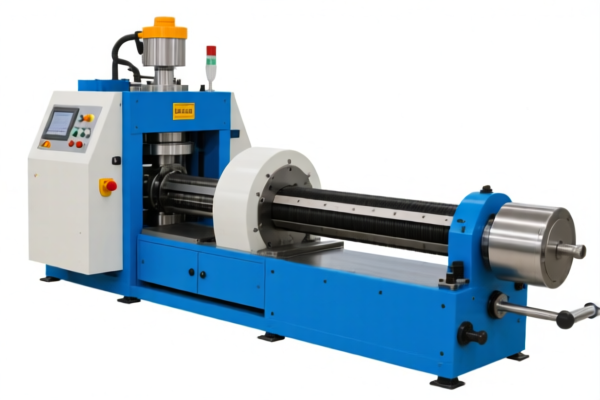
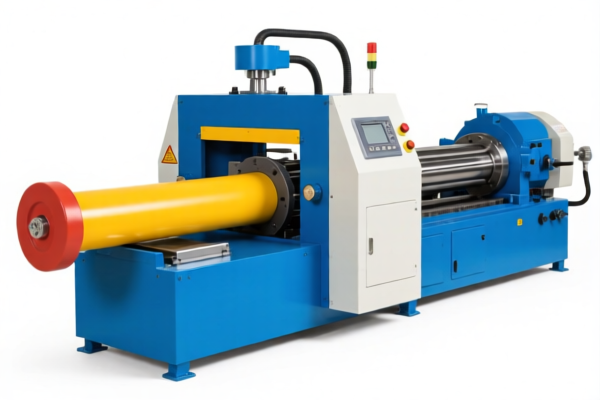
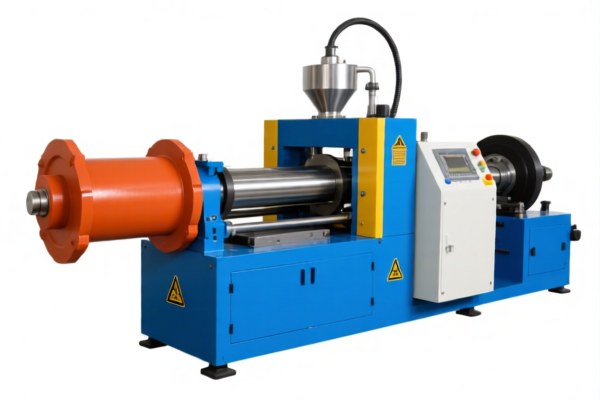
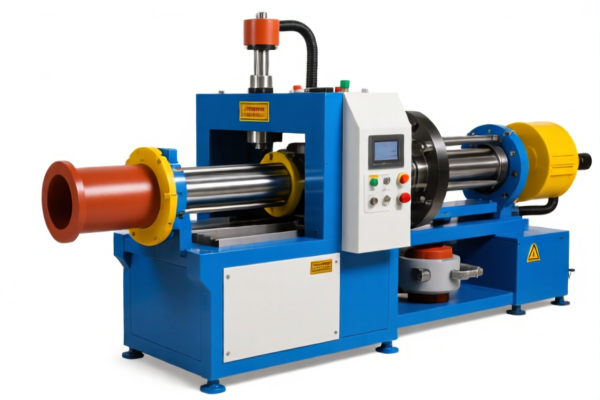
A Blow Molding Roller is a critical component used in plastic processing machinery, specifically in blow molding machines. It serves to guide, shape, or cool plastic parisons (hollow preforms) during the manufacturing process of bottles, containers, and hollow plastic products.
Key Characteristics: * Material: Typically made of Plastic (e.g., HDPE, Nylon, Acetal) or sometimes coated metals. * Function: It acts as a guide wheel, pressure roller, or cooling drum. * Context: It is a part/accessory of industrial machinery (84.77) or a standalone plastic article.
⚠️ Critical Classification Dilemma:
Customs authorities often debate whether this item is: 1. A machine part (heading 84.82 - Bearings/Bearings Parts) or 2. A general plastic article (heading 39.26 - Other Plastic Articles).This distinction drastically affects the Total Tax Rate due to varying "Section 301" and "122 Clause" tariffs.
📦 II. HS Code Classification Details (2026 Latest Tariff Database)
Based on the provided data, there are 5 distinct classification options for Plastic Rollers. Note that two entries are identical, resulting in 4 unique classification paths.
| HS Code | Summary Description | Key Logic | Total Tax Rate |
|---|---|---|---|
| 8482.91.00.90 | Roller Type Part | Classified as a roller bearing component; material is plastic. | 39.4% |
| 3926.90.99.89 | General Plastic Article | Classified as a "catch-all" plastic product (not a machine part). | 22.8% |
| 8482.99.65.95 | Bearing Part/Component | Classified as a part of bearings/components; material is plastic. | 40.8% |
| 3926.90.60.90 | Mechanical Accessory | Classified as a plastic accessory for machinery. | 39.2% |
🔍 Important Note:
The entry3926.90.99.89appears twice in the source data with identical tax details (22.8%). It represents the lowest tax burden option.
💰 III. 2026 Latest Tariff Rate Breakdown (Detailed Tax Analysis)
✅ Applicable Jurisdiction: United States (US)
✅ Origin: China (CN)
✅ Effective Date: Post-2025 Policies (Including 122 Clause & Section 301)
🎯 1. 3926.90.99.89 —— LOWEST COST OPTION: Other Plastic Articles
🟢 Recommended for General Importers if the item is not strictly defined as a bearing part.
| Item | Details |
|---|---|
| Base Tariff | 5.3% (General Ad Valorem) |
| Section 301 Additional Tariff | +7.5% |
| 122 Clause Tariff | +10% |
| TOTAL RATE | 22.8% |
| De Minimis Exemption? | ❌ No (Deny De Minimis) |
| Legal Basis | HTSUS:3926.90.99.89 → USITC Footnotes → 122 Clause |
📌 Explanation:
This classification treats the roller simply as a "plastic object." It avoids the higher "machinery part" penalties. However, you must prove it is not a specific "bearing part" to justify this lower rate.
🎯 2. 3926.90.60.90 —— MEDIUM COST: Plastic Mechanical Accessory
🟡 Alternative if defined as a machinery accessory.
| Item | Details |
|---|---|
| Base Tariff | 4.2% |
| Section 301 Additional Tariff | +25.0% |
| 122 Clause Tariff | +10% |
| TOTAL RATE | 39.2% |
| De Minimis Exemption? | ❌ No |
| Legal Basis | HTSUS:3926.90.60.90 → USITC Footnotes → Section 301 |
📌 Explanation:
This classification views the roller as an accessory to mechanical equipment. The high 25% Section 301 tariff significantly increases costs compared to3926.90.99.89.
🎯 3. 8482.91.00.90 —— HIGH COST: Roller/Bearing Part Type
🔴 Riskier Classification: If customs argues the roller is a bearing component.
| Item | Details |
|---|---|
| Base Tariff | 4.4% |
| Section 301 Additional Tariff | +25.0% |
| 122 Clause Tariff | +10% |
| TOTAL RATE | 39.4% |
| De Minimis Exemption? | ❌ No |
| Legal Basis | HTSUS:8482.91.00.90 → USITC Footnotes → Section 301 |
📌 Explanation:
Heading 84.82 covers "Ball or Roller Bearings." If your plastic roller is used within a bearing assembly, it may be forced into this category, triggering the 25% Section 301 tariff.
🎯 4. 8482.99.65.95 —— HIGHEST COST: Other Bearing Parts
🔴 Highest Penalty: Broad category for bearing components.
| Item | Details |
|---|---|
| Base Tariff | 5.8% |
| Section 301 Additional Tariff | +25.0% |
| 122 Clause Tariff | +10% |
| TOTAL RATE | 40.8% |
| De Minimis Exemption? | ❌ No |
| Legal Basis | HTSUS:8482.99.65.95 → USITC Footnotes → Section 301 |
📌 Explanation:
This is the "catch-all" for bearing parts not specified elsewhere. It attracts the highest total duty among the options. Avoid this unless specifically required by customs ruling.
🛠️ IV. Customs Clearance Practical Advice (Battle-Tested Tips)
✅ 1. Documentation Checklist (Must-Haves)
| Document | Required? | Purpose |
|---|---|---|
| Product Technical Specification | ✔️ | Must explicitly state material (e.g., "100% Nylon Plastic") and function (e.g., "Plastic Guide Roller"). |
| Diagram/Blueprint | ✔️ | Show the roller is not part of a ball-bearing assembly to support 3926 classification. |
| Commercial Invoice | ✔️ | Clearly describe as "Plastic Roller for Blow Molding Machine" — avoid vague terms like "Bearing Part." |
| Packing List | ✔️ | List items individually if mixed with other goods. |
| Country of Origin Certificate | ✔️ | Essential for applying Section 301 rates. |
| FCC/CE Certificates | ❌ | Not typically required for plastic rollers, but good for credibility. |
✅ 2. Classification Strategy (The "Golden Rule")
🔥 Strategy: "Argue for Plastic, Not Bearing."
| Scenario | Recommended HS Code | Why? |
|---|---|---|
| General Guide Roller (No bearings inside) | 3926.90.99.89 |
Lowest Tax (22.8%). Best for cost-saving. |
| Roller with Internal Ball Bearings | 8482.91.00.90 or 8482.99.65.95 |
If it contains bearings, customs will force 84.82. Tax will be ~40%. |
| Customs Audit Risk | 3926.90.60.90 |
A middle ground if 3926.99.89 is rejected but 8482 is too high. |
⚠️ Warning:
If the roller has a metal core or integrated ball bearings, you CANNOT use3926. You must use8482. Misclassification leads to penalties + back taxes.
✅ 3. Special Situations
| Situation | Handling Advice |
|---|---|
| OEM Plastic Rollers | Provide proof that the design is for a specific machine (Blow Molder) to support "Accessory" classification (3926.90.60.90). |
| Mixed Shipment | If shipping rollers with other plastic goods, keep them on separate invoices to clarify the HS Code. |
| Pre-Ruling Request | If shipping large volumes, file a Binding Ruling Request with US CBP to lock in 3926.90.99.89 and avoid 40% surprise taxes. |
🌍 V. Global Market Comparison (2026 Update)
| Market | Recommended HS Code | Est. Duty Rate (China Origin) | Key Notes |
|---|---|---|---|
| 🇺🇸 USA | 3926.90.99.89 |
22.8% | Avoid 8482 due to 25% Sec 301. |
| 🇨🇳 China | 3926.90.99.00 |
~5-10% | Import duty low; no Section 301. |
| 🇪🇺 EU | 3926.90.97 |
~4-6% | No additional trade war tariffs. |
| 🇬🇧 UK | 3926.90.99 |
~4-6% | Post-Brexit tariff applies. |
| 🇻🇳 Vietnam | 3926.90.90 |
~0-5% | If transshipped/processed locally. |
📌 Conclusion:
The USA is the only market with punitive tariffs (122 Clause + Section 301).
Optimization Tip: For US imports, every percentage point matters. Choosing3926.90.99.89(22.8%) over8482(40.8%) saves ~18% on duty costs.
📌 VI. Common Mistakes & Pitfalls (Learn from Others)
❌ Mistake 1: Calling it "Bearing Part" in the invoice.
👉 Result: Customs automatically assigns 8482 → 40.8% Tax.
✅ Fix: Use "Plastic Guide Roller" or "Blow Molding Accessory."
❌ Mistake 2: Assuming all rollers are "Bearing Parts."
👉 Result: Overpaying 18% in taxes.
✅ Fix: Provide technical specs showing no rolling elements (balls/rollers) inside the plastic part.
❌ Mistake 3: Ignoring the 122 Clause.
👉 Result: Underestimating total cost.
✅ Fix: Always add 10% for the 122 Clause to any calculation.
🎯 VII. Conclusion: Smart Classification, Maximized Profit!
🎯 Key Takeaway:
🔹 "Plastic Roller? Go for 3926.90.99.89."
🔹 "Saves 18% vs. Bearing Classification."
🔹 "Total Cost: 22.8% (Base 5.3% + Sec 301 7.5% + 122 10%)."
📌 Pro Tip:
If your roller is simple plastic (no bearings, no metal cores), insist on 3926.90.99.89. Provide a clear product photo and technical diagram proving it is a solid or hollow plastic tube/wheel. This is your strongest defense against customs misclassification.
📣 Next Steps:
📞 Contact a Customs Broker: Confirm the "no bearing" argument before shipment.
📄 Prepare Technical Data Sheet: Highlight "Material: Plastic" and "Function: Guide/Pressure."
🚀 Save Money: Reduce duty liability from ~40% to 22.8% through accurate classification!
✨ Accurate Classification Starts Here!
💼 Don't Let Customs Decide Your Tax Rate — Decide It Yourself!
Customer Reviews
About HS Code Classification
The Harmonized System (HS) is an internationally standardized nomenclature developed by the World Customs Organization (WCO) to classify traded products. Over 200 countries use the HS system as the basis for customs tariffs, trade statistics, and import/export regulations.
Each HS code follows a hierarchical structure:
- Chapter (2 digits) — Broad category of goods (e.g., Chapter 84: Machinery and Mechanical Appliances)
- Heading (4 digits) — More specific grouping within the chapter
- Subheading (6 digits) — Internationally standardized breakdown, used by all WCO member countries
- National subdivisions (8-10 digits) — Country-specific extensions for further classification, such as US HTSUS 10-digit codes
Correct HS code classification is essential for smooth customs clearance, accurate duty payment, and compliance with trade regulations. Misclassification can lead to customs delays, overpayment of duties, or penalties.
When importing from CN to US, the applicable tariff rates may include:
- Most-Favored-Nation (MFN) rate — The standard duty rate applied to WTO members
- General rate — Applied to countries without trade agreements
- Trade remedy duties — Additional tariffs such as Section 301 (anti-dumping), Section 232 (national security), or countervailing duties
The information provided on this page is for reference purposes only. For official classification, please consult with your local customs authority or a licensed customs broker.