Blowing and Suction Integrated Device
CN → US| HS Code | Tariff Rate | Origin | Destination | Doc |
|---|---|---|---|---|
| 8479891000 | 35.0% | CN | US | Official Doc |
| 8479892000 | 35.0% | CN | US | Official Doc |
| 8414100000 | 37.5% | CN | US | Official Doc |
| 8414591500 | 35.0% | CN | US | Official Doc |
Product Images
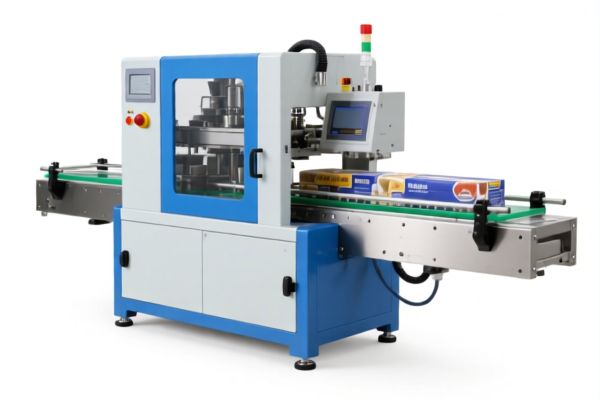
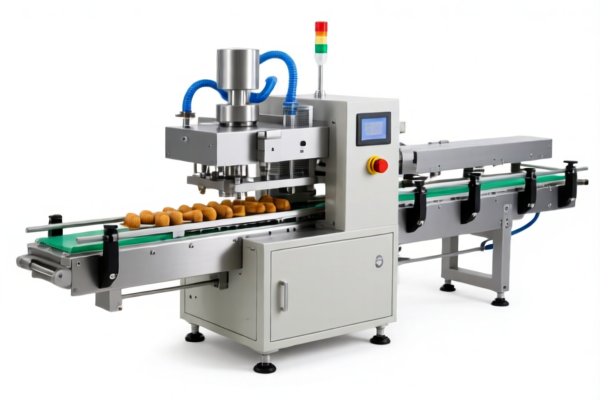
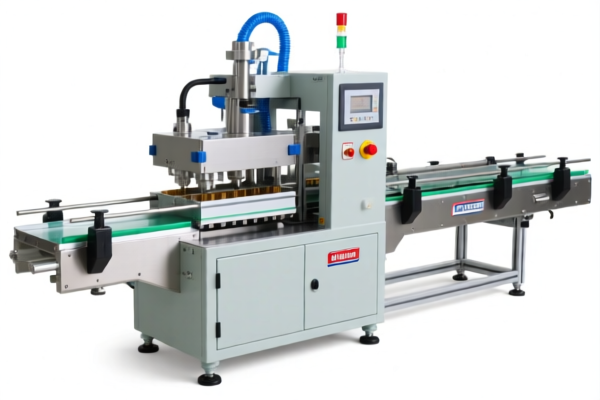
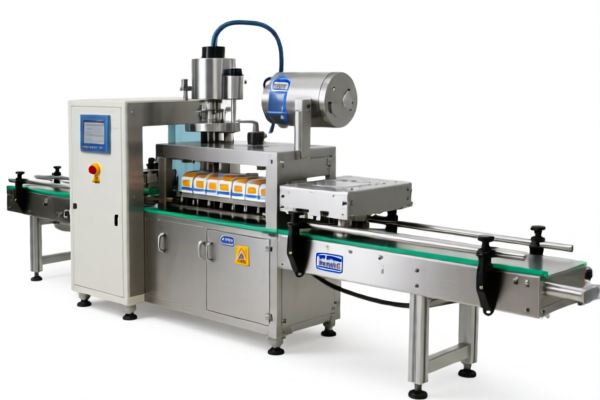
AI Analysis
🌬️ Blowing and Suction Integrated Device (Blower/Vacuum Units)
🌐 HS Code Reference & Customs Clearance Guide | 2026 Latest Tariff Analysis | Professional-Level Clearance Strategy
📌 I. Product Definition & Classification: Do You Really Understand "Blowing and Suction Devices"?
A Blowing and Suction Integrated Device is a versatile piece of industrial or household equipment capable of generating both positive pressure (blowing) and negative pressure (suction/vacuum). These devices are commonly used for dust collection, material conveying, air drying, ventilation, and industrial cleaning.
In international trade, classification depends heavily on the primary function, motor integration, and specific application. Key distinctions include:
- Vacuum Pumps (Pure Suction): Devices designed primarily to create a vacuum, often without a built-in motor or for specific technical applications (e.g., lab use, semiconductor manufacturing).
- Fans & Blowers (Air Movement): Devices designed to move air, including those with self-contained motors for ventilation or cooling.
- Electromechanical Multi-Purpose Machines: Devices with individual functions that do not fit neatly into other specific chapters, often including self-contained motors.
⚠️ Key Classification Distinction:
- If the device is a pure vacuum pump (creating vacuum for process purposes) → Classified under 8414.10.00.00
- If the device is a fan/blower used for cooling electronics (e.g., CPU coolers, server fans) → Classified under 8414.59.15.00
- If the device is an electromechanical appliance with a self-contained motor, used for general purposes (like air humidification, polishing, or general blowing/suction not specified elsewhere) → Classified under 8479.89.10.00 or 8479.89.20.00
📦 II. HS Code Classification Details (2026 Latest Tariff Authority Comparison)
| HS Code | Product Description | Application Scenario | Motor Type | Key Features |
|---|---|---|---|---|
8414.10.00.00 |
Vacuum Pumps | Industrial vacuum systems, lab equipment, packaging machines | Usually self-contained | Creates vacuum for processes; not primarily for air circulation |
8414.59.15.00 |
Fans (Cooling Microprocessors/Computers) | Computer cooling, server ventilation, telecom equipment cooling | Self-contained motor | Specifically designed for cooling electronics; high airflow, low pressure |
8479.89.10.00 |
Electromechanical Appliances (Other): Air Humidifiers/Dehumidifiers | Humidity control, HVAC systems, household appliances | Self-contained motor | Regulates moisture; may include blowing/suction but for humidity control |
8479.89.20.00 |
Electromechanical Appliances (Other): Floor Polishers | Industrial floor cleaning, polishing, surface treatment | Self-contained motor | Mechanical movement + suction/blowing for cleaning; specific to floor care |
🔍 Important Note:
- "Blowing and Suction Integrated Device" is a generic term. It must be classified based on its primary function and design intent.
- If it is primarily for creating vacuum (not air circulation), use 8414.10.00.00.
- If it is primarily for cooling electronics, use 8414.59.15.00.
- If it is a general-purpose electromechanical appliance (e.g., a vacuum blower for general cleaning or humidity control), it may fall under 8479.89.10.00 or 8479.89.20.00.
- Do not misclassify a general-purpose vacuum blower as a "vacuum pump" if it is designed for air circulation or cleaning.
💰 III. 2026 Latest Tariff Rate Details (Including Additional Taxes & Policy Add-ons)
✅ Applicable Country: United States (US)
✅ Origin: China (CN)
✅ Effective Date: 2025–2026 (Current Trade War Tariffs Apply)
🎯 1. 8414.10.00.00 —— Vacuum Pumps
| Item | Content |
|---|---|
| Base Tariff | 0.0% (ad valorem) |
| Additional Tariff (Section 301) | +25.0% |
| Total Tariff | 25.0% |
| Tax Calculation | CIF Value × 25% |
| De Minimis Exemption | ❌ Not Available (Subject to full tariff) |
| Legal Basis | USITC Section 301 Tariff List |
📌 Explanation:
- Vacuum pumps are classified under 8414.10.00.00.
- Base rate is 0%, but the 25% Section 301 additional tariff applies to Chinese-made products.
- Total effective rate: 25%.
- No IEEPA additional tax listed for this specific code in the provided data, but verify with latest USITC updates.
🎯 2. 8414.59.15.00 —— Fans for Cooling Microprocessors/Computers
| Item | Content |
|---|---|
| Base Tariff | 0.0% (ad valorem) |
| Additional Tariff (Section 301) | +25.0% |
| Total Tariff | 25.0% |
| Tax Calculation | CIF Value × 25% |
| De Minimis Exemption | ❌ Not Available |
| Legal Basis | USITC Section 301 Tariff List |
📌 Explanation:
- Fans specifically designed for cooling computers, microprocessors, or telecommunications apparatus fall under 8414.59.15.00.
- Base rate is 0%, but the 25% Section 301 additional tariff applies.
- Total effective rate: 25%.
- Crucial: Ensure the product is explicitly for cooling electronics. If it is a general fan, it may fall under a different subheading.
🎯 3. 8479.89.10.00 —— Electromechanical Appliances: Air Humidifiers/Dehumidifiers
| Item | Content |
|---|---|
| Base Tariff | 0.0% (ad valorem) |
| Additional Tariff (Section 301) | +25.0% |
| Total Tariff | 25.0% |
| Tax Calculation | CIF Value × 25% |
| De Minimis Exemption | ❌ Not Available |
| Legal Basis | USITC Section 301 Tariff List |
📌 Explanation:
- If the "blowing and suction" device is primarily an air humidifier or dehumidifier, it falls under 8479.89.10.00.
- Base rate is 0%, but the 25% Section 301 additional tariff applies.
- Total effective rate: 25%.
- Warning: Do not misclassify a general vacuum blower as a humidifier. The primary function must be humidity control.
🎯 4. 8479.89.20.00 —— Electromechanical Appliances: Floor Polishers
| Item | Content |
|---|---|
| Base Tariff | 0.0% (ad valorem) |
| Additional Tariff (Section 301) | +25.0% |
| Total Tariff | 25.0% |
| Tax Calculation | CIF Value × 25% |
| De Minimis Exemption | ❌ Not Available |
| Legal Basis | USITC Section 301 Tariff List |
📌 Explanation:
- If the device is a floor polisher (which may have suction/blowing for dust collection), it falls under 8479.89.20.00.
- Base rate is 0%, but the 25% Section 301 additional tariff applies.
- Total effective rate: 25%.
- Warning: Only applies if the device is specifically designed for floor polishing.
🛠️ IV. Customs Clearance Practical Advice (Battle-Tested Pitfall Guide)
✅ 1. Required Documentation Checklist (All Mandatory)
| Document | Mandatory | Description |
|---|---|---|
| ✅ Product Specification Sheet | ✔️ | Includes airflow rate, pressure, power, voltage, motor type |
| ✅ Technical Drawings | ✔️ | To prove primary function (vacuum vs. fan vs. polisher) |
| ✅ Product Photos (with Nameplate) | ✔️ | Clear view of model, brand, input/output parameters |
| ✅ Third-Party Test Reports | ✔️ | UL, CE, RoHS, FCC (if electronic) |
| ✅ Commercial Invoice | ✔️ | Must clearly state the primary function (e.g., "Vacuum Pump," "Computer Cooling Fan," "Floor Polisher") |
| ✅ Packing List | ✔️ | Detail parts vs. accessories |
| ✅ Origin Certificate (CO) | ✔️ | If applicable for preferential treatment |
✅ 2. Declaration Tips (Critical Mantras)
🔥 "Function Defines Code, Code Defines Tax, Misclassification Costs Money!"
| Scenario | Correct Declaration | Wrong Practice |
|---|---|---|
| Vacuum Pump (creates vacuum for process) | 8414.10.00.00 |
Misdeclare as "Fan" → 25% still applies, but risk of rejection |
| Computer Cooling Fan | 8414.59.15.00 |
Misdeclare as "Vacuum Pump" → 25% still applies, but risk of penalty |
| General Blower/Vacuum Cleaner | Verify Primary Function | Misclassify as "Humidifier" → 25% still applies, but risk of audit |
| Floor Polisher with Suction | 8479.89.20.00 |
Misclassify as "Vacuum Pump" → 25% still applies, but risk of penalty |
📌 Key Insight:
- All codes in the provided data have a total tariff of 25% for Chinese origin.
- However, misclassification can lead to penalties, delays, or seizure.
- Always ensure the HS Code matches the primary function and technical specifications.
✅ 3. Special Cases & Handling
| Scenario | Handling Advice |
|---|---|
| OEM Custom Devices | Provide client order + design drawings. Specify primary function clearly. |
| Multi-Function Devices | Declare based on primary function. If equal, consult with customs broker. |
| Devices with Motors | Ensure motor specs are included. Self-contained motor is a key classifier. |
| Export to Non-US Markets | Tariffs vary. Check local HS codes and rates for EU, China, Japan, etc. |
🌍 V. Global Market Customs Clearance Comparison (2026 Latest)
| Country/Region | Recommended HS Code | Tariff (China Origin) | Certification Requirements | Notes |
|---|---|---|---|---|
| 🇺🇸 USA | 8414.10.00.00 / 8414.59.15.00 / 8479.89.xxxx |
25% | FCC, UL, RoHS | 25% Section 301 applies. |
| 🇨🇳 China | 8414.10.00 / 8414.59.00 / 8479.89.00 |
0%~5% | CCC (if applicable) | Low tariffs, no Section 301. |
| 🇪🇺 EU | 8414.10 / 8414.59 / 8479.89 |
0%~1.7% | CE, RoHS | No additional tariffs. |
| 🇯🇵 Japan | 8414.10 / 8414.59 / 8479.89 |
0%~1.5% | PSE | Low tariffs. |
| 🇬🇧 UK | 8414.10 / 8414.59 / 8479.89 |
0%~1.7% | UKCA | Post-Brexit rules apply. |
📌 Conclusion:
- USA is the only market with a 25% additional tariff for these categories.
- Other markets have low or zero tariffs, but require proper certification (CE, PSE, etc.).
- Strategic Recommendation: For US-bound goods, consider supply chain diversification (e.g., Vietnam, Mexico) if cost is a major factor.
📌 VI. Common Mistakes & Pitfall Guide (Lessons Learned)
❌ Mistake 1: Calling a "Vacuum Pump" a "Fan" or vice versa
👉 Consequence: Customs may reclassify, leading to delays or penalties.
❌ Mistake 2: Misdeclaring a "Floor Polisher" as a "Vacuum Pump"
👉 Consequence: Incorrect HS code, even if tariff is same, risks audit.
❌ Mistake 3: Not specifying "For Cooling Microprocessors"
👉 Consequence: May be misclassified under general fans, leading to incorrect tariff rates.
❌ Mistake 4: Ignoring motor integration
👉 Consequence: "Parts" vs. "Machines" classification differs. Must declare as complete unit if self-contained.
✅ Correct Practice:
"Vacuum Pump, Model XYZ, Self-Contained Motor, Industrial Use, UL Certified, CIF"
OR
"Computer Cooling Fan, Model ABC, For CPU/Server Cooling, FCC Certified, CIF"
🎯 VII. Conclusion: Professional Declaration, Save Time, Reduce Costs!
🎯 Remember the Mantra:
🔹 "Function Defines Code, Code Defines Tax, Misclassification Costs Money!"
🔹 "All these codes face 25% US Tariff, so accuracy is key to avoid penalties!"
📌 Tips:
- If your product is originating from Vietnam, Mexico, Thailand, or Malaysia, you may qualify for exemptions from Section 301 tariffs, reducing the rate to 0%.
- Consider applying for Advance Rulings from US Customs to confirm HS code before shipment.
📣 Immediate Action:
📞 Contact a professional customs broker + Provide product specs + Request HS Code Advance Ruling
🚀 Ensure your Blowing and Suction Devices clear customs smoothly, reduce costs, and maximize profit!
✨ Professional clearance starts with accurate classification!
💼 Every penny saved is a penny earned!
Customer Reviews
About HS Code Classification
The Harmonized System (HS) is an internationally standardized nomenclature developed by the World Customs Organization (WCO) to classify traded products. Over 200 countries use the HS system as the basis for customs tariffs, trade statistics, and import/export regulations.
Each HS code follows a hierarchical structure:
- Chapter (2 digits) — Broad category of goods (e.g., Chapter 84: Machinery and Mechanical Appliances)
- Heading (4 digits) — More specific grouping within the chapter
- Subheading (6 digits) — Internationally standardized breakdown, used by all WCO member countries
- National subdivisions (8-10 digits) — Country-specific extensions for further classification, such as US HTSUS 10-digit codes
Correct HS code classification is essential for smooth customs clearance, accurate duty payment, and compliance with trade regulations. Misclassification can lead to customs delays, overpayment of duties, or penalties.
When importing from CN to US, the applicable tariff rates may include:
- Most-Favored-Nation (MFN) rate — The standard duty rate applied to WTO members
- General rate — Applied to countries without trade agreements
- Trade remedy duties — Additional tariffs such as Section 301 (anti-dumping), Section 232 (national security), or countervailing duties
The information provided on this page is for reference purposes only. For official classification, please consult with your local customs authority or a licensed customs broker.