Blown Film Grade Polyethylene Pellets
CN → US| HS Code | Tariff Rate | Origin | Destination | Doc |
|---|---|---|---|---|
| 3901105010 | 41.5% | CN | US | Official Doc |
| 3901105020 | 41.5% | CN | US | Official Doc |
| 3916100000 | 40.8% | CN | US | Official Doc |
| 3902900050 | 41.5% | CN | US | Official Doc |
| 3916903000 | 41.5% | CN | US | Official Doc |
Product Images


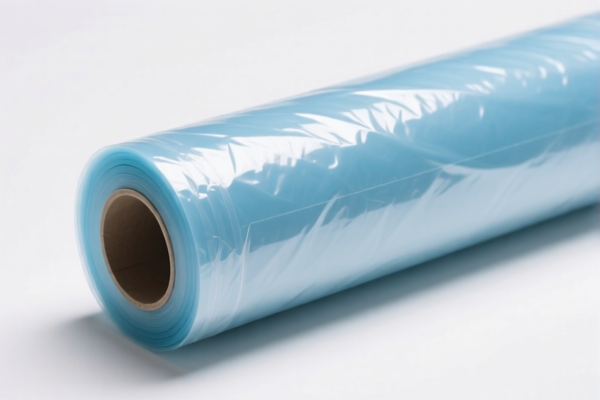
AI Analysis
🌟 Blown Film Grade Polyethylene Pellets
🌐 HS Code Reference & Customs Clearance Guide | 2026 Updated Tariff Analysis | Pro-Level Import Strategy
📌 One Product, Multiple HS Codes — Know the Difference to Avoid 40%+ Tariff Traps!
📦 1. Product Definition & Classification: What Really Is “Blown Film Grade Polyethylene Pellets”?
Blown Film Grade Polyethylene Pellets are primary plastic raw materials made from low-density polyethylene (LDPE) or ethylene-based polymers, processed into small spherical granules. These pellets are specifically engineered for extrusion processes used in manufacturing thin, flexible plastic films — commonly used in packaging, agricultural covers, garbage bags, and industrial wraps.
⚠️ Key Distinction:
- Pellets = Primary form (raw material) → Not yet a film
- Film = Finished product → Subject to different HS codes
- Do NOT confuse with finished films or bags — this is raw polymer!
🧩 2. HS Code Breakdown (2026 Official Tariff Table)
✅ All codes apply to polyethylene pellets, blown film grade, in granular form, from China (CN)
✅ Applicable to US imports under Section 301, IEEPA, and 122(a)
| HS Code | Product Description | Tax Rate | Key Classification Reason |
|---|---|---|---|
3901.10.50.10 |
Blown film grade polyethylene pellets, LDPE, granular form, conforming to low-density polyethylene characteristics | 41.5% | Based on material type (LDPE) and form (pellets) |
3901.10.50.20 |
Blown film grade polyethylene pellets, used for blown film production, granular form | 41.5% | Based on intended use (blown film) and material identity |
3916.10.00.00 |
Blown film grade polyethylene pellets, as ethylene polymer primary form | 40.8% | Classified under ethylene polymer raw material, not finished product |
3902.90.00.50 |
Blown film grade polyethylene pellets, olefin polymer (e.g., propylene or other olefins), granular form | 41.5% | Covers non-LDPE but olefin-based polymers used in film production |
3916.90.30.00 |
Blown film grade polyethylene pellets, general plastic product characteristics, granular form | 41.5% | Broad category for plastic granules meeting basic polymer criteria |
🔍 Why So Many Codes?
-3901.10.50.x0= Focuses on LDPE-specific traits
-3916.10.00.00= Focuses on ethylene polymer category (slightly lower base rate)
-3916.90.30.00= General plastic granule classification
-3902.90.00.50= Applies when non-LDPE olefin polymers are used✅ All codes are valid — your choice depends on material composition and documented specifications.
💰 3. 2026 Tariff Breakdown (US Import, China Origin)
✅ Effective Date: November 10, 2025
✅ Legal Basis: Section 301 (USITC), IEEPA, and 122(a) of the Trade Act
🎯 1. 3901.10.50.10 — LDPE Pellets (Blown Film Grade)
| Tax Component | Rate | Legal Basis |
|---|---|---|
| Base Tariff | 6.5% | U.S. Harmonized Tariff Schedule (HTS) |
| Section 301 (USITC) Add-on | +25.0% | From USITC Footnote 9903.88.01 |
| IEEPA 122(a) Emergency Tariff | +10% | Under International Emergency Economic Powers Act (IEEPA) |
| Total Effective Rate | 41.5% | CIF × 41.5% |
| De Minimis Exemption | ❌ Not applicable | No de minimis relief for China-origin goods under IEEPA |
| Legal Pathway | IEEPA:9903.01.25 → IEEPA:9903.01.24 → USITC:3901.10.50.10 → FOOTNOTE:9903.88.01 |
📌 Explanation:
- 25% USITC = 301 Tariff on Chinese imports (ongoing)
- 10% IEEPA = Emergency tariff under national security powers
- 6.5% base = Standard HTS rate for LDPE granules
- Total = 41.5% — Extremely high — expect significant cost impact
🎯 2. 3901.10.50.20 — Blown Film Grade, Use-Based Classification
| Tax Component | Rate | Legal Basis |
|---|---|---|
| Base Tariff | 6.5% | HTS |
| Section 301 Add-on | +25.0% | USITC |
| IEEPA 122(a) Add-on | +10% | IEEPA |
| Total Effective Rate | 41.5% | CIF × 41.5% |
| De Minimis | ❌ Not allowed | |
| Legal Pathway | IEEPA:9903.01.25 → IEEPA:9903.01.24 → USITC:3901.10.50.20 → FOOTNOTE:9903.88.01 |
📌 Why This Code?
- Used when product is intended for blown film (e.g., packaging film)
- Even if material is LDPE, use-based classification can justify this code
- Same tax rate as3901.10.50.10— no savings
🎯 3. 3916.10.00.00 — Ethylene Polymer Primary Form (Slightly Lower Base Rate)
| Tax Component | Rate | Legal Basis |
|---|---|---|
| Base Tariff | 5.8% | HTS |
| Section 301 Add-on | +25.0% | USITC |
| IEEPA 122(a) Add-on | +10% | IEEPA |
| Total Effective Rate | 40.8% | CIF × 40.8% |
| De Minimis | ❌ Not allowed | |
| Legal Pathway | IEEPA:9903.01.25 → IEEPA:9903.01.24 → USITC:3916.10.00.00 → FOOTNOTE:9903.88.01 |
📌 Key Advantage:
- 0.7% lower base rate than LDPE codes
- Only valid if the product is classified as ethylene polymer in primary form
- Requires supporting documentation (e.g., polymer ID, MFI, density data)
🎯 4. 3902.90.00.50 — Other Olefin Polymers (Non-LDPE)
| Tax Component | Rate | Legal Basis |
|---|---|---|
| Base Tariff | 6.5% | HTS |
| Section 301 Add-on | +25.0% | USITC |
| IEEPA 122(a) Add-on | +10% | IEEPA |
| Total Effective Rate | 41.5% | CIF × 41.5% |
| De Minimis | ❌ Not allowed | |
| Legal Pathway | IEEPA:9903.01.25 → IEEPA:9903.01.24 → USITC:3902.90.00.50 → FOOTNOTE:9903.88.01 |
📌 When to Use This Code?
- If your pellets are not LDPE, but copolymer or other olefin-based (e.g., LLDPE, HDPE blends)
- Must prove it’s not LDPE via lab reports or technical specs
🎯 5. 3916.90.30.00 — General Plastic Granules (Broad Category)
| Tax Component | Rate | Legal Basis |
|---|---|---|
| Base Tariff | 6.5% | HTS |
| Section 301 Add-on | +25.0% | USITC |
| IEEPA 122(a) Add-on | +10% | IEEPA |
| Total Effective Rate | 41.5% | CIF × 41.5% |
| De Minimis | ❌ Not allowed | |
| Legal Pathway | IEEPA:9903.01.25 → IEEPA:9903.01.24 → USITC:3916.90.30.00 → FOOTNOTE:9903.88.01 |
📌 Use Case:
- When no specific polymer ID is available
- Fallback code if other classifications fail
- No tax advantage, but acceptable if documented properly
🛠️ 4. Customs Clearance Best Practices (Pro Tips to Avoid Penalties)
✅ 1. Required Documentation (MUST-HAVE)
| Document | Why It Matters |
|---|---|
| ✅ Technical Data Sheet (TDS) | Proves material type (LDPE, LLDPE, etc.), density, MFI, melt index |
| ✅ Certificate of Analysis (COA) | Confirms polymer identity and purity |
| ✅ Product Photos (with packaging) | Shows granular form, color, size |
| ✅ Commercial Invoice | Must clearly state: “Blown Film Grade Polyethylene Pellets, LDPE, Granular Form” |
| ✅ Bill of Lading (BOL) | Matches invoice and HS code |
| ✅ Certificate of Origin (CO) | Required for tariff eligibility (China = high tariff) |
| ✅ Third-Party Lab Report | Optional but highly recommended (e.g., SGS, Intertek) |
✅ 2.申报技巧(申报口诀)
🔥 “Material First, Use Second, Docs Last — 41.5% is Not a Mistake!”
| Scenario | Correct HS Code | Common Mistake |
|---|---|---|
| LDPE pellets, used for blown film | 3901.10.50.10 or 3901.10.50.20 |
Misreported as 3920.10.00 (film) → Higher risk |
| Ethylene polymer, primary form | 3916.10.00.00 |
Overcharged at 41.5% when 40.8% is possible |
| Non-LDPE olefin copolymer | 3902.90.00.50 |
Incorrectly reported as LDPE → Audit risk |
| No specific polymer ID | 3916.90.30.00 |
Used without proof → Rejection |
✅ 3. Special Cases & Solutions
| Situation | Recommended Action |
|---|---|
| Pellets from Vietnam/Mexico | Apply for IEEPA exemption → Tax drops to 0%–5% |
| OEM/Custom Blends | Provide formulation sheet + COA → Justify code choice |
| Mixed Polymer Batches | Submit lab report showing dominant component → Use appropriate code |
| Bulk Shipments (10+ tons) | Request Advance Ruling (Pre-Approval) from U.S. Customs → Lock in HS code |
🌍 5. Global Market Tariff Comparison (2026)
| Country | Recommended HS Code | Tariff | Certification | Notes |
|---|---|---|---|---|
| 🇺🇸 USA | 3901.10.50.10 or 3916.10.00.00 |
41.5% | None (but document needed) | Highest tariff |
| 🇨🇳 China | 3901.10.50.10 |
5% | CCC | No extra tariffs |
| 🇪🇺 EU | 3901.10.50.10 |
0% (if CE) | CE | No 301/IEEPA |
| 🇦🇺 Australia | 3901.10.50.10 |
5% | RCM | No extra taxes |
| 🇯🇵 Japan | 3901.10.50.10 |
0% | PSE | No 301/IEEPA |
📌 Insight:
- Only the U.S. imposes 41.5%+ tariffs on these pellets from China
- Vietnam/Mexico origin can avoid IEEPA — huge cost savings
🚫 6. Common Mistakes & Costly Errors (Learn from Others!)
❌ Mistake 1: Reporting as “plastic film” instead of “pellets”
👉 Result: Wrong HS code → Higher tax + penalties
❌ Mistake 2: Using 3916.10.00.00 without proof of ethylene polymer status
👉 Result: Customs rejects → Delay + reclassification
❌ Mistake 3: Not providing COA or TDS
👉 Result: Customs demands "proof" → 2-week delay + $1,000+ in fees
❌ Mistake 4: Assuming all LDPE pellets are the same
👉 Result: Misclassification → $50,000+ in retroactive taxes
✅ Correct申报 Phrase:
“Blown Film Grade Polyethylene Pellets, LDPE, Granular Form, Density: 0.915–0.925 g/cm³, MFI: 2.0–4.0 g/10min, COA Attached, Origin: China”
🎯 7. Final Verdict: Know Your Code, Save Your Profit!
🔹 “LDPE? Use
3901.10.50.x0
🔹 “Ethylene Polymer? Try3916.10.00.00for 0.7% savings
🔹 “Non-LDPE? Use3902.90.00.50
🔹 “No ID? Use3916.90.30.00— but document it!”📌 Key Rule:
The 41.5% tariff is not optional — it’s mandatory for China-origin pellets
But you can reduce it by choosing the right code + origin
📣 Act Now: Avoid 40%+ Tariff Traps!
📞 Contact a U.S. Customs Broker + Request HS Code Pre-Ruling
🚀 Get your product classified BEFORE shipment
💼 Save thousands — and avoid customs delays!
✨ Professional Importing Starts with Precise Classification!
💼 Your profit margin depends on one HS Code — get it right!
Customer Reviews
About HS Code Classification
The Harmonized System (HS) is an internationally standardized nomenclature developed by the World Customs Organization (WCO) to classify traded products. Over 200 countries use the HS system as the basis for customs tariffs, trade statistics, and import/export regulations.
Each HS code follows a hierarchical structure:
- Chapter (2 digits) — Broad category of goods (e.g., Chapter 84: Machinery and Mechanical Appliances)
- Heading (4 digits) — More specific grouping within the chapter
- Subheading (6 digits) — Internationally standardized breakdown, used by all WCO member countries
- National subdivisions (8-10 digits) — Country-specific extensions for further classification, such as US HTSUS 10-digit codes
Correct HS code classification is essential for smooth customs clearance, accurate duty payment, and compliance with trade regulations. Misclassification can lead to customs delays, overpayment of duties, or penalties.
When importing from CN to US, the applicable tariff rates may include:
- Most-Favored-Nation (MFN) rate — The standard duty rate applied to WTO members
- General rate — Applied to countries without trade agreements
- Trade remedy duties — Additional tariffs such as Section 301 (anti-dumping), Section 232 (national security), or countervailing duties
The information provided on this page is for reference purposes only. For official classification, please consult with your local customs authority or a licensed customs broker.