Blue Baby Teether
CN → US| HS Code | Tariff Rate | Origin | Destination | Doc |
|---|---|---|---|---|
| 9503000011 | 10.0% | CN | US | Official Doc |
| 9503000071 | 10.0% | CN | US | Official Doc |
| 3926901600 | 20.6% | CN | US | Official Doc |
| 3926909989 | 22.8% | CN | US | Official Doc |
Product Images
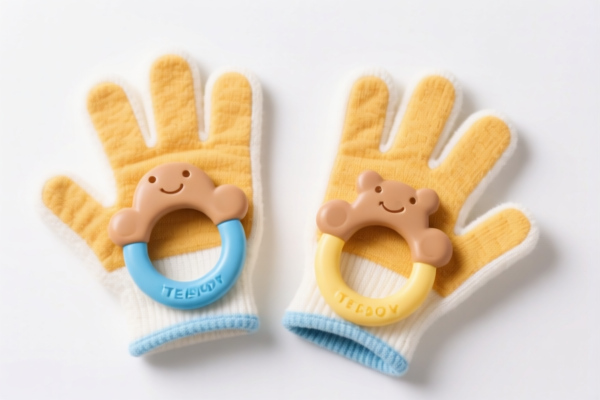
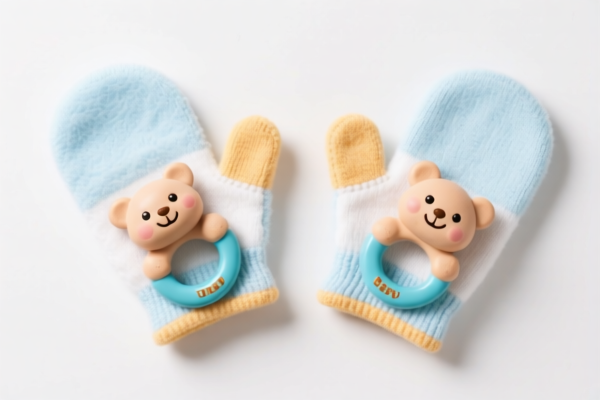
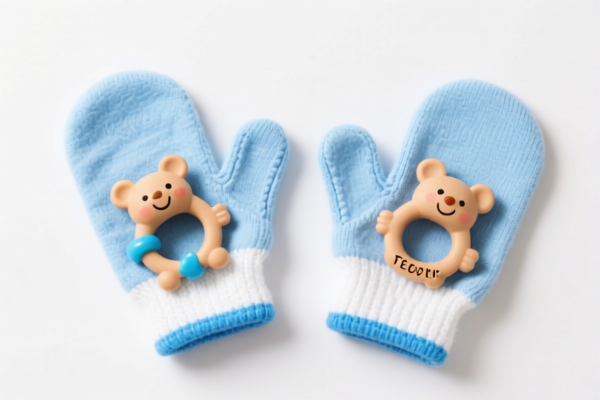
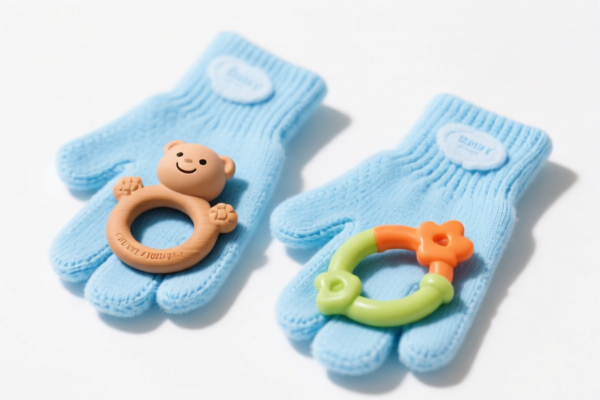
AI Analysis
👶 Blue Baby Teether (婴儿牙胶)
🌐 HS Code Reference & Customs Clearance Guide | 2026 Latest Tariff Analysis | Professional Clearance Strategy
📌 1. Product Definition & Classification: Do You Really Know "Baby Teether"?
The "Blue Baby Teether" is a small, ergonomic accessory designed to relieve gum pain during teething. In international trade, its classification depends heavily on material composition, intended use, and age labeling.
Crucially, for US customs purposes, the distinction between a "Toy" and a "Baby Product" is vital. If labeled for children under 3 years, it falls under specific "Children’s Products" regulations. If it is a pacifier-like object made of plastic/rubber, it may fall under different headings.
⚠️ Key Classification Points: - Is it a Toy? If it has no functional purpose other than play, it’s a toy (
9503). - Is it a Pacifier/Sipper? If it functions as a nipple substitute or drool catcher, it’s often grouped with pacifiers (3926.90.16.00). - Age Labeling: Items labeled for Under 3 Years trigger stricter safety standards (CPSIA) but do not necessarily change the HS Code unless specified.
📦 2. HS Code Classification Details (2026 Latest Tariff Authority Mapping)
Based on the provided data, here are the applicable HS Codes for "Blue Baby Teether" scenarios:
| HS Code | Product Description | Applicable Scenario | Material/Function |
|---|---|---|---|
9503.00.00.11 |
Other toys; dolls’ carriages; reduced-scale models; puzzles; parts/accessories thereof. “Children’s Products”: Inflatable toy balls, balloons, punchballs, of rubber; Labeled/Determined for persons Under 3 years. | Rare/Specific Case: Only if the teether is explicitly an inflatable rubber toy/ball (unlikely for a standard hard teether). Note: This code specifically mentions inflatables. | Rubber (Inflatable) |
9503.00.00.71 |
Other toys; dolls’ carriages; reduced-scale models; puzzles; parts/accessories thereof. “Children’s Products”: Other; Labeled/Determined for persons Under 3 years. | Standard Toy Case: If classified strictly as a non-inflatable toy/sipper for babies under 3. | Plastic/Rubber (Non-inflatable) |
3926.90.16.00 |
Other articles of plastics and articles of other materials of headings 3901 to 3914: Other: Pacifiers. | Pacifier Case: If the product is functionally a pacifier or drool shield, regardless of color ("Blue"). | Plastic/Rubber (Pacifier) |
3926.90.99.89 |
Other articles of plastics and articles of other materials of headings 3901 to 3914: Other: Other Other. | Catch-All Case: If it doesn’t fit "Pacifier" or "Toy under 3" definitions strictly, or if it’s a generic plastic baby accessory not meeting specific toy/pacifier criteria. | Plastic (General) |
🔍 Critical Note: -
9503.00.00.11is highly specific to inflatable rubber items. A standard hard teether likely does not qualify unless it’s a specific inflatable toy. -9503.00.00.71is the most likely "Toy" classification for a non-inflatable teether for kids under 3. -3926.90.16.00is the primary classification if the item is deemed a pacifier (even if marketed as a "teether" for gum relief, customs may view it as a nipple substitute). -3926.90.99.89is the fallback for generic plastic baby items not fitting other specific categories.
💰 3. 2026 Latest Tariff Rate Details (Including Additional Taxes & Policy Add-ons)
✅ Applicable Country: United States (US)
✅ Origin: China (CN)
✅ Effective Time: Current applicable rates based on provided data.
🎯 1. 9503.00.00.11 – Rubber Inflatable Toys/Balls (Under 3)
| Item | Content |
|---|---|
| Base Duty Rate | 0.0% |
| Additional Duty (Section 301) | 0.0% |
| Total Duty Rate | 0.0% |
| Tax Calculation | CIF Value × 0% |
| De Minimis Eligibility | ✅ Yes (Typically eligible if < $800, subject to other regulations) |
| Legal Basis Path | USITC:9503.00.00.11 |
📌 Explanation:
- Toys for children under 3 often enjoy low or zero base duties to encourage family consumption. - No Section 301 surcharge applied in this specific code bracket in the provided data.
🎯 2. 9503.00.00.71 – Other Toys for Children Under 3
| Item | Content |
|---|---|
| Base Duty Rate | 0.0% |
| Additional Duty (Section 301) | 0.0% |
| Total Duty Rate | 0.0% |
| Tax Calculation | CIF Value × 0% |
| De Minimis Eligibility | ✅ Yes |
| Legal Basis Path | USITC:9503.00.00.71 |
📌 Explanation:
- Similar to9503.00.00.11, this category for toys under 3 also shows 0% total tax in the provided dataset. - This makes it a highly favorable classification if the product can be justified as a "toy" rather than a "pacifier" or "general plastic article."
🎯 3. 3926.90.16.00 – Pacifiers
| Item | Content |
|---|---|
| Base Duty Rate | 0.0% |
| Additional Duty (Section 301) | 0.0% |
| Total Duty Rate | 0.0% |
| Tax Calculation | CIF Value × 0% |
| De Minimis Eligibility | ✅ Yes |
| Legal Basis Path | USITC:3926.90.16.00 |
📌 Explanation:
- Pacifiers are often classified under Chapter 39 (Plastics) but enjoy 0% duty in this specific subheading. - Crucial: You must prove the item is a pacifier (functionally similar to a nipple) to use this code. If customs deems it a "teether" that is not a pacifier, they may reclassify it to3926.90.99.89.
🎯 4. 3926.90.99.89 – Other Plastic Articles (General Catch-All)
| Item | Content |
|---|---|
| Base Duty Rate | 5.3% |
| Additional Duty (Section 301) | 7.5% |
| Total Duty Rate | 12.8% |
| Tax Calculation | CIF Value × 12.8% |
| De Minimis Eligibility | ✅ Yes (if < $800) |
| Legal Basis Path | USITC:3926.90.99.89 |
📌 Explanation:
- This is the most expensive option in the provided data. - It applies to generic plastic baby products that don’t fit "Toy" (Ch. 95) or "Pacifier" (Ch. 39, specific) categories. - Avoid this classification if possible by properly arguing for Toy or Pacifier status.
🛠️ 4. Customs Clearance Practical Advice (Battle-Tested Pitfall Guide)
✅ 1. Required Documentation Checklist (None Missing)
| Document | Mandatory? | Explanation |
|---|---|---|
| ✅ Product Specifications | ✔️ | Include material (Food-grade Silicone? PVC? Rubber?), dimensions, and design. |
| ✅ Material Safety Data Sheet (MSDS) | ✔️ | Proof of non-toxic, BPA-free, food-safe materials. Critical for baby products. |
| ✅ Third-Party Testing Report | ✔️ | ASTM F963 (Toy Standard) or CPSIA (Children’s Product Standard) for US market. |
| ✅ Commercial Invoice | ✔️ | Clearly describe as "Baby Teether" or "Pacifier", not just "Plastic Toy". |
| ✅ Origin Certificate | ✔️ | To confirm China origin and apply correct Section 301 rates. |
| ✅ Photos (Clear) | ✔️ | Show the product shape, packaging, and any "Under 3" labeling. |
✅ 2. Declaration Tips (Key Mantras)
🔥 “Label for Under 3, Claim Toy Status, Avoid 12.8% Tax!”
| Scenario | Correct Declaration Strategy | Wrong Approach |
|---|---|---|
| Product is a simple chewable ring | Declare as Toy (9503.00.00.71) if possible. |
Call it "Plastic Accessory" → 3926.90.99.89 (12.8%) |
| Product has a nipple shield | Declare as Pacifier (3926.90.16.00). |
Call it "Teether" without explaining function → Risk of reclassification |
| Product is an inflatable ball | Declare as Inflatable Toy (9503.00.00.11). |
Call it "Rubber Ball" → May still be 9503.00.00.71 but check function |
| Product is labeled "Not for Under 3" | Could be classified as General Plastic (3926.90.99.89). |
Ignoring age label → Compliance risk |
📌 Pro Tip:
- If your teether is not a pacifier (no nipple) and not inflatable, try to classify under9503.00.00.71(Toy for Under 3) for 0% duty. - Argue that it is a "Teething Toy" which falls under Chapter 95 (Toys), not Chapter 39 (Plastics). - Documentation is Key: Provide an ASTM F963 test report to support the "Toy" classification.
✅ 3. Special Cases Handling
| Situation | Handling Advice |
|---|---|
| OEM Custom Teether | Provide design drawings to show it’s a "toy" rather than a medical device or generic plastic part. |
| Mixed Packaging | If sold as a set (Teether + Carrier), declare the main item (Teether) but note the set. Don’t split if it’s sold as one unit. |
| Color "Blue" | Color is irrelevant to HS Code. Focus on function (Toy vs. Pacifier) and Age Label. |
| Material: Silicone | Silicone is often treated as Plastic (Ch. 39) or Rubber (Ch. 40/95). If it’s a teether, Chapter 95 is preferable for lower tax. |
🌍 5. Global Market Clearance Comparison (2026 Latest)
| Country/Region | Recommended HS Code | Duty Rate | Certification Required | Notes |
|---|---|---|---|---|
| 🇺🇸 USA | 9503.00.00.71 |
0.0% | CPSIA, ASTM F963, CPC | Best for 0% tax. Avoid 3926.90.99.89 (12.8%). |
| 🇺🇸 USA (If Pacifier) | 3926.90.16.00 |
0.0% | FDA, CPSIA | Only if it functions as a pacifier. |
| 🇨🇳 China | 9503.00.00 |
5-9% | CCC (if applicable) | No Section 301. |
| 🇪🇺 EU | 9503.00 |
0% (if < 6 yrs) | CE, EN71 | No Section 301. |
| 🇬🇧 UK | 9503.00 |
0% | UKCA, EN71 | Post-Brexit rules apply. |
📌 Conclusion:
- US Market: Aggressively pursue9503.00.00.71(Toy under 3) or3926.90.16.00(Pacifier) to achieve 0% duty. - Avoid3926.90.99.89unless the product is clearly not a toy and not a pacifier (e.g., a generic plastic spoon accessory).
📌 6. Common Mistakes & Pitfall Guide (Lessons Learned)
❌ Mistake 1: Classifying a "Teether" as a general "Plastic Article" (3926.90.99.89)
👉 Result: Pay 12.8% duty instead of 0%. Loss of 12.8% margin!
❌ Mistake 2: Not providing CPSIA/ASTM F963 test reports
👉 Result: US Customs may detain goods for safety compliance, leading to storage fees and delays.
❌ Mistake 3: Calling it a "Medical Device"
👉 Result: FDA approval required, which is expensive and unnecessary for a simple teether. Stick to "Toy" or "Pacifier".
❌ Mistake 4: Ignoring "Under 3" Labeling
👉 Result: If not labeled for Under 3, it may not qualify for the "Children's Product" toy codes, pushing it to general plastic categories.
✅ Correct Declaration Example:
"Baby Teething Toy, Silicone, Blue, Labeled for Children Under 3 Years, ASTM F963 Certified, Model BT-123"
HS Code:9503.00.00.71
Duty: 0.0%
🎯 7. Conclusion: Professional Declaration Saves Money!
🎯 Remember the Mantra:
🔹 "Under 3? Call it a Toy!
9503.71gets 0%!
🔹 Pacifier?3926.16gets 0%!
🔹 General Plastic?3926.89pays 12.8%!
🔹 Choose wisely, save your cash!"
📌 Pro Tip:
- If your "Blue Baby Teether" is silicone, ensure your supplier provides a Food Contact Material (FCM) certificate.
- For US imports, CPC (Children’s Product Certificate) is mandatory for goods under 12.
- Pre-clearance: Submit product details to a customs broker before shipping to confirm 9503.00.00.71 is acceptable for your specific design.
📣 Immediate Action:
📞 Contact your customs broker with product photos and ASTM F963 test report.
🚀 Secure 0% Duty by declaring correctly as a Toy for Children Under 3.
✨ Professional Clearance, Precise Classification!
💼 Your 12.8% Saving Starts with the Right HS Code!
Customer Reviews
About HS Code Classification
The Harmonized System (HS) is an internationally standardized nomenclature developed by the World Customs Organization (WCO) to classify traded products. Over 200 countries use the HS system as the basis for customs tariffs, trade statistics, and import/export regulations.
Each HS code follows a hierarchical structure:
- Chapter (2 digits) — Broad category of goods (e.g., Chapter 84: Machinery and Mechanical Appliances)
- Heading (4 digits) — More specific grouping within the chapter
- Subheading (6 digits) — Internationally standardized breakdown, used by all WCO member countries
- National subdivisions (8-10 digits) — Country-specific extensions for further classification, such as US HTSUS 10-digit codes
Correct HS code classification is essential for smooth customs clearance, accurate duty payment, and compliance with trade regulations. Misclassification can lead to customs delays, overpayment of duties, or penalties.
When importing from CN to US, the applicable tariff rates may include:
- Most-Favored-Nation (MFN) rate — The standard duty rate applied to WTO members
- General rate — Applied to countries without trade agreements
- Trade remedy duties — Additional tariffs such as Section 301 (anti-dumping), Section 232 (national security), or countervailing duties
The information provided on this page is for reference purposes only. For official classification, please consult with your local customs authority or a licensed customs broker.