Blue Ceramic Tea Cup Set 5 Pieces
CN → US| HS Code | Tariff Rate | Origin | Destination | Doc |
|---|---|---|---|---|
| 6911103710 | 25.5% | CN | US | Official Doc |
| 6911103510 | 43.5% | CN | US | Official Doc |
| 6912003510 | 19.8% | CN | US | Official Doc |
Product Images
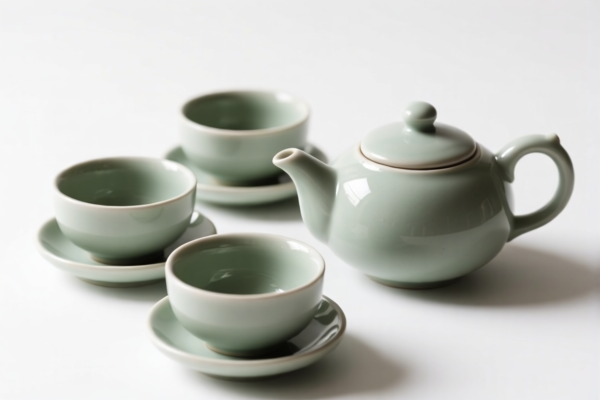
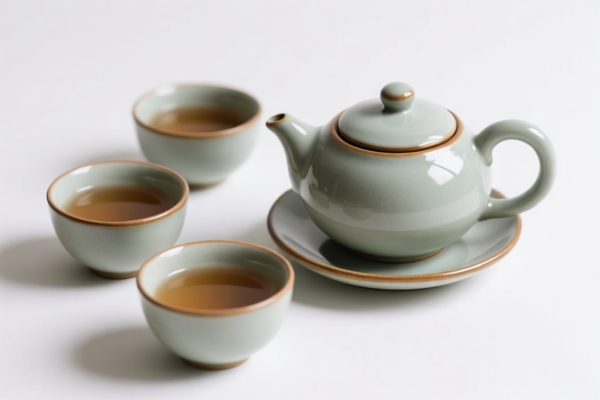
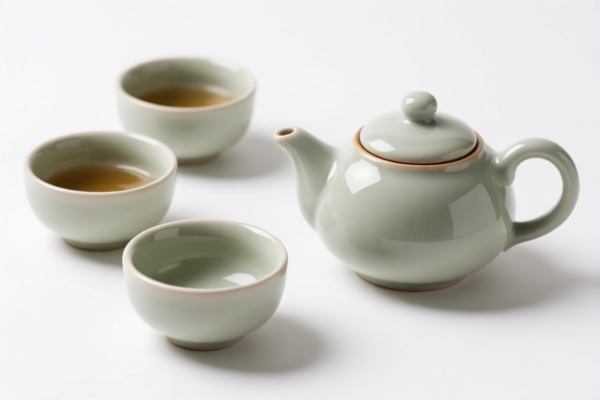
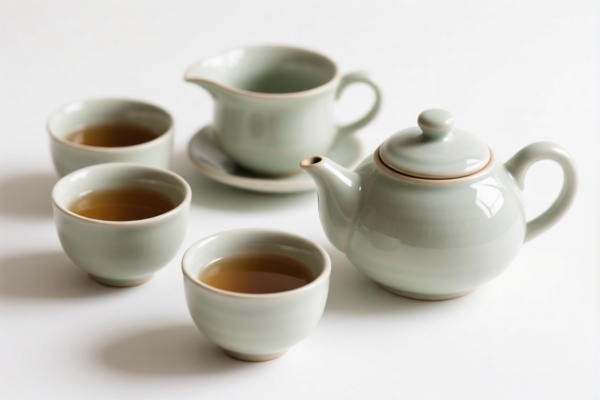
AI Analysis
🍵 Ceramic Tea Cup Set (5 Pieces)
🌐 HS Code Reference & Customs Clearance Guide | 2026 Latest Tariff Analysis | Professional Clearance Strategy
📌 I. Product Definition & Classification: What is a "Ceramic Tea Cup Set"?
A 5-Piece Blue Ceramic Tea Cup Set typically consists of ceramic teacups, saucers, or associated tea-serving utensils packed together. In international trade, ceramic tableware is categorized based on:
- Material: Must be identified as "Porcelain" (瓷制), "Chinaware" (瓷器), or generic "Ceramic" (陶瓷).
- Function: Specifically for table use (teacups, saucers).
- Packaging: "Set" implies multiple items designed for complementary use, often triggering specific subheadings for "sets."
⚠️ Key Distinction:
- If the item is strictly porcelain and intended for table use (drinking tea), it generally falls under Heading 6911.
- If the material is broader ceramic (stoneware, earthenware, etc.) or lacks specific porcelain certification, it may fall under Heading 6912.
- Note: The specific 10-digit code determines the tax rate significantly, especially under US trade policies (Section 301 / IEEPA).
📦 II. HS Code Classification Details (2026 Latest Tariff Authority)
Based on the provided data, here are the three potential classifications for your product. The choice depends on the specific material certification (Porcelain vs. Ceramic) and precise dimensional specifications.
| HS Code | Product Description | Applicable Scenario | Material/Usage Match |
|---|---|---|---|
6911.10.37.10 |
Tableware, kitchenware... of porcelain, shaped otherwise than by moulding | Specific dimensional limits for teacups | ✅ High Match: Explicitly mentions "Porcelain" and "Teacup Sets." Fits if dimensions are standard. |
6911.10.35.10 |
Tableware, kitchenware... of porcelain | General teacups/saucers | ✅ High Match: Covers "Porcelain" and "Tea Cup Sets." Often used for standard 5-piece sets. |
6912.00.35.10 |
Other ceramic tableware, kitchenware, other toilet articles | Broader ceramic category | ✅ Fallback: Used if material is "Ceramic" but not strictly "Porcelain," or if dimensions don't fit 6911 limits. |
🔍 Critical Insight:
- 6911 is for Porcelain (high-fired, white/translucent).
- 6912 is for Other Ceramic (stoneware, earthenware, lower-fired).
- Blue Color: The color "Blue" does not change the HS Code but must be declared in the description.
- 5 Pieces: Confirms it is a "Set," which often aligns with the "Tea Cup Set" sub-descriptions in 6911.10.
💰 III. 2026 Latest Tariff Rate Breakdown (Including Additional Duties)
✅ Applicable Country: USA (US)
✅ Country of Origin: China (CN)
✅ Effective Date: 2025/2026 (Post-Section 301 & IEEPA adjustments)
🎯 1. 6911.10.37.10 — Porcelain Teacups (Specific Dimensions)
| Item | Content |
|---|---|
| Base Tariff | 8.0% |
| Additional Duty (Section 301) | 7.5% |
| IEEPA / Section 122 Duty | 10.0% |
| Total Tax Rate | 25.5% |
| Calculation | CIF Value × 25.5% |
| De Minimis Exemption | ❌ Not Eligible (High total rate usually disqualifies from de minimis if threshold is strict, or subject to specific exclusions) |
| Legal Path | HTSUS:6911.10.37.10 → Section 301: Footnote 9903.88.01 → IEEPA: 10% surcharge |
📌 Analysis:
- This code offers the lowest total tax rate (25.5%) among the options.
- Condition: The product must strictly meet the "dimensions" and "shape" definitions for this specific subheading.
- Strategy: If your tea cups are standard size and made of true porcelain, this is the optimal code.
🎯 2. 6911.10.35.10 — Other Porcelain Tableware
| Item | Content |
|---|---|
| Base Tariff | 26.0% |
| Additional Duty (Section 301) | 7.5% |
| IEEPA / Section 122 Duty | 10.0% |
| Total Tax Rate | 43.5% |
| Calculation | CIF Value × 43.5% |
| De Minimis Exemption | ❌ Not Eligible |
| Legal Path | HTSUS:6911.10.35.10 → Section 301 → IEEPA |
📌 Analysis:
- This code has a high base tariff (26%).
- Risk: Do not use this unless the product falls under a different "shape" category that still qualifies as porcelain but not 6911.10.37.
- Cost Impact: Nearly 1.7x the tax of code 6911.10.37.10. Avoid if possible.
🎯 3. 6912.00.35.10 — Other Ceramic Tableware
| Item | Content |
|---|---|
| Base Tariff | 9.8% |
| Additional Duty (Section 301) | 0.0% |
| IEEPA / Section 122 Duty | 10.0% |
| Total Tax Rate | 19.8% |
| Calculation | CIF Value × 19.8% |
| De Minimis Exemption | ⚠️ Possible Check: Section 301 does not apply here (0%), but IEEPA 10% still applies. |
| Legal Path | HTSUS:6912.00.35.10 → IEEPA: 10% surcharge |
📌 Analysis:
- This code has the lowest total tax rate (19.8%).
- Crucial Condition: The material must NOT be classified as "Porcelain" (6911). It must be "Other Ceramic" (e.g., stoneware, earthenware).
- Risk: If CBP determines your "Blue Ceramic" is actually porcelain, you will face misclassification penalties and back taxes (difference between 19.8% and 25.5% or 43.5%).
- Strategy: Use this ONLY if the product is explicitly non-porcelain ceramic.
🛠️ IV. Customs Clearance Practical Advice (Battle-Tested Tips)
✅ 1. Documentation Checklist (Essential for Approval)
| Document | Required | Description |
|---|---|---|
| ✅ Product Description | ✔️ | "5-Piece Blue Ceramic Tea Cup Set, Porcelain/Stoneware, Set of 5" |
| ✅ Material Certification | ✔️ | Proof of material (Porcelain vs. Ceramic). Crucial for 6911 vs 6912. |
| ✅ Dimensions | ✔️ | Diameter/Height of cups. Needed to validate 6911.10.37.10 vs 35.10. |
| ✅ Commercial Invoice | ✔️ | Must show unit price and total CIF value. |
| ✅ Packing List | ✔️ | Confirm "5 Pieces" as a set. |
| ✅ HS Code Pre-Ruling | ⭐ Recommended | Apply for an Advance Ruling to confirm 6911 vs 6912 status. |
✅ 2. Declaration Strategy (Key Formulas)
🔥 "Porcelain goes to 6911, Other Ceramic to 6912. Check dimensions, check material. Get the lowest legal rate!"
| Scenario | Recommended HS Code | Total Tax | Reason |
|---|---|---|---|
| True Porcelain, Standard Cup Size | 6911.10.37.10 |
25.5% | Lowest rate for porcelain. Best balance of compliance and cost. |
| True Porcelain, Non-Standard/General | 6911.10.35.10 |
43.5% | High tax. Avoid unless necessary. |
| Stoneware/Earthenware (Non-Porcelain) | 6912.00.35.10 |
19.8% | Lowest Tax, but High Audit Risk if material is actually porcelain. |
✅ 3. Special Considerations
| Situation | Advice |
|---|---|
| "Ceramic" Ambiguity | If the product is marketed as "Ceramic" but looks like porcelain, CBP may reclassify to 6911. Recommendation: Use 6911.10.37.10 (25.5%) as a safer middle ground if unsure, rather than risking 6912 (19.8%) with penalty risks. |
| Section 122 / IEEPA | All listed codes are subject to 10% IEEPA duty. Ensure this is added to your cost calculation. |
| De Minimis (Section 321) | Total tax > 10% generally disqualifies packages from de minimis exemption in many cases, or requires strict documentation. For 5-piece sets, full entry is likely required. |
| Color "Blue" | Does not affect HS Code. Include in description: "Blue glazed porcelain teacup set." |
🌍 V. Global Market Comparison (2026)
| Country/Region | Recommended HS Code | Tariff (China Origin) | Notes |
|---|---|---|---|
| 🇺🇸 USA | 6911.10.37.10 or 6912.00.35.10 |
25.5% or 19.8% | High taxes due to Section 301 & IEEPA. |
| 🇨🇳 China | 6911.10.37.10 |
~8% | Low import tax. |
| 🇪🇺 EU | 6911.10.37.10 |
~0-6.5% | No Section 301. VAT applies. |
| 🇬🇧 UK | 6911.10.37.10 |
~6.5% | Post-Brexit tariffs. |
| 🇨🇦 Canada | 6911.10.37.10 |
~0-5% | CUSMA/USMCA does not apply to China. |
📌 Conclusion:
- USA is the most expensive market for ceramic tableware from China due to Section 301 (7.5%) and IEEPA (10%) add-ons.
- EU/UK/Canada are significantly cheaper, but may have different HS coding nuances.
📌 VI. Common Mistakes & Pitfalls (Lessons Learned)
❌ Mistake 1: Using 6912.00.35.10 (19.8%) for Porcelain items.
👉 Consequence: CBP audits may reclassify to 6911 (25.5% or 43.5%), leading to back taxes + penalties.
❌ Mistake 2: Ignoring the "Set" aspect.
👉 Consequence: Declaring items individually as "Teacup" and "Saucer" separately can lead to higher combined duties or valuation issues. Always declare as a Set.
❌ Mistake 3: Missing the IEEPA 10% in cost calculations.
👉 Consequence: Profit margin erosion. Many traders forget that IEEPA 10% applies to all 6911/6912 codes from China, even if Section 301 doesn't (in 6912's case).
❌ Mistake 4: Vague description "Ceramic Cup."
👉 Consequence: CBP may assess the highest possible rate (6911.10.35.10 at 43.5%) due to lack of clarity on material/shape.
✅ Correct Approach:
"5-Piece Blue Porcelain Tea Cup Set, Model XYZ, Standard Size, HTS: 6911.10.37.10, Subject to 25.5% Total Duty."
🎯 VII. Conclusion: Smart Classification for Maximum Savings
🎯 Remember the Rule:
🔹 "Porcelain = 6911 (25.5% or 43.5%) | Ceramic = 6912 (19.8%)"
🔹 "Verify Material First, Then Choose Code."
🔹 "IEEPA 10% is Universal for China-Origin Ceramics."
📌 Pro Tip:
If you are unsure whether your product is "Porcelain" or "Stoneware," consider testing it or using a consultant to confirm. Misclassifying porcelain as "Other Ceramic" to save 5.7% (25.5% - 19.8%) is a high-risk audit target.
📣 Immediate Action:
📞 Verify Material: Is it Porcelain or Stoneware?
📏 Measure Dimensions: Do they fit 6911.10.37.10?
📄 File Pre-Ruling: Secure your HS Code before shipping.
🚀 Clear Customs Smoothly, Optimize Taxes, Maximize Profit!
✨ Professional Clearance Starts with Accurate Classification!
💼 Every Percentage Point of Tax Matters!
Customer Reviews
About HS Code Classification
The Harmonized System (HS) is an internationally standardized nomenclature developed by the World Customs Organization (WCO) to classify traded products. Over 200 countries use the HS system as the basis for customs tariffs, trade statistics, and import/export regulations.
Each HS code follows a hierarchical structure:
- Chapter (2 digits) — Broad category of goods (e.g., Chapter 84: Machinery and Mechanical Appliances)
- Heading (4 digits) — More specific grouping within the chapter
- Subheading (6 digits) — Internationally standardized breakdown, used by all WCO member countries
- National subdivisions (8-10 digits) — Country-specific extensions for further classification, such as US HTSUS 10-digit codes
Correct HS code classification is essential for smooth customs clearance, accurate duty payment, and compliance with trade regulations. Misclassification can lead to customs delays, overpayment of duties, or penalties.
When importing from CN to US, the applicable tariff rates may include:
- Most-Favored-Nation (MFN) rate — The standard duty rate applied to WTO members
- General rate — Applied to countries without trade agreements
- Trade remedy duties — Additional tariffs such as Section 301 (anti-dumping), Section 232 (national security), or countervailing duties
The information provided on this page is for reference purposes only. For official classification, please consult with your local customs authority or a licensed customs broker.