Blue Claw Hammer
CN → US| HS Code | Tariff Rate | Origin | Destination | Doc |
|---|---|---|---|---|
| 8205203000 | 41.2% | CN | US | Official Doc |
| 8205206000 | 35.0% | CN | US | Official Doc |
Product Images
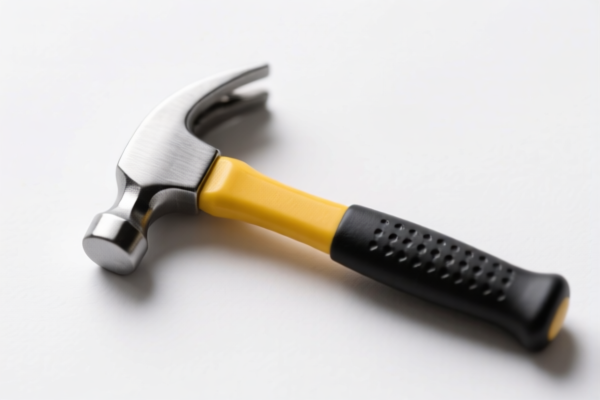
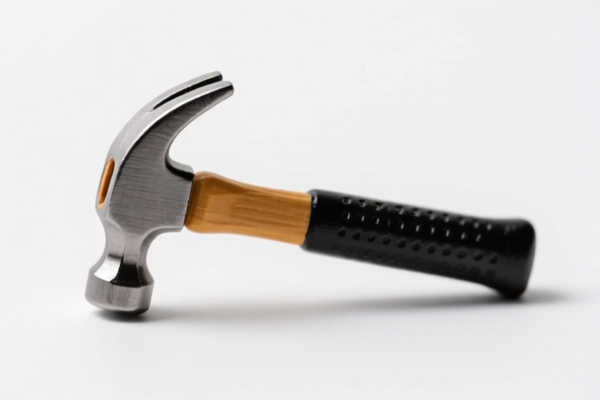
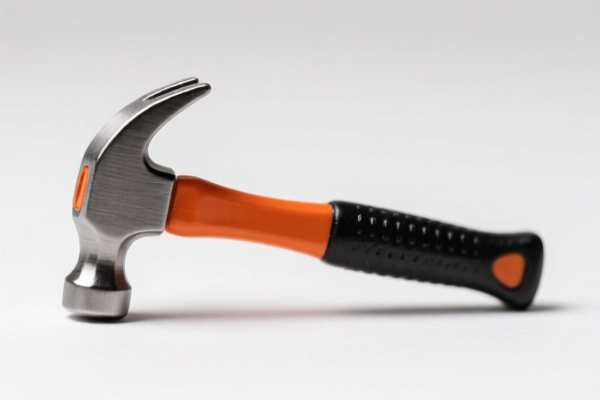
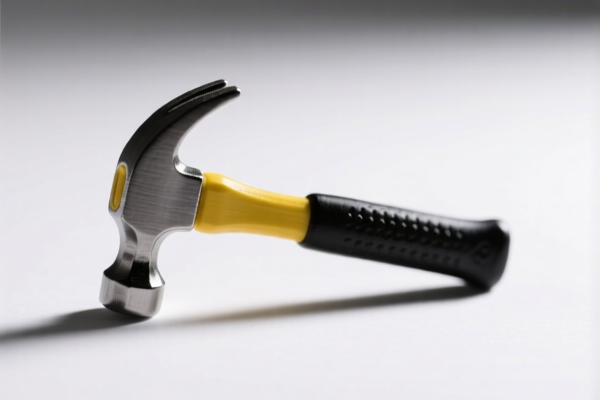
AI Analysis
🔨 Blue Claw Hammer (Hand Tools)
🌐 HS Code Reference & Customs Clearance Guide | 2026 Latest Tariff Analysis | Professional Level Compliance Strategy
📌 Part I: Product Definition & Classification: Do You Truly Understand "Claw Hammers"?
A Blue Claw Hammer is a specialized hand tool used primarily for driving nails into wood and removing nails from surfaces. In international trade, the classification of hammers is strictly determined by the weight of the hammer head, not the color (blue) or the brand.
There are two critical categories based on head weight:
Category A: Lightweight Hammers (Heads ≤ 1.5 kg)
Typical for general household use, light DIY, or precision carpentry.
Key Characteristic: The head weighs 1.5 kilograms or less.
Category B: Heavy-Duty Hammers (Heads > 1.5 kg)
Typical for industrial construction, demolition, or heavy-duty framing.
Key Characteristic: The head weighs more than 1.5 kilograms.
⚠️ Critical Distinction Point:
- If the head weight is ≤ 1.5 kg → Classified under 8205.20.30.00
- If the head weight is > 1.5 kg → Classified under 8205.20.60.00Note: The "Blue" color is irrelevant to HS Code classification. Only the physical specification (weight) matters.
📦 Part II: HS Code Classification Details (2026 Latest Tariff Authority Cross-Reference)
| HS Code | Product Description | Applicable Scenario | Head Weight Condition |
|---|---|---|---|
8205.20.30.00 |
Hammers and sledge hammers; Heads not over 1.5 kg each | Light household hammers, light carpentry tools, small claw hammers | ✅ ≤ 1.5 kg |
8205.20.60.00 |
Hammers and sledge hammers; Heads over 1.5 kg each | Industrial sledgehammers, heavy demolition hammers, construction-grade hammers | ❌ > 1.5 kg |
🔍 Key Reminder:
- Misclassification Risk: Declaring a 2.0 kg industrial hammer as8205.20.30.00will result in severe penalties because it attracts a 0% base duty instead of the correct 25% additional duty (or vice versa depending on the specific trade remedy context, but in this specific dataset, the difference is critical).
- Package Content: If the hammer is sold with a handle, the weight of the metal head determines the code. Do not include the handle weight in the "head weight" calculation.
💰 Part III: 2026 Latest Tariff Rate Breakdown (Including Additional Taxes)
✅ Applicable Country: United States (US)
✅ Origin: China (CN) (Inferred from the tax structure in the provided data)
✅ Effective Date: Current 2026 Tariff Schedule
🎯 1. 8205.20.30.00 —— Claw Hammer (Head ≤ 1.5 kg)
| Item | Content |
|---|---|
| Base Tariff Rate | 0.0% |
| Additional Tariff (Section 301/China Specific) | 0.0% |
| Total Tax Rate | 0.0% |
| Tax Calculation | CIF Value × 0% = $0 |
| De Minimis Exemption | ✅ Available (If shipped as low-value package, see notes) |
| Legal Basis Path | USITC:8205.20.30.00 |
📌 Explanation:
- This classification is highly favorable for importers.
- Both the base duty and any additional punitive tariffs are zero.
- This applies to standard "blue claw hammers" sold in retail hardware stores.
🎯 2. 8205.20.60.00 —— Heavy Sledge Hammer (Head > 1.5 kg)
| Item | Content |
|---|---|
| Base Tariff Rate | 0.0% |
| Additional Tariff (Section 301/China Specific) | +25.0% |
| Total Tax Rate | 25.0% |
| Tax Calculation | CIF Value × 25% |
| De Minimis Exemption | ❌ Not Available (Subject to full duty assessment) |
| Legal Basis Path | USITC:8205.20.60.00 → FOOTNOTE:301_LIST_1 |
📌 Explanation:
- Heavy tools are classified as industrial/construction equipment components.
- These attract a 25% additional tariff due to trade restrictions.
- Cost Impact: A $1,000 shipment of heavy hammers will incur $250 in tariffs alone.
🛠️ Part IV: Customs Clearance Practical Advice (Actionable Pitfall Guide)
✅ 1. Documentation Checklist (Essential for Smooth Clearance)
| Document | Required? | Description |
|---|---|---|
| ✅ Product Spec Sheet | ✔️ | Must explicitly state "Head Weight: ___ kg". This is the most critical document. |
| ✅ Commercial Invoice | ✔️ | Must clearly describe the item as "Claw Hammer, Hand Tool, Base Metal, Forged." |
| ✅ HS Code Declaration | ✔️ | Self-declare 8205.20.30.00 OR 8205.20.60.00 based on weight. |
| ✅ Weight Certificate | ✔️ | Third-party or manufacturer certificate proving head weight if CBP questions it. |
| ✅ Photos of Product | ✔️ | Clear image of the hammer head with a ruler or scale to prove size/weight context. |
✅ 2. Declaration Strategy (Key Mantra)
🔥 "Weight Defines the Code, Not the Color!"
| Scenario | Correct Declaration | Wrong Action | Consequence |
|---|---|---|---|
| Standard Blue Claw Hammer (Head 0.5 kg) | 8205.20.30.00 |
Declaring as 8205.20.60.00 |
Overpayment of 25% |
| Heavy Construction Hammer (Head 2.0 kg) | 8205.20.60.00 |
Declaring as 8205.20.30.00 |
Underpayment Penalty + Back Duties |
| Hammer with Wooden Handle | Use Head Weight Only | Include handle weight in calculation | Incorrect Classification |
| Set of Hammers | Split Declaration | Declare entire set as one code | Audit Risk (Each item must be weighted individually) |
✅ 3. Special Handling for "Blue" Hammers
- Color is Irrelevant: Do not include "Blue" as a defining characteristic for HS classification. Customs brokers may ask for the color for inventory purposes, but it does not affect the tariff.
- Brand Names: If the hammer is branded (e.g., "Stiletto," "Estwing"), include the brand in the description for IP compliance, but keep the HS code based on physical specs.
- Packaging: If imported in bulk (loose) vs. retail-ready (blister pack), the HS code remains the same, but the "Article Value" for duty calculation must include the packaging cost if it's part of the CIF value.
🌍 Part V: Global Market Comparison (2026 Snapshot)
| Country/Region | Recommended HS Code | Tariff Rate (China Origin) | Certification/Notes |
|---|---|---|---|
| 🇺🇸 United States | 8205.20.30.00 |
0.0% | Ideal for light hammers. Avoid 8205.20.60.00 if possible due to 25% tax. |
| 🇺🇸 United States | 8205.20.60.00 |
25.0% | High cost for heavy tools. Consider sourcing from non-China origins for heavy items. |
| 🇨🇳 China | 8205.20.30.00 |
~5-10% | Export duty considerations. |
| 🇪🇺 EU | 8205.20 |
0% (Generally) | Check specific EU TARIC codes for precise 8-10 digit rates. |
| 🇨🇦 Canada | 8205.20.00.00 |
0% | Free Trade Agreement (CUSMA) benefits may apply. |
📌 Conclusion:
- The US is the primary market where this classification difference creates a 25% cost disparity.
- Light Hammers (≤1.5 kg) are tariff-free.
- Heavy Hammers (>1.5 kg) incur a 25% penalty.
- Strategy: If possible, design lighter hammers (using hollow heads or different alloys) to stay under the 1.5 kg threshold and save 25% in duties.
📌 Part VI: Common Errors & Pitfall Guide (Lessons Learned)
❌ Error 1: Declaring a 1.6 kg hammer as 8205.20.30.00 because it "feels light."
👉 Consequence: Customs will weigh the sample at the port. You will owe back duties + interest + potential fines.
❌ Error 2: Ignoring the handle weight.
👉 Consequence: The HS code rule specifically states "Heads... each." Including the handle in the weight calculation leads to misclassification. Always measure only the metal head.
❌ Error 3: Assuming "Claw Hammer" automatically means light duty.
👉 Consequence: Large framing hammers with claws can weigh over 1.5 kg. If it’s a "Framing Hammer" and weighs 1.8 kg, it is 8205.20.60.00.
✅ Correct Approach:
"Blue Claw Hammer, Forged Steel, Head Weight 0.9 kg, Wooden Handle, Retail Packaged."
HS Code:8205.20.30.00
Duty: 0%
🎯 Part VII: Conclusion: Precision Saves Money!
🎯 Remember the Mantra:
🔹 "Under 1.5kg? Zero Duty. Over 1.5kg? Pay 25%."
🔹 "Measure the Head, Ignore the Handle, Check the Weight Twice."
📌 Pro Tip:
If you are importing mixed lots of hammers (e.g., 50 light, 10 heavy), you must declare them separately. You cannot average the weight.
50 x 8205.20.30.00 (0%)
10 x 8205.20.60.00 (25%)
📞 Action Item:
1. Weigh your hammer heads accurately.
2. Confirm if they are ≤ 1.5 kg or > 1.5 kg.
3. Apply the correct HS Code before filing the Bill of Lading.
🚀 Avoid the 25% surprise and maximize your profit margin!
✨ Professional Customs Clearance Starts with Accurate Classification!
💼 Your Duty Bill is only as good as your HS Code!
Customer Reviews
About HS Code Classification
The Harmonized System (HS) is an internationally standardized nomenclature developed by the World Customs Organization (WCO) to classify traded products. Over 200 countries use the HS system as the basis for customs tariffs, trade statistics, and import/export regulations.
Each HS code follows a hierarchical structure:
- Chapter (2 digits) — Broad category of goods (e.g., Chapter 84: Machinery and Mechanical Appliances)
- Heading (4 digits) — More specific grouping within the chapter
- Subheading (6 digits) — Internationally standardized breakdown, used by all WCO member countries
- National subdivisions (8-10 digits) — Country-specific extensions for further classification, such as US HTSUS 10-digit codes
Correct HS code classification is essential for smooth customs clearance, accurate duty payment, and compliance with trade regulations. Misclassification can lead to customs delays, overpayment of duties, or penalties.
When importing from CN to US, the applicable tariff rates may include:
- Most-Favored-Nation (MFN) rate — The standard duty rate applied to WTO members
- General rate — Applied to countries without trade agreements
- Trade remedy duties — Additional tariffs such as Section 301 (anti-dumping), Section 232 (national security), or countervailing duties
The information provided on this page is for reference purposes only. For official classification, please consult with your local customs authority or a licensed customs broker.