Blue Cotton and Linen Canvas Bag
CN → US| HS Code | Tariff Rate | Origin | Destination | Doc |
|---|---|---|---|---|
| 6305200000 | 23.7% | CN | US | Official Doc |
| 6305900000 | 23.7% | CN | US | Official Doc |
| 4202926091 | 41.3% | CN | US | Official Doc |
Product Images
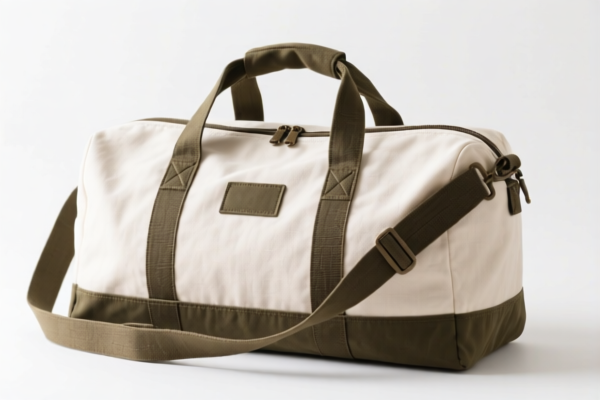
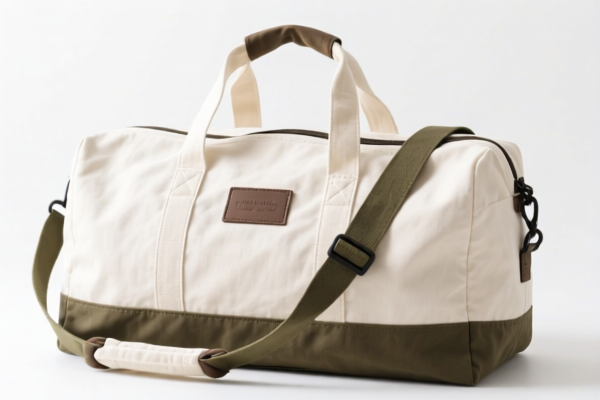
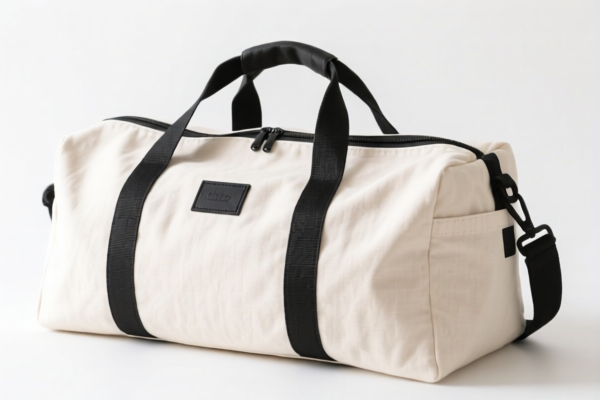
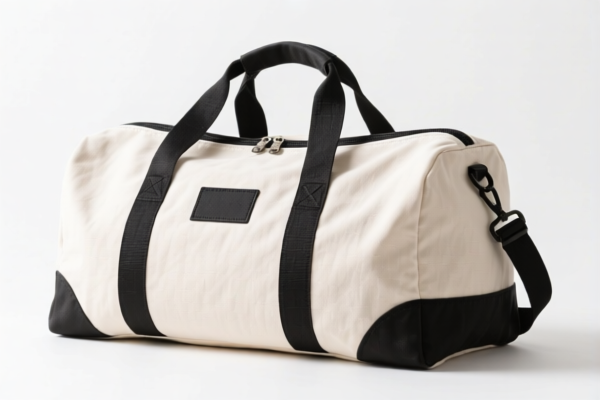
AI Analysis
🎒 Blue Cotton and Linen Canvas Bag
🌐 HS Code Reference & Customs Clearance Guide | 2026 Latest Tariff Analysis | Professional-Level Clearance Strategy
📌 Part 1: Product Definition & Classification: Do You Really Understand "Canvas Bags"?
A "Blue Cotton and Linen Canvas Bag" is a versatile container used for retail, logistics, or daily carry. In international trade, its classification depends heavily on the specific material composition and structural design. It is not a single uniform category but splits based on customs interpretations of "textile" vs. "prepared articles of leather/fabric."
⚠️ Key Distinction Point:
- If classified strictly as woven textile fabric (sacks/sacks-like), it falls under Chapter 63.
- If classified as a finished bag/container with handles, lining, or specific shape (like a handbag or shoulder bag), it may fall under Chapter 42 (Articles of leather or similar materials, including bags).
📦 Part 2: HS Code Classification Details (2026 Latest Tariff Authority Comparison)
| HS Code | Product Description | Applicable Scenario | Material Interpretation |
|---|---|---|---|
6305.20.00.00 |
Sacks and bags, of cotton | Cotton-heavy canvas sacks/bags | Cotton-dominant. If the bag is essentially a "sack" made primarily of cotton fabric. |
6305.90.00.00 |
Other sacks and bags | Mixed material (Cotton + Linen) bags | Cotton/Linen Blend. If the material is explicitly a blend of cotton and linen textiles. |
4202.92.60.91 |
Other bags with outer surface of textile materials | Structured bags (e.g., tote, shoulder bag) with lining/handles | Bag Structure. If the item is shaped as a container (bag) with textile outer, regardless of fiber count. |
🔍 Important Note:
-6305Series: Typically refers to "sacks and bags" used for packaging or bulk storage. If your "Blue Canvas Bag" is a simple open-top sack, use this.
-4202Series: Refers to "handbags, shoulder bags, etc." If your bag has a structured shape, handles, zippers, or lining, customs often prefer Chapter 42.
- Misclassification Risk: Declaring a structured handbag as6305.20(Cotton Sack) when it fits4202(Bag) can lead to duty disputes, especially with higher "Section 301" rates in the4202category.
💰 Part 3: 2026 Latest Tariff Rate Breakdown (Including Additional Duties)
✅ Applicable Country: United States (US)
✅ Origin: China (CN)
✅ Effective Time: 2025/2026 Current Trade Regulations
🎯 1. 6305.20.00.00 —— Cotton Sacks/Bags (Cotton Material)
| Item | Detail |
|---|---|
| Base Tariff | 6.2% |
| Section 301 (421) Surcharge | 7.5% |
| Section 122 Tariff | 10% |
| Total Effective Rate | 23.7% |
| Tax Calculation | CIF Value × 23.7% |
| De Minimis Eligibility | ❌ No (High rate excludes $800 exemption for many commercial shipments) |
| Legal Path | Base: 6.2% → Add: 7.5% → Add: 10% |
📌 Explanation:
- The 7.5% is part of the ongoing Section 301 tariffs on Chinese textiles.
- The 10% is the specific "Section 122" tariff (often applied to specific textile imports under emergency provisions).
- Total 23.7% is moderate compared to structured bags but significant for low-margin goods.
🎯 2. 6305.90.00.00 —— Other Sacks/Bags (Cotton/Linen Blend)
| Item | Detail |
|---|---|
| Base Tariff | 6.2% |
| Section 301 (421) Surcharge | 7.5% |
| Section 122 Tariff | 10% |
| Total Effective Rate | 23.7% |
| Tax Calculation | CIF Value × 23.7% |
| De Minimis Eligibility | ❌ No |
| Legal Path | Base: 6.2% → Add: 7.5% → Add: 10% |
📌 Note:
- Despite being a Cotton-Linen blend, if classified under6305(Sacks/Bags of textile materials), the tariff structure is identical to pure cotton sacks (6305.20).
- This is beneficial if the bag is simple and not structured.
🎯 3. 4202.92.60.91 —— Other Bags with Textile Outer Surface
| Item | Detail |
|---|---|
| Base Tariff | 6.3% |
| Section 301 (421) Surcharge | 25.0% |
| Section 122 Tariff | 10% |
| Total Effective Rate | 41.3% |
| Tax Calculation | CIF Value × 41.3% |
| De Minimis Eligibility | ❌ No |
| Legal Path | Base: 6.3% → Add: 25.0% → Add: 10% |
📌 Critical Warning:
- The 25.0% Section 301 surcharge on4202is much higher than the 7.5% on6305.
- If customs determines your "Blue Canvas Bag" is a fashion bag/handbag (Chapter 42) rather than a simple sack (Chapter 63), the tariff jumps from 23.7% to 41.3%.
- This is a 17.6% difference on CIF value!
🛠️ Part 4: Customs Clearance Practical Advice (Pitfall Avoidance Guide)
✅ 1. Documentation Checklist (Essential)
| Document | Required | Notes |
|---|---|---|
| ✅ Product Specification Sheet | ✔️ | Must specify: "100% Cotton" or "55% Cotton / 45% Linen" |
| ✅ Photos of Bag | ✔️ | Show handles, lining, zippers, and overall shape |
| ✅ Commercial Invoice | ✔️ | Clear description: "Cotton Canvas Tote Bag" or "Cotton Sack" |
| ✅ Bill of Lading/Air Waybill | ✔️ | Ensure weight and package count match |
| ✅ Origin Certificate | ✔️ | To prove CN origin for accurate tariff application |
✅ 2. Classification Strategy (Key Tips)
🔥 "Shape Determines Duty: Simple Sack vs. Structured Bag!"
| Scenario | Recommended HS Code | Why? | Risk if Misclassified |
|---|---|---|---|
| Simple Open Sack (No handles, just fabric) | 6305.20.00.00 or 6305.90.00.00 |
Fits "Sack" definition in Ch 63 | Avoids 25% Section 301 |
| Tote Bag with Handles (Simple structure) | Debated: Can argue 6305 if very simple, but often 4202 |
Customs may see handles as "Bag" features | If 4202, duty is 41.3% vs 23.7% |
| Structured Handbag/Shoulder Bag (Lined, Zippered, Shaped) | 4202.92.60.91 |
Fits "Bag" definition in Ch 42 | High duty inevitable; ensure correct label |
📌 Customs Insight:
- The US CBP often classifies items with handles, lining, or zippers as Chapter 42 Bags (4202), regardless of material.
- If your bag is a simple reusable shopping bag with sewn-in handles, you may argue for6305, but it is risky.
- Recommendation: If possible, design the bag to look more like a "packaging sack" (minimal structure) to qualify for6305(23.7%) if cost-sensitive. Otherwise, prepare for4202(41.3%).
✅ 3. Special Handling Cases
| Case | Advice |
|---|---|
| Linen Content > Cotton | Must use 6305.90.00.00 ("Other" sacks). Do not use 6305.20 (Cotton). |
| Mixed Material | If <10% Linen, it may still be considered Cotton (6305.20). Check textile rules of origin. |
| Branded vs. Generic | Branding does not change HS code, but "Fashion Bag" marketing may trigger CBP scrutiny for 4202. |
| Sample vs. Bulk | Samples under $800 (De Minimis) might be exempt, but commercial shipments are not. |
🌍 Part 5: Global Market Comparison (2026)
| Country/Region | Recommended HS Code | Tariff (China Origin) | Notes |
|---|---|---|---|
| 🇺🇸 USA | 6305.90.00.00 |
23.7% | If classified as sack. 4202.92.60.91: 41.3% |
| 🇨🇳 China | 6305.90.00.00 |
~6.2% | Lower base rate, no 301/122 surcharges |
| 🇪🇺 EU | 6305.33 (Linen) or 6305.32 (Cotton) |
~6.8% | Different chapter structure; no Section 122 |
| 🇬🇧 UK | 6305.33 |
~6.8% | Post-Brexit rules apply |
📌 Conclusion for US Market:
- The difference between 23.7% and 41.3% is critical.
- If your product is a simple canvas tote, try to justify6305by emphasizing "sack-like" features.
- If it is a fashion accessory, accept4202and budget for 41.3%.
📌 Part 6: Common Errors & Pitfalls (Lessons Learned)
❌ Error 1: Declaring a structured handbag as 6305.20 (Cotton Sack)
👉 Consequence: CBP reclassifies to 4202, charges 41.3% retroactively + penalties.
✅ Fix: Accurately describe as "Bag" if it has structure.
❌ Error 2: Using 6305.20 for a Linen-Cotton Blend
👉 Consequence: Incorrect classification error. Must use 6305.90.
✅ Fix: Verify fiber content. If Linen > Cotton, use 6305.90.
❌ Error 3: Ignoring Section 122 Tariff
👉 Consequence: Underpaying by 10%.
✅ Fix: Include 10% in all cost calculations for US imports.
✅ Correct Description Example:
"Textile Sack, Blue Cotton/Linen Blend, for Packaging Use" (For
6305)
vs.
"Canvas Tote Bag, Blue, with Handles and Lining, for Retail Use" (Likely4202)
🎯 Part 7: Conclusion: Smart Classification Saves Money!
🎯 Key Takeaway:
🔹 "Sack = 23.7% | Bag = 41.3%"
🔹 17.6% Savings possible by correct classification!
📌 Recommendation:
- If the bag is simple (no lining, no complex handles), argue for 6305.90.00.00.
- If the bag is structured (fashion-style), plan for 4202.92.60.91.
- Always include the 10% Section 122 and the correct Section 301 rate (7.5% vs 25%).
📣 Immediate Action:
📞 Consult a customs broker to review product photos.
📝 Determine if your "Canvas Bag" fits "Sack" (Ch 63) or "Bag" (Ch 42).
💰 Calculate landed cost with 23.7% vs 41.3% to choose the best design strategy.
✨ Professional Customs Clearance Starts with Accurate Classification!
💼 Your Profit Margin Depends on This 17.6% Difference!
Customer Reviews
About HS Code Classification
The Harmonized System (HS) is an internationally standardized nomenclature developed by the World Customs Organization (WCO) to classify traded products. Over 200 countries use the HS system as the basis for customs tariffs, trade statistics, and import/export regulations.
Each HS code follows a hierarchical structure:
- Chapter (2 digits) — Broad category of goods (e.g., Chapter 84: Machinery and Mechanical Appliances)
- Heading (4 digits) — More specific grouping within the chapter
- Subheading (6 digits) — Internationally standardized breakdown, used by all WCO member countries
- National subdivisions (8-10 digits) — Country-specific extensions for further classification, such as US HTSUS 10-digit codes
Correct HS code classification is essential for smooth customs clearance, accurate duty payment, and compliance with trade regulations. Misclassification can lead to customs delays, overpayment of duties, or penalties.
When importing from CN to US, the applicable tariff rates may include:
- Most-Favored-Nation (MFN) rate — The standard duty rate applied to WTO members
- General rate — Applied to countries without trade agreements
- Trade remedy duties — Additional tariffs such as Section 301 (anti-dumping), Section 232 (national security), or countervailing duties
The information provided on this page is for reference purposes only. For official classification, please consult with your local customs authority or a licensed customs broker.