Blue Photosensitive Film
CN → US| HS Code | Tariff Rate | Origin | Destination | Doc |
|---|---|---|---|---|
| 3702100030 | 38.7% | CN | US | Official Doc |
| 3702100060 | 38.7% | CN | US | Official Doc |
| 3703903060 | 38.7% | CN | US | Official Doc |
| 3703903030 | 38.7% | CN | US | Official Doc |
| 3926909989 | 22.8% | CN | US | Official Doc |
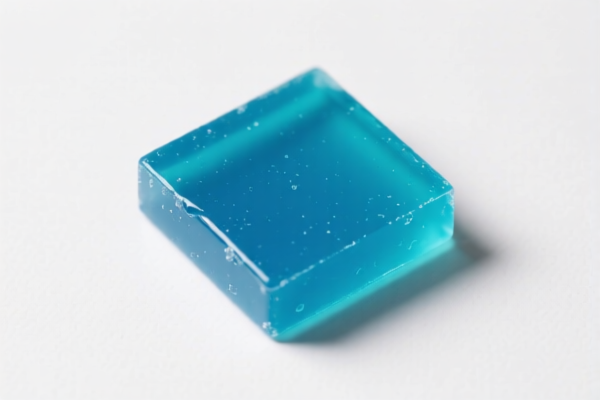
Product Images



AI Analysis
🎞️ Blue Photosensitive Film (X-Ray & Reflective Variants)
🌐 HS Code Reference & Customs Clearance Guide | 2026 Latest Tariff Analysis | Professional Strategy for US Imports
📌 I. Product Definition & Classification: What Exactly is "Blue Photosensitive Film"?
"Blue Photosensitive Film" is a broad commercial term that typically refers to two distinct categories of optical materials used in industrial, medical, or security applications. In international trade, precise classification depends heavily on the material composition, intended use, and functional state.
1. Blue Sensitized X-Ray Film (Medical/Industrial Imaging)
Used for capturing X-ray images. It contains silver halide emulsions that react to radiation. The "blue" tint often refers to the color of the film base or the emulsion layer, designed to work with specific blue-light screens or scanners.
2. Blue Reflective Film (Security/Decorative/Industrial)
A plastic-based film designed to reflect light, often used for vehicle safety markings, security tape, or decorative purposes. It is not "photosensitive" in the chemical sense (like film for cameras) but is optically sensitive to light reflection.
⚠️ Critical Distinction:
- If the product is unexposed photographic/X-ray film based on silver halides → It falls under Chapter 37 (Photographic Goods).
- If the product is a plastic reflective sheeting (no chemical emulsion) → It falls under Chapter 39 (Plastics).
Misclassification leads to massive tariff penalties (38.7% vs. 22.8%) and potential seizure.
📦 II. HS Code Classification Details (2026 Latest Tariff Authority)
| HS Code | Product Description | Key Characteristics | Material |
|---|---|---|---|
3702.10.00.30 |
Blue Sensitized X-Ray Film | Form: Sensitized Film; Use: X-Ray; Material: Non-paper/Non-textile base | Plastic/Resin Base + Silver Halide |
3702.10.00.60 |
Blue Sensitized X-Ray Film | Match: X-Ray Function; Sensitized; Material: Non-paper, Non-textile | Plastic/Resin Base + Silver Halide |
3703.90.30.60 |
Blue Sensitized X-Ray Film | Material: Silver Halide (Halogenated Silver); Form: Sheet; Feature: Unexposed | Silver Halide Emulsion on Base |
3703.90.30.30 |
Blue Sensitized X-Ray Film | Material: Silver Halide; Form: Sheet; Use: Sensitization; Other Category | Silver Halide Emulsion on Base |
3926.90.99.89 |
Blue Reflective Film | Material: Plastic/Synthetic; Form: Sheeting; Category: Other Plastic Articles | PVC/PE/Polycarbonate + Reflective Layer |
🔍 Key Insight:
- Codes3702and3703are for chemical/photographic films (X-ray).
- Code3926is for plastic articles (Reflective/Decorative).
- The "Blue" color alone does not determine the HS code; the function (X-ray imaging vs. Light reflection) and material (Silver Halide vs. Pure Plastic) do.
💰 III. 2026 Latest Tariff Rate Breakdown (Detailed Tax Clauses)
✅ Applicable Country: United States (US)
✅ Origin: China (CN)
✅ Effective Date: Post-2025 Policy Adjustments (Including Section 301 & IEEPA)
🎯 1. X-Ray Film Group (3702.10.00.30, 3702.10.00.60, 3703.90.30.60, 3703.90.30.30)
These products are classified as photographic/medical imaging materials. Due to their chemical nature and strategic industrial value, they face the highest tariff burden.
| Item | Detail |
|---|---|
| Base Tariff (MFN) | 3.7% (Ad Valorem) |
| Section 301 Additional Tariff | +25.0% (List 3/4 Products) |
| Section 122 Tariff (IEEPA) | +10.0% (Specific Chinese Import Surcharge) |
| Total Tariff Rate | 38.7% |
| Tax Calculation | CIF Value × 38.7% |
| De Minimis Exemption | ❌ Not Eligible (Denied for chemical/photographic goods) |
| Legal Basis Path | 3702.10.00 / 3703.90.30 → Section 301: 25% → IEEPA: 10% |
📌 Explanation:
- The 3.7% is the standard Most Favored Nation (MFN) duty for photographic paper/film.
- The 25% is the standard Section 301 tariff on many Chinese manufactured goods.
- The 10% is an additional surcharge under IEEPA (Executive Order 13813 or similar 122-type clauses).
- Total Impact: Importing X-ray film from China costs nearly 40% more in duties alone.
🎯 2. Reflective Film Group (3926.90.99.89)
This code is a "basket" category for other plastic articles not specified elsewhere. Reflective film (often PVC or PE) falls here.
| Item | Detail |
|---|---|
| Base Tariff (MFN) | 5.3% (Ad Valorem) |
| Section 301 Additional Tariff | +7.5% (Plastic articles often have lower Section 301 rates) |
| Section 122 Tariff (IEEPA) | +10.0% (Same IEEPA surcharge applies) |
| Total Tariff Rate | 22.8% |
| Tax Calculation | CIF Value × 22.8% |
| De Minimis Exemption | ❌ Not Eligible (Generally denied for Chinese plastic imports >$800) |
| Legal Basis Path | 3926.90.99 → Section 301: 7.5% → IEEPA: 10% |
📌 Explanation:
- The 5.3% is the standard duty for other plastic articles.
- The 7.5% is a reduced Section 301 rate applied to certain plastic products.
- The 10% IEEPA surcharge still applies.
- Total Impact: 22.8% is significantly lower than X-ray film, but still substantial.
🛠️ IV. Customs Clearance Practical Advice (Pitfall Avoidance Guide)
✅ 1. Essential Documentation Checklist
| Document | Required? | Notes |
|---|---|---|
| ✅ Product Specification Sheet | ✔️ | Must specify: "X-Ray Film" OR "Reflective Plastic Film". Do NOT just write "Blue Film". |
| ✅ Material Safety Data Sheet (MSDS) | ✔️ | Critical for X-ray film (chemical emulsion). Not needed for simple reflective plastic. |
| ✅ Composition Declaration | ✔️ | Must state: "Contains Silver Halide" (for Ch.37) or "100% PVC/PE Plastic" (for Ch.39). |
| ✅ Commercial Invoice | ✔️ | Clearly distinguish between "Medical Imaging Film" and "Decorative Reflective Sheet". |
| ✅ Packing List | ✔️ | Ensure weight and dimensions match the declared HS code type. |
✅ 2. Classification Strategy (Key Mnemonics)
🔥 "Silver Halide = 38.7%, Plastic = 22.8%. Name Matters!"
| Scenario | Correct HS Code | Why? |
|---|---|---|
| X-Ray Film for Hospitals | 3702.10.00.30 / 3703.90.30 |
Contains silver halide emulsion for radiation imaging. |
| Blue Tape for Vehicle Safety | 3926.90.99.89 |
Plastic backing with reflective microbeads, no chemical imaging layer. |
| Unexposed Photographic Roll | 3702.10.00.30 |
General photographic film, non-paper base. |
| Printed Blue Banner (Plastic) | 3926.90.99.89 |
Finished plastic article, not a sensitized chemical good. |
⚠️ Warning:
- If you declare Reflective Film as X-Ray Film (3702...), you will pay 38.7% instead of 22.8%.
- If you declare X-Ray Film as Reflective Film (3926...), you risk seizure, fines, and fraud charges because you are misrepresenting a chemical/medical product as a simple plastic good.
✅ 3. Special Cases
| Case | Handling Advice |
|---|---|
| Hybrid Products | If a film has both reflective properties AND is sensitized, the sensitized (chemical) nature usually dominates. Classify under Chapter 37. |
| Exempt Items | Some medical devices may qualify for duty-free status if classified as "Parts of Medical Devices" (e.g., 9022...), but film itself is rarely exempt. |
| Sample Imports | Samples of X-ray film are not eligible for de minimis entry ($800). All entries must be formal. |
🌍 V. Global Market Comparison (2026)
| Market | Recommended HS Code | Tariff Rate (China Origin) | Key Requirement |
|---|---|---|---|
| 🇺🇸 USA | 3702.10.00.30 / 3926.90.99.89 |
38.7% (X-Ray) / 22.8% (Reflective) | Strict Section 301 + IEEPA |
| 🇨🇳 China | 3702.10.00 / 3926.90.99 |
5-10% (Import Duty) | No Section 301 |
| 🇪🇺 EU | 3702.10 / 3920.99 |
0-6.5% | CE Marking for medical/reflective |
| 🇬🇧 UK | 3702.10 / 3920.99 |
0-6.5% | Post-Brexit Tariffs |
📌 Conclusion:
The USA is the most expensive market for these goods due to layered tariffs.
For X-ray film, the 38.7% rate is prohibitive for low-margin goods. Consider duty drawback programs if re-exporting.
For reflective film, the 22.8% rate is manageable but requires accurate material declaration.
📌 VI. Common Mistakes & Pitfalls (Lessons Learned)
❌ Mistake 1: Calling all "blue films" "Plastic Film"
👉 Result: Customs flags for misdescription. X-ray film contains hazardous chemicals (silver, developers). Failure to disclose can lead to hazmat penalties.
❌ Mistake 2: Using 3702.90 (Other) instead of 3702.10 (X-Ray)
👉 Result: Incorrect classification. 3702.10 is specific to X-ray. Using general codes may trigger audits.
❌ Mistake 3: Ignoring the "122 Clause"
👉 Result: Underpaying duties. The 10% IEEPA surcharge is mandatory for most Chinese imports. Failing to pay it leads to back taxes + interest.
✅ Correct Declaration Example:
"X-RAY FILM, BLUE BASE, UNEXPOSED, CONTAINS SILVER HALIDE EMULSION, FOR MEDICAL IMAGING, MODEL: XYZ-100"
OR
"BLUE REFLECTIVE TAPE, PVC BASE, ADHESIVE BACKING, FOR VEHICLE SAFETY MARKING, NO CHEMICAL EMULSION"
🎯 VII. Conclusion: Professional Classification Saves Money!
🎯 Key Takeaway:
🔹 X-Ray Film (Silver Halide) = 38.7% Total Duty
🔹 Reflective Film (Plastic) = 22.8% Total Duty
🔹 Never Guess the HS Code. The material composition (Chemical vs. Plastic) is the deciding factor.
📌 Pro Tip:
- For X-ray film, ensure you have a Chemical Composition Statement.
- For Reflective film, ensure you have a Plastic Type Declaration (e.g., PVC, PE).
- Pre-clearance rulings from CBP are highly recommended for high-volume imports to avoid audits.
✨ Professional Customs Clearance Starts with Accurate Classification!
💼 Every Percentage Point Matters. Don't Let Tariffs Erase Your Profit!
Customer Reviews
About HS Code Classification
The Harmonized System (HS) is an internationally standardized nomenclature developed by the World Customs Organization (WCO) to classify traded products. Over 200 countries use the HS system as the basis for customs tariffs, trade statistics, and import/export regulations.
Each HS code follows a hierarchical structure:
- Chapter (2 digits) — Broad category of goods (e.g., Chapter 84: Machinery and Mechanical Appliances)
- Heading (4 digits) — More specific grouping within the chapter
- Subheading (6 digits) — Internationally standardized breakdown, used by all WCO member countries
- National subdivisions (8-10 digits) — Country-specific extensions for further classification, such as US HTSUS 10-digit codes
Correct HS code classification is essential for smooth customs clearance, accurate duty payment, and compliance with trade regulations. Misclassification can lead to customs delays, overpayment of duties, or penalties.
When importing from CN to US, the applicable tariff rates may include:
- Most-Favored-Nation (MFN) rate — The standard duty rate applied to WTO members
- General rate — Applied to countries without trade agreements
- Trade remedy duties — Additional tariffs such as Section 301 (anti-dumping), Section 232 (national security), or countervailing duties
The information provided on this page is for reference purposes only. For official classification, please consult with your local customs authority or a licensed customs broker.