Blue Reflective Film
CN → US| HS Code | Tariff Rate | Origin | Destination | Doc |
|---|---|---|---|---|
| 7005108000 | 39.4% | CN | US | Official Doc |
| 7005290410 | 35.0% | CN | US | Official Doc |
| 7607201000 | 13.7% | CN | US | Official Doc |
| 7607205000 | 17.5% | CN | US | Official Doc |
| 3920620050 | 39.2% | CN | US | Official Doc |
| 3920992000 | 39.2% | CN | US | Official Doc |
Product Images
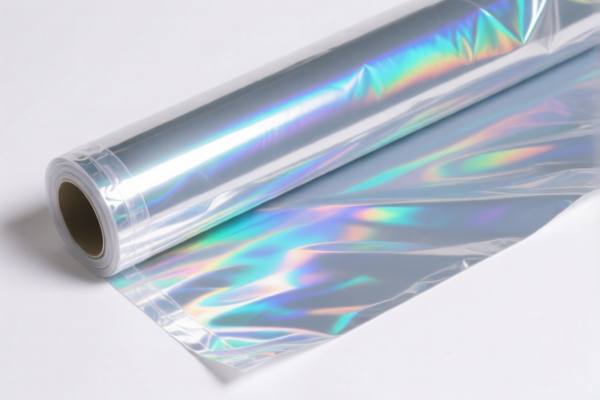

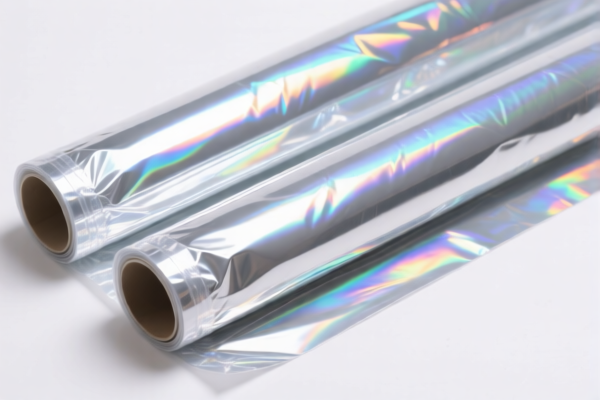
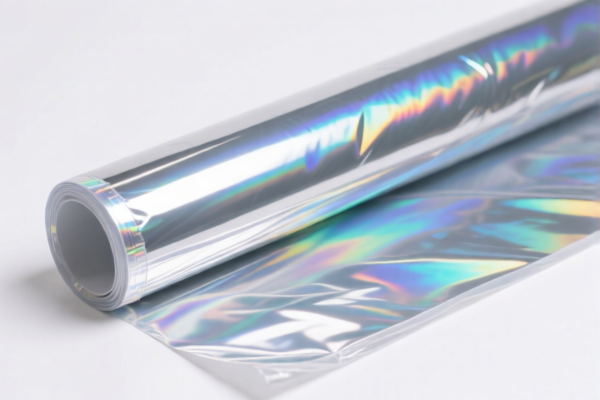
AI Analysis
🌈 Blue Reflective Film (Reflective/Decorative Plastic & Aluminum Foil)
🌐 HS Code Reference & Customs Clearance Guide | 2026 Latest Tariff Analysis | Precision Classification Strategy
📌 I. Product Definition & Classification: What Exactly Is "Blue Reflective Film"?
"Blue Reflective Film" is a broad trade term that can refer to two distinct types of industrial materials. In international trade, classification depends entirely on the base material (Plastic vs. Aluminum) and the application (Functional vs. Decorative).
1. Metallized Polyester Film (PET):
A clear or blue-tinted plastic film coated with a thin layer of aluminum to provide reflectivity. Used in insulation, electronics shielding, or decorative applications.
Key Characteristic*: Flexible plastic base, metallic coating for reflection.
2. Decorative Aluminum Foil:
Aluminum foil that is printed, colored, or backed with paper/plastic to create a specific blue reflective or decorative effect.
Key Characteristic*: Metallic base, thickness ≤ 0.2mm, often used for packaging or aesthetic purposes.
⚠️ Critical Distinction Point:
- If the product is primarily a plastic film (PET) with a metallic coating → It falls under Chapter 39 (Plastics).
- If the product is aluminum foil with a decorative pattern, print, or backing → It falls under Chapter 76 (Aluminum).
- Do not mix these up! Misclassification leads to severe tariff penalties (25%+ vs 0%).
📦 II. HS Code Classification Details (2026 Latest Tariff Authority)
Based on the provided data, here are the correct HS Codes for "Blue Reflective Film" variants:
| HS Code | Product Description | Applicable Scenario | Material Base | Key Feature |
|---|---|---|---|---|
3920.62.00.50 |
Other plates, sheets, film, foil, of plastics... Of poly(ethylene terephthalate) (PET) Metallized PET film: Other | Metallized blue PET film, decorative plastic film, shielding film | Plastic (PET) | Metallized, non-cellular |
3920.99.20.00 |
Other plates, sheets, film, foil, of plastics... Film, strip and sheets... Other | Generic flexible plastic films, non-specified decorative films | Plastic (Other) | Flexible plastic sheet |
7607.20.10.00 |
Aluminum foil... Backed: Covered or decorated with a character, design, fancy effect or pattern | Blue foil with printed design, decorative backing, fancy effect | Aluminum | Decorative/Backed Foil |
7607.20.50.00 |
Aluminum foil... Backed: Other | Standard backed aluminum foil (non-decorative) | Aluminum | Backed, non-decorative |
🔍 Important Note:
-3920.62.00.50is the most likely code for standard Metallized Blue PET Film (common in packaging and decoration).
-7607.20.10.00applies if it is Aluminum Foil specifically designed with a decorative blue pattern/character.
- Generic blue plastic sheets without metallization may fall under3920.99.20.00.
💰 III. 2026 Latest Tariff Rate Details (Including Surcharges & Policy Add-ons)
✅ Applicable Country: USA (US)
✅ Origin: China (CN) (Note: Rates are based on provided data which reflects standard US-China trade dynamics)
✅ Effective Time: 2026 (Current Period)
🎯 1. 3920.62.00.50 —— Metallized PET Film (Plastic Base)
| Item | Content |
|---|---|
| Base Tariff | 4.2% (ad valorem) |
| Section 301 Surcharge (USITC) | +25.0% |
| Total Tariff | 29.2% |
| Tax Calculation | CIF Value × 29.2% |
| De Minimis Exemption | ❌ Not Applicable (High tariff item) |
| Legal Basis | USITC Section 301 List for Chapter 39 Plastics |
📌 Explanation:
- Metallized PET film is considered a "plastic product" subject to standard trade measures.
- The 25% Section 301 surcharge is critical here. This is a high-cost item for importers from China.
- Total Cost Impact: Nearly 30% of the product value is tax.
🎯 2. 3920.99.20.00 —— Other Plastic Films
| Item | Content |
|---|---|
| Base Tariff | 4.2% |
| Section 301 Surcharge (USITC) | +25.0% |
| Total Tariff | 29.2% |
| Tax Calculation | CIF Value × 29.2% |
| De Minimis Exemption | ❌ Not Applicable |
| Legal Basis | USITC Section 301 List for General Plastics |
📌 Note:
- Same high tariff burden as Metallized PET.
- Ensure the film is not "cellular" or "reinforced," as that would change the code.
🎯 3. 7607.20.10.00 —— Decorative/Printed Aluminum Foil (Backed)
| Item | Content |
|---|---|
| Base Tariff | 0.0% |
| Section 301 Surcharge (USITC) | 0.0% |
| Total Tariff | 0.0% |
| Tax Calculation | $0 |
| De Minimis Exemption | ✅ Applicable (if under $800) |
| Legal Basis | Aluminum Foil, Decorative/Printed |
📌 Crucial Advantage:
- If your "Blue Reflective Film" is classified as Aluminum Foil with a decorative pattern/character, it may enjoy 0% tariffs.
- Condition: It must be "backed" and explicitly "decorated with a character, design, fancy effect or pattern." A plain blue color might not qualify; a design/pattern is key.
🎯 4. 7607.20.50.00 —— Other Backed Aluminum Foil
| Item | Content |
|---|---|
| Base Tariff | 0.0% |
| Section 301 Surcharge (USITC) | +7.5% |
| Total Tariff | 7.5% |
| Tax Calculation | CIF Value × 7.5% |
| De Minimis Exemption | ❌ Not Applicable (due to surcharge) |
| Legal Basis | General Backed Aluminum Foil |
📌 Warning:
- If it is backed aluminum foil but NOT explicitly decorative/patterned, it falls here.
- 7.5% is significantly cheaper than the 29.2% for plastics, but still a cost factor.
🛠️ IV. Customs Clearance Practical Advice (Real-World Pitfall Guide)
✅ 1. Documentation Checklist (Must-Haves)
| Document | Required | Description |
|---|---|---|
| ✅ Product Specification Sheet | ✔️ | Must state: Material (PET vs. Al), Thickness, Coating Type, Width/Length. |
| ✅ Composition Analysis | ✔️ | Proof of backing material (Paper, Plastic, or None). |
| ✅ Product Photos | ✔️ | Close-up of surface (to show pattern/design for 7607.20.10.00 claim). |
| ✅ Commercial Invoice | ✔️ | Description must match HS Code (e.g., "Decorative Blue Aluminum Foil" vs. "Metallized PET Film"). |
| ✅ Packing List | ✔️ | Weight and dimensions for volume calculation. |
✅ 2. Classification Strategy (Key Mantra)
🔥 “Plastic Pays 29%, Foil Decorative is Free, Foil Plain is 7.5%!”
| Scenario | Correct HS Code | Tariff Rate | Risk |
|---|---|---|---|
| Metallized Blue PET Film | 3920.62.00.50 |
29.2% | High Cost |
| Plain Blue Plastic Sheet | 3920.99.20.00 |
29.2% | High Cost |
| Decorative/Printed Blue Aluminum Foil | 7607.20.10.00 |
0.0% | Best Option (if applicable) |
| Backed Aluminum Foil (No Pattern) | 7607.20.50.00 |
7.5% | Moderate Cost |
📌 Strategic Tip:
- If your product is Aluminum Foil, try to emphasize any printing, design, or decorative effect in the invoice description to qualify for7607.20.10.00(0% tariff).
- Plain colored foil (e.g., solid blue without pattern) will likely be classified as7607.20.50.00(7.5%).
- Do not declare Plastic Foil as Aluminum Foil to avoid fraud allegations.
✅ 3. Special Cases
| Case | Handling Advice |
|---|---|
| Hybrid Materials | If foil is laminated with plastic, check if the primary function is metallic or plastic. Usually, backing determines the chapter. |
| "Reflective" Claim | Ensure "reflective" is not a technical term implying optical instruments (which might go to Ch. 90). For packaging/decor, it’s fine in Ch. 39 or 76. |
| Thickness Matters | Aluminum foil must be ≤ 0.2mm. If thicker, it becomes "Aluminum Plates/Sheets" (different code, different tariff). |
🌍 V. Global Market Comparison (2026)
| Country/Region | Recommended HS Code | Tariff (China Origin) | Notes |
|---|---|---|---|
| 🇺🇸 USA | 3920.62.00.50 or 7607.20.10.00 |
29.2% or 0.0% | Huge tariff difference based on material! |
| 🇨🇳 China | 3920.62.00.50 or 7607.20.10.00 |
4.2% or 0.0% | No Section 301 surcharge. |
| 🇪🇺 EU | 3920.62.00.00 or 7607.20.00 |
~6-9% | Standard WTO rates, no US-style surcharges. |
| 🇯🇵 Japan | 3920.62.00.00 or 7607.20.00 |
~5-7% | Liberal trade policy. |
📌 Conclusion:
- The USA market is highly sensitive to the Plastic vs. Aluminum classification.
- 0% tariff is achievable for Decorative Aluminum Foil (7607.20.10.00).
- 29.2% tariff is unavoidable for Metallized Plastic Film (3920.62.00.50).
📌 VI. Common Mistakes & Pitfalls (Lessons Learned)
❌ Mistake 1: Declaring Metallized PET Film as Aluminum Foil
👉 Consequence: Customs may reject the claim, reclassify to 3920.62.00.50, and charge 29.2% + penalties.
👉 Fix: Provide material composition certificate.
❌ Mistake 2: Calling plain blue foil "Decorative" to get 0%
👉 Consequence: If no pattern/character/design exists, it falls under 7607.20.50.00 (7.5%).
👉 Fix: Be honest. If it’s just color, pay the 7.5%. If it has a printed design, highlight it.
❌ Mistake 3: Ignoring Thickness for Aluminum Foil
👉 Consequence: If foil is >0.2mm, it becomes "Plate/Sheet" (Chapter 7610/7606), with different tariffs and rules.
👉 Fix: Verify thickness. Must be ≤ 0.2mm for Chapter 7607.
🎯 VII. Conclusion: Precision Classification Saves Money!
🎯 Remember the Mantra:
🔹 "Plastic Film? Prepare for 29.2%.
🔹 Decorative Foil? Enjoy 0%.
🔹 Plain Foil? Pay 7.5%.
🔹 Misclassify? Pay Double + Penalty!"
📌 Pro Tip:
If you are importing Metallized PET Film from China to the USA, consider:
1. Supplier Negotiation: Share the 29.2% tariff burden.
2. Third-Country Transshipment: (Note: Risky and illegal if circumventing sanctions).
3. Product Redesign: Can it be classified as a "Decorative Backed Foil" if aluminum backing is used?
📣 Action Plan:
📞 Contact Customs Broker: Provide physical samples.
📄 Prepare Spec Sheet: Clearly state "Material: PET" or "Aluminum".
🏷️ Invoice Description: Use precise terms like "Decorative Blue Aluminum Foil, Patterned" to support 0% claim if applicable.
✨ Professional Customs Clearance Starts with Accurate Classification!
💼 Every 1% of tariff difference is pure profit or loss!
Customer Reviews
About HS Code Classification
The Harmonized System (HS) is an internationally standardized nomenclature developed by the World Customs Organization (WCO) to classify traded products. Over 200 countries use the HS system as the basis for customs tariffs, trade statistics, and import/export regulations.
Each HS code follows a hierarchical structure:
- Chapter (2 digits) — Broad category of goods (e.g., Chapter 84: Machinery and Mechanical Appliances)
- Heading (4 digits) — More specific grouping within the chapter
- Subheading (6 digits) — Internationally standardized breakdown, used by all WCO member countries
- National subdivisions (8-10 digits) — Country-specific extensions for further classification, such as US HTSUS 10-digit codes
Correct HS code classification is essential for smooth customs clearance, accurate duty payment, and compliance with trade regulations. Misclassification can lead to customs delays, overpayment of duties, or penalties.
When importing from CN to US, the applicable tariff rates may include:
- Most-Favored-Nation (MFN) rate — The standard duty rate applied to WTO members
- General rate — Applied to countries without trade agreements
- Trade remedy duties — Additional tariffs such as Section 301 (anti-dumping), Section 232 (national security), or countervailing duties
The information provided on this page is for reference purposes only. For official classification, please consult with your local customs authority or a licensed customs broker.