Blue Wet Leather for Luggage
CN → US| HS Code | Tariff Rate | Origin | Destination | Doc |
|---|---|---|---|---|
| 411410 | 0.0% | CN | US | Official Doc |
| 411490 | 0.0% | CN | US | Official Doc |
Product Images
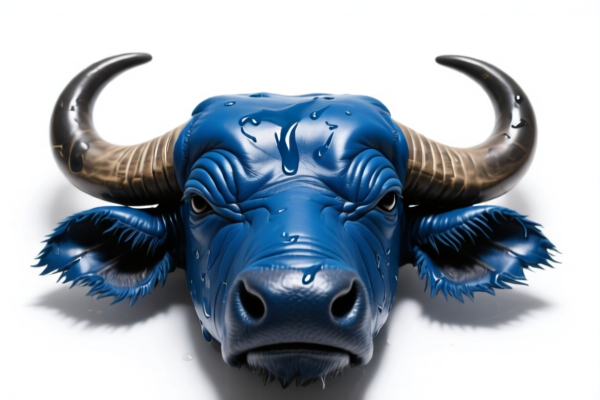
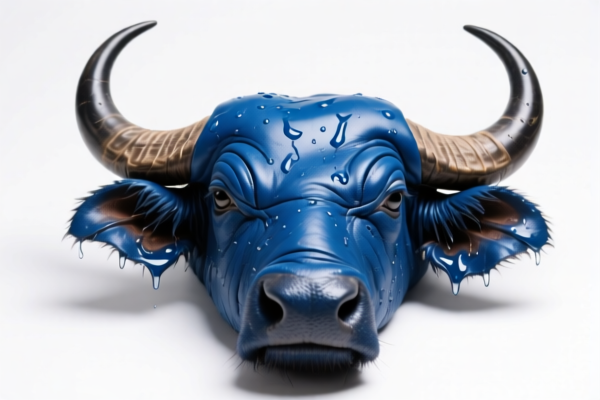
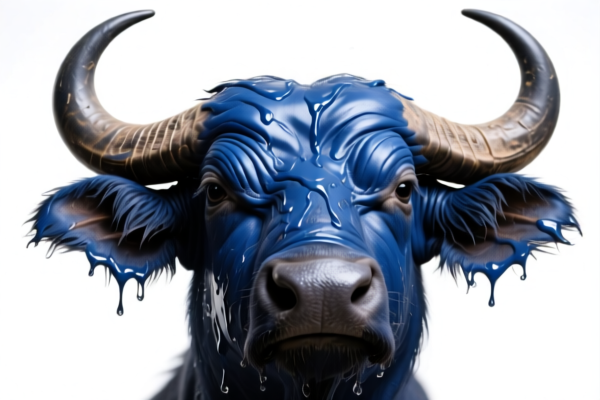
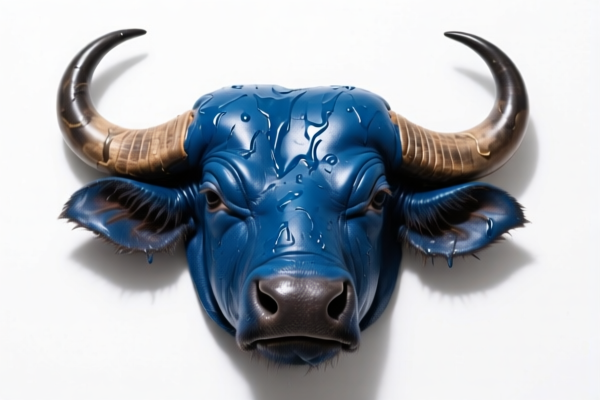
AI Analysis
🧳 Blue Wet Blue Leather for Luggage Manufacturing
🌐 HS Code Reference & Customs Clearance Guide | 2026 Latest Tariff Analysis | Professional-Level Strategy
📌 Part 1: Product Definition & Classification – Do You Really Know "Wet Blue Leather"?
"Wet Blue Leather" (often referred to as "Wet Blue") is an intermediate semi-processed leather product. It has undergone liming, pickling, or other wet-storage processes but has not yet undergone tanning, dyeing, or finishing processes. It is characterized by its blue color (due to the chrome salts used in processing) and is primarily used as a raw material for further processing into finished leather goods, such as luggage, bags, and similar articles.
In international trade, it is critical to distinguish between: * Wet Blue Leather (HS 4114): Not further prepared than limed, pickled, or otherwise wet-stored. * Finished Leather (HS 4115 or others): Tanned, dyed, or otherwise prepared for immediate use.
⚠️ Key Distinction Point:
- If the leather is only limed, pickled, or wet-stored (even if blue) and not tanned/dyed/finished → HS 4114
- If the leather has been tanned (chrome-tanned or vegetable-tanned) and/or dyed/finished → Not HS 4114 (likely HS 4115 or other categories depending on finish)
📦 Part 2: HS Code Classification Details (2026 Latest Tariff Authority Comparison)
| HS Code | Product Description | Application Scenario | Preparation Status |
|---|---|---|---|
4114.10 |
Wet blue leather, not further prepared than limed, pickled, or otherwise wet-stored, used primarily for the manufacture of luggage and similar articles | Raw material for luggage factories; semi-processed chrome leather | ✅ Only limed/pickled/wet-stored |
4114.90 |
Other wet blue leather, not further prepared than limed, pickled, or otherwise wet-stored, suitable for use in luggage production | General wet blue leather for various leather goods | ✅ Only limed/pickled/wet-stored |
🔍 Important Reminder:
- Both codes refer to "Wet Blue" status. The key is that the leather has not been tanned/dyed/finished.
- If the leather is sold as "finished leather" (even if just dyed), it cannot be declared under HS 4114.
- Misclassification can lead to significant tax discrepancies and customs delays.
💰 Part 3: 2026 Latest Tariff Rate Details (Including Surcharges & Policy Surcharges)
✅ Applicable Country: United States (US)
✅ Origin: China (CN)
✅ Effective Date: From November 10, 2025 (including subsequent imports)
🎯 1. 4114.10 – Wet Blue Leather for Luggage
| Item | Content |
|---|---|
| Base Tariff Rate | 0% (ad valorem) |
| USITC Surtax | N/A (Not applicable to this code under current 301 Footnotes for this specific subheading) |
| IEEPA Surtax | +10% (Against Chinese/Hong Kong products, from Nov 10, 2025) |
| Total Tariff Rate | 10% |
| Tax Calculation | CIF Value × 10% |
| De Minimis Eligibility | ❌ No (deny_de_minimis) |
| Legal Basis Path | IEEPA:9903.01.25 → USITC:4114.10 |
📌 Explanation:
- "IEEPA 10%" is the additional tariff under the International Emergency Economic Powers Act for Chinese-origin goods.
- Unlike some electronic components, leather products like wet blue often have lower or no 301 surtaxes depending on specific subheadings, but the 10% IEEPA tariff remains mandatory.
- Total cost impact: 10%, which is significantly lower than many other Chinese imports.
🎯 2. 4114.90 – Other Wet Blue Leather
| Item | Content |
|---|---|
| Base Tariff Rate | 0% (ad valorem) |
| USITC Surtax | N/A |
| IEEPA Surtax | +10% (Against Chinese/Hong Kong products, from Nov 10, 2025) |
| Total Tariff Rate | 10% |
| Tax Calculation | CIF Value × 10% |
| De Minimis Eligibility | ❌ No (deny_de_minimis) |
| Legal Basis Path | IEEPA:9903.01.25 → USITC:4114.90 |
📌 Note:
- Both4114.10and4114.90share the same tariff structure.
- The distinction is descriptive:4114.10specifies "for luggage," while4114.90is a catch-all for other wet blue leathers.
- Even if destined for non-luggage items, if it is "wet blue," it falls under this category with the same 10% rate.
🛠️ Part 4: Customs Clearance Practical Advice (Real-World Pitfall Avoidance)
✅ 1. Document Checklist (All Required)
| Document | Mandatory | Description |
|---|---|---|
| ✅ Product Specification Sheet | ✔️ | Must clearly state: "Wet Blue," "Limed/Pickled," "Not Tanned," "For Luggage Production" |
| ✅ Process Flow Diagram | ✔️ | Shows liming/pickling steps; proves no tanning/dyeing/finishing |
| ✅ Product Photos | ✔️ | Clear images showing blue color, no finished coating, no dye patterns |
| ✅ Commercial Invoice | ✔️ | Must explicitly state: "Wet Blue Leather, Not Further Prepared Than Limed" |
| ✅ Packing List | ✔️ | Detailing weight, volume, and package count |
| ✅ Certificate of Origin | ✔️ | Required for IEEPA tariff determination |
✅ 2. Declaration Tips (Key Mantra)
🔥 "Wet Blue Means Raw, Not Finished, Don't Claim Tanned!"
| Scenario | Correct Declaration | Wrong Practice |
|---|---|---|
| Wet Blue Leather (Limed Only) | 4114.10 or 4114.90 |
Misdeclare as "Finished Leather" → Higher Tax |
| Chrome-Tanned Finished Leather | 4115.20 (or other) |
Misdeclare as "Wet Blue" → Fraud/penalties |
| Split Shipment (Wet Blue + Finished) | Separate HS Codes | Combined Declaration → Confusion/Delays |
✅ 3. Special Situations Handling
| Situation | Handling Advice |
|---|---|
| Mixed Container | If wet blue is mixed with finished leather, declare separately. Do not blend. |
| Labeling | Ensure outer packaging states "Wet Blue Leather" or "Semi-Processed Leather." |
| Origin Verification | Ensure the chromium source and processing location are clearly documented to prove Chinese origin. |
🌍 Part 5: Global Market Customs Comparison (2026 Latest)
| Country/Region | Recommended HS Code | Tariff | Certification | Notes |
|---|---|---|---|---|
| 🇺🇸 USA | 4114.10 / 4114.90 |
10% (China) | None specific | IEEPA 10% applies |
| 🇨🇳 China | 4114.10 / 4114.90 |
0% | None | Import duty may be 0% for semi-processed |
| 🇪🇺 EU | 4114.10 / 4114.90 |
0% | REACH Compliance | No additional tariffs if REACH compliant |
| 🇬🇧 UK | 4114.10 / 4114.90 |
0% | UKCA (if applicable) | Post-Brexit rules align with EU for leather |
| 🇯🇵 Japan | 4114.10 / 4114.90 |
0% | JIS | No additional tariffs |
📌 Conclusion:
- USA is the only major market with additional tariffs (10% IEEPA) for this product from China.
- EU, Japan, and UK offer 0% tariff for wet blue leather, making them more attractive if supply chains can be rerouted.
- However, logistics costs to US vs. EU may offset tariff savings.
📌 Part 6: Common Errors & Pitfall Avoidance (Blood-Test Lessons)
❌ Mistake 1: Declaring "Finished Leather" as "Wet Blue" to avoid higher tariffs
👉 Consequence: Customs Audit + Penalties + Back Taxes!
Why: Finished leather (e.g., HS 4115) may have different duties, but misdeclaration is fraud.
❌ Mistake 2: Failing to specify "Not Further Prepared Than Limed"
👉 Consequence: Customs may classify under a different, higher-tax category (e.g., "Other Tanned Leather")
Why: The phrase "Not Further Prepared Than Limed" is the legal key to HS 4114.
❌ Mistake 3: Not providing process documentation
👉 Consequence: Delay in release, potential re-inspection, or forced re-classification
Why: Customs needs proof that the leather has not been tanned/dyed.
✅ Correct Approach:
"Wet Blue Leather, Chrome-Tanned Base but Not Further Prepared Than Limed, Picked, or Wet-Stored, for Luggage Production, HS Code 4114.10, Origin China"
🎯 Part 7: Conclusion – Professional Declaration, Cost Control, Efficiency!
🎯 Remember the Mantra:
🔹 "Wet Blue is Raw, Not Finished. Declare 4114, Avoid Fraud. IEEPA 10% is Key, Plan Ahead for US Entry."
🔹 "HS Code 4114 is Correct, Misdeclare is a Risk. 10% Tax is Manageable, Don't Take a Chance!"
📌 Pro Tip:
If your wet blue leather is originally from Vietnam, Mexico, or Thailand, you may be eligible for IEEPA Exemptions, reducing the tariff to 0%.
Recommend Apply for Advance Ruling for large-volume imports to ensure certainty.
📣 Immediate Action:
📞 Contact Professional Customs Broker + Provide Product Photos + Apply for HS Code Advance Ruling
🚀 Let your leather Clear Customs Smoothly, Export Efficiently, Maximize Profits!
✨ Professional Customs Clearance Starts with Accurate Classification!
💼 Every Cent of Your Cost Deserves Precision Calculation!
Customer Reviews
About HS Code Classification
The Harmonized System (HS) is an internationally standardized nomenclature developed by the World Customs Organization (WCO) to classify traded products. Over 200 countries use the HS system as the basis for customs tariffs, trade statistics, and import/export regulations.
Each HS code follows a hierarchical structure:
- Chapter (2 digits) — Broad category of goods (e.g., Chapter 84: Machinery and Mechanical Appliances)
- Heading (4 digits) — More specific grouping within the chapter
- Subheading (6 digits) — Internationally standardized breakdown, used by all WCO member countries
- National subdivisions (8-10 digits) — Country-specific extensions for further classification, such as US HTSUS 10-digit codes
Correct HS code classification is essential for smooth customs clearance, accurate duty payment, and compliance with trade regulations. Misclassification can lead to customs delays, overpayment of duties, or penalties.
When importing from CN to US, the applicable tariff rates may include:
- Most-Favored-Nation (MFN) rate — The standard duty rate applied to WTO members
- General rate — Applied to countries without trade agreements
- Trade remedy duties — Additional tariffs such as Section 301 (anti-dumping), Section 232 (national security), or countervailing duties
The information provided on this page is for reference purposes only. For official classification, please consult with your local customs authority or a licensed customs broker.