Blue Wet Pigskin
CN → US| HS Code | Tariff Rate | Origin | Destination | Doc |
|---|---|---|---|---|
| 4113200000 | 39.2% | CN | US | Official Doc |
| 4103301000 | 17.5% | CN | US | Official Doc |
| 4103302000 | 21.7% | CN | US | Official Doc |
| 4106319000 | 39.2% | CN | US | Official Doc |
| 4106311000 | 39.2% | CN | US | Official Doc |
Product Images
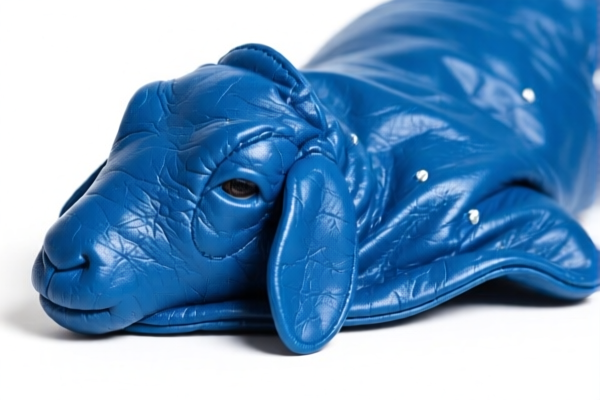
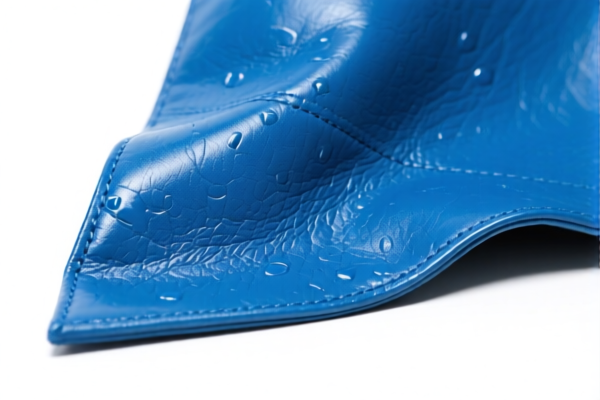
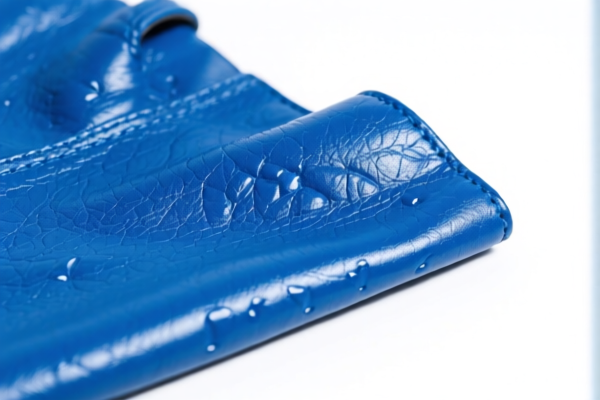
AI Analysis
🐖 Blue Wet Pigskin (Wet-Blue Pig Leather)
🌐 HS Code Reference & Customs Clearance Guide | 2026 Latest Tariff Analysis | Professional Clearance Strategy
📌 I. Product Definition & Classification: Do You Truly Understand "Blue Wet Pigskin"?
"Blue Wet Pigskin" (often referred to as Wet-Blue Pig Leather) is a semi-finished leather product. In international trade, it is crucial to distinguish its state of preservation and processing level, as this directly dictates the HS Code and the resulting tariff burden.
Key Distinctions: * Preserved Raw Hides/Skins: Pigskins that are fresh, salted, pickled, or otherwise preserved but NOT yet tanned. * Pre-Tanned/Further Processed: Pigskins that have undergone initial tanning or further chemical treatments.
⚠️ Critical Classification Point:
- If the pigskin is salted/pickled but NOT pre-tanned → It falls under 4103.30.10.00 (Lowest Base Duty).
- If it is pre-tanned, further processed, or classified as "coarsely tanned" → It falls under 4106.31.10.00 / 4106.31.90.00 or 4113.20.00.00 (High Base Duty).
📦 II. HS Code Classification Details (2026 Latest Tariff Authority Comparison)
| HS Code | Product Description | Application Scenario | Tanning State |
|---|---|---|---|
4103.30.10.00 |
Wet blue pigskin, material is pigskin, wet state符合 salted, pickled, or preserved without pre-tanning | Salted/Pickled raw hides, un-tanned | ✅ Not Pre-Tanned |
4103.30.20.00 |
Wet blue pigskin, material is pig raw hide, wet corresponds to fresh/salted/pickled, un-tanned raw hide category | Un-tanned raw hides, preserved | ✅ Not Pre-Tanned |
4106.31.10.00 |
Wet blue pigskin, material is pigskin, form is wet-blue, fully consistent with classification | Standard wet-blue leather (pre-tanned) | ❌ Pre-Tanned |
4106.31.90.00 |
Wet blue pigskin, material is pigskin, form is wet/blue state, fully matches classification limits | Standard wet-blue leather (pre-tanned) | ❌ Pre-Tanned |
4113.20.00.00 |
Wet blue pigskin, material is pigskin, form is wet, belongs to coarse tanning or further processed category | Coarsely tanned or further processed | ❌ Further Processed |
🔍 Key Reminder:
-4103.30.10.00has a 0% Base Duty, making it significantly cheaper for import into the US compared to pre-tanned options. -4106and4113codes carry a 4.2% Base Duty, but both are subject to heavy additional tariffs.
💰 III. 2026 Latest Tariff Rate Details (Including Additional Taxes, Policy Add-ons)
✅ Applicable Country: United States (US)
✅ Origin: China (CN)
✅ Effective Time: Ongoing (Section 301 & IEEPA Tariffs)
🎯 1. 4103.30.10.00 —— Wet Blue Pigskin (Un-tanned, Salted/Pickled)
| Item | Content |
|---|---|
| Base Duty Rate | 0.0% (Ad Valorem) |
| Section 301 Additional Duty | +7.5% |
| IEEPA Section 122 Duty | +10.0% |
| Total Tax Rate | 17.5% |
| Tax Calculation | CIF Value × 17.5% |
| De Minimis Exemption? | ❌ No (Not eligible for $800 de minimis if classified under these specific tariff structures for bulk raw hides, though typically de minimis applies to low-value items; however, for industrial leather, full declaration is required. Note: The data indicates total tax 17.5%, implying full duty application.) |
| Legal Basis Path | USITC:4103.30.10.00 → Section 301: 7.5% → IEEPA: 10% |
📌 Explanation:
- Base Duty 0%: Un-tanned raw hides enjoy preferential base rates. - Section 301 (7.5%): Standard trade war tariff for certain leather products. - IEEPA (10%): Additional levy under the International Emergency Economic Powers Act targeting specific Chinese imports. - Total 17.5%: This is the most cost-effective classification if the product is truly un-tanned.
🎯 2. 4103.30.20.00 —— Wet Blue Pigskin (Un-tanned Raw Hide)
| Item | Content |
|---|---|
| Base Duty Rate | 4.2% |
| Section 301 Additional Duty | +7.5% |
| IEEPA Section 122 Duty | +10.0% |
| Total Tax Rate | 21.7% |
| Tax Calculation | CIF Value × 21.7% |
| De Minimis Exemption? | ❌ No |
| Legal Basis Path | USITC:4103.30.20.00 → Section 301: 7.5% → IEEPA: 10% |
📌 Note:
- Slightly higher base duty (4.2%) than4103.30.10.00. - Still significantly cheaper than pre-tanned options (4106/4113).
🎯 3. 4106.31.10.00 & 4106.31.90.00 —— Wet Blue Pigskin (Pre-Tanned)
| Item | Content |
|---|---|
| Base Duty Rate | 4.2% |
| Section 301 Additional Duty | +25.0% |
| IEEPA Section 122 Duty | +10.0% |
| Total Tax Rate | 39.2% |
| Tax Calculation | CIF Value × 39.2% |
| De Minimis Exemption? | ❌ No |
| Legal Basis Path | USITC:4106.31.10.00 / 4106.31.90.00 → Section 301: 25% → IEEPA: 10% |
📌 Warning:
- High Tariff Alert: The Section 301 rate jumps to 25% for pre-tanned leather products. - Total 39.2%: This is a high-cost classification. Ensure your product is NOT pre-tanned if you want to avoid this rate.
🎯 4. 4113.20.00.00 —— Wet Blue Pigskin (Coarsely Tanned/Further Processed)
| Item | Content |
|---|---|
| Base Duty Rate | 4.2% |
| Section 301 Additional Duty | +25.0% |
| IEEPA Section 122 Duty | +10.0% |
| Total Tax Rate | 39.2% |
| Tax Calculation | CIF Value × 39.2% |
| De Minimis Exemption? | ❌ No |
| Legal Basis Path | USITC:4113.20.00.00 → Section 301: 25% → IEEPA: 10% |
📌 Note:
- Identical tax burden to4106codes. - Applies to leather that is "coarsely tanned" or "further processed."
🛠️ IV. Customs Clearance Practical Advice (Combat Pitfall Guide)
✅ 1. Required Document Checklist (No exceptions)
| Document | Required | Explanation |
|---|---|---|
| ✅ Product Specifications | ✔️ | Must clearly state: "Wet-Blue," "Pigskin," "Salted/Pickled," and Crucially: "Un-tanned" or "Pre-tanned" status. |
| ✅ Process Description | ✔️ | Detailed chemical process: "Only salted/pickled, NO chrome tanning applied yet." |
| ✅ Product Photos | ✔️ | Clear images of the hide texture, color (blue tint if dyes added), and packaging. |
| ✅ Commercial Invoice | ✔️ | Must explicitly state: "Wet-Blue Pigskin, Un-tanned" to justify HS 4103. |
| ✅ Packing List | ✔️ | Weight, dimensions, and number of hides. |
| ✅ Certificate of Origin (CO) | ✔️ | To prove origin is China (for accurate tariff application). |
✅ 2. Declaration Tips (Key Mnemonics)
🔥 "Un-tanned is 0% Base, Pre-tanned is 4.2% Base. Choose 4103 to save!"
| Scenario | Correct Declaration | Wrong Practice |
|---|---|---|
| Salted/Pickled, No Tanning | 4103.30.10.00 |
Declare as 4106.31.10.00 → Pay 39.2% instead of 17.5% |
| Pre-Tanned (Chrome Tanned) | 4106.31.10.00 |
Declare as 4103.30.10.00 → Customs Rejection/Penalty |
| Further Processed | 4113.20.00.00 |
Declare as 4103 → High Risk of Audit |
✅ 3. Special Cases Handling
| Scenario | Handling Advice |
|---|---|
| "Wet-Blue" Color Dye Used | If only dyes/pigments are added for visibility but no tanning agent (like chromium) is used, it may still qualify as Un-tanned (4103). Provide lab test results to prove absence of tanning chemicals. |
| Salted vs. Pickled | Both fall under 4103.30.10.00 if un-tanned. Ensure invoice distinguishes method if required by customs broker. |
| Mixed Shipment | If you have both pre-tanned and un-tanned goods, declare separately. Do not mix codes to avoid audit flags. |
| OEM Custom Hides | Provide client order + technical data sheet confirming tanning stage. |
🌍 V. Global Market Comparison (2026 Latest)
| Country/Region | Recommended HS Code | Total Tax Rate | Certification | Notes |
|---|---|---|---|---|
| 🇺🇸 USA | 4103.30.10.00 |
17.5% | None Specific | Best for Un-tanned. Pre-tanned = 39.2%. |
| 🇨🇳 China | 4103.30.10.00 |
~13% (VAT+Tariff) | N/A | Import duties vary by trade agreement. |
| 🇪🇺 EU | 4103.30.10 |
~4.2% + VAT | REACH Compliance | No Section 301/IEEPA equivalents. |
| 🇬🇧 UK | 4103.30.10 |
~4.2% + VAT | UKCA | Post-Brexit tariffs apply. |
📌 Conclusion:
- USA has the highest differential between un-tanned (17.5%) and pre-tanned (39.2%) leather. - Strategic Recommendation: If your product is merely salted/pickled, insist on HS 4103.30.10.00 to save 21.7% in tariffs.
📌 VI. Common Mistakes & Pitfall Guide (Blood & Tears Lessons)
❌ Mistake 1: Calling all "Wet-Blue" leather "Pre-Tanned"
👉 Consequence: Misclassification as 4106 → Pay 39.2% instead of 17.5% → Profit Loss!
❌ Mistake 2: Not distinguishing "Salted" vs. "Tanned" on Invoice
👉 Consequence: Customs questions origin of blue color → Delays/Inspection
❌ Mistake 3: Using "Leather" as a generic term
👉 Consequence: Customs may assume "Finished Leather" → Higher Duty Bracket
✅ Correct Practice:
"Wet-Blue Pigskin, Un-tanned, Salted, HS 4103.30.10.00"
🎯 VII. Conclusion: Precise Classification, Maximize Profit!
🎯 Remember the Mnemonic:
🔹 "Un-tanned is 4103, 17.5% Total. Pre-tanned is 4106, 39.2% Total. Choose right, save big!"
🔹 "HS Code determines destiny, 21.7% difference is huge! Declare accurately, save thousands!"
📌 Pro Tip:
If your supplier claims it is "Wet-Blue," ask for a Chemical Analysis Report confirming the absence of tanning agents (e.g., Chromium). This document is your golden ticket to the lower 17.5% tax rate.
📣 Immediate Action:
📞 Contact your Customs Broker + Provide Product Photos + Confirm Tanning Status
🚀 Ensure Smooth Clearance, Avoid Penalties, Maximize Margins!
✨ Professional Clearance Starts with Precise Classification!
💼 Every Cent of Cost Deserves Precise Calculation!
Customer Reviews
About HS Code Classification
The Harmonized System (HS) is an internationally standardized nomenclature developed by the World Customs Organization (WCO) to classify traded products. Over 200 countries use the HS system as the basis for customs tariffs, trade statistics, and import/export regulations.
Each HS code follows a hierarchical structure:
- Chapter (2 digits) — Broad category of goods (e.g., Chapter 84: Machinery and Mechanical Appliances)
- Heading (4 digits) — More specific grouping within the chapter
- Subheading (6 digits) — Internationally standardized breakdown, used by all WCO member countries
- National subdivisions (8-10 digits) — Country-specific extensions for further classification, such as US HTSUS 10-digit codes
Correct HS code classification is essential for smooth customs clearance, accurate duty payment, and compliance with trade regulations. Misclassification can lead to customs delays, overpayment of duties, or penalties.
When importing from CN to US, the applicable tariff rates may include:
- Most-Favored-Nation (MFN) rate — The standard duty rate applied to WTO members
- General rate — Applied to countries without trade agreements
- Trade remedy duties — Additional tariffs such as Section 301 (anti-dumping), Section 232 (national security), or countervailing duties
The information provided on this page is for reference purposes only. For official classification, please consult with your local customs authority or a licensed customs broker.