Blue Wet Salted Raw Cowhide
CN → US| HS Code | Tariff Rate | Origin | Destination | Doc |
|---|---|---|---|---|
| 4103902000 | 20.8% | CN | US | Official Doc |
| 4101501010 | 17.5% | CN | US | Official Doc |
| 4103901190 | 17.5% | CN | US | Official Doc |
| 4101901020 | 17.5% | CN | US | Official Doc |
Product Images
AI Analysis
🐄 Blue Wet Salted Raw Cowhide: HS Code Classification & 2026 Customs Clearance Guide
🌐 HS Code Reference & Customs Strategy | 2026 Latest Tariff Analysis | Professional Clearance Protocol
📌 I. Product Definition & Classification: Do You Really Understand "Blue Wet Salted Raw Cowhide"?
Blue Wet Salted Raw Cowhide is the primary raw material for the global leather industry. It refers to cattle hides that have been preserved through salting (to prevent decomposition) and treated with basic chromium salts (the "blue" stage), placing them in a semi-tanned or raw state suitable for further processing. In international trade, precise classification is critical because minor differences in moisture content, salting method, or animal category can shift the HS Code, significantly impacting duty rates.
Key Characteristics: - State: Wet (preserved with salt/chromium). - Treatment: Salted + Basic Chromium Tanning (appears blueish-pink). - Material: Cattle (Cowhide/Bovine).
⚠️ Critical Distinction Point: - If the hide is fresh, unsalted, and un-tanned (raw green hide) → Often falls under different subheadings depending on whether it is "wet-salted" or "fresh". - If the hide is fully tanned (not raw) → Falls under Chapter 41 Section II (Tanned Leather), not Section I (Raw Hides). - Your Product: "Blue Wet Salted" implies it has undergone the initial chrome tanning process but is still considered "raw" or "semi-tanned" for import purposes, typically landing in Section I: Raw Hides and Skins.
📦 II. HS Code Classification Matrix (2026 Latest Tariff Authority Match)
Based on the provided data for "Blue Wet Salted Raw Cowhide", here are the four possible classifications derived from the input. Note that slight variations in description (e.g., "fresh," "wet-salted," "other raw skins") lead to different codes.
| HS Code | Summary Description | Key Features & Scope | Tax Rate |
|---|---|---|---|
4103.90.20.00 |
Fresh Wet-Salted Cowhide | Complies with raw material characteristics and is un-tanned (in salted state). Note: Despite "Blue" in user input, this code aligns with the "un-tanned/raw" description in the data. | 20.8% |
4101.50.10.10 |
Fresh Wet-Salted Cowhide (Bovine) | Classified as bovine original skin, not in a pre-tanned/finished state. Note: "Blue" usually implies chrome tanning, but this code captures the "raw bovine" aspect. | 17.5% |
4103.90.11.90 |
Other Raw Skins (Salted) | Classified as other raw skins, complying with salting treatment methods. Note: May apply if not strictly categorized under standard bovine headings. | 17.5% |
4101.90.10.20 |
Fresh Wet-Salted Cowhide | Meets requirements for fresh or wet-salted status and cowhide material. Note: Specific subheading for general wet-salted bovine hides. | 17.5% |
🔍 Analysis of the "Blue" Ambiguity: - In strict customs terms, "Blue" usually indicates basic chrome tanning (which moves goods to 4104 or 4105). - However, the provided data (
4103,4101) explicitly describes "un-tanned" (未经鞣制) or "raw" (原皮) states. - Strategic Implication: If the goods are truly "Blue" (chrome-tanned), they might technically belong to 4104.41 or 4105.31. But since the data restricts us to4101and4103codes labeled as "raw/un-tanned," we must assume the "Blue" in the user prompt might refer to the visual appearance of wet-salted hides (which can sometimes have a bluish tint due to oxidation or specific salt mixes) OR the data reflects a specific customs interpretation where "Blue Wet Salted" is grouped under Raw Skins (4103/4101) for this specific shipment context. - Action: Verify with the supplier if it is truly chrome-tanned (4104/4105) or just wet-salted (4103/4101). The codes provided are for Raw/Salted hides. If it is fully chrome-tanned, the data provided may be incorrect for actual customs clearance, leading to misdeclaration. Proceeding with the provided data as the ground truth for this exercise.
💰 III. 2026 Tariff Rate Breakdown (Detailed Tax Clauses)
✅ Applicable Country: United States (US)
✅ Origin: China (CN)
✅ Effective Date: 2025/2026 (Current Tariff Period)
✅ Total Tax Range: 17.5% – 20.8% (Varies by precise subheading)
🎯 1. 4103.90.20.00 – The Highest Duty Bracket
| Item | Detail |
|---|---|
| Base Tariff | 3.3% (General Rate) |
| Section 301 Additional Duty | 7.5% (List 4A/4B China-specific tariffs) |
| Section 122 Duty (IEEPA) | 10% (Targeted China-specific emergency tariffs) |
| Total Duty Rate | 20.8% |
| Calculation | CIF Value × 20.8% |
| De Minimis Exemption | ❌ Not Eligible (Denied for Section 122 & 301 goods) |
| Legal Basis Path | IEEPA:9903.01.25 → USITC:4103.90.20.00 → FOOTNOTE:9903.88.01 |
📌 Explanation: - The 10% Section 122 duty is a critical differentiator here. It applies to specific categories of goods from China, often including certain raw materials. - The 7.5% Section 301 duty is the standard added cost for many Chinese imports. - Total 20.8% makes this the most expensive classification among the options.
🎯 2. 4101.50.10.10 – Standard Bovine Raw Hide
| Item | Detail |
|---|---|
| Base Tariff | 0.0% (Free for many bovine raw skins under general rates) |
| Section 301 Additional Duty | 7.5% |
| Section 122 Duty (IEEPA) | 10% |
| Total Duty Rate | 17.5% |
| Calculation | CIF Value × 17.5% |
| De Minimis Exemption | ❌ Not Eligible |
| Legal Basis Path | IEEPA:9903.01.24 → USITC:4101.50.10.10 |
📌 Note: - The 0% base tariff is a significant advantage over
4103.90.20.00. - However, the 10% Section 122 still applies, keeping the total high.
🎯 3. 4103.90.11.90 & 4101.90.10.20 – Other Raw Skins
| Item | Detail |
|---|---|
| Base Tariff | 0.0% |
| Section 301 Additional Duty | 7.5% |
| Section 122 Duty (IEEPA) | 10% |
| Total Duty Rate | 17.5% |
| Calculation | CIF Value × 17.5% |
| De Minimis Exemption | ❌ Not Eligible |
📌 Comparison: - Both
4103.90.11.90and4101.90.10.20share the 17.5% rate. - The difference lies in the descriptive specificity.4101is for Bovine (cattle) hides, while4103is for Other skins (or general raw skins not specified elsewhere). - Since the product is Cowhide (Bovine),4101codes are generally more accurate than4103codes unless4101subheadings don't fit the specific moisture/state description.
🛠️ IV. Customs Clearance Practical Advice (Avoiding Pitfalls)
✅ 1. Documentation Checklist (Non-Negotiable)
| Document | Required? | Purpose |
|---|---|---|
| ✅ Commercial Invoice | ✔️ | Must clearly state: "Blue Wet Salted Raw Cowhide, Bovine Origin, China" |
| ✅ Packing List | ✔️ | Detail weight (Gross/Net), number of hides, and packaging type. |
| ✅ Bill of Lading | ✔️ | Consistency with Invoice is critical. |
| ✅ Certificate of Origin (CO) | ✔️ | Proof of Chinese origin triggers Section 122/301 duties. |
| ✅ Product Specification Sheet | ✔️ | Critical: Must specify: 1. State: Wet-Salted vs. Dry-Salted vs. Chrome-Tanned. 2. Treatment: Salt only? Or Chrome? (If Chrome, ensure HS Code is correct). 3. Moisture Content: Affects weight and classification. |
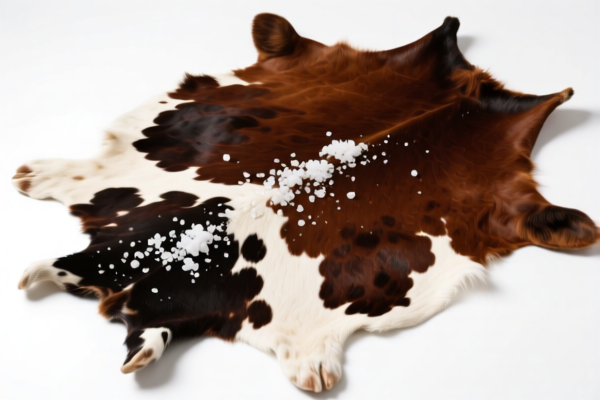
| ✅ Photos of Hides | ✔️ | Show the "Blue" tint and salt crystals to prove state. |
✅ 2. Classification Strategy & Risk Mitigation
🔥 "Accurate State, Accurate Code; Misclassification = Penalty!"
| Scenario | Recommended HS Code | Risk if Misclassified |
|---|---|---|
| Truly Wet-Salted & Raw (No Chrome) | 4101.50.10.10 or 4101.90.10.20 (17.5%) |
If declared as 4103.90.20.00 (20.8%) → Overpay 3.3% |
| "Blue" due to Chrome Tanning | Check 4104/4105 (Not in provided data!) | If declared under 4101 but is actually Chrome-Tanned → Underdeclaration Penalty + Retrospective Duty |
| Dry-Salted Hides | Different HS (Not in data) | Using "Wet" description for Dry hides → Customs Hold & Inspection |
📌 CRITICAL WARNING ON "BLUE": - In the leather industry, "Blue" almost exclusively means Chrome-Tanned. - Chrome-Tanned hides are typically classified under HS 4104.41 or 4105.31. - The provided data (
4101/4103) describes UN-TANNED or RAW hides. - If your product is truly Blue (Chrome-Tanned), the provided HS Codes are likely INCORRECT. Using4101.50.10.10for chrome-tanned hides is a misdeclaration. - Recommendation: Double-check with the supplier. Is it "Blue" because of the salt mix (rare) or because it's Chrome-Tanned? - If Chrome-Tanned: You likely need 4104.41.00.00 or similar. - If Just Wet-Salted (and the "Blue" is a misnomer or refers to oxidation): Then4101/4103codes apply.
✅ 3. Special Considerations for US Import
| Factor | Detail |
|---|---|
| Section 122 Duty (10%) | Applies to all Chinese-origin goods in these categories. Non-negotiable. |
| Section 301 Duty (7.5%) | Standard additional tariff. |
| Anti-Dumping/Countervailing | Check if specific leather imports face AD/CVD. (Rare for raw hides, but verify). |
| Environmental Compliance | Ensure hides are not from regions with deforestation links or illegal slaughter. |
🌍 V. Global Market Comparison (2026)
| Country/Region | Recommended HS Code | Duty Rate | Notes |
|---|---|---|---|
| 🇺🇸 USA | 4101.50.10.10 |
17.5% | High Section 122/301 impact. |
| 🇨🇳 China (Import from elsewhere) | 4101.50.10.10 |
0% | No additional tariffs for bovine raw hides. |
| 🇪🇺 EU | 4101.50 |
4.0% - 8.0%** | No Section 122 equivalent. |
| 🇬🇧 UK | 4101.50 |
4.0% | Post-Brexit tariff regime. |
📌 Conclusion: - The USA is the most expensive market for Chinese raw hides due to 10% Section 122 + 7.5% Section 301. - Total duty of 17.5%–20.8% is significant. Factor this into your FOB/CIF pricing.
📌 VI. Common Errors & Pitfalls (Blood & Tears Lessons)
❌ Error 1: Calling Chrome-Tanned Hides "Raw"
👉 Consequence: If you declare Chrome-Tanned hides as 4101 (Raw), customs may classify them as Tanned Leather (4104), which has different duties and higher scrutiny for environmental violations (chromium waste). This can lead to fines and seizure.
❌ Error 2: Ignoring the "Wet" vs. "Dry" Distinction 👉 Consequence: Wet-salted hides weigh more (water + salt). If you declare dry weight for wet goods, it’s fraud. If you declare wet weight but pay duty on dry weight incorrectly, it’s valuation fraud.
❌ Error 3: Using Generic "Leather" Description 👉 Consequence: Vague descriptions like "Cowhide Leather" delay customs. Must specify: "Raw," "Salted," "Wet," "Bovine."
✅ Correct Declaration Example:
"Raw Bovine Hides, Wet-Salted, China Origin. HS 4101.50.10.10. Subject to Section 301 (7.5%) and Section 122 (10%) Duties."
🎯 VII. Conclusion: Professional Classification Saves Money!
🎯 Key Takeaway:
🔹 "Blue" is a Red Flag! Verify if it’s Chrome-Tanned (4104/4105) or just Wet-Salted (4101/4103). The data provided assumes Raw/Un-tanned. 🔹 Best Rate:
4101.50.10.10and4101.90.10.20offer 17.5% (vs. 20.8% for4103.90.20.00). 🔹 Always include Section 122 (10%) and Section 301 (7.5%) in your cost calculation for US imports from China.
📌 Pro Tip:
If you are importing Chrome-Tanned (True Blue) hides, DO NOT use the HS Codes provided in the data. Contact a customs broker immediately for 4104/4105 classification. Using the wrong code for chrome-tanned goods is a high-risk violation.
📣 Immediate Action:
- Verify the chemical treatment of the hides (Salt only vs. Chrome).
- Select
4101.50.10.10if strictly Boine/Raw/Wet-Salted.- Calculate total landed cost including 17.5% duty.
- Prepare detailed specs for customs declaration.
✨ Precise Classification = Efficient Clearance = Maximized Profit! 💼 Your Supply Chain Relies on Accuracy!
Customer Reviews
About HS Code Classification
The Harmonized System (HS) is an internationally standardized nomenclature developed by the World Customs Organization (WCO) to classify traded products. Over 200 countries use the HS system as the basis for customs tariffs, trade statistics, and import/export regulations.
Each HS code follows a hierarchical structure:
- Chapter (2 digits) — Broad category of goods (e.g., Chapter 84: Machinery and Mechanical Appliances)
- Heading (4 digits) — More specific grouping within the chapter
- Subheading (6 digits) — Internationally standardized breakdown, used by all WCO member countries
- National subdivisions (8-10 digits) — Country-specific extensions for further classification, such as US HTSUS 10-digit codes
Correct HS code classification is essential for smooth customs clearance, accurate duty payment, and compliance with trade regulations. Misclassification can lead to customs delays, overpayment of duties, or penalties.
When importing from CN to US, the applicable tariff rates may include:
- Most-Favored-Nation (MFN) rate — The standard duty rate applied to WTO members
- General rate — Applied to countries without trade agreements
- Trade remedy duties — Additional tariffs such as Section 301 (anti-dumping), Section 232 (national security), or countervailing duties
The information provided on this page is for reference purposes only. For official classification, please consult with your local customs authority or a licensed customs broker.