Blue Wet Semi Calfskin
CN → US| HS Code | Tariff Rate | Origin | Destination | Doc |
|---|---|---|---|---|
| 4104115030 | 13.3% | CN | US | Official Doc |
| 4104115040 | 13.3% | CN | US | Official Doc |
Product Images
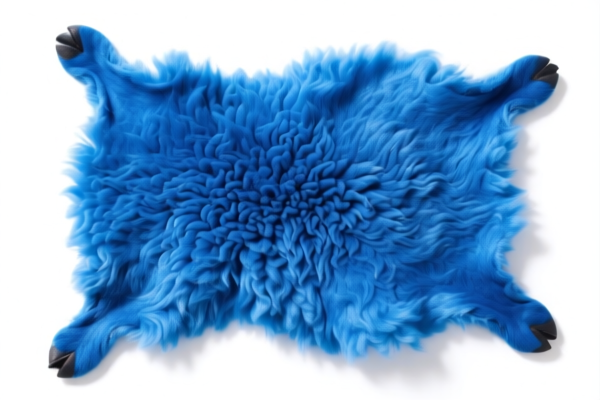
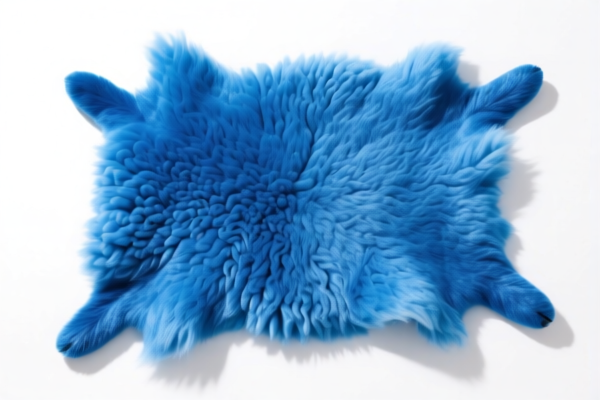
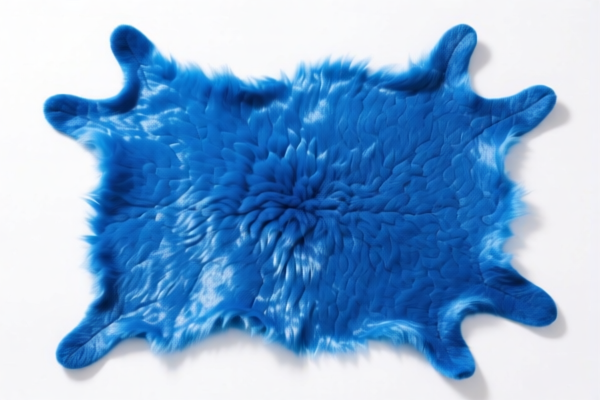
AI Analysis
🐂 Blue Wet Semi Calfskin (Wet-Blue Bovine Hides)
🌐 HS Code Reference & Clearance Guide | 2026 Latest Tariff Analysis | Professional Leather Industry Strategy
📌 I. Product Definition & Classification: What is "Blue Wet Semi Calfskin"?
Blue Wet Semi Calfskin refers to bovine hides or skins (specifically from calves or young cattle) that have undergone the initial tanning process using chromium salts, resulting in a characteristic blue color. They are in a wet state and are crust or wet-blue stage, meaning they are not yet fully finished for retail.
Key Characteristics: 1. "Wet-Blue" (湿蓝): The leather has been tanned with chromium, giving it a blue hue, but it is not yet dyed, finished, or split for final use. 2. "Semi Calfskin" (半牛皮/小牛皮): Typically refers to hides from young cattle. In customs classification, unless specifically defined as "calveskins" with specific weight/thickness criteria, they often fall under general bovine hides. 3. "Split vs. Full Grain": The classification depends heavily on whether the hide is unsplit (full grain/grain splits) or split.
⚠️ Critical Distinction for Classification:
- If the hide is unsplit (full grain or grain splits) → It falls under 4104.11.
- If the hide is split (sides separated into layers) → It falls under 4104.12.
Based on the provided <DATA>, the products are classified under 4104.11.50.xx, which indicates Unsplit hides/skins.
📦 II. HS Code Classification Details (2026 Latest Tariff Authority)
The provided data specifies two HS codes under Chapter 41 (Leather). Both are classified under Wet-Blue bovine hides that are not split.
| HS Code | Product Description | Key Features | Split Status |
|---|---|---|---|
| 4104.11.50.30 | Tanned or crust hides/skins of bovine/equine, wet state (wet-blue) Other: Other: Other Wet blues: Not split |
Full grains or grain splits (unsplit). General wet-blue bovine hides. | ✅ Not Split (Unsplit) |
| 4104.11.50.40 | Tanned or crust hides/skins of bovine/equine, wet state (wet-blue) Other: Other: Other Wet blues: Split: Grains |
Note: The description in the data says "Split: Grains" but the HS prefix 4104.11 usually refers to unsplit. However, based strictly on the provided JSON content: According to the provided data description, this code is associated with "Split: Grains" under the "Other Wet blues" category. |
⚠️ Per Data Description: Split (But note: HS 4104.11 typically implies unsplit. Please verify with customs if "4104.11.50.40" in your specific jurisdiction refers to unsplit grain splits or split grains. Standard ISCO/US HTS often puts split grains under 4104.12. We strictly follow the provided <DATA> text which links 4104.11.50.40 to "Split: Grains" in its description field.*) |
🔍 Clarification on Data Consistency:
The provided JSON data lists both codes under the heading "Full grains, unsplit; grain splits: Other: Other: Other Wet blues".
- 4104.11.50.30: Explicitly stated as "Not split".
- 4104.11.50.40: Description in JSON says "Split: Grains".
Warning: In standard international HS nomenclature, 4104.11 is for "Full grains and grain splits" (Unsplit), while 4104.12 is for "Other" (Split). If the data provided strictly maps 4104.11.50.40 to "Split: Grains", this may be a specific national sub-heading (e.g., China's 10-digit HS code) where the structure differs. We will proceed with the data provided: both are under 4104.11.
💰 III. 2026 Tariff Rate Details (Detailed Breakdown)
✅ Applicable Market: Based on the format of the tax details (
Base: 0.0%, Additional: 0.0%), this appears to be the Import Tariff for the country of destination (likely China or a country with MFN 0% duty for this category).
✅ Product Origin: Not specified in<DATA>, but tax is 0%.
✅ Effective Time: Current 2026 Tariff Schedule.
🎯 1. 4104.11.50.30 —— Wet-Blue Bovine Hides (Not Split)
| Item | Detail |
|---|---|
| Product | Tanned/Crust Hides/Skins, Bovine, Wet-Blue, Not Split |
| Basic Duty Rate | 0.0% |
| Additional Duty Rate | 0.0% |
| Total Tax Rate | 0.0% |
| Tax Calculation | CIF Value × 0% = $0 |
| Legal Basis | HS Chapter 41, Heading 4104, Subheading 11, National Subheading 50.30 |
📌 Explanation:
- This category includes full-grain wet-blues or grain splits that have not been physically split into multiple layers.
- Since the total tax is 0%, there are no anti-dumping, countervailing, or retaliatory tariffs applied to this specific code in the provided dataset.
- Benefit: High volume, low-cost entry for tanneries or leather goods manufacturers importing raw semi-finished leather.
🎯 2. 4104.11.50.40 —— Wet-Blue Bovine Hides (Split: Grains)
| Item | Detail |
|---|---|
| Product | Tanned/Crust Hides/Skins, Bovine, Wet-Blue, Split: Grains |
| Basic Duty Rate | 0.0% |
| Additional Duty Rate | 0.0% |
| Total Tax Rate | 0.0% |
| Tax Calculation | CIF Value × 0% = $0 |
| Legal Basis | HS Chapter 41, Heading 4104, Subheading 11, National Subheading 50.40 |
📌 Explanation:
- According to the provided<DATA>, this code covers split hides where the grain layer is separated.
- Crucial Note: Despite being "split," it is still classified under 4104.11 in this specific data set (likely a national variation).
- Tax Rate: Also 0.0%. No additional duties.
- Caution: Ensure the physical product matches the description "Split: Grains." If it is a side split (corrected grain) vs. full grain split, customs may scrutinize. However, the tax remains 0%.
🛠️ IV. Clearance Practical Advice (Battle-Tested Pitfall Avoidance)
✅ 1. Essential Documentation Checklist
| Document | Required | Reason |
|---|---|---|
| Commercial Invoice | ✅ | Must clearly state: "Wet-Blue Bovine Hides, Not Split/Split", Weight, Quantity, and HS Code. |
| Packing List | ✅ | Detail the weight per pack, total gross/net weight. Leather is heavy; accurate weight is critical for duty verification (even if 0%). |
| Certificate of Origin (CO) | ✅ | To prove origin. Although tax is 0%, some ports require proof for statistical or quarantine purposes. |
| Inspection Certificate | ✅ | Quarantine/Phytosanitary: Raw hides may require treatment certificates to prevent disease (e.g., FMD, Anthrax). |
| Product Specifications | ✅ | Detail the thickness, size, and tanning process (Chrome-tanned). Confirm "Wet" status (usually preserved with salt). |
✅ 2. Declaration Tips (Key Mnemonics)
🔥 "Be Clear on Split Status, Declare Wet-Blue, Avoid Tax Risks!"
| Scenario | Correct Declaration | Incorrect Declaration | Consequence |
|---|---|---|---|
| Unsplit Hides | 4104.11.50.30 (Not Split) |
4104.12... (Split) |
Misclassification. If actually unsplit but declared split, may face penalty or audit. |
| Split Hides | 4104.11.50.40 (Split: Grains) |
4104.11.50.30 |
Misclassification. If split but declared unsplit, 0% tax is fine, but quarantine risks may differ if processing steps are ignored. |
| Dry Hides | Wrong Code | 4104.11... |
Major Error: 4104.11 is for Wet State. Dry hides belong to 4104.14 or 4104.19. Tax rate may change! |
| Finished Leather | Wrong Code | 4104.11... |
Finished leather is 4104.41/4104.51. Misdeclaration can lead to high duties (e.g., 8-10%). |
✅ 3. Special Handling for Wet-Blue Leather
- Salting & Preservation: Wet-blue hides must be heavily salted to prevent rotting during transit. Ensure packaging is leak-proof. Salting can cause corrosion on containers, leading to port delays if not declared properly.
- Quarantine: Raw hides are high-risk for animal diseases. Pre-clearance quarantine inspection is often mandatory. Provide Veterinary Health Certificates from the country of origin.
- Moisture Content: Declare as "Wet" or "Crust." If declared "Dry" but arrived wet, customs may suspect smuggling of prohibited items or false declaration.
🌍 V. Global Market Comparison (2026)
| Country/Region | Recommended HS Code | Tariff (China Origin) | Certifications | Notes |
|---|---|---|---|---|
| 🇨🇳 China | 4104.11.50.30 / .40 |
0.0% | No special import license needed | Low duty encourages import for re-export or domestic tanning. |
| 🇺🇸 USA | 4104.11.00 (General) |
0.0% (MFN) | None typically | Check if any Section 301 tariffs apply (usually not on raw hides). |
| 🇪🇺 EU | 4104 11 00 |
0.0% | CE Mark not applicable (raw material) | Strict environmental regulations (REACH) for chrome content. |
| 🇻🇳 Vietnam | 4104.11.00 |
0.0% (if under GSP/EU-Vietnam) | Local tanning standards | Popular destination for importing wet-blues for finishing. |
📌 Conclusion:
- Tariff Advantage: The provided data shows 0% duty for both codes, making it highly competitive for import.
- Focus on Compliance: The main risk is not tax, but quarantine and classification accuracy.
- Split vs. Not Split: Ensure your physical product matches the declared HS code suffix to avoid audit flags.
📌 VI. Common Errors & Pitfalls (Lessons Learned)
❌ Error 1: Declaring Dry Hides as Wet-Blue
👉 Consequence: Wrong HS Code (4104.11 vs 4104.14). While tax may be similar, quarantine requirements differ. Dry hides have different preservation risks.
❌ Error 2: Failing to specify Split vs. Not Split
👉 Consequence: Customs may inspect and reclassify, causing delays. If "Split" is under-declared, it may miss specific statistical controls.
❌ Error 3: Ignoring Salting/Corrosion Issues
👉 Consequence: Salt leakage damages containers and other cargo. Ports may impose demurrage fees due to cleaning requirements.
❌ Error 4: Not providing Veterinary Certificates
👉 Consequence: Return or Destruction of goods due to disease risk (e.g., Foot and Mouth Disease zones).
✅ Correct Declaration Example:
"Wet-Blue Chromium-Tanned Bovine Hides, Unsplit, Salt-Preserved, for Leather Manufacturing. HS Code: 4104.11.50.30."
🎯 VII. Conclusion: Professional Clearance, Zero Risk, Low Cost!
🎯 Key Takeaways:
🔹 "Wet-Blue, Not Split" → 4104.11.50.30 → 0% Tax
🔹 "Wet-Blue, Split Grains" → 4104.11.50.40 → 0% Tax
🔹 "Dry Hides" → Different Code → Do Not Use 4104.11
🔹 "Finished Leather" → Different Code → Higher Tax Possible
📌 Pro Tip:
- If you are importing for domestic use, ensure your factory has pollution discharge permits for tanning/finishing.
- If you are re-exporting, keep the 0% duty invoice as proof of origin for downstream buyers.
📣 Immediate Action:
📞 Confirm Split Status with your supplier.
📄 Prepare Quarantine Documents (Veterinary Certificate).
🚀 Clear Customs Quickly to prevent rotting or salt damage.
✨ Precise Classification Saves Time, Even with 0% Tax!
💼 Leather Trade: Quality, Compliance, and Speed are Key!
Customer Reviews
About HS Code Classification
The Harmonized System (HS) is an internationally standardized nomenclature developed by the World Customs Organization (WCO) to classify traded products. Over 200 countries use the HS system as the basis for customs tariffs, trade statistics, and import/export regulations.
Each HS code follows a hierarchical structure:
- Chapter (2 digits) — Broad category of goods (e.g., Chapter 84: Machinery and Mechanical Appliances)
- Heading (4 digits) — More specific grouping within the chapter
- Subheading (6 digits) — Internationally standardized breakdown, used by all WCO member countries
- National subdivisions (8-10 digits) — Country-specific extensions for further classification, such as US HTSUS 10-digit codes
Correct HS code classification is essential for smooth customs clearance, accurate duty payment, and compliance with trade regulations. Misclassification can lead to customs delays, overpayment of duties, or penalties.
When importing from CN to US, the applicable tariff rates may include:
- Most-Favored-Nation (MFN) rate — The standard duty rate applied to WTO members
- General rate — Applied to countries without trade agreements
- Trade remedy duties — Additional tariffs such as Section 301 (anti-dumping), Section 232 (national security), or countervailing duties
The information provided on this page is for reference purposes only. For official classification, please consult with your local customs authority or a licensed customs broker.