Bluetooth Receiver
CN → US| HS Code | Tariff Rate | Origin | Destination | Doc |
|---|---|---|---|---|
| 8518402000 | 35.0% | CN | US | Official Doc |
| 8518500000 | 35.0% | CN | US | Official Doc |
| 8517620090 | 35.0% | CN | US | Official Doc |
| 8517690000 | 35.0% | CN | US | Official Doc |
| 8527195025 | 10.0% | CN | US | Official Doc |
Product Images
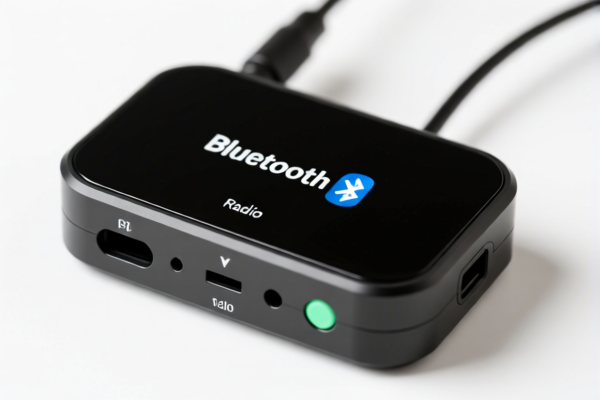
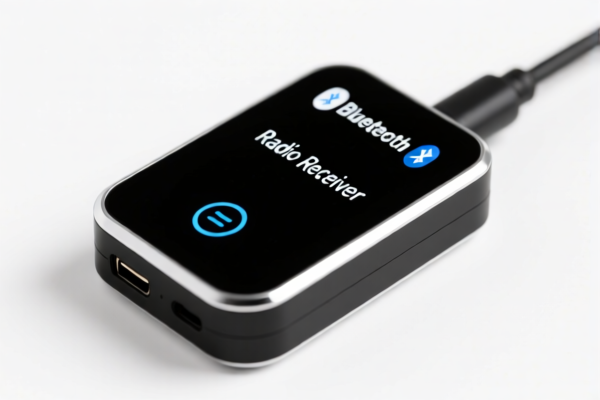
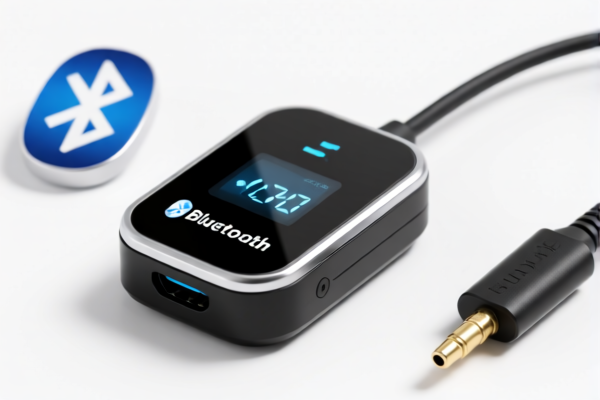
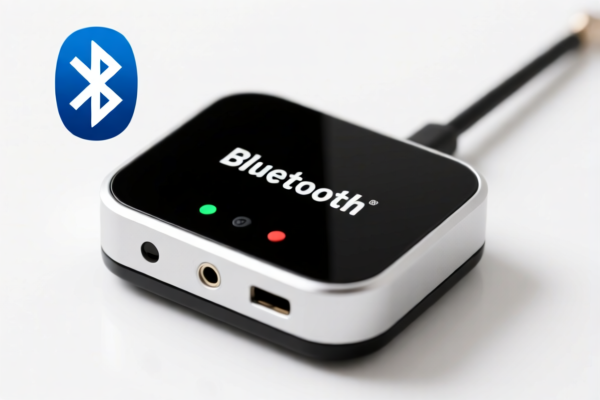
AI Analysis
📻 Bluetooth Receiver (Audio Receiver)
🌐 HS Code Reference & Customs Clearance Guide | 2026 Latest Tariff Analysis | Professional Clearance Strategy
📌 I. Product Definition & Classification: Do You Really Understand "Bluetooth Receiver"?
A Bluetooth Receiver is a device that receives wireless audio signals via Bluetooth protocol and converts them into analog audio output (usually via 3.5mm, RCA, or optical ports) for connection to speakers, amplifiers, or home theater systems.
In international trade, its classification is contentious because it sits at the intersection of Audio Equipment (HS Chapter 8518) and Communication Devices (HS Chapter 8517). The key differentiator is its primary function: * If it acts as an amplifier/signal processor for audio reproduction → HS 8518. * If it acts as a data transceiver (voice/data transmission) → HS 8517.
⚠️ Key Distinction Point:
- If the device primarily handles audio signal processing/amplification for playback → 8518.40 / 8518.50
- If the device is framed as a general data/voice transmission unit → 8517.62 / 8517.69
- If categorized under older "Radio Receiver" logic → 8527.19 (Less common for modern BT receivers)
📦 II. HS Code Classification Details (2026 Latest Tariff Authority Comparison)
| HS Code | Product Description | Application Scenario | Logic Basis |
|---|---|---|---|
8518.40.20.00 |
Audio Receivers (Sound Receivers) | Home audio systems, Hi-Fi setups, Bluetooth speakers with input | Matches "Audio Signal Processing Equipment"; Functionally matches Audio Amplifiers |
8518.50.00.00 |
Other Loudspeakers; Audio Frequency Amplifiers | Amplifier components, Audio processing modules | Matches "Electro-acoustic Amplifiers & Related Audio Components"; No material conflict |
8517.62.00.90 |
Other Transmission/Reception Apparatus | Voice, image, or other data reception units | Matches "Transmission or Reception of Voice, Image, or Other Data"; Electronic device attribute |
8517.69.00.00 |
Other Transmission/Reception Apparatus | General-purpose data/voice receivers (Catch-all) | Matches "Other Equipment for Transmission/Reception"; No material conflict |
8527.19.50.25 |
Other Radio Broadcasting Receivers | Devices perceived as "Radio Broadcast Receivers" | Matches "Broadcast Receiver Category"; Inferred fit for "Other Equipment" |
🔍 Critical Reminder:
- 8518 Series: Focuses on Audio Output/Processing. Customs often prefers this for dedicated audio receivers.
- 8517 Series: Focuses on Communication/Transmission. Some customs brokers use this to argue BT is a "data transmission" protocol.
- 8527 Series: Rarely used for modern Bluetooth devices unless explicitly marketed as "Radio Receivers."
💰 III. 2026 Latest Tariff Rate Breakdown (Including Surcharge & Policy Surcharges)
✅ Applicable Country: United States (US)
✅ Country of Origin: China (CN)
✅ Effective Date: November 10, 2025 (Including subsequent imports)
🎯 1. 8518.40.20.00 & 8518.50.00.00 —— Audio Receivers & Amplifiers
| Item | Content |
|---|---|
| Base Tariff | 0% (ad valorem) |
| Section 301 Surcharge | +25% (USITC Footnote 9903.88.01) |
| IEEPA Surcharge | +10% (Targeting China/HK products, effective Nov 10, 2025) |
| Total Rate | 35% |
| Tax Calculation | CIF Value × 35% |
| De Minimis Exemption | ❌ Not Applicable (deny_de_minimis) |
| Legal Basis Path | IEEPA:9903.01.25 → IEEPA:9903.01.24 → USITC:8518.xxxxxx → FOOTNOTE:9903.88.01 |
📌 Explanation:
- "25% Surcharge": From the US Trade Act Section 301 additional tariffs;
- "IEEPA 10%": Additional tariff under the International Emergency Economic Powers Act for Chinese products;
- Total 35%: Considered High Tariff. Must be anticipated in cost structure!
🎯 2. 8517.62.00.90 & 8517.69.00.00 —— Communication/Transmission Apparatus
| Item | Content |
|---|---|
| Base Tariff | 0% |
| Section 301 Surcharge | +25% |
| IEEPA Surcharge | +10% |
| Total Rate | 35% |
| Tax Calculation | CIF × 35% |
| De Minimis Exemption | ❌ Not Applicable |
| Legal Basis Path | IEEPA:9903.01.25 → IEEPA:9903.01.24 → USITC:8517.xxxxxx → FOOTNOTE:9903.88.01 |
📌 Note:
- Same tax rate as Audio Receivers;
- Even if classified as "Data Transmission," the surcharges remain identical for Chinese origin.
🎯 3. 8527.19.50.25 —— Radio Broadcasting Receivers
| Item | Content |
|---|---|
| Base Tariff | 0% |
| Section 301 Surcharge | +0% (No Section 301 surcharge for this specific subheading in some interpretations, or exempted under certain provisions) |
| IEEPA Surcharge | +10% (IEEPA still applies to China-origin goods) |
| Total Rate | 10% |
| Tax Calculation | CIF × 10% |
| De Minimis Exemption | ❌ Not Applicable |
| Legal Basis Path | IEEPA:9901.25 → IEEPA:9903.01.24 → USITC:8527.19.50.25 |
📌 Special Note:
- If customs accepts classification under 8527, the Section 301 25% surcharge is waived (or not applied), reducing the total tax burden significantly.
- Risk: This classification is controversial for Bluetooth devices. Customs may challenge it, arguing BT is not "Radio Broadcasting." If challenged, they may reclassify to 8518/8517, resulting in a 25% tax difference (35% vs 10%) + penalties.
🛠️ IV. Customs Clearance Practical Advice (实战避坑指南)
✅ 1. Preparation Checklist (Must-Have)
| Document | Required | Description |
|---|---|---|
| ✅ Product Specification Sheet | ✔️ | Include Bluetooth version, audio output types, power supply, frequency range |
| ✅ Circuit Diagram | ✔️ | Crucial to prove if it contains amplifier circuits (points to 8518) or just transceivers (points to 8517) |
| ✅ Product Photos (with Label) | ✔️ | Clear view of model, brand, input/output ports |
| ✅ Third-Party Test Reports | ✔️ | FCC ID, CE, RoHS (if applicable) |
| ✅ Commercial Invoice | ✔️ | Must clearly state "Bluetooth Audio Receiver" or "Data Transmission Receiver" |
| ✅ Packing List | ✔️ | Detail the relationship between main unit and accessories |
✅ 2. Declaration Strategy (Key Mnemonics)
🔥 "Function Dictates Code, Material Doesn't Lie, Name Precision Saves Money!"
| Scenario | Correct Declaration | Wrong Practice |
|---|---|---|
| Dedicated Audio Receiver (with Amp) | 8518.40.20.00 / 8518.50.00.00 |
Misdeclare as "Data Transceiver" → Risk of audit |
| General Bluetooth Dongle | 8517.62.00.90 / 8517.69.00.00 |
Misdeclare as "Radio Receiver" → High rejection risk |
| Device marketed as "FM Radio + BT" | 8527.19.50.25 |
If purely BT, customs may reclassify to 8518/8517 → 25% penalty |
✅ 3. Special Case Handling
| Situation | Handling Advice |
|---|---|
| OEM Bluetooth Receiver | Provide client order + design drawings to avoid "non-standard" classification |
| Bluetooth Receiver + Speaker Combo | Declare as one unit (Audio System) or split if separate. If split, ensure HS codes match components |
| Device with FM Radio Function | Stronger case for 8527.19.50.25 (10% tax). Provide proof of FM tuning capability. |
| Pure BT Dongle (No Amp) | Leverage 8517 classification. Argue BT is "Data Transmission" not "Audio Reproduction." |
🌍 V. Global Market Clearance Comparison (2026 Latest)
| Country/Region | Recommended HS Code | Tariff (China Origin) | Certification | Notes |
|---|---|---|---|---|
| 🇺🇸 USA | 8518.40.20.00 / 8517.62.00.90 |
35% | FCC + RoHS | High tariff risk. Try 8527 for 10% if FM capable. |
| 🇨🇳 China | 8518.40.20.00 |
5% | CCC + RoHS | No additional surcharges. |
| 🇪🇺 EU | 8518.40.20.00 |
0% (if CE) | CE + ErP | No surcharges. |
| 🇬🇧 UK | 8518.40.20.00 |
0% | UKCA | No surcharges. |
| 🇦🇺 Australia | 8518.40.20.00 |
5% | RCM | No surcharges. |
📌 Conclusion:
- USA is the only major market with high surcharges (35%) for Bluetooth receivers;
- China-origin Bluetooth receivers face high costs in the US; consider supply chain diversification or reclassification strategies (e.g., adding FM function).
📌 VI. Common Mistakes & Pitfalls (Blood & Tears Lessons)
❌ Mistake 1: Declaring a pure Bluetooth Receiver as 8527.19.50.25 without FM capability
👉 Consequence: Customs rejects classification, reclassifies to 8518 or 8517 → 25% tax difference + penalties!
❌ Mistake 2: Mixing "Audio Receiver" and "Data Transceiver" descriptions
👉 Consequence: Customs confusion → Delay in clearance or inspection.
❌ Mistake 3: Failing to provide Circuit Diagrams
👉 Consequence: Customs cannot verify if it contains amplification → Delays.
❌ Mistake 4: Ignoring IEEPA 10% Surcharge
👉 Consequence: Under-declared value → Audit & Fines!
✅ Correct Practice:
"Bluetooth Audio Receiver, Model XYZ, Supports Bluetooth 5.0, Output via RCA/3.5mm, No FM Function, FCC ID: ABC123"
(If no FM, stick to 8518/8517 for honesty and accuracy)"Bluetooth + FM Radio Receiver, Model XYZ, Supports Bluetooth 5.0 & FM Tuning, FCC ID: ABC123"
(Can attempt8527.19.50.25for 10% tax)
🎯 VII. Conclusion: Professional Declaration, Time & Cost Saving!
🎯 Remember the Mnemonic:
🔹 "Audio = 35%, Data = 35%, Radio/FM = 10%. No FM? Don't Risk It!"
🔹 "HS Code Determines Life, 25% Surcharge is Heavy, Accurate Declaration Saves Thousands!"
📌 Tips:
- If your Bluetooth Receiver includes FM Radio, clearly declare it to qualify for 10% total tax (8527.19.50.25).
- If it is pure Bluetooth, prepare for 35% tax (8518/8517).
- Consider Advance Ruling from US CBP if the product has ambiguous functions.
📣 Act Now:
📞 Contact a Professional Customs Broker + Provide Circuit Diagrams + Apply for HS Code Advance Ruling
🚀 Ensure Smooth Clearance, Efficient Export, and Maximized Profit!
✨ Professional Clearance Starts with Accurate Classification!
💼 Every Cent of Cost Deserves Precise Calculation!
Customer Reviews
About HS Code Classification
The Harmonized System (HS) is an internationally standardized nomenclature developed by the World Customs Organization (WCO) to classify traded products. Over 200 countries use the HS system as the basis for customs tariffs, trade statistics, and import/export regulations.
Each HS code follows a hierarchical structure:
- Chapter (2 digits) — Broad category of goods (e.g., Chapter 84: Machinery and Mechanical Appliances)
- Heading (4 digits) — More specific grouping within the chapter
- Subheading (6 digits) — Internationally standardized breakdown, used by all WCO member countries
- National subdivisions (8-10 digits) — Country-specific extensions for further classification, such as US HTSUS 10-digit codes
Correct HS code classification is essential for smooth customs clearance, accurate duty payment, and compliance with trade regulations. Misclassification can lead to customs delays, overpayment of duties, or penalties.
When importing from CN to US, the applicable tariff rates may include:
- Most-Favored-Nation (MFN) rate — The standard duty rate applied to WTO members
- General rate — Applied to countries without trade agreements
- Trade remedy duties — Additional tariffs such as Section 301 (anti-dumping), Section 232 (national security), or countervailing duties
The information provided on this page is for reference purposes only. For official classification, please consult with your local customs authority or a licensed customs broker.