Bluetooth Transmitter
CN → US| HS Code | Tariff Rate | Origin | Destination | Doc |
|---|---|---|---|---|
| 8525507010 | 35.0% | CN | US | Official Doc |
| 8526925000 | 35.0% | CN | US | Official Doc |
| 8526910040 | 35.0% | CN | US | Official Doc |
Product Images
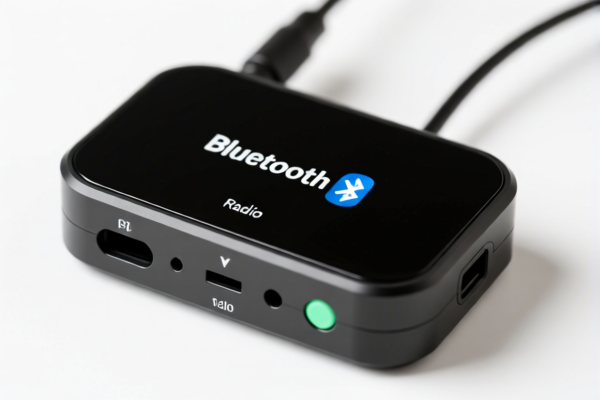
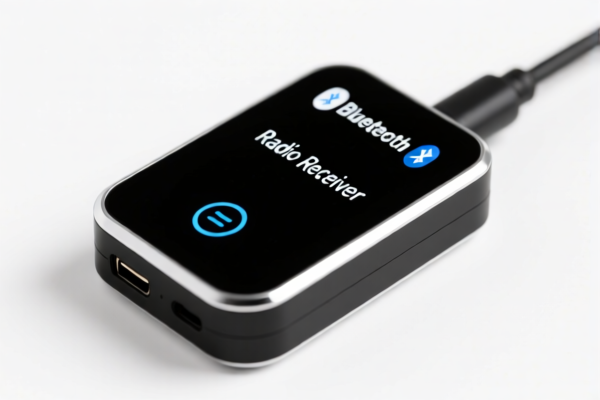
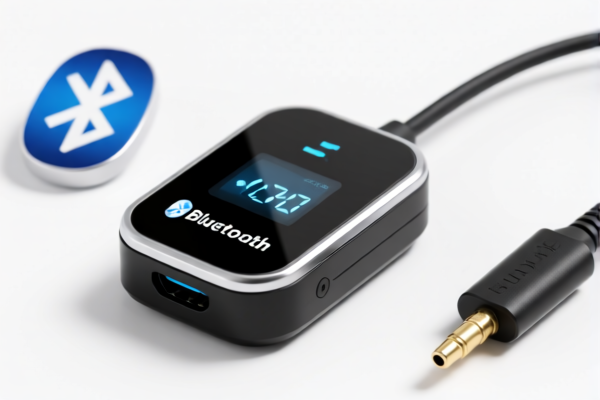
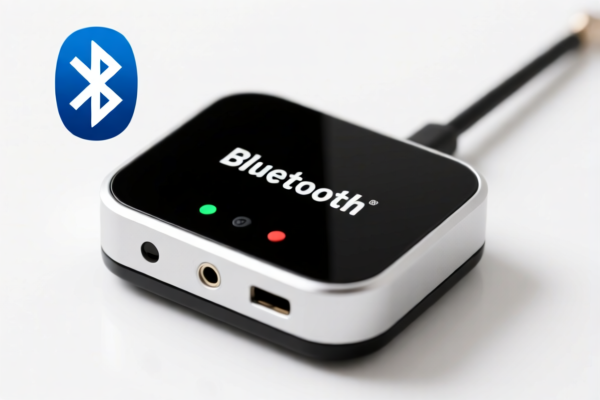
AI Analysis
📡 Bluetooth Transmitter (Radio Transmission Apparatus)
🌐 HS Code Reference & Customs Clearance Guide | 2026 Latest Tariff Analysis | Professional Clearance Strategy
📌 I. Product Definition & Classification: What exactly is a "Bluetooth Transmitter"?
In international trade, a Bluetooth Transmitter is categorized not by its wireless protocol (Bluetooth), but by its function as a radio signal transmission device. It falls under Chapter 85 (Electrical machinery and equipment) because it emits radio waves to transmit sound or data.
Crucial Distinction:
- If it is a standalone unit transmitting audio/data via radio frequency → Chapter 85.
- If it is a component inside a larger machine (e.g., a Bluetooth chip inside a PC) → It may be classified as a part of that specific machine.
- If it is for broadcasting (radio/TV stations) → Different subheading.
⚠️ Key Classification Logic:
- Bluetooth operates in the 2.4 GHz ISM band. Devices that generate and emit this signal are classified under HS 8525 (Transmission apparatus for radio-broadcasting or television) or HS 8526 (Radio navigation apparatus). - Do NOT classify as headphones or receivers (HS 8518) if the primary function is transmitting the signal from a source to a receiver.
📦 II. HS Code Classification Details (2026 Authoritative Reference)
Based on the provided data, here are the precise HS Codes for Bluetooth Transmitters depending on their specific application and regulatory status.
| HS Code | Product Description | Application Scenario | Tax Rate |
|---|---|---|---|
| 8525.50.70.10 | Transmitters for broadcasting (发射器用于广播的发射机) |
High-power audio transmitters, FM transmitters for public address, or professional broadcasting equipment. | 35.0% |
| 8526.92.50.00 | Components of radio remote control apparatus (发射器属于无线电遥控装置的组成部分) |
Bluetooth remotes for IoT devices, drones, smart home controllers, industrial wireless remotes. | 35.0% |
| 8526.91.00.40 | Transmitting equipment in radio navigation aids (发射器属于无线电导航辅助装置中的发送端设备) |
GPS/Nav Bluetooth beacons, AIS (Automatic Identification System) transponders, marine/aviation navigation aids. | 35.0% |
🔍 Critical Note:
- Standard Consumer Bluetooth Audio Transmitters (e.g., 3.5mm to Bluetooth dongles for TVs) often face scrutiny. If they are low-power, short-range, and not for "broadcasting" or "navigation," customs may challenge the above codes. However, if classified under 8525.50 (Transmission apparatus), they attract the 35% total tax. - The provided data indicates a uniform 35% total tax rate for these specific high-frequency transmission codes due to US trade policies.
💰 III. 2026 Latest Tariff Rate Breakdown (Including Surcharges)
✅ Applicable Country: United States (US)
✅ Origin: China (CN)
✅ Effective Date: Current trade policies (Section 301 & IEEPA)
🎯 1. 8525.50.70.10 — Transmitters for Broadcasting
| Item | Detail |
|---|---|
| Base Tariff | 0.0% |
| Section 301 Surcharge | +25.0% |
| Section 122 / IEEPA Surcharge | +10.0% |
| Total Tax Rate | 35.0% |
| Calculation | CIF Value × 35% |
| De Minimis Exemption | ❌ Not Eligible (High tariff items usually exclude Section 321 de minimis relief) |
| Legal Basis | USITC:8525.50.70.10 → Section 301: Footnote 9903.88.01 → IEEPA: 10% Surcharge |
📌 Explanation:
- Base 0%: Standard MFN (Most Favored Nation) rate for electronic transmitters is low or zero. - +25% Section 301: Retaliatory tariffs on Chinese goods, including electronics. - +10% IEEPA: Additional tariff under the International Emergency Economic Powers Act for certain Chinese tech exports. - Total 35%: This is a significant cost burden.
🎯 2. 8526.92.50.00 — Remote Control Components
| Item | Detail |
|---|---|
| Base Tariff | 0.0% |
| Section 301 Surcharge | +25.0% |
| Section 122 / IEEPA Surcharge | +10.0% |
| Total Tax Rate | 35.0% |
| Calculation | CIF Value × 35% |
| De Minimis Exemption | ❌ Not Eligible |
| Legal Basis | USITC:8526.92.50.00 → Section 301 → IEEPA |
📌 Explanation:
- Bluetooth modules used in remote controls are treated as "radio transmission apparatus." - Identical tax structure to broadcasting transmitters due to US tech import restrictions.
🎯 3. 8526.91.00.40 — Navigation Aid Transmitters
| Item | Detail |
|---|---|
| Base Tariff | 0.0% |
| Section 301 Surcharge | +25.0% |
| Section 122 / IEEPA Surcharge | +10.0% |
| Total Tax Rate | 35.0% |
| Calculation | CIF Value × 35% |
| De Minimis Exemption | ❌ Not Eligible |
| Legal Basis | USITC:8526.91.00.40 → Section 301 → IEEPA |
📌 Explanation:
- Even for navigation aids, if the technology is Chinese-origin and classified under these transmission codes, the full 35% applies.
🛠️ IV. Customs Clearance Practical Advice (Pitfall Avoidance Guide)
✅ 1. Documentation Checklist (Essential)
| Document | Required | Description |
|---|---|---|
| ✅ Technical Specification Sheet | ✔️ | Must detail frequency (2.4 GHz), power output (mW), and modulation type (GFSK for Bluetooth). |
| ✅ Circuit Diagram/Block Diagram | ✔️ | To prove if it's a complete unit or a module. |
| ✅ Product Photos (Clear) | ✔️ | Show connectors, antennas, labels, and FCC ID if applicable. |
| ✅ FCC ID / SAR Report | ✔️ | Mandatory for Bluetooth devices in the US. Without it, shipment will be rejected. |
| ✅ Commercial Invoice | ✔️ | Must state: "Bluetooth Transmitter, Model XYZ, Made in China." |
| ✅ HS Code Pre-Ruling (Optional but Recommended) | ✔️ | To avoid disputes over "Broadcasting" vs. "Remote Control." |
✅ 2. Declaration Tips (Key Mantra)
🔥 "Be Specific, Not Generic! 'Bluetooth' is not a HS Code!"
| Scenario | Correct Declaration | Wrong Approach |
|---|---|---|
| Audio Bluetooth Dongle | 8525.50.70.10 - Radio Transmission Apparatus |
"Bluetooth Speaker" (Wrong chapter: 8518) → Leads to delay & reclassification. |
| Smart Home Remote | 8526.92.50.00 - Remote Control Component |
"Toy" or "Electronic Toy" → Incorrect classification, high penalty risk. |
| GPS Beacon | 8526.91.00.40 - Navigation Aid Transmitter |
"GPS Receiver" (Wrong: Receivers are different) → Must be Transmitting equipment. |
✅ 3. Special Cases & Mitigation
| Situation | Recommendation |
|---|---|
| Low-Power Consumer Dongles | If power is <10mW and not for broadcast, argue for HS 8517.62 (Machines for reception, conversion & transmission) if possible, but check latest rulings as customs may still classify under 8525/8526. Note: Provided data lists 8525/8526 codes. |
| OEM/White Label Goods | Provide the original manufacturer’s tech specs to justify the classification. |
| Kit vs. Finished Good | If sold as a kit, declare as "Parts." If finished, declare as "Apparatus." |
| FCC Certification | Ensure the FCC ID is printed on the device. Missing FCC ID = Automatic seizure. |
🌍 V. Global Market Comparison (2026)
| Country/Region | Recommended HS Code | Tariff | Certification | Notes |
|---|---|---|---|---|
| 🇺🇸 USA | 8525.50.70.10 / 8526.92.50.00 |
35% | FCC ID + RoHS | High barrier due to Section 301 & IEEPA. |
| 🇨🇳 China | 8525.50.70.10 |
5-10% | SRRC (Radio) | Low import tax, but strict radio regulation. |
| 🇪🇺 EU | 8517.62.00 or 8525.50 |
0-4% | CE + RED Directive | No Section 301 equivalent. Lower cost. |
| 🇬🇧 UK | 8525.50 |
0-4% | UKCA + Ofcom | Post-Brexit rules apply. |
| 🇯🇵 Japan | 8525.50 |
0-5% | PSE + TELEC | Strict radio laws. |
📌 Conclusion:
- USA is the most expensive market for Bluetooth transmitters due to 35% combined tariffs. - EU and UK are more cost-effective but require CE/UKCA + RED Directive compliance.
📌 VI. Common Mistakes & Pitfalls (Lessons Learned)
❌ Mistake 1: Classifying Bluetooth Audio Transmitter as "Headphones" (HS 8518)
👉 Consequence: Incorrect classification. Headphones are receivers. Transmitters are transmitters. Customs may penalize and apply retroactive tariffs.
❌ Mistake 2: Omitting "Radio Transmission" in Description
👉 Consequence: Vague description ("Bluetooth Device") leads to customs examination, delays, and potential reclassification to higher tariff lines.
❌ Mistake 3: Ignoring FCC ID for US Imports
👉 Consequence: Shipment Seized. No Bluetooth device enters the US without a valid FCC ID.
❌ Mistake 4: Assuming De Minimis ($800) Applies
👉 Consequence: Many Section 301 items are excluded from de minimis. Even small shipments may face 35% tax. Verify current IEEPA exclusions.
✅ Correct Approach:
"Bluetooth Transmitter Module, Model XYZ, 2.4GHz, FCC ID: ABC123, Intended for Audio Transmission, Made in China"
🎯 VII. Conclusion: Professional Clearance, Cost Optimization!
🎯 Remember the Mantra:
🔹 "Transmitter ≠ Receiver. Radio Waves = Chapter 85."
🔹 "35% Total Tax is the Reality for US Imports. Plan Accordingly."
🔹 "FCC ID is Non-Negotiable."
📌 Pro Tip:
If your Bluetooth transmitter is integrated into a larger product (e.g., a Bluetooth speaker), ensure the principal function dictates the HS code. If it's a standalone transmitter, expect 35% duty.
Consider pre-classification rulings with US CBP to confirm the specific HS code and tariff impact for your exact model.
📣 Immediate Action:
📞 Consult a US Customs Broker + Provide FCC ID + Prepare Detailed Tech Specs
🚀 Minimize Duty Costs, Maximize Clearance Speed, Protect Your Supply Chain!
✨ Professional Clearance Starts with Accurate Classification!
💼 Your Margins Depend on Precision!
Customer Reviews
About HS Code Classification
The Harmonized System (HS) is an internationally standardized nomenclature developed by the World Customs Organization (WCO) to classify traded products. Over 200 countries use the HS system as the basis for customs tariffs, trade statistics, and import/export regulations.
Each HS code follows a hierarchical structure:
- Chapter (2 digits) — Broad category of goods (e.g., Chapter 84: Machinery and Mechanical Appliances)
- Heading (4 digits) — More specific grouping within the chapter
- Subheading (6 digits) — Internationally standardized breakdown, used by all WCO member countries
- National subdivisions (8-10 digits) — Country-specific extensions for further classification, such as US HTSUS 10-digit codes
Correct HS code classification is essential for smooth customs clearance, accurate duty payment, and compliance with trade regulations. Misclassification can lead to customs delays, overpayment of duties, or penalties.
When importing from CN to US, the applicable tariff rates may include:
- Most-Favored-Nation (MFN) rate — The standard duty rate applied to WTO members
- General rate — Applied to countries without trade agreements
- Trade remedy duties — Additional tariffs such as Section 301 (anti-dumping), Section 232 (national security), or countervailing duties
The information provided on this page is for reference purposes only. For official classification, please consult with your local customs authority or a licensed customs broker.