Boat
CN → US| HS Code | Tariff Rate | Origin | Destination | Doc |
|---|---|---|---|---|
| 8901100000 | 35.0% | CN | US | Official Doc |
| 8906900090 | 35.0% | CN | US | Official Doc |
| 8906900010 | 35.0% | CN | US | Official Doc |
| 8901900000 | 35.0% | CN | US | Official Doc |
| 8903210030 | 36.5% | CN | US | Official Doc |
Product Images
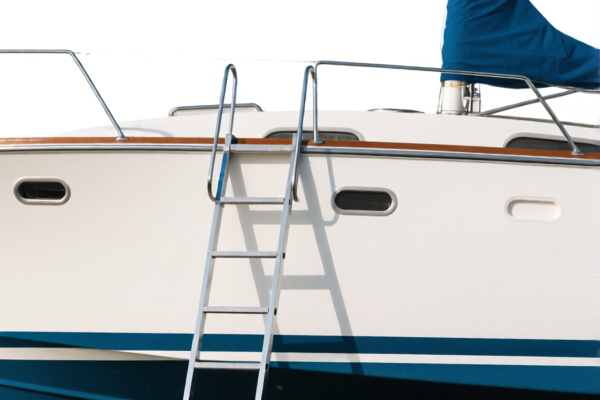
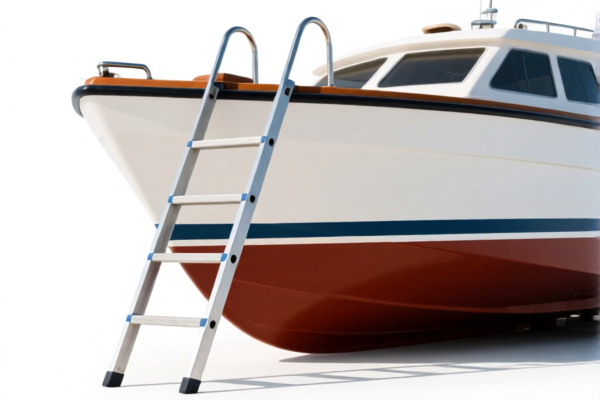
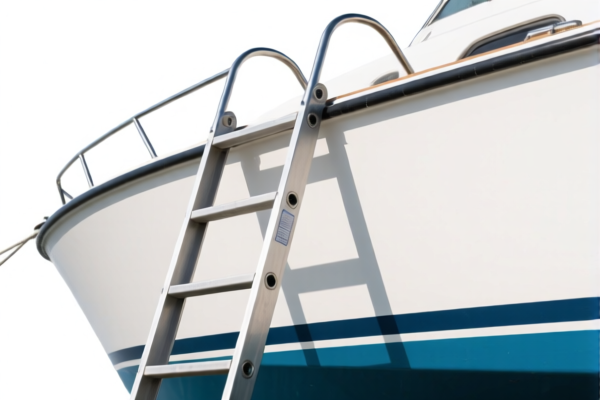
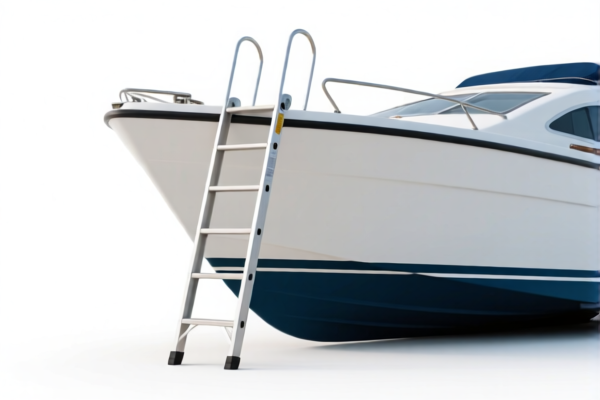
AI Analysis
🚢 Sailing Boats & Yachts: The Ultimate HS Code & Customs Clearance Guide (2026)
🌐 HS Code Reference & Customs Strategy | 2026 Tariff Breakdown | Professional Clearance Tactics
📌 I. Product Definition & Classification: What is a "Sailing Boat"?
A sailing boat (or yacht) is a vessel powered primarily by sails, though often equipped with auxiliary engines. In international trade, it is classified as a ship, boat, or floating structure. The key to correct classification lies in its primary function and construction:
- Recreational/Sport Vessels: Small to medium-sized boats used for leisure, sports, or entertainment (e.g., dinghies, small yachts).
- General Cargo/Passenger Vessels: Larger vessels capable of transporting goods or people over long distances, including those that may use sails but are structurally classified under general ship categories.
⚠️ Critical Distinction:
- If the boat is specifically designed for recreation/sports and matches specific length/material criteria → It may fall under 8903.21.
- If the boat is a general-purpose vessel (transporting people/goods) regardless of sail power → It falls under 8901.xxxx.
- If the boat is a generic ship not specifically described elsewhere → It falls under 8906.90.
📦 II. HS Code Classification Details (2026 Latest Tariff Authority)
Below are the five most likely HS Codes for "Sailing Boats" based on the provided data, categorized by their specific use and structure.
| HS Code | Product Description | Applicable Scenario | Tax Rate |
|---|---|---|---|
8903.21.00.30 |
Recreational/Sport Sailing Boats | Small sailing boats for leisure, sports, or entertainment; no material/length conflicts. | 36.5% |
8901.10.00.00 |
Vessels for Excursion/Transport | Sailing boats used for transporting persons or goods, fitting the definition of "excursion boats and similar vessels." | 35.0% |
8901.90.00.00 |
Other Mixed Cargo/Passenger Vessels | Sailing boats that function as "other vessels both for transporting persons and goods." | 35.0% |
8906.90.00.10 |
Other Ships (Complete Structure) | Generic sailing boats classified as "other ships," assumed to have a complete vessel structure. | 35.0% |
8906.90.00.90 |
Other Ships (General) | Sailing boats not specifically designated as "hulls," fitting the broad "other ships" category. | 35.0% |
🔍 Key Insight:
- 8903.21.00.30 is the only code with a higher base tariff (1.5%), resulting in a 36.5% total rate.
- All other codes (8901and8906series) have a 0% base tariff, resulting in a 35.0% total rate.
- Misclassification can lead to overpayment (0.5%) or customs penalties if the wrong functional definition is applied.
💰 III. 2026 Latest Tariff Rate Breakdown (Including Surcharges & Policy Add-ons)
✅ Applicable Country: USA (US)
✅ Country of Origin: China (CN)
✅ Effective Date: November 10, 2025 (and onwards)
🎯 1. 8903.21.00.30 —— Recreational/Sport Sailing Boats
| Item | Detail |
|---|---|
| Base Tariff | 1.5% (Ad Valorem) |
| USITC Surtax (Section 301) | +25.0% |
| IEEPA Surtax (Section 122) | +10.0% |
| Total Tariff Rate | 36.5% |
| Tax Calculation | CIF Value × 36.5% |
| De Minimis Exemption | ❌ Not Eligible (deny_de_minimis) |
| Legal Basis Path | USITC:8903.21.00.30 → 301:25% → IEEPA:10% |
📌 Explanation:
- This code applies to purely recreational or sports-oriented sailing boats.
- Despite being for leisure, the base tariff is 1.5%, making it more expensive than general cargo vessels.
- Total 36.5% includes all surcharges.
🎯 2. 8901.10.00.00 / 8901.90.00.00 —— General Purpose Sailing Vessels
| Item | Detail |
|---|---|
| Base Tariff | 0.0% |
| USITC Surtax (Section 301) | +25.0% |
| IEEPA Surtax (Section 122) | +10.0% |
| Total Tariff Rate | 35.0% |
| Tax Calculation | CIF Value × 35.0% |
| De Minimis Exemption | ❌ Not Eligible (deny_de_minimis) |
| Legal Basis Path | USITC:8901.xxxx → 301:25% → IEEPA:10% |
📌 Explanation:
- These codes apply to sailing boats that are functionally equivalent to general transport vessels (carrying passengers/cargo).
- Base tariff is 0%, but the 25% + 10% surcharges bring the total to 35.0%.
- Common for larger yachts or multi-purpose sailing vessels.
🎯 3. 8906.90.00.10 / 8906.90.00.90 —— Other Ships (Generic)
| Item | Detail |
|---|---|
| Base Tariff | 0.0% |
| USITC Surtax (Section 301) | +25.0% |
| IEEPA Surtax (Section 122) | +10.0% |
| Total Tariff Rate | 35.0% |
| Tax Calculation | CIF Value × 35.0% |
| De Minimis Exemption | ❌ Not Eligible (deny_de_minimis) |
| Legal Basis Path | USITC:8906.90 → 301:25% → IEEPA:10% |
📌 Explanation:
- This is a catch-all category for ships not specifically described elsewhere.
- If your sailing boat doesn’t fit neatly into 8901 (transport) or 8903 (recreation), it falls here.
- No base tariff, but same high surcharges (35.0% total).
🛠️ IV. Customs Clearance Practical Advice (Avoid Pitfalls)
✅ 1. Required Documentation Checklist (Non-Negotiable)
| Document | Required | Notes |
|---|---|---|
| ✅ Product Specification Sheet | ✔️ | Must detail hull material, length, beam, draft, and primary use (recreation vs. transport). |
| ✅ Technical Drawings | ✔️ | Show complete vessel structure to justify 8906 or 8901 classification. |
| ✅ Commercial Invoice | ✔️ | Clearly state "Sailing Boat" or "Yacht," not just "Boat." |
| ✅ Bill of Lading (B/L) | ✔️ | Must match invoice description and HS Code. |
| ✅ CE/USCG Certification | ✔️ | Safety compliance certificates are often required for marine vessels. |
| ✅ Origin Certificate (CO) | ✔️ | Proves China origin; triggers surcharges. |
✅ 2. Declaration Tips (Key Mantra)
🔥 "Define Use Clearly, Structure Fully, Surcharges Apply Uniformly!"
| Scenario | Correct Declaration | Wrong Declaration |
|---|---|---|
| Small recreational dinghy | 8903.21.00.30 (Sport/Recreation) |
8901.10.00.00 → Risk of penalty |
| Large sailing yacht (cargo/passenger capability) | 8901.10.00.00 or 8901.90.00.00 |
8906.90.00.90 → May be accepted but less precise |
| Generic sailing vessel | 8906.90.00.10 or 8906.90.00.90 |
8903.21.00.30 → Overpay by 1.5% |
| Boat hull only (not complete) | Not applicable (In data, all are complete vessels) | N/A |
✅ 3. Special Cases & Handling
| Situation | Recommendation |
|---|---|
| OEM Custom Yachts | Provide design specs and client order to justify 8901 or 8906. |
| Mixed Use (Recreation + Transport) | Declare as 8901.10.00.00 if transport capability is significant. |
| Sailing Kit (Disassembled) | Must prove it forms a complete vessel upon assembly. Otherwise, may be split into parts (high risk). |
| Used Boats | Same HS Code applies, but ensure age and condition are declared if required. |
🌍 V. Global Market Comparison (2026)
| Country/Region | Recommended HS Code | Base Tariff | Surcharges | Total Rate | Notes |
|---|---|---|---|---|---|
| 🇺🇸 USA | 8901.10.00.00 / 8903.21.00.30 |
0% or 1.5% | +35% (25%+10%) | 35.0% / 36.5% | High surcharges for Chinese origin. |
| 🇨🇳 China | 8901.10.00.00 |
0% | 0% | 0% | No surcharges for domestic use. |
| 🇪🇺 EU | 8901.10.00.00 |
0% | 0% | 0% | No additional tariffs for Chinese origin. |
| 🇯🇵 Japan | 8901.10.00.00 |
0% | 0% | 0% | No surcharges. |
| 🇦🇺 Australia | 8901.10.00.00 |
5% | 0% | 5% | Moderate base tariff, no US-style surcharges. |
📌 Conclusion:
- USA is the only market imposing heavy surcharges (25% + 10%) on Chinese sailing boats.
- Total cost in the US is significantly higher than in other major markets.
- Strategic Tip: Consider sourcing from or shipping via non-China origin countries to avoid IEEPA/301 surcharges if possible.
📌 VI. Common Mistakes & Pitfalls (Lessons Learned)
❌ Mistake 1: Declaring a recreational boat as 8901 (Transport)
👉 Result: May be accepted, but risk of penalty if functionality is clearly recreational.
👉 Correct: Use 8903.21.00.30 for pure recreation.
❌ Mistake 2: Declaring a transport vessel as 8903 (Recreation)
👉 Result: Underpayment if base tariff is higher (1.5% vs 0%).
👉 Correct: Use 8901.10.00.00 if it carries cargo/passengers.
❌ Mistake 3: Ignoring IEEPA & 301 Surcharges
👉 Result: Budget failure. Total rate is 35-36.5%, not just base tariff.
👉 Correct: Always add 35% to CIF value for US clearance.
❌ Mistake 4: Claiming De Minimis Exemption
👉 Result: Seizure or heavy penalties. Marine vessels are never de minimis eligible.
👉 Correct: Prepare full documentation and pay full duties.
✅ Best Practice:
"Full-size Sailing Yacht, Recreational Use, 30ft Length, Fiberglass Hull, Model XYZ, CE & USCG Certified"
🎯 VII. Conclusion: Precision Classification for Cost Efficiency
🎯 Remember the Mantra:
🔹 "Recreation = 36.5%, Transport = 35.0%, Generic = 35.0%.
🔹 "Surcharges are King: 25% + 10% = 35% Extra!"
🔹 "No De Minimis, No Excuses!"**
📌 Pro Tip:
If your sailing boat is originating from Vietnam, Mexico, Thailand, or Malaysia, you may avoid IEEPA/301 surcharges, reducing the total rate to 0%~5% (base only).
Recommendation: Apply for a Pre-Ruling (Advance Ruling) from US Customs to confirm the correct HS Code and avoid clearance delays.
📣 Take Action Now:
📞 Contact a licensed customs broker + Provide product images + Apply for HS Code Pre-Ruling
🚀 Ensure smooth clearance, minimize costs, and maximize your sailing business profits!
✨ Professional clearance starts with precise classification!
💼 Every dollar of tax saved is profit earned!
Customer Reviews
About HS Code Classification
The Harmonized System (HS) is an internationally standardized nomenclature developed by the World Customs Organization (WCO) to classify traded products. Over 200 countries use the HS system as the basis for customs tariffs, trade statistics, and import/export regulations.
Each HS code follows a hierarchical structure:
- Chapter (2 digits) — Broad category of goods (e.g., Chapter 84: Machinery and Mechanical Appliances)
- Heading (4 digits) — More specific grouping within the chapter
- Subheading (6 digits) — Internationally standardized breakdown, used by all WCO member countries
- National subdivisions (8-10 digits) — Country-specific extensions for further classification, such as US HTSUS 10-digit codes
Correct HS code classification is essential for smooth customs clearance, accurate duty payment, and compliance with trade regulations. Misclassification can lead to customs delays, overpayment of duties, or penalties.
When importing from CN to US, the applicable tariff rates may include:
- Most-Favored-Nation (MFN) rate — The standard duty rate applied to WTO members
- General rate — Applied to countries without trade agreements
- Trade remedy duties — Additional tariffs such as Section 301 (anti-dumping), Section 232 (national security), or countervailing duties
The information provided on this page is for reference purposes only. For official classification, please consult with your local customs authority or a licensed customs broker.