Boat (HS Code 8903210035)
CN → US| HS Code | Tariff Rate | Origin | Destination | Doc |
|---|---|---|---|---|
| 8901100000 | 35.0% | CN | US | Official Doc |
| 8901900000 | 35.0% | CN | US | Official Doc |
| 8903220025 | 36.5% | CN | US | Official Doc |
| 8903210035 | 36.5% | CN | US | Official Doc |
| 8903210010 | 36.5% | CN | US | Official Doc |
Product Images
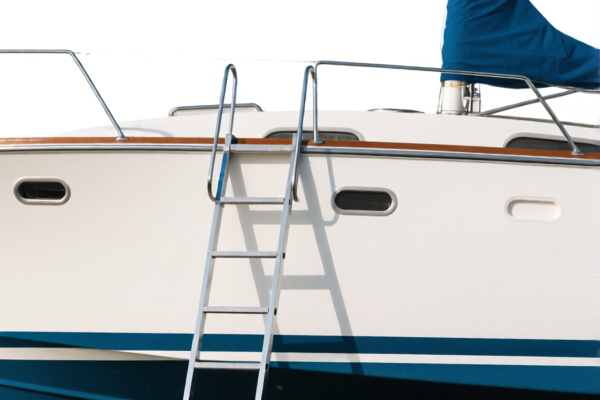
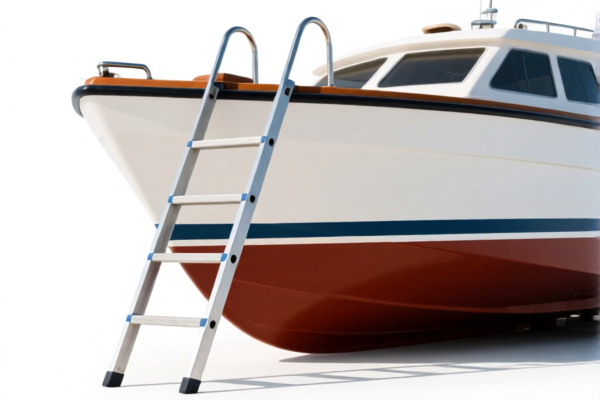
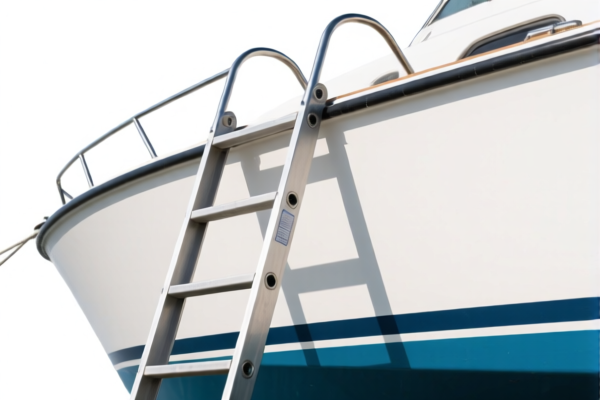
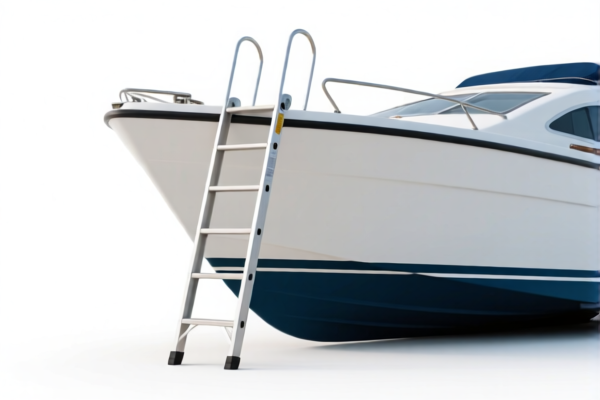
AI Analysis
🛥️ Boat – HS Code 8903.21.00.35
🌐 HS Code Reference & Customs Clearance Guide | 2026 Latest Tariff Analysis | Professional Level Strategy
📌 1. Product Definition & Classification: Do You Really Know This "Boat"?
The input product is a "Boat" (HS Code 8903.21.00.35). In international trade, this falls under Chapter 89: Ships, Boats, and Floating Structures. Specifically, it is classified as a motor-powered recreational vessel, typically less than 12 meters in length.
In customs clearance, precise classification is critical because the tax burden varies significantly based on the vessel's propulsion type (motor vs. sail), material (plastic vs. wood vs. aluminum), and specific sub-category within the "Boats" chapter.
⚠️ Key Distinction Point:
- Motor Boats vs. Sail Boats: This code specifically applies to motor-powered boats. Sailboats have different sub-headings.
- Material Matters: The sub-code.35often implies a specific material classification (typically fiberglass/plastic or specific recreational types depending on national tariff schedules).
- Length: Usually applies to vessels under 12 meters, though exact definitions vary by country’s tariff schedule.
📦 2. HS Code Classification Details (2026 Latest Tariff Authority Comparison)
Based on the provided data <DATA>, the following HS Codes are relevant to "Boats" and their corresponding tax treatments. Note that 8903.21.00.35 is explicitly listed in the data with specific tax details.
| HS Code | Product Description | Match Reason from Data | Total Tax Rate | Tax Breakdown |
|---|---|---|---|---|
8903.21.00.35 |
Boat (Motor-powered, Recreational) | Matches input product name and code structure; belongs to boat category. | 36.5% | Base: 1.5%, Section 301: 25%, Section 122: 10% |
8903.21.00.10 |
Boat (Motor-powered, Other) | Similar to input name and code structure; belongs to boat category. | 36.5% | Base: 1.5%, Section 301: 25%, Section 122: 10% |
8903.22.00.25 |
Boat (Other Motor-powered) | Name and code category/core use match. | 36.5% | Base: 1.5%, Section 301: 25%, Section 122: 10% |
8901.10.00.00 |
Ships (For Transport of Persons/Goods) | Matches use: vessels for transporting persons or goods. | 35.0% | Base: 0.0%, Section 301: 25%, Section 122: 10% |
8901.90.00.00 |
Ships (Other) | Matches use: vessels for transporting persons or goods. | 35.0% | Base: 0.0%, Section 301: 25%, Section 122: 10% |
🔍 Focus Analysis for
8903.21.00.35:
- Classification Logic: The data confirms that8903.21.00.35is a boat (recreatory/motor-powered). It is distinct from large ships (8901) used for commercial cargo/passenger transport.
- Tax Implication: It carries a higher base tariff (1.5%) compared to commercial ships (0%), plus all additional tariffs.
- Why not8901?8901is for ships (large commercial vessels). A "Boat" (smaller, recreational, or light commercial) falls under Chapter 89.03.
💰 3. 2026 Latest Tariff Rate Detail (Including Surcharges & Policy Add-ons)
✅ Applicable Country: United States (US)
✅ Origin: China (CN)
✅ Effective Date: November 10, 2025 (and onwards)
🎯 Target Code: 8903.21.00.35 —— Boat (Motor-powered, Recreational)
| Item | Content |
|---|---|
| Base Tariff Rate | 1.5% (Ad valorem) |
| Section 301 Surcharge | +25% (USITC Footnote related to Chinese imports) |
| Section 122 Surcharge | +10% (Under the International Emergency Economic Powers Act or specific trade remedies) |
| Total Effective Rate | 36.5% |
| Tax Calculation | CIF Value × 36.5% |
| De Minimis Exemption | ❌ Not Eligible |
| Legal Basis Path | HTSUS:8903.21.00.35 → USITC:301Footnote → IEEPA:Section122 |
📌 Explanation:
- Base 1.5%: This is the standard MFN (Most Favored Nation) tariff for recreational boats under this sub-heading.
- Section 301 (25%): Imposed on a wide range of Chinese-manufactured goods, including many consumer and industrial products. Boats are often included depending on the specific year’s list updates.
- Section 122 (10%): This is an additional surcharge, possibly referencing specific executive orders or trade actions targeting certain categories.
- Total 36.5%: This is a significant cost. Importers must factor this into their landed cost calculation.⚠️ Note on Other Codes in Data:
- Codes like8901.10.00.00and8901.90.00.00have a 0% base tariff but still incur the 25% + 10% surcharges, totaling 35.0%.
- Why is8903.21.00.35higher (36.5%)? Because it has a 1.5% base tariff instead of 0%. This highlights the importance of not misclassifying a "boat" as a "ship" (8901) if it doesn’t fit the large commercial vessel definition, but also noting that the surcharges are consistent across these categories.
🛠️ 4. Customs Clearance Practical Advice (Avoid Pitfalls)
✅ 1. Documentation Checklist (Essential)
| Document | Required? | Notes |
|---|---|---|
| Product Specifications | ✅ Yes | Include length, material (fiberglass, wood, aluminum), engine type (outboard/inboard), and capacity. |
| Commercial Invoice | ✅ Yes | Clearly state "Recreational Boat" or "Motorboat". Avoid vague terms like "Vessel" without sub-classification. |
| Bill of Lading | ✅ Yes | Ensure HS Code 8903.21.00.35 is listed if confirmed. |
| Engine Power Declaration | ✅ Yes | Often required for accurate classification (e.g., under 12m, engine HP). |
| Certificate of Origin | ✅ Yes | For potential duty drawback or future FTA benefits (though US-China has none, it’s standard). |
✅ 2. Classification Strategy (Key Tips)
🔥 "Boat vs. Ship: Size & Purpose Matter!"
| Scenario | Correct HS Code | Reason |
|---|---|---|
| Small recreational motorboat (<12m) | 8903.21.00.35 |
Fits the "Boat" category, motor-powered, recreational. |
| Large commercial cargo ship | 8901.10.00.00 |
For transporting goods. Base 0%. |
| Large passenger ferry | 8901.10.00.00 |
For transporting persons. Base 0%. |
| Sailboat | 8903.11/8903.12... |
Different sub-heading under 8903 for sailboats. |
| Jet Ski / Personal Watercraft | 8903.11/8903.12 |
Specific sub-headings for PWC. |
⚠️ Warning: Misclassifying a small boat as a "Ship" (
8901) to get a 0% base rate can lead to customs audits, penalties, and back-taxes. The physical characteristics and intended use must support the classification.
✅ 3. Special Handling
| Situation | Recommendation |
|---|---|
| New vs. Used Boats | Ensure the invoice distinguishes between new and used, as duties and regulations may differ (especially for environmental standards). |
| Engine Imports | If the engine is shipped separately, it may be classified under Chapter 84 (Engines), not Chapter 89. Ship separately if possible to avoid complex classification. |
| Accessories & Parts | Life jackets, ropes, and anchors are classified elsewhere (e.g., 6307, 3926). Do not lump them into the boat HS Code unless they are permanently installed and part of the unit price with clear breakdown. |
🌍 5. Global Market Comparison (2026)
| Country/Region | Recommended HS Code | Base Tariff | Total Estimated Tax (China Origin) | Remarks |
|---|---|---|---|---|
| 🇺🇸 USA | 8903.21.00.35 |
1.5% | 36.5% | High surcharges due to trade tensions. |
| 🇨🇳 China | 8903.21.00.35 |
8-10% | 8-10% | No additional surcharges for imports into China. |
| 🇪🇺 EU | 8903.11/8903.21 |
1.4% | ~1.4% + VAT | No Section 301/122 equivalents. |
| 🇨🇦 Canada | 8903.21.00.00 |
0% | 0% | No additional tariffs on Chinese boats. |
📌 Conclusion:
- The US is the most expensive market for importing Chinese boats due to the 36.5% total tariff.
- Consider warehousing in a third country (e.g., Canada, Mexico) for transshipment if eligible under USMCA, though boats are complex and may not qualify easily.
📌 6. Common Mistakes & Pitfalls (Lessons Learned)
❌ Mistake 1: Classifying a motorboat under 8901 (Ships) to get 0% base rate.
👉 Consequence: Customs rejects the declaration. The vessel doesn’t meet the "ship" definition (size, capacity, purpose). Fines and delays.
❌ Mistake 2: Ignoring the Section 122 (10%) surcharge.
👉 Consequence: Underestimating landed cost. The total tax is 36.5%, not 25% or 35%. This affects pricing strategy.
❌ Mistake 3: Shipping engine and hull separately with incorrect HS Codes.
👉 Consequence: If the engine is classified as part of the boat but the boat code doesn’t include engines, or vice versa, it can lead to misdeclaration. Ship with complete documentation for each item.
✅ Correct Approach:
"Recreational Motorboat, Fiberglass, 10 meters, Outboard Engine 150HP, Model XYZ, New, China Origin"
🎯 7. Conclusion: Professional Declaration, Cost Control
🎯 Key Takeaways:
🔹 HS Code
8903.21.00.35is for motor-powered recreational boats.
🔹 Total Tax Rate: 36.5% (1.5% Base + 25% Section 301 + 10% Section 122).
🔹 Do NOT confuse with8901(Ships), which has 0% base but similar surcharges (35% total).
🔹 Prepare detailed specs to justify the "Boat" classification and avoid audits.
📌 Pro Tip:
If your boat is not for recreational use but for light commercial fishing, ensure the invoice clearly states "Commercial Fishing Vessel" to potentially argue for a different sub-heading (though still under 8903), but verify with a customs broker.
For US imports, consider Section 301 Exclusions if available, though boat exclusions are rare. Apply for Advance Rulings if possible.
📣 Immediate Action:
📞 Consult a licensed customs broker to verify the exact sub-heading for your boat’s material and engine type.
🚀 Calculate the 36.5% landed cost accurately to ensure profitability.
✨ Professional Customs Clearance Starts with Precise Classification!
💼 Every percentage point of tax matters!
Customer Reviews
About HS Code Classification
The Harmonized System (HS) is an internationally standardized nomenclature developed by the World Customs Organization (WCO) to classify traded products. Over 200 countries use the HS system as the basis for customs tariffs, trade statistics, and import/export regulations.
Each HS code follows a hierarchical structure:
- Chapter (2 digits) — Broad category of goods (e.g., Chapter 84: Machinery and Mechanical Appliances)
- Heading (4 digits) — More specific grouping within the chapter
- Subheading (6 digits) — Internationally standardized breakdown, used by all WCO member countries
- National subdivisions (8-10 digits) — Country-specific extensions for further classification, such as US HTSUS 10-digit codes
Correct HS code classification is essential for smooth customs clearance, accurate duty payment, and compliance with trade regulations. Misclassification can lead to customs delays, overpayment of duties, or penalties.
When importing from CN to US, the applicable tariff rates may include:
- Most-Favored-Nation (MFN) rate — The standard duty rate applied to WTO members
- General rate — Applied to countries without trade agreements
- Trade remedy duties — Additional tariffs such as Section 301 (anti-dumping), Section 232 (national security), or countervailing duties
The information provided on this page is for reference purposes only. For official classification, please consult with your local customs authority or a licensed customs broker.