Boats and Ships (HS Code 8906900010)
CN → US| HS Code | Tariff Rate | Origin | Destination | Doc |
|---|---|---|---|---|
| 8901100000 | 35.0% | CN | US | Official Doc |
| 8901900000 | 35.0% | CN | US | Official Doc |
Product Images
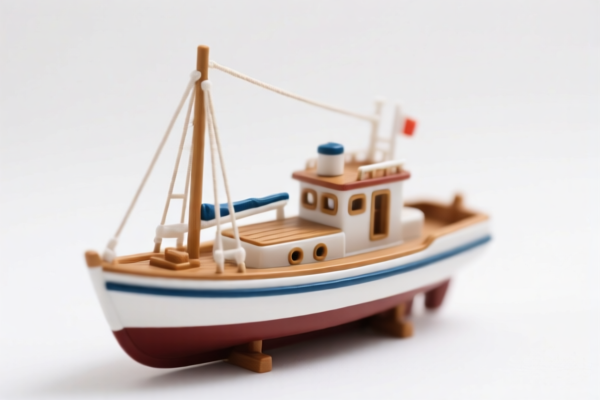
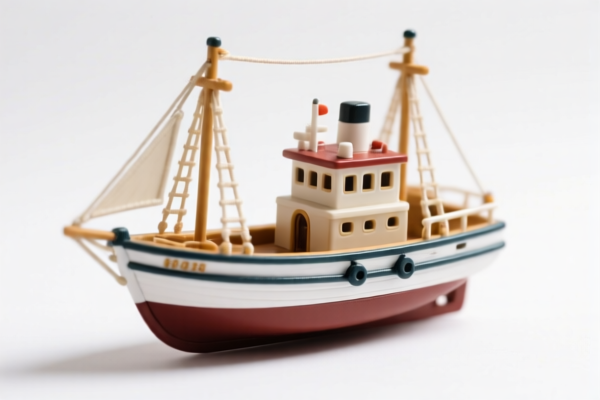
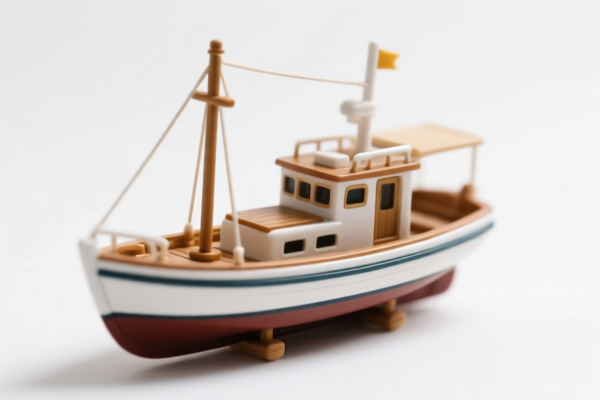
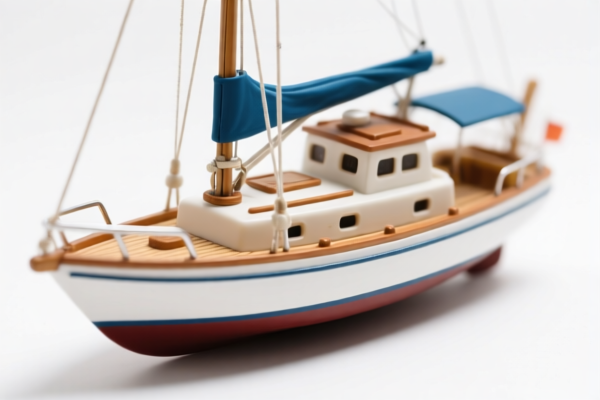
AI Analysis
🚢 Boats & Ships (HS Code 8906.90.00.10)
🌐 HS Code Reference & Clearance Guide | 2026 Latest Tariff Analysis | Professional Clearance Strategy
📌 I. Product Definition & Classification: What Exactly Are "Boats and Ships"?
In international trade, the category of "Boats and Ships" under HS Code 8906 is a residual category. It specifically captures vessels that do not fall into the main transport categories (which are 8901–8905).
The Crucial Distinction:
If a vessel is principally designed for transporting persons (like cruise ships, ferries) or goods (like cargo ships), it falls under HS 8901.
Only vessels that are NOT primarily for commercial transport fall under HS 8906.
⚠️ Key Classification Logic:
- If the vessel is a Cruise Ship → Goes to 8901.10.00.00
- If the vessel is a Cargo Ship → Goes to 8901.90.00.00
- If the vessel is Not for Transport (e.g., Yachts, Military Vessels, Submarines, Barges not for cargo) → Goes to 8906.90.00.10
📦 II. HS Code Classification Details (2026 Latest Tariff Authority)
| HS Code | Product Description | Typical Examples | Transport Purpose? |
|---|---|---|---|
8906.90.00.10 |
Other boats and ships | Private yachts, luxury motorboats, military patrol boats, research vessels, lifeboats (if not part of a transport vessel), dredgers (if not primarily for cargo transport) | ❌ No (Primary purpose is leisure, military, or special service) |
8901.10.00.00 |
Cruise ships, excursion boats, ferry boats | Passenger ferries, large cruise liners, tourist excursion boats | ✅ Yes (Persons) |
8901.90.00.00 |
Other vessels for transport of goods | Container ships, bulk carriers, tankers, general cargo vessels | ✅ Yes (Goods) |
🔍 Critical Reminder:
- Do NOT misclassify a luxury yacht as a "cargo vessel" to avoid taxes.
- Do NOT misclassify a military patrol boat as a "ferries."
- HS 8906.90.00.10 is for "Other" vessels. If it transports people or goods commercially, it belongs in 8901.
💰 III. 2026 Latest Tariff Rate Breakdown (Including Additional Taxes)
✅ Applicable Country: United States (US)
✅ Country of Origin: China (CN)
✅ Effective Date: November 10, 2025 (and subsequent imports)
🎯 1. 8906.90.00.10 —— Other boats and ships (Not for Transport)
| Item | Content |
|---|---|
| Base Tariff | 0.0% (Ad valorem) |
| USITC Additional Tariff | +25.0% (Under Section 301 Tariff List) |
| IEEPA Additional Tariff | +0.0% (Not applicable to this specific code under current IEEPA lists for this category) |
| Total Tariff Rate | 25.0% |
| Tax Calculation | CIF Value × 25% |
| De Minimis Exemption? | ❌ No (Section 301 goods are excluded from de minimis relief) |
| Legal Basis Path | USITC:8906.90.00.10 → FOOTNOTE:9903.88.01 → Section 301 |
📌 Explanation:
- The base tariff for ships/boats is 0%, but the 25% Section 301 tariff applies to most Chinese-made vessels that are not primarily for transport (like yachts, special services vessels).
- Total Tax = 25%. This is a high cost for imports.
- Warning: If you misclassify a ferry as an "other boat" (8906) to try to avoid taxes, you risk severe penalties because ferries are explicitly listed under 8901.10, which also has a 25% additional tariff. There is no tax avoidance trick here.
⚖️ Comparison: Misclassification Risk
| Correct HS Code | Tax Rate (China Origin) | Risk of Misclassification |
|---|---|---|
8901.10.00.00 (Ferry/Cruise) |
25% | Low risk if declared correctly. High penalty if hidden as 8906. |
8901.90.00.00 (Cargo Ship) |
25% | Low risk if declared correctly. High penalty if hidden as 8906. |
8906.90.00.10 (Yacht/Special) |
25% | Low risk if declared correctly. |
📌 Key Insight:
Whether you classify as 8901 (Transport) or 8906 (Other), the total tax remains 25%.
Misclassification does NOT save money. It only creates legal risk.
🛠️ IV. Clearance Practical Advice (Battle-Tested Guide)
✅ 1. Documentation Checklist (Non-Negotiable)
| Document | Required | Notes |
|---|---|---|
| ✅ Commercial Invoice | ✔️ | Must clearly state "Not for Commercial Transport" if using 8906. |
| ✅ Bill of Lading | ✔️ | Must match vessel type. |
| ✅ Vessel Registration/Certificate | ✔️ | Proof of ownership and type (e.g., Yacht Certificate, Military License). |
| ✅ Product Specifications | ✔️ | Include length, width, draft, engine power, and primary purpose. |
| ✅ Photo Documentation | ✔️ | Clear photos of exterior, interior, and hull number. |
| ✅ Certificate of Origin | ✔️ | To confirm China origin for 301 tariff calculation. |
✅ 2. Declaration Tips (Critical Mnemonic)
🔥 “Purpose Defines Code: Transport=8901, Special=8906. Both 25%, Don’t Guess!”
| Scenario | Correct HS Code | Why? |
|---|---|---|
| Private Luxury Yacht | 8906.90.00.10 |
Not used for commercial transport of persons/goods. |
| Military Patrol Boat | 8906.90.00.10 |
Defense purpose, not commercial transport. |
| Research Vessel | 8906.90.00.10 |
Scientific purpose, not transport. |
| Passenger Ferry | 8901.10.00.00 |
Principally for transporting persons. |
| Cargo Ship | 8901.90.00.00 |
Principally for transporting goods. |
| Lifeboat (Stand-alone) | 8906.90.00.10 |
Safety equipment, not a transport vessel per se. |
✅ 3. Special Cases & Pitfalls
| Situation | Handling Advice |
|---|---|
| Yacht with Crew Quarters | Still 8906.90.00.10 if not for hire/commercial transport. |
| Vessel Used for Both Transport & Leisure | Primary Purpose Test: If mostly for transport → 8901. If mostly for leisure/special → 8906. |
| Submarines | 8906.90.00.10 (Specialized vessel). |
| Dredgers | 8906.90.00.10 (Special service vessel, not for cargo transport). |
| Floats/Docks | Not vessels! May fall under 8906.90.90 or 7308 (Steel structures). Do not classify as 8906.10. |
🌍 V. Global Market Comparison (2026 Latest)
| Country/Region | Recommended HS Code | Tariff (China Origin) | Certification | Notes |
|---|---|---|---|---|
| 🇺🇸 USA | 8906.90.00.10 |
25% | None specific for vessels | Section 301 applies. |
| 🇨🇳 China | 8906.90.00.10 |
0% | CCC (if applicable) | No additional tariffs. |
| 🇪🇺 EU | 8906.90 |
0% | CE, Marine Equipment Directive | No additional tariffs. |
| 🇦🇺 Australia | 8906.90 |
5% | RCM, Vessel Standards | Moderate tariff. |
| 🇯🇵 Japan | 8906.90 |
0% | JIS, Marine Safety Law | Low tariff. |
📌 Conclusion:
- The US is the only major market with a high additional tariff (25%) for Chinese-made boats/ships.
- No tax advantage in misclassifying transport vessels as "other" vessels.
- Pre-clearance ruling is highly recommended for borderline cases (e.g., dual-purpose vessels).
📌 VI. Common Errors & Pitfalls (Lessons Learned)
❌ Error 1: Classifying a Cargo Ship as 8906.90.00.10 to "save time"
👉 Result: Customs rejection, penalties, and retroactive 25% tax + interest. No savings.
❌ Error 2: Classifying a Ferry as 8906.90.00.10
👉 Result: Same as above. Ferries are explicitly defined as 8901.10.
❌ Error 3: Thinking "Base Tax is 0%, so Total Tax is 0%"
👉 Result: Ignoring the 25% Section 301 tariff leads to unexpected costs.
❌ Error 4: Using "Boat" or "Ship" loosely in description
👉 Result: Customs may ask for clarification. Provide vessel type certificate and primary purpose.
✅ Correct Practice:
"Yacht, Private, 50ft, Aluminum Hull, No Commercial Transport Use, Model XYZ, Made in China"
🎯 VII. Conclusion: Professional Classification Saves Time & Money
🎯 Remember:
🔹 "Transport=8901, Special=8906. Both 25% for China. Don’t Guess!"
🔹 "Base Tax 0%, Total Tax 25%. Plan Accordingly!"
📌 Tips:
- If your vessel is made in Vietnam, Mexico, or Malaysia, it may avoid the 25% Section 301 tariff. Check origin rules carefully.
- For dual-purpose vessels, apply for an Advance Ruling from US Customs (CBP) to confirm classification.
📣 Immediate Action:
📞 Contact a licensed customs broker + Provide vessel specs + Apply for Advance Ruling if unsure.
🚀 Clear your vessel smoothly, avoid penalties, and maximize profit!
✨ Professional clearance starts with accurate classification!
💼 Every percentage point of tax matters!
Customer Reviews
About HS Code Classification
The Harmonized System (HS) is an internationally standardized nomenclature developed by the World Customs Organization (WCO) to classify traded products. Over 200 countries use the HS system as the basis for customs tariffs, trade statistics, and import/export regulations.
Each HS code follows a hierarchical structure:
- Chapter (2 digits) — Broad category of goods (e.g., Chapter 84: Machinery and Mechanical Appliances)
- Heading (4 digits) — More specific grouping within the chapter
- Subheading (6 digits) — Internationally standardized breakdown, used by all WCO member countries
- National subdivisions (8-10 digits) — Country-specific extensions for further classification, such as US HTSUS 10-digit codes
Correct HS code classification is essential for smooth customs clearance, accurate duty payment, and compliance with trade regulations. Misclassification can lead to customs delays, overpayment of duties, or penalties.
When importing from CN to US, the applicable tariff rates may include:
- Most-Favored-Nation (MFN) rate — The standard duty rate applied to WTO members
- General rate — Applied to countries without trade agreements
- Trade remedy duties — Additional tariffs such as Section 301 (anti-dumping), Section 232 (national security), or countervailing duties
The information provided on this page is for reference purposes only. For official classification, please consult with your local customs authority or a licensed customs broker.