Body Sealing Rubber Gasket
CN → US| HS Code | Tariff Rate | Origin | Destination | Doc |
|---|---|---|---|---|
| 3926904510 | 38.5% | CN | US | Official Doc |
| 8484900000 | 37.5% | CN | US | Official Doc |
| 4016935010 | 37.5% | CN | US | Official Doc |
| 4016931010 | 37.5% | CN | US | Official Doc |
| 3926909989 | 22.8% | CN | US | Official Doc |
Product Images
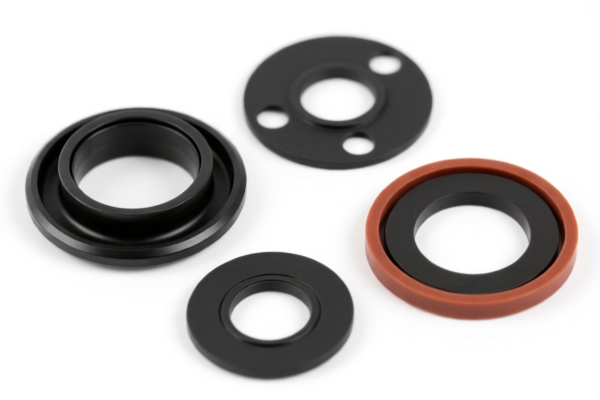
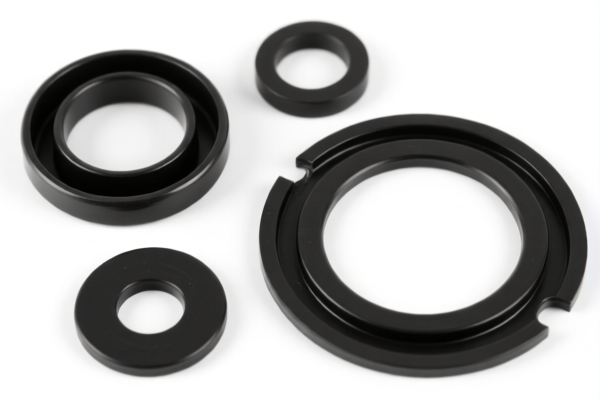
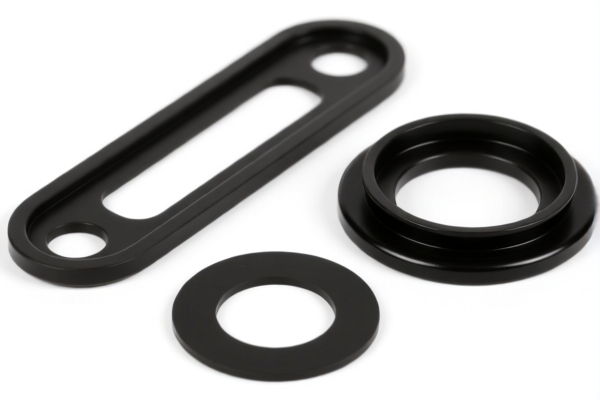
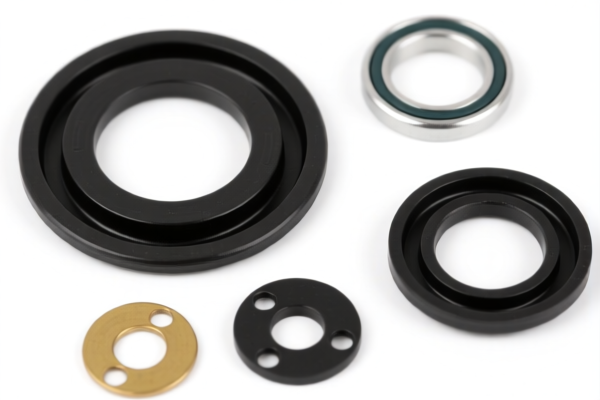
AI Analysis
🔩 Body Sealing Rubber Gasket (Rubber Seat/Tire Seal)
🌐 HS Code Reference & Customs Clearance Guide | 2026 Latest Tariff Analysis | Strategic Compliance Strategy
📌 Part I: Product Definition & Classification – What Exactly Is This "Gasket"?
The term "Body Sealing Rubber Gasket" is ambiguous in international trade. It can refer to: 1. Toilet Seat Cushions/Pads: Rubber or synthetic rubber rings/pads used in sanitary ware. 2. Tire Protection Pads: Rubber mats or seals used to protect tires or wheel wells. 3. Industrial Mechanical Seals: Non-metallic sealing components for pumps or valves.
⚠️ Critical Distinction Point:
- If it is a sanitary ware accessory (e.g., toilet seat ring) made of vulcanized rubber → It may fall under Chapter 40 (Rubber Articles) or Chapter 39 (Plastics/Rubber mixes depending on composition).
- If it is an industrial mechanical seal (non-metallic composition) → It may fall under Chapter 84 (Machinery Parts).
- If it is specifically a tire accessory → It falls under Chapter 40 (Rubber Tires/Accessories).
Misclassification leads to massive tariff discrepancies (from 22.8% to 38.5%). Below is the exact mapping based on the provided data.
📦 Part II: HS Code Classification Matrix (Based on Provided Data)
| HS Code | Product Description | Matching Criteria (Logic) | Total Tax Rate (China-US) |
|---|---|---|---|
3926.90.45.10 |
Rubber Seat Ring Seal | Based on usage (seal) & material (rubber-like plastic mix) | 38.5% |
8484.90.00.00 |
Rubber Seat Ring Seal | Based on mechanical sealing class & non-metallic composite | 37.5% |
4016.93.50.10 |
Rubber Seat Ring Seal | Based on vulcanized rubber material & gasket usage | 37.5% |
4016.93.10.10 |
Rubber Seat Ring Seal | Based on rubber material & gasket form | 37.5% |
3926.90.99.89 |
Rubber Tire Protection Pad | Based on synthetic rubber material & other article category | 22.8% |
🔍 Key Insight:
- The lowest tax rate (22.8%) applies only if the product is classified as a "Tire Protection Pad" (3926.90.99.89).
- All "Seat Ring Seals" (3926.90.45.10,8484.90.00.00,4016...) carry higher taxes (37.5%–38.5%).
- Do not mix up "Seat Seal" with "Tire Pad" – they have different tax implications!
💰 Part III: 2026 Tariff Rate Breakdown (Detailed)
✅ Applicable Country: United States (US)
✅ Origin: China (CN)
✅ Effective Date: Post-November 2025 (Including subsequent imports)
🎯 1. 3926.90.45.10 – Rubber Seat Seal (Plastic-Rubber Mix Category)
| Item | Details |
|---|---|
| Base Tariff | 3.5% (Ad Valorem) |
| Section 301 Tariff | +25.0% |
| IEEPA Tariff (Section 122) | +10.0% |
| Total Tax Rate | 38.5% |
| Tax Calculation | CIF Value × 38.5% |
| De Minimis Exemption | ❌ Not Applicable (deny_de_minimis) |
| Legal Basis Path | USITC:3926.90.45.10 → Section 301: 25% → IEEPA: 10% |
📌 Explanation:
- This code treats the product as an "Article of Plastics and Other Materials" (Chapter 39).
- The 38.5% rate is the highest among all options.
- Justification: Customs may view it as a plastic-rubber hybrid if the material composition is not 100% vulcanized rubber.
🎯 2. 8484.90.00.00 – Mechanical Seal (Non-Metallic)
| Item | Details |
|---|---|
| Base Tariff | 2.5% (Ad Valorem) |
| Section 301 Tariff | +25.0% |
| IEEPA Tariff (Section 122) | +10.0% |
| Total Tax Rate | 37.5% |
| Tax Calculation | CIF Value × 37.5% |
| De Minimis Exemption | ❌ Not Applicable |
| Legal Basis Path | USITC:8484.90.00.00 → Section 301: 25% → IEEPA: 10% |
📌 Explanation:
- Classified under Machinery Parts (Chapter 84).
- Suitable if the gasket is part of a mechanical system (e.g., pump seal, engine seal).
- Lower base rate (2.5%) than3926, but total rate is still high due to trade remedies.
🎯 3 & 4. 4016.93.50.10 & 4016.93.10.10 – Vulcanized Rubber Gaskets
| Item | Details |
|---|---|
| Base Tariff | 2.5% (Ad Valorem) |
| Section 301 Tariff | +25.0% |
| IEEPA Tariff (Section 122) | +10.0% |
| Total Tax Rate | 37.5% |
| Tax Calculation | CIF Value × 37.5% |
| De Minimis Exemption | ❌ Not Applicable |
| Legal Basis Path | USITC:4016.93.xx.xx → Section 301: 25% → IEEPA: 10% |
📌 Explanation:
- Classified under Rubber Articles (Chapter 40).
- This is the most accurate classification for pure vulcanized rubber gaskets.
- Difference between 4016.93.50.10 and 4016.93.10.10:
-.50.10: Emphasizes usage as a seal/gasket.
-.10.10: Emphasizes form as a gasket.
- Both have the same tax rate (37.5%).
🎯 5. 3926.90.99.89 – Rubber Tire Protection Pad
| Item | Details |
|---|---|
| Base Tariff | 5.3% (Ad Valorem) |
| Section 301 Tariff | +7.5% |
| IEEPA Tariff (Section 122) | +10.0% |
| Total Tax Rate | 22.8% |
| Tax Calculation | CIF Value × 22.8% |
| De Minimis Exemption | ❌ Not Applicable |
| Legal Basis Path | USITC:3926.90.99.89 → Section 301: 7.5% → IEEPA: 10% |
📌 Explanation:
- Classified under Plastic Articles (Chapter 39) but specifically as "Other Articles".
- Significantly Lower Tax (22.8%) due to lower Section 301 rate (7.5% vs. 25%).
- CRITICAL: This code is ONLY for Tire Protection Pads or similar non-seal applications.
- DO NOT use this for toilet seat seals or mechanical seals – it is misclassification if the product is not a tire pad.
🛠️ Part IV: Customs Clearance Practical Advice (Real-World Pitfall Guide)
✅ 1. Documentation Checklist (Mandatory)
| Document | Required? | Notes |
|---|---|---|
| ✅ Product Specification Sheet | ✔️ | Must specify material (e.g., "Vulcanized Rubber," "Synthetic Rubber"). |
| ✅ Material Composition Test Report | ✔️ | Proves whether it is 100% rubber (4016) or plastic-rubber mix (3926). |
| ✅ Product Photos | ✔️ | Show shape, usage context (e.g., installed on a toilet, tire, or machine). |
| ✅ Commercial Invoice | ✔️ | Clearly state "Rubber Gasket" or "Tire Protection Pad" – never vague terms like "Part." |
| ✅ Packing List | ✔️ | Confirm quantity and weight. |
| ✅ Country of Origin Certificate | ✔️ | Required for US origin verification and tariff calculation. |
✅ 2. Classification Strategy (Critical!)
🔥 Golden Rule: "Match Material + Usage to HS Code"
| Product Type | Correct HS Code | Tax Rate | Risk Level |
|---|---|---|---|
| Toilet Seat Seal (Rubber) | 4016.93.50.10 or 4016.93.10.10 |
37.5% | Medium (Ensure material is rubber) |
| Toilet Seat Seal (Plastic-Rubber Mix) | 3926.90.45.10 |
38.5% | High (Highest tax) |
| Mechanical Seal (Pump/Valve) | 8484.90.00.00 |
37.5% | Medium (Must prove mechanical use) |
| Tire Protection Pad | 3926.90.99.89 |
22.8% | Lowest Tax – Use if Applicable! |
⚠️ Warning:
- If you ship Toilet Seat Seals but declare them as Tire Pads (3926.90.99.89), customs will detect the mismatch (photos, description, product shape) → Seizure + Fine + Back Taxes.
- Never use3926.90.99.89for seals. It is exclusively for tire accessories.
✅ 3. Special Case Handling
| Scenario | Recommendation |
|---|---|
| Mixed Materials (e.g., Rubber + Plastic Core) | Use 3926.90.45.10 (38.5%) – safest bet for mixed composites. |
| Industrial Mechanical Gaskets | Use 8484.90.00.00 (37.5%) – provide engineering drawings showing mechanical function. |
| Pure Vulcanized Rubber Gaskets | Use 4016.93.50.10 (37.5%) – provide rubber material certificate. |
| Tire Protection Mats | Use 3926.90.99.89 (22.8%) – HIGHEST SAVINGS, but only for tire-related products. |
🌍 Part V: Global Market Comparison (2026)
| Country/Region | Recommended HS Code | Tariff Rate (China Origin) | Certification |
|---|---|---|---|
| 🇺🇸 USA | 4016.93.50.10 |
37.5% | FCC (if electronic), RoHS |
| 🇺🇸 USA | 3926.90.99.89 |
22.8% (if Tire Pad) | RoHS |
| 🇨🇳 China | 4016.93.50.10 |
2.5% | CCC (if applicable) |
| 🇪🇺 EU | 4016.93.50.10 |
0% (if CE) | CE, REACH |
| 🇬🇧 UK | 4016.93.50.10 |
0% (if UKCA) | UKCA |
📌 Note:
- USA has the highest tariffs due to Section 301 and IEEPA.
- EU/UK/China have significantly lower or zero base tariffs for rubber goods.
- US Importers must budget for 37.5%–38.5% for seals, or 22.8% for tire pads.
📌 Part VI: Common Mistakes & Pitfalls (Lessons Learned)
❌ Mistake 1: Calling a Toilet Seat Seal a "Tire Pad" to get 22.8% tax.
👉 Consequence: Customs inspection reveals product shape mismatch → Seizure + 200% Penalty.
❌ Mistake 2: Using 8484.90.00.00 for a toilet seat seal.
👉 Consequence: Customs argues it’s not a "mechanical seal" → Reclassification to 3926 (38.5%) + Back Taxes.
❌ Mistake 3: Not providing material proof for 4016.93.50.10.
👉 Consequence: Customs assumes plastic mix → Reclassification to 3926.90.45.10 (38.5%).
✅ Correct Approach:
"Vulcanized Rubber Gasket, for Toilet Seat, Material: 100% EPDM Rubber, HS Code: 4016.93.50.10"
🎯 Part VII: Conclusion – Professional Classification Saves Money!
🎯 Key Takeaway:
🔹 For Tire Pads: Use
3926.90.99.89→ 22.8% (Best Rate).
🔹 For Rubber Seals: Use4016.93.50.10→ 37.5% (Standard).
🔹 For Plastic-Rubber Mixes: Use3926.90.45.10→ 38.5% (Highest Rate).
🔹 For Mechanical Seals: Use8484.90.00.00→ 37.5% (Niche).
📌 Pro Tip:
- Always provide material composition reports to avoid being downgraded to the highest tax bracket (3926.90.45.10).
- If your product is NOT a tire pad, DO NOT use 3926.90.99.89 – the risk is too high.
📣 Immediate Action:
📞 Consult a licensed customs broker.
📸 Submit product photos and material specs for pre-ruling.
🚀 Avoid customs delays, penalties, and unnecessary tax overpayments!
✨ Precision in Classification = Profit in Customs!
💼 Your Product, Your Tariff, Your Strategy.
Customer Reviews
About HS Code Classification
The Harmonized System (HS) is an internationally standardized nomenclature developed by the World Customs Organization (WCO) to classify traded products. Over 200 countries use the HS system as the basis for customs tariffs, trade statistics, and import/export regulations.
Each HS code follows a hierarchical structure:
- Chapter (2 digits) — Broad category of goods (e.g., Chapter 84: Machinery and Mechanical Appliances)
- Heading (4 digits) — More specific grouping within the chapter
- Subheading (6 digits) — Internationally standardized breakdown, used by all WCO member countries
- National subdivisions (8-10 digits) — Country-specific extensions for further classification, such as US HTSUS 10-digit codes
Correct HS code classification is essential for smooth customs clearance, accurate duty payment, and compliance with trade regulations. Misclassification can lead to customs delays, overpayment of duties, or penalties.
When importing from CN to US, the applicable tariff rates may include:
- Most-Favored-Nation (MFN) rate — The standard duty rate applied to WTO members
- General rate — Applied to countries without trade agreements
- Trade remedy duties — Additional tariffs such as Section 301 (anti-dumping), Section 232 (national security), or countervailing duties
The information provided on this page is for reference purposes only. For official classification, please consult with your local customs authority or a licensed customs broker.