Bodycon Skirt
CN → US| HS Code | Tariff Rate | Origin | Destination | Doc |
|---|---|---|---|---|
| 6111204000 | 29.0% | CN | US | Official Doc |
| 6111900510 | 31.1% | CN | US | Official Doc |
| 6204434030 | 33.5% | CN | US | Official Doc |
| 6212900090 | 24.1% | CN | US | Official Doc |
| 6212900050 | 24.1% | CN | US | Official Doc |
Product Images
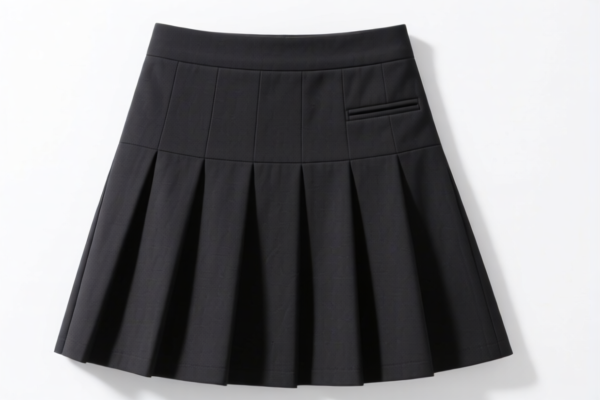
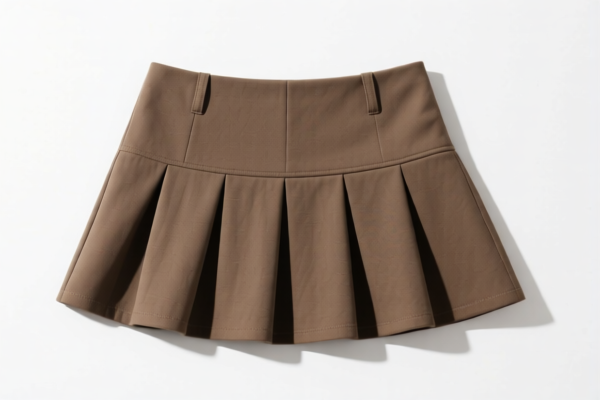
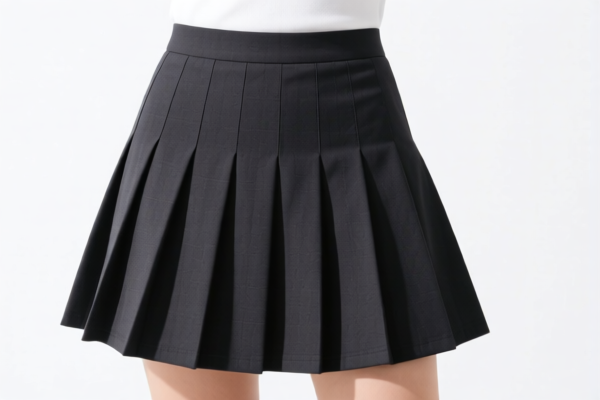
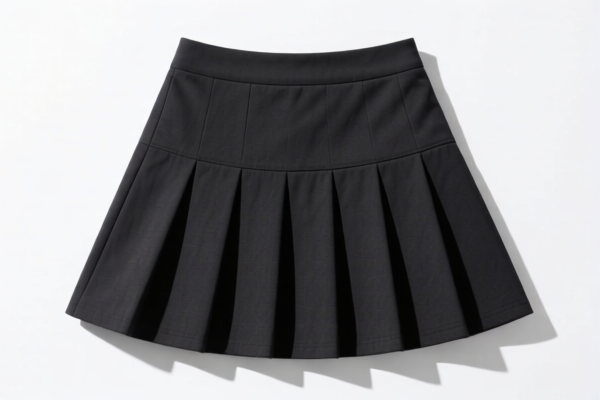
AI Analysis
👗 Bodycon Skirt (Tight-Fitting Skirt)
🌐 HS Code Reference & Customs Clearance Guide | 2026 Latest Tariff Analysis | Professional Clearance Strategy
📌 I. Product Definition & Classification: Do You Really Understand the "Bodycon Skirt"?
A Bodycon Skirt is a form-fitting, knee-length or midi-length skirt designed to accentuate the body's curves. In international trade, its classification depends heavily on material composition (cotton, synthetic, other textiles) and construction method (knitted vs. woven).
Based on common market variations, the following HS Codes are the most likely candidates.
⚠️ Key Distinction Point:
- If the fabric is knitted (stretchy, looped structure) → Likely falls under Chapter 61.
- If the fabric is woven (non-stretch, interlaced structure) → Likely falls under Chapter 62.
- If it is a corset-style or shapewear item (high compression) → May fall under Chapter 62.12.
📦 II. HS Code Classification Details (Based on Provided Data)
The following table maps the product "Bodycon Skirt" to the specific HS Codes provided in your dataset, along with their tax implications.
| HS Code | Product Description & Summary | Material/Construction Inference | Total Tax Rate |
|---|---|---|---|
6111.20.40.00 |
Knitted Skirt (Cotton) | Cotton Knitted/Woven Summary: Matches usage (dress/skirt) & form (apparel). Inferred as cotton based on common sense. |
29.0% |
6111.90.05.10 |
Knitted Skirt (Other Textile) | Other Textile Fibers Summary: Matches form (apparel) & usage (wearable). Inferred as knitted or other textile materials. |
31.1% |
6204.43.40.30 |
Woven Dress/Skirt (Synthetic) | Synthetic Fibers (Woven) Summary: Matches form & usage. Inferred as synthetic/textile, fitting the dress category. |
33.5% |
6212.90.00.90 |
Shapewear/Corset (Non-Silk/Cotton/Wool) | Non-Silk/Cotton/Wool + Rubber/Plastic Summary: Form (corset/tightwear) matches. Inferred as non-traditional fibers combined with rubber/plastic. |
24.1% |
6212.90.00.50 |
Shapewear/Corset (Silk Blend) | Silk Component Summary: Form (corset/tightwear) matches. Inferred to contain silk components. |
24.1% |
🔍 Important Note:
- Chapters 61 vs. 62: The primary split is between Knitted (Ch. 61) and Woven (Ch. 62).
- Ch. 62.12: Specifically covers "Corsets, brassieres, girdles, etc." If your bodycon skirt has strong shapewear properties (compression, structural support), it may be classified here rather than as a general skirt.
💰 III. 2026 Latest Tariff Rate Breakdown (Detailed Tax Analysis)
✅ Applicable Jurisdiction: United States (US)
✅ Origin: China (CN)
✅ Effective Date: 2025/2026 (Including subsequent imports)
🎯 1. 6111.20.40.00 — Cotton Knitted Skirt
| Item | Detail |
|---|---|
| Base Duty | 11.5% |
| Section 301 Duty | +7.5% |
| 122 Clause Duty | +10% |
| Total Tax Rate | 29.0% |
| Tax Calculation | CIF Value × 29.0% |
| Legal Basis | Base Tariff + Section 301 + 122 Clause |
📌 Explanation:
- This is a mid-range tax bracket for cotton knitted apparel.
- The 122 Clause (often related to specific textile quotas or retaliatory measures) adds a fixed 10%.
- Section 301 adds 7.5% on top of the base rate.
🎯 2. 6111.90.05.10 — Other Textile Knitted Skirt
| Item | Detail |
|---|---|
| Base Duty | 13.6% |
| Section 301 Duty | +7.5% |
| 122 Clause Duty | +10% |
| Total Tax Rate | 31.1% |
| Tax Calculation | CIF Value × 31.1% |
| Legal Basis | Base Tariff + Section 301 + 122 Clause |
📌 Note:
- Slightly higher than cotton due to the higher base duty (13.6% vs 11.5%) for "other textile materials."
- Applicable if the skirt is made of wool blends, acrylic, or other fibers not specifically listed in the cotton subheading.
🎯 3. 6204.43.40.30 — Synthetic Woven Dress/Skirt
| Item | Detail |
|---|---|
| Base Duty | 16.0% |
| Section 301 Duty | +7.5% |
| 122 Clause Duty | +10% |
| Total Tax Rate | 33.5% |
| Tax Calculation | CIF Value × 33.5% |
| Legal Basis | Base Tariff + Section 301 + 122 Clause |
📌 Warning:
- This is the highest tax rate in the provided dataset.
- Synthetic woven fabrics often carry higher base duties.
- Ensure the product is not classified as "knitted" to avoid underpayment, but be aware that "woven" synthetics are taxed more heavily here.
🎯 4. 6212.90.00.90 — Shapewear/Corset (Non-Silk/Cotton/Wool)
| Item | Detail |
|---|---|
| Base Duty | 6.6% |
| Section 301 Duty | +7.5% |
| 122 Clause Duty | +10% |
| Total Tax Rate | 24.1% |
| Tax Calculation | CIF Value × 24.1% |
| Legal Basis | Base Tariff + Section 301 + 122 Clause |
📌 Optimization Opportunity:
- If your bodycon skirt is marketed as shapewear or compression wear, it may fall under 6212 (Corsets, etc.).
- The base duty is significantly lower (6.6%) compared to general skirts (11.5%-16.0%).
- Crucial: Must meet the definition of "corset/girdle/shapewear" (high compression, structural integrity). Mere tightness is not enough.
🎯 5. 6212.90.00.50 — Shapewear/Corset (Silk Blend)
| Item | Detail |
|---|---|
| Base Duty | 6.6% |
| Section 301 Duty | +7.5% |
| 122 Clause Duty | +10% |
| Total Tax Rate | 24.1% |
| Tax Calculation | CIF Value × 24.1% |
| Legal Basis | Base Tariff + Section 301 + 122 Clause |
📌 Note:
- Same tax rate as the non-silk shapewear.
- Applies if the shapewear contains silk components.
- Verify the silk percentage meets the customs definition for this subheading.
🛠️ IV. Customs Clearance Practical Advice (Pitfall Avoidance Guide)
✅ 1. Preparation Checklist (All Required)
| Document | Required | Notes |
|---|---|---|
| ✅ Product Specifications | ✔️ | Must specify: Material (Cotton/Synthetic/Wool), Knitted vs. Woven, Length, Fit Type. |
| ✅ Fabric Swatch/Photo | ✔️ | Crucial for determining Knitted (Ch. 61) vs. Woven (Ch. 62). |
| ✅ Commercial Invoice | ✔️ | Clearly state "Bodycon Skirt" and material composition. |
| ✅ Packing List | ✔️ | Include quantity, weight, and dimensions. |
| ✅ Labeling/Tagging | ✔️ | Must show fiber content and country of origin. |
✅ 2. Declaration Strategy (Key Mnemonics)
🔥 "Knitted Ch61, Woven Ch62, Shapewear Ch62.12, Base Rate Matters!"
| Scenario | Correct Declaration | Incorrect Action | Consequence |
|---|---|---|---|
| Soft, Stretchy, Loop-knit fabric | 6111.20.40.00 or 6111.90.05.10 |
Declare as Woven | Underpayment/Penalty |
| Stiff, Interlaced, Non-stretch fabric | 6204.43.40.30 |
Declare as Knitted | Misclassification |
| High Compression, Supportive Structure | 6212.90.00.90 or .50 |
Declare as General Skirt | Missed Savings (Tax drops from 33.5% to 24.1%) |
| Mixed Materials | Verify Primary Fiber | Guess Material | Audit Risk |
✅ 3. Special Situations
| Situation | Handling Advice |
|---|---|
| OEM/Private Label | Provide design sheets to prove "shapewear" functionality if claiming 6212. |
| Sample vs. Bulk | Samples may be exempt from duties if value < $800 (De Minimis), but ensure correct HS code is used. |
| Return/Exchange | Keep original invoices for potential duty drawback claims. |
🌍 V. Global Market Comparison (2026 Latest)
| Country/Region | Recommended HS Code | Est. Duty Rate | Certification Required | Remarks |
|---|---|---|---|---|
| 🇺🇸 USA | 6111.20.40.00 (Cotton) |
29.0% | None specific | High tariffs due to Section 301 & 122 Clause. |
| 🇨🇳 China | 6111.20.40.00 |
~5-10% (Varies) | GB Standards | Lower base tariffs. |
| 🇪🇺 EU | 6104.43 / 6204.43 |
12% | CE (if functional wear) | No Section 301 equivalent. |
| 🇬🇧 UK | 6104.43 / 6204.43 |
12% | UKCA | Post-Brexit tariffs apply. |
| 🇯🇵 Japan | 6104.43 / 6204.43 |
16% | PSE (if functional) | FTAs may reduce rates. |
📌 Conclusion:
- USA has the highest effective tax burden due to Section 301 and 122 Clause.
- Shapewear classification (6212) offers the best cost-saving opportunity in the US market.
- Material verification is critical to avoid misclassification penalties.
📌 VI. Common Errors & Pitfalls (Lessons Learned)
❌ Error 1: Classifying all tight skirts as "General Apparel"
👉 Consequence: Misses lower duty rate for Shapewear (6212).
✅ Fix: If it provides compression/support, declare as 6212.
❌ Error 2: Confusing Knitted vs. Woven
👉 Consequence: Wrong Chapter (61 vs. 62), potential duty difference + penalties.
✅ Fix: Provide fabric swatch or detailed technical sheet.
❌ Error 3: Ignoring the 122 Clause
👉 Consequence: Underpayment of 10% + interest.
✅ Fix: Always add 10% to base + 301 duty for US imports from China.
🎯 VII. Conclusion: Professional Declaration, Cost Savings!
🎯 Key Takeaways:
🔹 "Shapewear saves money: 24.1% vs 33.5%!"
🔹 "Knitted is Ch61, Woven is Ch62, Don't mix them up!"
🔹 "Always add 10% for 122 Clause in US imports!"
📌 Tips:
- If your bodycon skirt is not shapewear, stick to
6111or6204.- If it is shapewear, ensure it meets the structural criteria for
6212.- Pre-classification ruling is recommended for high-volume imports.
📣 Immediate Action:
📞 Consult a licensed customs broker.
📄 Provide fabric swatches and product photos.
🚀 Optimize your duty rate by choosing the right HS Code!
✨ Professional Clearance Starts with Accurate Classification!
💼 Every percentage point counts in the global trade!
Customer Reviews
About HS Code Classification
The Harmonized System (HS) is an internationally standardized nomenclature developed by the World Customs Organization (WCO) to classify traded products. Over 200 countries use the HS system as the basis for customs tariffs, trade statistics, and import/export regulations.
Each HS code follows a hierarchical structure:
- Chapter (2 digits) — Broad category of goods (e.g., Chapter 84: Machinery and Mechanical Appliances)
- Heading (4 digits) — More specific grouping within the chapter
- Subheading (6 digits) — Internationally standardized breakdown, used by all WCO member countries
- National subdivisions (8-10 digits) — Country-specific extensions for further classification, such as US HTSUS 10-digit codes
Correct HS code classification is essential for smooth customs clearance, accurate duty payment, and compliance with trade regulations. Misclassification can lead to customs delays, overpayment of duties, or penalties.
When importing from CN to US, the applicable tariff rates may include:
- Most-Favored-Nation (MFN) rate — The standard duty rate applied to WTO members
- General rate — Applied to countries without trade agreements
- Trade remedy duties — Additional tariffs such as Section 301 (anti-dumping), Section 232 (national security), or countervailing duties
The information provided on this page is for reference purposes only. For official classification, please consult with your local customs authority or a licensed customs broker.