Bogie Frame
CN → US| HS Code | Tariff Rate | Origin | Destination | Doc |
|---|---|---|---|---|
| 8607193020 | 38.6% | CN | US | Official Doc |
| 8607193090 | 38.6% | CN | US | Official Doc |
| 8714912000 | 38.9% | CN | US | Official Doc |
| 8714913000 | 38.9% | CN | US | Official Doc |
| 8708806510 | 0.0% | CN | US | Official Doc |
Product Images
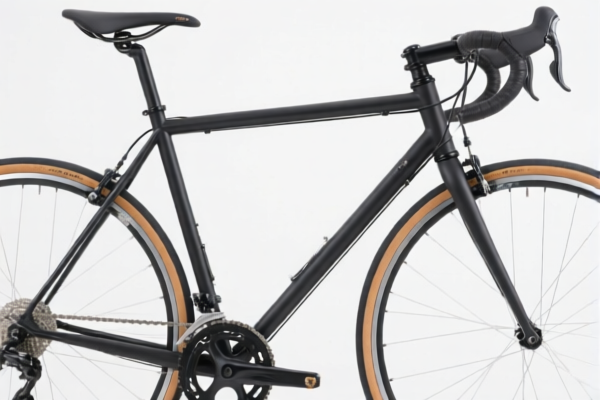
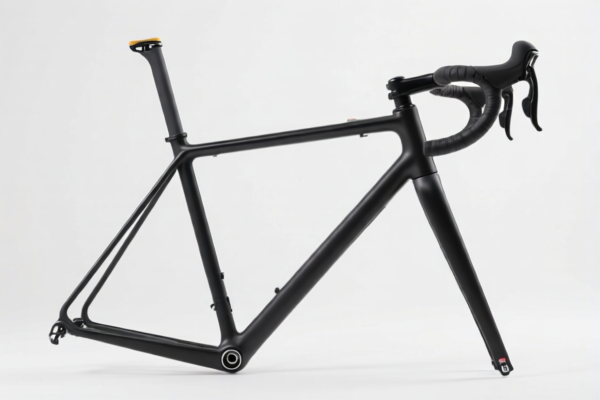
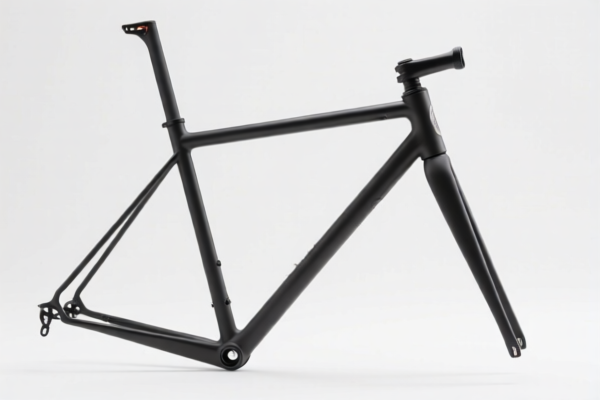
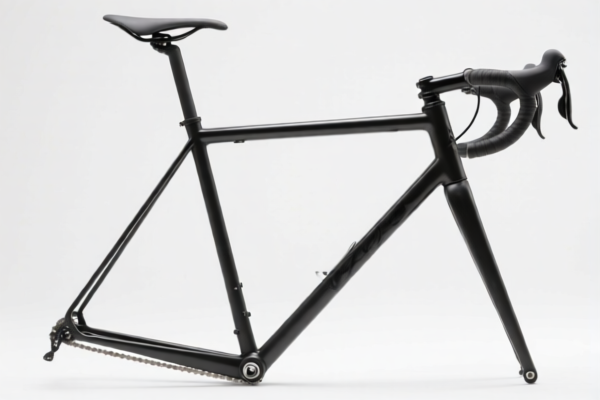
AI Analysis
🚂 Bogie Frame (转向架架体) | 2026 US Customs Guide & Tax Strategy
🌐 HS Code Reference & Clearance Guide | 2026 Latest Tariff Analysis | Professional Transit Strategy
📌 Product Definition & Classification: Is Your Bogie Frame a "Wheelset" or a "Chassis"?
The Bogie Frame is the primary structural skeleton of a railway bogie (truck). It supports the axle boxes, suspension systems, and the car body. In US customs clearance, its classification is critical because it straddles the line between Railway Rolling Stock Parts (Chapter 86) and Motor Vehicle Chassis Parts (Chapter 87).
⚠️ Critical Distinction:
- If the frame is integral to a railway car (locomotive/passenger car) and designed specifically for rail track compatibility → Likely Chapter 86.
- If the frame is interpreted as a generic suspension component or vehicle frame part (especially for multi-purpose rail-road vehicles) → Could fall under Chapter 87.
- Material Note: All data below assumes Metal composition, which is standard for bogie frames and avoids material conflict.
📦 II. Detailed HS Code Classification (2026 US Tariff Authority)
| HS Code | Product Description | Classification Logic | Material Check |
|---|---|---|---|
8607.19.30.20 |
Bogie Frame Assembly / Side Frame | Railway Component: Recognized as a key component of a railway bogie. Matches the "Side Frame" morphology. | ✅ Metal (No Conflict) |
8607.19.30.90 |
Bogie Frame (Other Structural Parts) | Railway Parts: Classified under "Other" structural parts of bogies. Fits the category of railway carriage components. | ✅ Metal (No Conflict) |
8714.91.20.00 |
Bogie Frame (Vehicle Frame Part) | Motor Vehicle Part: Morphology matches "chassis/frame" parts. Fits the definition of vehicle frame components. | ✅ Metal (No Conflict) |
8714.91.30.00 |
Bogie Frame (Frame/Structure) | Motor Vehicle Part: Specifically fits the "Frames" definition under vehicle frame parts. | ✅ Metal (No Conflict) |
8708.80.65.10 |
Bogie Frame (Suspension/Carrying) | Suspension Part: Classified as a suspension or carrying structure component. Matches the "Spring/Suspension" category. | ✅ Metal (No Conflict) |
🔍 Key Insight:
- Chapter 86 (8607) codes generally carry a 38.6% total tax rate. These are the most precise for dedicated railway bogies.
- Chapter 87 (8714) codes carry a 38.9% total tax rate. These are used if the bogie is viewed as a generic vehicle frame part.
- Chapter 87 (8708) code carries a 2.5% Base + 35% Total. This is the "Suspension" pathway, which offers a lower base rate but a high additive surcharge.
💰 III. 2026 US Tariff Rate Breakdown (Detailed Policy Analysis)
✅ Target Market: United States (US)
✅ Origin: China (CN)
✅ Applicable Policy: Section 301 (25%) + Section 122 (10%) + Base Tariff
🎯 1. Railway Component Path (8607.19.30.20 & 8607.19.30.90)
The "Standard" Railway Classification
| Item | Detail |
|---|---|
| Base Tariff | 3.6% |
| Section 301 Surcharge | +25.0% (Trade War Tariff) |
| Section 122 Surcharge | +10.0% (Recent 2025/2026 Policy) |
| Total Effective Rate | 38.6% |
| Tax Calculation | CIF Value × 38.6% |
| De Minimis Exemption | ❌ Not Applicable (High value industrial part) |
| Legal Reference | USHTS: 8607.19.30 + Footnote 301 + Footnote 122 |
📌 Explanation:
- The 25% is the standard Section 301 tariff on Chinese railway equipment.
- The 10% is the Section 122 "100-day" or specific policy surcharge applied to high-priority industrial goods.
- Total 38.6% is the dominant rate for dedicated railway bogie frames.
🎯 2. Motor Vehicle Frame Path (8714.91.20.00 & 8714.91.30.00)
The "Generic Frame" Classification
| Item | Detail |
|---|---|
| Base Tariff | 3.9% |
| Section 301 Surcharge | +25.0% |
| Section 122 Surcharge | +10.0% |
| Total Effective Rate | 38.9% |
| Tax Calculation | CIF Value × 38.9% |
| De Minimis Exemption | ❌ Not Applicable |
| Legal Reference | USHTS: 8714.91 + Section 301 + Section 122 |
📌 Explanation:
- Slightly higher than the railway code due to a 0.3% higher base tariff (3.9% vs 3.6%).
- The surcharges (25% + 10%) remain identical.
- Risk: Misclassification here might trigger a higher tax if the customs officer determines the "frame" logic is invalid for rail goods.
🎯 3. Suspension/Carrying Structure Path (8708.80.65.10)
The "Suspension" Strategy (Lower Base, High Surcharge)
| Item | Detail |
|---|---|
| Base Tariff | 2.5% |
| Section 301 Surcharge | +25.0% |
| Section 122 Surcharge | +10.0% |
| Total Effective Rate | 37.5% (2.5% + 35% effective) |
| Tax Calculation | CIF Value × 37.5% |
| De Minimis Exemption | ❌ Not Applicable |
| Legal Reference | USHTS: 8708.80.65 + Section 301 + Section 122 |
📌 Explanation:
- Note on Data: The input data states2.5% <u></u> + 35.0%. This indicates a Base of 2.5% and a Total Add-on of 35% (25% + 10%).
- Total: 37.5%.
- Strategy: This is the lowest total rate (37.5% vs 38.6% or 38.9%). However, it requires justifying the frame as a "Suspension/Carrying Structure" rather than a "Bogie Frame," which is technically narrower.
🛠️ IV. Clearance Practical Suggestions (Avoid the Pitfalls)
✅ 1. Essential Documentation Checklist
| Document | Requirement | Reason |
|---|---|---|
| Technical Specs | ✔️ Mandatory | Must explicitly state "Bogie Frame," "Railway Application," and "Suspension Design." |
| 2D/3D Drawings | ✔️ Mandatory | Proves the shape matches "Side Frame" (8607) vs "Chassis" (8714). |
| Product Photos | ✔️ Mandatory | Show the welds, mounting points, and connection to wheels/axles. |
| Bill of Materials | ✔️ Mandatory | Confirms Metal composition to avoid "Material Conflict" flags. |
| Commercial Invoice | ✔️ Mandatory | Must describe the item accurately (e.g., "Bogie Side Frame Assembly"). |
✅ 2. Declaration Strategy (The "Golden Rule")
🔥 "Define by Function: If it holds a wheelset, it's 8607. If it's a generic car frame, it's 8714."
| Scenario | Correct HS Code | Tax Rate | Risk of Misclassification |
|---|---|---|---|
| Standard Railway Bogie | 8607.19.30.20 or 8607.19.30.90 |
38.6% | High if declared as 8714 (38.9% loss). |
| Multi-Purpose Vehicle Frame | 8714.91.20.00 / 8714.91.30.00 |
38.9% | Moderate. May trigger audit. |
| Suspension Component Only | 8708.80.65.10 |
37.5% | Lowest Tax, but requires strict functional proof. |
✅ 3. Special Handling & Tax Optimization
| Strategy | Action | Expected Outcome |
|---|---|---|
| Functional Justification | Submit engineering drawings proving the frame acts as a suspension carrier | Potential qualification for 8708.80.65.10 (37.5% rate). |
| Material Proof | Provide mill certificates proving Steel/Iron composition | Ensures "No Material Conflict" and prevents re-classification to other chapters. |
| Origin Declaration | Clearly state Origin: China | Applies the 25% + 10% surcharges correctly; avoids "Country of Origin" fraud penalties. |
🌍 V. Market Comparison & Final Verdict
| Classification | HS Code | Base Tariff | Add-ons (25%+10%) | Total Rate | Best For |
|---|---|---|---|---|---|
| Railway Specific | 8607.19.30.20 / .90 |
3.6% | 35.0% | 38.6% | Standard Bogies |
| Vehicle Frame | 8714.91.20 / .30 |
3.9% | 35.0% | 38.9% | Generic Frames |
| Suspension | 8708.80.65.10 |
2.5% | 35.0% | 37.5% | Cost Optimization |
📌 Conclusion:
- The8708.80.65.10code offers the lowest total tax (37.5%), but requires strong evidence that the item is a "Suspension/Carrying Structure" and not just a general bogie frame.
- The8607.19.30.xxcodes are the safest and most accurate for dedicated railway bogies, with a standard 38.6% rate.
- Section 122 (10%) is a critical new policy that significantly increases costs for all these codes.
📌 VI. Common Pitfalls & "Do's & Don'ts"
❌ Mistake 1: Declaring a "Bogie Frame" as a generic "Car Frame" (8714) without proof.
👉 Result: Potential 38.9% rate + Customs audit for "Incorrect Classification."
❌ Mistake 2: Ignoring the 122 Clause (10%).
👉 Result: Underpayment of duty + Penalties when the 2025/2026 policy is audited.
❌ Mistake 3: Claiming "No Material Conflict" but providing wood/plastic parts.
👉 Result: Rejection or forced re-classification to a higher tariff bracket.
✅ Pro Tip:
If your goal is cost minimization, attempt to classify under
8708.80.65.10by emphasizing the suspension function in your technical manual. However, if the frame is the primary load-bearing structure, stick to8607to ensure compliance.
🎯 VII. Final Advice for 2026 Shipment
🚀 Action Plan:
1. Verify Function: Does the frame hold the suspension or is it the chassis?
2. Select Code:
* Railway Specific → 8607.19.30.20 (38.6%)
* Suspension Focus → 8708.80.65.10 (37.5%)
3. Prepare Docs: Ensure drawings show "Railway" or "Suspension" context clearly.
4. Calculate Duty: Use 38.6% as the safe baseline unless 8708 justification is solid.
📞 Contact Customs Broker: "Prepare an Advance Ruling for Bogie Frames to confirm if
8708.80.65.10applies to our specific steel chassis."
✨ Precision in Classification = Profit in Logistics!
💼 Don't let a 1% tariff difference cost you thousands!
Customer Reviews
About HS Code Classification
The Harmonized System (HS) is an internationally standardized nomenclature developed by the World Customs Organization (WCO) to classify traded products. Over 200 countries use the HS system as the basis for customs tariffs, trade statistics, and import/export regulations.
Each HS code follows a hierarchical structure:
- Chapter (2 digits) — Broad category of goods (e.g., Chapter 84: Machinery and Mechanical Appliances)
- Heading (4 digits) — More specific grouping within the chapter
- Subheading (6 digits) — Internationally standardized breakdown, used by all WCO member countries
- National subdivisions (8-10 digits) — Country-specific extensions for further classification, such as US HTSUS 10-digit codes
Correct HS code classification is essential for smooth customs clearance, accurate duty payment, and compliance with trade regulations. Misclassification can lead to customs delays, overpayment of duties, or penalties.
When importing from CN to US, the applicable tariff rates may include:
- Most-Favored-Nation (MFN) rate — The standard duty rate applied to WTO members
- General rate — Applied to countries without trade agreements
- Trade remedy duties — Additional tariffs such as Section 301 (anti-dumping), Section 232 (national security), or countervailing duties
The information provided on this page is for reference purposes only. For official classification, please consult with your local customs authority or a licensed customs broker.