Boiler Parts
CN → US| HS Code | Tariff Rate | Origin | Destination | Doc |
|---|---|---|---|---|
| 8419903000 | 35.0% | CN | US | Official Doc |
| 8417900000 | 38.9% | CN | US | Official Doc |
| 8417800000 | 38.9% | CN | US | Official Doc |
| 7323920020 | 17.5% | CN | US | Official Doc |
| 7323915020 | 15.3% | CN | US | Official Doc |
Product Images
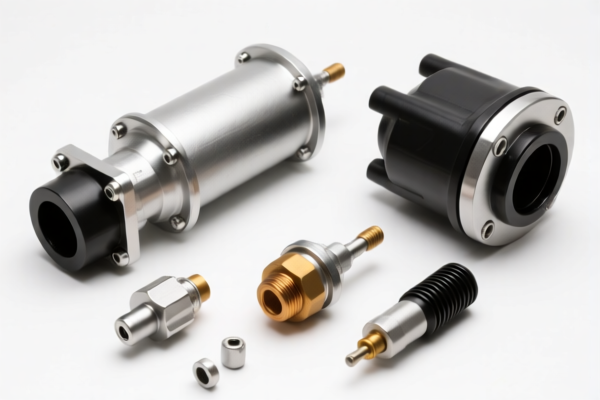
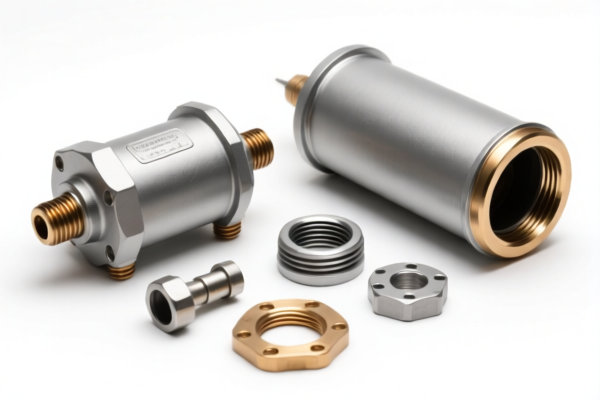
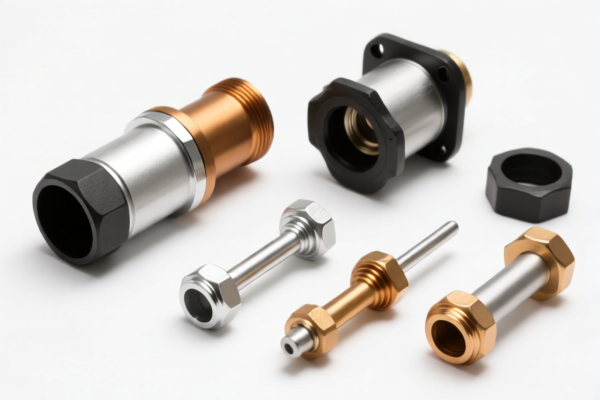
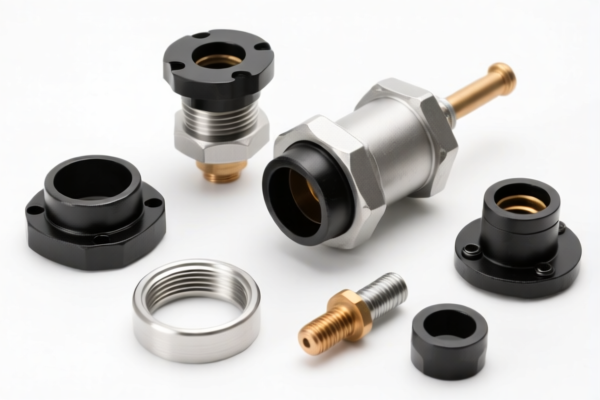
AI Analysis
🔥 Boiler Parts (Industrial Cast Iron Accessories)
🌐 HS Code Reference & Clearance Guide | 2026 Latest Tariff Analysis | Professional Custom Strategies
📌 I. Product Definition & Classification: What are "Boiler Parts"?
In international trade, "Boiler Parts" typically refer to components made of Cast Iron used in industrial heating systems, furnaces, or boilers. The classification depends heavily on material (Cast Iron) and function (Part of Heat Exchange Device vs. Part of Non-Electric Furnace).
Key Distinction Logic: * Metal/Cast Iron Material: Triggers Chapter 73 (Articles of Iron or Steel) or Chapter 84 (Machinery). * Function: * If it’s a part of a Heat Exchanger → 8419. * If it’s a part of a Non-Electric Industrial Furnace → 8417. * If it falls under Household/General Ironware (less likely for industrial boilers, but possible for residential) → 7323.
⚠️ Critical Note:
- "Cast Iron" (铸铁) is the primary material identifier.
- "Parts/Accessories" (配件/零件) implies it is not a standalone machine.
- Conflict Check: Some headings explicitly exclude parts (e.g., 8417.80 excludes parts, but 8417.90 includes them).
📦 II. HS Code Classification Details (2026 Latest Tariff Authority对照)
Based on the provided data, here are the 5 potential HS Codes for "Boiler Parts" (Cast Iron):
| HS Code | Product Description | Matching Logic (Summary) | Total Tax Rate |
|---|---|---|---|
8419.90.30.00 |
Parts and accessories of mechanical-heat-exchange non-electric generators and instantaneous water heaters, including heat pumps | Match: "Cast Iron" implies metal; "Boiler Parts" fit "Heat Exchanger Parts". No material conflict. | 35.0% |
8417.90.00.00 |
Parts of non-electric industrial or laboratory furnaces, ovens, including incinerators | Match: "Accessories" fit "Parts"; "Cast Iron" fits industrial furnace material. No conflict. | 38.9% |
8417.80.00.00 |
Non-electric industrial or laboratory furnaces and ovens, including incinerators | Match: "Cast Iron" fits non-electric furnace material; "Parts" fall under component logic. Note: Heading 8417.80 excludes parts, but 8417.90 covers them. This code is listed as "Possible" based on component logic in other categories. | 38.9% |
7323.92.00.20 |
Table, kitchen or other household articles and parts thereof, of enamelled cast iron | Match: "Cast Iron" matches "Enamelled Cast Iron" base; "Parts" fit "Other" category. | 17.5% |
7323.91.50.20 |
Other articles of iron or steel | Match: "Cast Iron" inferred as Iron/Steel; "Parts" fit "Other" category. | 15.3% |
🔍 Priority Ranking for Industrial Boilers:
1.8419.90.30.00(Most accurate for heat exchange/boiler parts)
2.8417.90.00.00(Accurate for furnace/industrial boiler parts)
3.7323Series (Only if classified as general household ironware, which is risky for industrial boilers)
💰 III. 2026 Latest Tariff Rate Details (Including Surcharges)
✅ Applicable Country: United States (US)
✅ Origin: China (CN)
✅ Effective Date: November 10, 2025 onwards
🎯 1. 8419.90.30.00 — Parts of Heat Exchangers (Best Match for Boilers)
| Item | Content |
|---|---|
| Base Tariff | 0.0% (Ad Valorem) |
| Section 301 Surcharge | +25.0% (USITC Footnote) |
| IEEPA Surcharge | +10.0% (Against China/HK products, effective Nov 2025) |
| Total Rate | 35.0% |
| Calculation | CIF Value × 35% |
| De Minimis Exemption | ❌ Not Applicable |
| Legal Path | IEEPA:9903.01.25 → USITC:8419.90.30.00 → FOOTNOTE:9903.88.01 |
📌 Explanation:
- Base 0%: Standard MFN rate for machinery parts.
- 301 Tariff 25%: Standard trade war surcharge on Chinese machinery parts.
- IEEPA 10%: New additional tariff on Chinese goods.
- Total 35%: High but standard for industrial machinery parts from China.
🎯 2. 8417.90.00.00 — Parts of Non-Electric Furnaces
| Item | Content |
|---|---|
| Base Tariff | 3.9% |
| Section 301 Surcharge | +25.0% |
| IEEPA Surcharge | +10.0% |
| Total Rate | 38.9% |
| Calculation | CIF Value × 38.9% |
| De Minimis Exemption | ❌ Not Applicable |
| Legal Path | IEEPA:9903.01.25 → USITC:8417.90.00.00 |
📌 Note:
- Higher base tariff (3.9%) than 8419.
- Total rate is 38.9%, making it slightly more expensive than 8419.90.30.00.
- Use this only if the product is strictly a furnace/oven part, not a heat exchanger.
🎯 3. 7323.92.00.20 — Enamelled Cast Iron Household Articles
| Item | Content |
|---|---|
| Base Tariff | 0.0% |
| Section 301 Surcharge | +7.5% (Lower tier for household ironware) |
| IEEPA Surcharge | +10.0% |
| Total Rate | 17.5% |
| Calculation | CIF Value × 17.5% |
| De Minimis Exemption | ❌ Not Applicable |
⚠️ Risk Warning:
- This rate is much lower (17.5%), BUT:
- Only applies if the part is deemed "Household/Enamelled Cast Iron".
- Industrial Boiler Parts are NOT household articles. Misclassifying industrial parts here leads to customs penalties, back taxes, and seizure.
- Do not use unless the boiler is explicitly for household use and the part is enamelled.
🎯 4. 7323.91.50.20 — Other Iron/Steel Articles
| Item | Content |
|---|---|
| Base Tariff | 5.3% |
| Section 301 Surcharge | 0.0% (No 301 surcharge for this subheading) |
| IEEPA Surcharge | +10.0% |
| Total Rate | 15.3% |
| Calculation | CIF Value × 15.3% |
| De Minimis Exemption | ❌ Not Applicable |
⚠️ Risk Warning:
- Lowest total rate (15.3%), but high misclassification risk.
- Chapter 73 items are generally "Articles of Iron/Steel," not machinery parts.
- If the part is clearly a machine part (e.g., burner, heat exchanger coil), customs will reclassify to Chapter 84 (higher tax).
- Only use if the part is a simple cast iron piece with no specific machinery function (e.g., a simple support bracket).
🛠️ IV. Clearance Practical Advice (Real-World Pitfall Guide)
✅ 1. Document Checklist (Mandatory)
| Document | Required | Description |
|---|---|---|
| ✅ Product Specification | ✔️ | Detail material (Cast Iron), dimensions, weight, and specific function (e.g., "Part of Heat Exchanger"). |
| ✅ Technical Drawing | ✔️ | Show if it’s a standalone cast iron piece or a complex assembly. |
| ✅ Photos (with Label) | ✔️ | Clear shots of the part, especially any markings indicating "Boiler Part" or "Heat Exchanger Component." |
| ✅ Commercial Invoice | ✔️ | Use precise description: "Cast Iron Part for Industrial Heat Exchanger" NOT just "Boiler Part." |
| ✅ Proof of Use | ✔️ | If claiming household use for 7323, provide evidence of residential application. |
✅ 2. Declaration Strategy (Key Mantra)
🔥 "Function Determines Chapter, Material Supports Classification, Avoid Household Trap!"
| Scenario | Correct HS Code | Wrong Code | Consequence |
|---|---|---|---|
| Industrial Boiler Part (Heat Exchanger) | 8419.90.30.00 (35%) |
7323.92.00.20 (17.5%) |
Penalty + Back Taxes (17.5% vs 35% difference) |
| Industrial Furnace Part | 8417.90.00.00 (38.9%) |
7323.91.50.20 (15.3%) |
Penalty + Back Taxes |
| Household Cast Iron Boiler Part | 7323.92.00.20 (17.5%) |
8419.90.30.00 (35%) |
Overpaying Tax (Legally acceptable but costly) |
| Simple Cast Iron Bracket (No Specific Function) | 7323.91.50.20 (15.3%) |
8419.90.30.00 (35%) |
Safe if truly generic |
✅ 3. Special Cases
| Situation | Handling Advice |
|---|---|
| OEM Custom Parts | Provide client design specs to prove specific machinery function → Chapter 84. |
| Enamelled Surface | If enamelled, customs may push for 7323.92.00.20. Provide proof of industrial use to reject this. |
| Mixed Package | If boiler parts are shipped with other steel parts, declare separately to avoid blanket misclassification. |
🌍 V. Global Clearance Comparison (2026)
| Country/Region | Recommended HS Code | Tariff | Certification | Remarks |
|---|---|---|---|---|
| 🇺🇸 USA | 8419.90.30.00 |
35% | None specific | High tax due to 301+IEEPA. Avoid 7323 unless household. |
| 🇨🇳 China | 8419.90.90.00 |
~5-10% | CCC (if applicable) | Lower tax for export/import within China. |
| 🇪🇺 EU | 8419.89.80 |
~0-2.7% | CE (if pressure vessel) | Lower tariffs, stricter pressure vessel safety rules. |
| 🇦🇺 Australia | 8419.89.90 |
~5% | RCM | No additional surcharges like US. |
| 🇯🇵 Japan | 8419.89.90 |
~0% | PSE (if electric) | Very low tariffs, but strict safety standards. |
📌 Conclusion:
- USA is the most expensive market due to 35-38.9% total tariffs.
- Misclassification Risk is Highest in the US because of the large tax difference between Chapter 73 (15-17.5%) and Chapter 84 (35-38.9%).
- Always prioritize Chapter 84 for industrial boiler parts to avoid customs disputes.
📌 VI. Common Errors & Pitfalls (Blood Lessons)
❌ Error 1: Classifying Industrial Boiler Parts as Household Cast Iron (7323)
👉 Consequence: Customs detects industrial use → Seizure + 100% Penalty + Back Taxes (35% - 17.5% = 17.5% penalty).
❌ Error 2: Declaring "Boiler" instead of "Parts of Boiler"
👉 Consequence: If not a complete boiler, it’s misclassified. Complete boilers may have different tariffs. Parts are safer if correctly described.
❌ Error 3: Ignoring IEEPA 10% Surcharge
👉 Consequence: Even if base tariff is 0%, the 10% IEEPA is mandatory for Chinese goods since Nov 2025. Total tax = Base + 25% + 10%.
❌ Error 4: Using "Other Iron Articles" (7323.91) for Complex Parts
👉 Consequence: If the part has a specific function (e.g., heat transfer), it belongs in 8419. Simple brackets may use 7323, but complex parts must use 8419.
✅ Correct Practice:
"Cast Iron Part for Industrial Heat Exchanger, Model XYZ, Used in Commercial Boiler System"
🎯 VII. Conclusion: Precise Classification Saves Costs!
🎯 Remember the Mantra:
🔹 "Industrial Boiler Parts → Chapter 84 (8419/8417)"
🔹 "Household Cast Iron → Chapter 73 (7323)"
🔹 "Never Mix Industrial with Household"
🔹 "Total Tax = Base + 25% (301) + 10% (IEEPA)"📌 Tip:
If your boiler parts are enamel-coated, customs will likely challenge8419as7323. Provide technical documentation proving industrial application to maintain8419classification and avoid penalties.
Consider Advance Ruling from US Customs if the part’s function is ambiguous.
📣 Immediate Action:
📞 Consult with a licensed customs broker.
📸 Provide detailed photos and technical specs.
🚀 Ensure correct HS Code to avoid 35%+ Tax Shocks!
✨ Professional Clearance, Start with Precise Classification!
💼 Your Every Dollar Saved is a Dollar Earned!
Customer Reviews
About HS Code Classification
The Harmonized System (HS) is an internationally standardized nomenclature developed by the World Customs Organization (WCO) to classify traded products. Over 200 countries use the HS system as the basis for customs tariffs, trade statistics, and import/export regulations.
Each HS code follows a hierarchical structure:
- Chapter (2 digits) — Broad category of goods (e.g., Chapter 84: Machinery and Mechanical Appliances)
- Heading (4 digits) — More specific grouping within the chapter
- Subheading (6 digits) — Internationally standardized breakdown, used by all WCO member countries
- National subdivisions (8-10 digits) — Country-specific extensions for further classification, such as US HTSUS 10-digit codes
Correct HS code classification is essential for smooth customs clearance, accurate duty payment, and compliance with trade regulations. Misclassification can lead to customs delays, overpayment of duties, or penalties.
When importing from CN to US, the applicable tariff rates may include:
- Most-Favored-Nation (MFN) rate — The standard duty rate applied to WTO members
- General rate — Applied to countries without trade agreements
- Trade remedy duties — Additional tariffs such as Section 301 (anti-dumping), Section 232 (national security), or countervailing duties
The information provided on this page is for reference purposes only. For official classification, please consult with your local customs authority or a licensed customs broker.