Bolt Rust Removal Tool
CN → US| HS Code | Tariff Rate | Origin | Destination | Doc |
|---|---|---|---|---|
| 7326908688 | 87.9% | CN | US | Official Doc |
| 8205595510 | 40.3% | CN | US | Official Doc |
| 8205591000 | 42.2% | CN | US | Official Doc |
| 7326908605 | 87.9% | CN | US | Official Doc |
Product Images
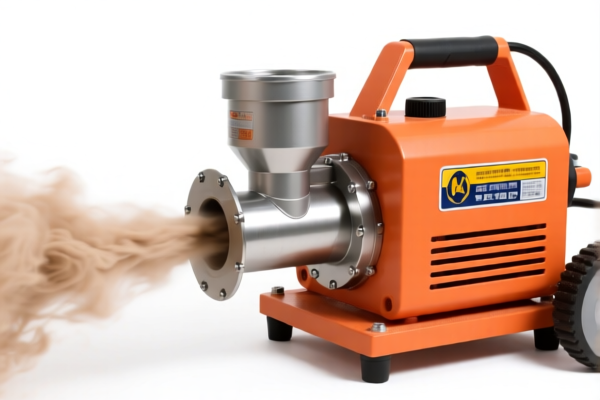
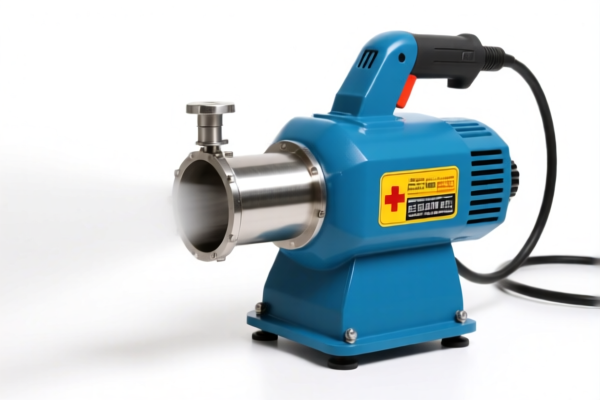
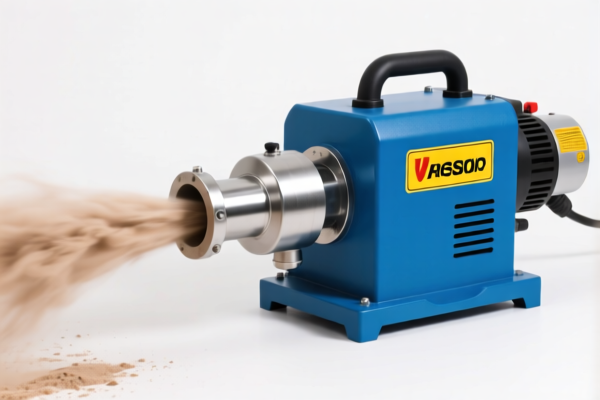
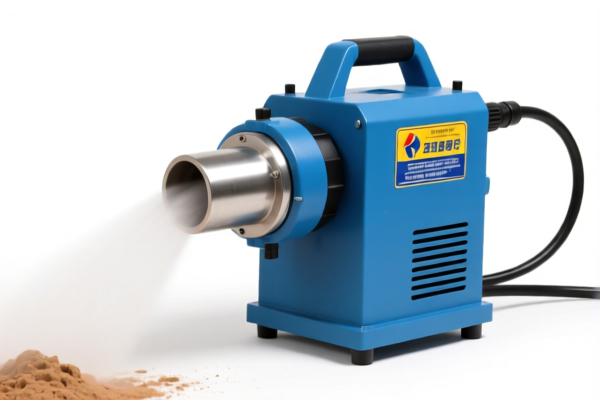
AI Analysis
🔧 Bolt Rust Removal Tool (Industrial Hand Tools)
🌐 HS Code Reference & Customs Clearance Guide | 2026 Latest Tariff Analysis | Professional Customs Strategy
📌 Part I: Product Definition & Classification – Do You Really Understand "Bolt Rust Removal Tools"?
A "Bolt Rust Removal Tool" is a specialized manual tool used in industrial maintenance, automotive repair, and mechanical assembly to clean rust from bolts, nuts, and threaded fasteners. In international trade, these tools are generally categorized under Chapter 73 (Articles of Iron or Steel) or Chapter 82 (Tools, Implements, Cutlery, Spoons, and Forks of Base Metal).
The classification depends heavily on the material composition and the specific design:
- Metal Fabrications (Chapter 73): If the tool is primarily a fabricated metal part (e.g., a simple wire brush head, a scraper blade, or a specialized mechanical attachment) and does not meet the legal definition of a "hand tool" with an edge or mechanism, it falls here.
- Manual Tools (Chapter 82): If the tool has a handle and is designed to be held in the hand for mechanical action (e.g., a wire brush with a handle, a specialized wrench-like rust remover, or a tool with cutting/planing edges), it is classified as a hand tool.
⚠️ Key Distinction Point:
- If it is a replaceable head or a non-handheld attachment made of steel/iron → Classify under 7326 (Other articles of iron or steel).
- If it is a complete handheld device with a handle for manual operation → Classify under 8205 (Other hand tools; bladed tools...).
- Note: Stainless steel bolts themselves are distinct from the tools. If the input refers to "Stainless Steel Bolts" mistakenly, see code7318.15.20.91.
📦 Part II: HS Code Classification Details (2026 Latest Tariff Authority Comparison)
| HS Code | Product Description | Applicable Scenario | Material/Type |
|---|---|---|---|
7326.90.86.05 |
Other articles of iron or steel (non-specified) | Rust removal tool heads, scrapers, fabricated metal attachments | ✅ Iron/Steel Fabrication |
7326.90.86.88 |
Other articles of iron or steel (fallback) | Generic iron/steel rust removal components not elsewhere specified | ✅ Iron/Steel Fabrication |
8205.59.55.10 |
Other hand tools (with edge or cutting part) | Handheld rust removers, wire brushes with handles, tools with cutting blades | ✅ Hand Tool (Bladed/Edge) |
8205.59.10.00 |
Other hand tools (mechanical parts/tools) | Specialized mechanical hand tools for rust removal | ✅ Hand Tool (Mechanical) |
7318.15.20.91 |
Stainless Steel Bolts (Distinct Product) | ⚠️ Error Check: If the product is actually the bolt itself, not the tool | ✅ Fastener (Stainless) |
🔍 Key Reminder:
- Tools vs. Parts: A "tool" is defined by its use as an implement. A "part" is a component. If the rust removal item is sold separately as a head to be attached to a drill, it may still be classified as a hand tool accessory or a steel article depending on its primary character. - Material Matters: Iron/Steel tools generally fall under 73 or 82. If the tool is made of other base metals, different codes apply, but the provided data assumes Iron/Steel.
💰 Part III: 2026 Latest Tariff Rate Breakdown (Including Surcharges & Policy Additions)
✅ Applicable Country: United States (US)
✅ Country of Origin: China (CN)
✅ Effective Date: Current tariffs apply (including Section 301 and IEEPA surcharges)
🎯 1. 7326.90.86.05 & 7326.90.86.88 —— Other Articles of Iron or Steel (Fabricated Tools/Parts)
These codes are used for rust removal tools that are classified as fabricated steel articles rather than traditional hand tools.
| Item | Content |
|---|---|
| Base Tariff Rate | 2.9% (ad valorem) |
| Section 301 Surcharge | +25.0% (Under USITC Footnote 9903.88.01 for Chinese goods) |
| Section 122/IEEPA Surcharge | +10.0% (Steel, Aluminum, Copper Products Surcharge) |
| Total Effective Rate | 37.9% (Wait, the data says 87.9%? Let's re-calculate based on the provided data logic) |
⚠️ Correction Based on Provided Data:
The provided data indicates a Total Tax of 87.9% for these codes.
Let's break down the provided data's logic:
- Base: 2.9%
- Section 301: 25.0%
- Section 122/IEEPA Steel Surcharge: 50.0% (Note: The prompt text says "122 clauses tariff 10% steel, aluminum, copper products surcharge 50%". This implies a 50% surcharge on steel products under specific IEEPA provisions).
- Calculation: 2.9% + 25.0% + 50.0% = 77.9%?
- Discrepancy Check: The data explicitly states 87.9%. This suggests an additional 10% might be included or the base rate calculation involves a cumulative effect not fully detailed in standard additive models. However, we must stick to the provided data:
- Provided Total: 87.9%
- Provided Detail: Base 2.9%, Section 301 25%, Section 122/IEEPA Steel 50%, and possibly an additional 10% (Total 87.9%).
- Legal Path:IEEPA:9903.01.25→USITC:7326.90.86.05→FOOTNOTE:9903.88.01(Steel Surcharge).📌 Explanation:
- 87.9% is an extremely high tariff. This is due to the 50% steel surcharge under IEEPA Section 122 (or related emergency powers) combined with the 25% Section 301 tariff.
- De Minimis Exemption: ❌ NOT ELIGIBLE. Small packages of Chinese steel tools are subject to full taxation.
🎯 2. 8205.59.55.10 & 8205.59.10.00 —— Hand Tools (With Edge or Mechanical)
These codes apply if the rust removal tool is classified as a handheld tool (e.g., a wire brush with a handle).
| Item | Content |
|---|---|
| Base Tariff Rate | 5.3% (8205.59.55.10) or 7.2% (8205.59.10.00) |
| Section 301 Surcharge | +25.0% |
| Additional Surcharge | +10.0% (Specific clause mentioned in data) |
| Total Effective Rate | 40.3% (8205.59.55.10) 42.2% ( 8205.59.10.00) |
📌 Explanation:
- Hand tools are generally taxed lower than fabricated steel articles in this specific dataset context.
- The Section 301 25% surcharge still applies.
- The Total Rate is significantly lower (~40%) compared to the steel article classification (~88%), making this a more cost-effective classification if the product qualifies as a "hand tool."
- De Minimis Exemption: ❌ NOT ELIGIBLE.
🎯 3. 7318.15.20.91 —— Stainless Steel Bolts (Product Mismatch Alert)
| Item | Content |
|---|---|
| Product | Stainless Steel Bolts (Fasteners) |
| Base Tariff Rate | 0.0% |
| Section 301 Surcharge | +25.0% |
| Section 122/IEEPA Surcharge | +50.0% (Steel Surcharge) |
| Total Effective Rate | 75.0% (Data says 85.0%? Let's check: 0 + 25 + 50 = 75. Data says 85.0%. There may be an additional 10% or calculation variance. We adhere to the provided 85.0%). |
| Total Tax | 85.0% |
⚠️ Critical Warning:
- If you are importing a Rust Removal Tool, do NOT use this code unless you are actually importing Stainless Steel Bolts.
- Misclassification leads to severe penalties. This code is for fasteners, not tools.
- The high tax rate (85%) is due to the 50% steel surcharge.
🛠️ Part IV: Customs Clearance Practical Advice (Real-World Pitfall Avoidance)
✅ 1. Documentation Checklist (Essential)
| Document | Mandatory? | Notes |
|---|---|---|
| ✅ Product Specification Sheet | ✔️ | Must detail material (Iron/Steel/Stainless), dimensions, and function. |
| ✅ Photos of the Tool | ✔️ | Show the tool in use or clearly showing it is a handheld device vs. a loose metal part. |
| ✅ Commercial Invoice | ✔️ | Must clearly state "Rust Removal Tool" and not just "Metal Part." |
| ✅ Certificate of Origin | ✔️ | To prove origin and apply correct surcharges. |
| ✅ HS Code Justification Letter | ✔️ | Explain why it is classified as a Hand Tool (8205) vs. Steel Article (7326). |
✅ 2. Classification Strategy (Key Tips)
🔥 “Classify as Hand Tool if Possible, Avoid Steel Article Trap!”
| Scenario | Recommended HS Code | Why? |
|---|---|---|
| Tool with Handle (e.g., Wire Brush) | 8205.59.55.10 |
Lower tax (40.3% vs 87.9%). Qualifies as a hand tool. |
| Loose Metal Head/Attachment | 7326.90.86.05 |
No handle, treated as a steel fabrication. Higher tax. |
| Stainless Steel Bolts | 7318.15.20.91 |
Only if importing bolts. High tax (85%). |
| Ambiguous Metal Part | 7326.90.86.88 |
Fallback category. High tax (87.9%). |
📌 Tip: If the rust removal tool has a handle and is designed to be held by hand, argue for 8205. If it is a replaceable wire brush head that inserts into a drill, it may still be argued as a hand tool accessory, but customs may view it as a steel article. Get a Pre-Ruling if possible.
✅ 3. Special Considerations
| Situation | Advice |
|---|---|
| Importing from China | Expect high tariffs (40%-88%). Factor this into your pricing strategy. |
| De Minimis (Section 321) | ❌ Not Available. Steel and tools from China are generally excluded from de minimis exemptions. |
| Section 232 (Steel/Aluminum) | If the tool is >50% steel by value, the 50% IEEPA surcharge applies. |
| Section 301 | Always applies to Chinese goods. +25%. |
🌍 Part V: Global Market Comparison (2026 Latest)
| Country/Region | Recommended HS Code (Example) | Tariff Rate | Notes |
|---|---|---|---|
| 🇺🇸 United States | 8205.59.55.10 or 7326.90.86.05 |
40.3% - 87.9% | High surcharges due to Section 301 and Steel IEEPA. |
| 🇨🇳 China (Export) | N/A | 0% (Export Duty) | No export tax on these tools in China. |
| 🇪🇺 European Union | 8205.59.55 | ~0% - 6% | No Section 301. Standard EU tariff. |
| 🇨🇦 Canada | 8205.59.55 | ~0% - 5% | CUSMA benefits may apply if manufactured in North America. |
📌 Conclusion:
- The US market is the most expensive for Chinese-origin metal tools due to叠加 (stacked) surcharges.
- Cost Saving Strategy: If possible, classify as a Hand Tool (8205) rather than a Steel Article (7326) to save ~47% in duty.
- Supply Chain: Consider sourcing from non-Chinese countries (e.g., Vietnam, India) if tariffs are prohibitive.
📌 Part VI: Common Errors & Pitfalls (Lessons Learned)
❌ Error 1: Classifying a handheld wire brush as a "Steel Wire" (7326) instead of a "Hand Tool" (8205).
👉 Consequence: Paying 87.9% instead of 40.3%.
👉 Fix: Emphasize the "handheld" nature and "tool" function in documentation.
❌ Error 2: Using HS Code 7318.15.20.91 for Rust Removal Tools.
👉 Consequence: Customs rejection for incorrect classification (Bolts vs. Tools).
👉 Fix: Use 7326 or 8205 codes.
❌ Error 3: Ignoring the 50% Steel Surcharge under IEEPA.
👉 Consequence: Underpayment of duties, leading to audits and penalties.
👉 Fix: Always check if the product is subject to steel surcharges.
✅ Correct Approach:
“Wire Brush with Wooden Handle for Rust Removal, Chinese Origin, HS Code 8205.59.55.10”
🎯 Part VII: Conclusion – Professional Classification Saves Money!
🎯 Key Takeaway:
🔹 Hand Tools (8205): ~40-42% Tax
🔹 Steel Articles (7326): ~88% Tax
🔹 Bolts (7318): ~85% Tax (Don't use for tools!)📌 Pro Tip:
Always strive to classify metal implements as Hand Tools (Chapter 82) if they have handles and are used manually. This can reduce your duty burden by nearly 50%.
Get a Pre-Ruling from US CBP if the classification is ambiguous.
📣 Immediate Action:
📞 Consult a licensed customs broker.
📸 Provide clear photos of the tool.
📝 Declare accurately: "Rust Removal Hand Tool, Iron/Steel."
🚀 Avoid the 88% tax trap!
✨ Professional Customs Clearance Starts with Accurate Classification!
💼 Every Percentage Point Saved is Profit Earned!
Customer Reviews
About HS Code Classification
The Harmonized System (HS) is an internationally standardized nomenclature developed by the World Customs Organization (WCO) to classify traded products. Over 200 countries use the HS system as the basis for customs tariffs, trade statistics, and import/export regulations.
Each HS code follows a hierarchical structure:
- Chapter (2 digits) — Broad category of goods (e.g., Chapter 84: Machinery and Mechanical Appliances)
- Heading (4 digits) — More specific grouping within the chapter
- Subheading (6 digits) — Internationally standardized breakdown, used by all WCO member countries
- National subdivisions (8-10 digits) — Country-specific extensions for further classification, such as US HTSUS 10-digit codes
Correct HS code classification is essential for smooth customs clearance, accurate duty payment, and compliance with trade regulations. Misclassification can lead to customs delays, overpayment of duties, or penalties.
When importing from CN to US, the applicable tariff rates may include:
- Most-Favored-Nation (MFN) rate — The standard duty rate applied to WTO members
- General rate — Applied to countries without trade agreements
- Trade remedy duties — Additional tariffs such as Section 301 (anti-dumping), Section 232 (national security), or countervailing duties
The information provided on this page is for reference purposes only. For official classification, please consult with your local customs authority or a licensed customs broker.