Bolts and Nuts
CN → US| HS Code | Tariff Rate | Origin | Destination | Doc |
|---|---|---|---|---|
| 7318152010 | 85.0% | CN | US | Official Doc |
| 7318152020 | 85.0% | CN | US | Official Doc |
Product Images

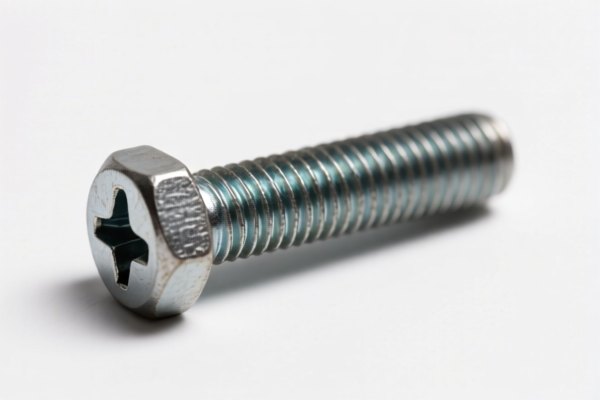
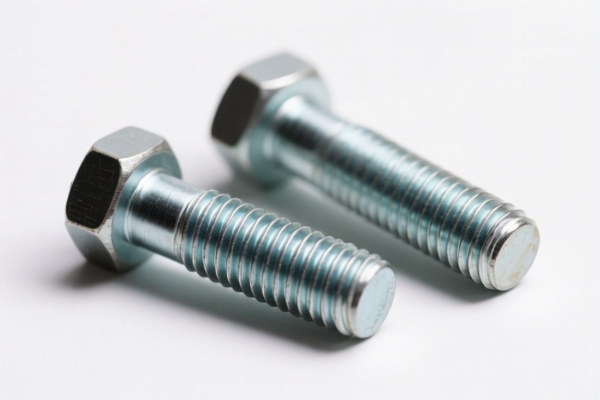
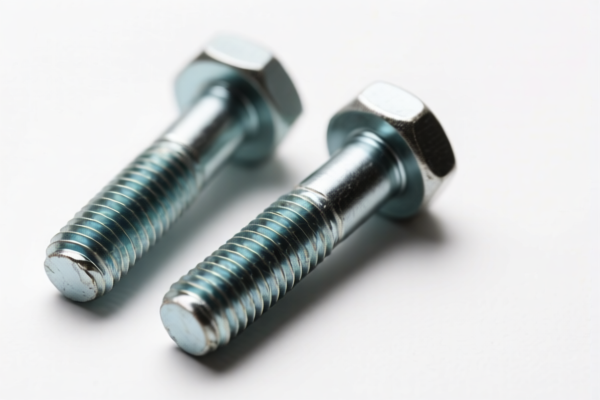
AI Analysis
🔩 Bolts, Nuts & Threaded Steel Articles (HS Codes 7318.15.20.10 & .20)
🌐 HS Code Reference & Customs Clearance Guide | 2024/2025 Latest Tariff Analysis | Professional Compliance Strategy
📌 I. Product Definition & Classification: Do You Know the Difference Between "Small" and "Large"?
Bolts, nuts, and screws are the unsung heroes of global infrastructure. In international trade, they are not all treated equally. The critical differentiator here is dimension (diameter) and specific application.
Based on the provided dataset, these items fall under Chapter 73: Articles of Iron or Steel. Specifically, they are classified as Threaded Articles. The key distinction lies in the shank or thread diameter:
- Small Diameter (< 6 mm): Fasteners with a diameter of less than 6 mm.
- Large Diameter (≥ 6 mm): Fasteners with a diameter of 6 mm or more, including specific sub-categories like Track Bolts.
⚠️ Critical Distinction Point:
- If the bolt/nut/shank diameter is less than 6 mm → It is classified as "Other" under the smaller category.
- If the diameter is 6 mm or more → It falls under the larger category, with specific mentions for Track Bolts (used in railway applications).
- Packaging Note: Both codes assume bolts and their accompanying nuts/washers are entered or exported in the same shipment.
📦 II. HS Code Classification Details (Latest Tariff Alignment)
| HS Code | Product Description | Application Scenario | Diameter/Specification |
|---|---|---|---|
7318.15.20.10 |
Other screws and bolts (shanks/threads < 6 mm) | Small machinery parts, electronics, precision instruments, small fixtures | < 6 mm |
7318.15.20.20 |
Track bolts (shanks/threads ≥ 6 mm) | Railway tracks, heavy industrial construction, large structural assemblies | ≥ 6 mm |
🔍 Key Reminder:
- Unit of Measurement: Ensure your commercial invoice clearly states the diameter (e.g., M4, M5, M6, 1/4", etc.).
- "Track Bolts" Specifics: Under7318.15.20.20, the data specifically highlights Track Bolts. If your large bolts are for general structural use (not rails), they still fall under this code but might be scrutinized for correct description.
- No Separate Entry for Nuts Alone: The description implies these codes cover "Bolts and their nuts/washers... entered or exported in the same shipment." If nuts are shipped separately, they may require a different HS code (e.g., 7318.15.30.10/20 depending on diameter), but this dataset only covers the combined bolt+nut scenarios listed above.
💰 III. 2024/2025 Latest Tariff Rate Detailed Explanation (US Imports from China)
✅ Applicable Country: United States (US)
✅ Country of Origin: China (CN)
✅ Effective Period: Current Trade Policy (Section 301 & IEEPA)
🎯 1. 7318.15.20.10 —— Bolts/Nuts < 6 mm
| Item | Content |
|---|---|
| Base Tariff Rate | 0.0% |
| Section 301 Additional Tariff | +25.0% |
| IEEPA Additional Tariff (Steel/Aluminum/Copper) | +50.0% |
| Total Effective Tariff Rate | 75.0% |
| Tax Calculation | CIF Value × 75% |
| De Minimis Exemption | ❌ Not Eligible (Deny de minimis for Section 301 goods) |
| Legal Basis Path | USITC:7318.15.20.10 → Section 301: Footnote 9903.88.01 → IEEPA:9903.01.24 (Steel products) |
📌 Explanation:
- "Base Tariff 0%": Under normal MFN (Most Favored Nation) treatment, basic steel fasteners often have a low or zero base rate.
- "Section 301 +25%": This is the standard additional duty imposed on Chinese goods under the US Trade Act Section 301.
- "IEEPA +50%": This is the critical, often overlooked tax. Specific steel and aluminum products from China are subject to an additional 50% tariff under the International Emergency Economic Powers Act (IEEPA). Since bolts/nuts of iron/steel are explicitly covered, this 50% is added on top.
- Total 75%: This is a prohibitive tariff rate. It makes importing these items directly from China to the US economically unviable unless the margin is extremely high or value-added in a third country.
🎯 2. 7318.15.20.20 —— Track Bolts & Others ≥ 6 mm
| Item | Content |
|---|---|
| Base Tariff Rate | 0.0% |
| Section 301 Additional Tariff | +25.0% |
| IEEPA Additional Tariff (Steel/Aluminum/Copper) | +50.0% |
| Total Effective Tariff Rate | 75.0% |
| Tax Calculation | CIF Value × 75% |
| De Minimis Exemption | ❌ Not Eligible |
| Legal Basis Path | USITC:7318.15.20.20 → Section 301: Footnote 9903.88.01 → IEEPA:9903.01.24 (Steel products) |
📌 Note:
- Uniform Tax Rate: Whether the bolt is small (<6mm) or large (≥6mm/Track Bolt), the total tariff rate remains 75% for Chinese-origin steel products.
- Track Bolts: While "Track Bolts" are specifically named in the HS description, the tax treatment for steel fasteners generally aligns with the IEEPA steel penalties.
- High Cost Impact: A $10,000 shipment of bolts will incur $7,500 in duties.
🛠️ IV. Customs Clearance Practical Advice (Pitfall Avoidance Guide)
✅ 1. Documentation Checklist (Non-Negotiable)
| Document | Required | Purpose |
|---|---|---|
| ✅ Commercial Invoice | ✔️ | Must clearly list: HS Code, Description, Quantity, Unit Price, Total Value, Country of Origin (China). |
| ✅ Packing List | ✔️ | Detailed breakdown of items. Ensure bolts and nuts are listed together if shipped as sets. |
| ✅ Product Specification Sheet | ✔️ | Must include: Material (e.g., Stainless Steel 304, Carbon Steel Grade 8.8), Diameter (mm or inch), Length, Thread Pitch, Surface Finish (Galvanized, Zinc-plated). |
| ✅ Country of Origin Certificate | ✔️ | Crucial to prove origin. If transshipped, provide anti-circumvention statements. |
| ✅ Bill of Lading / Air Waybill | ✔️ | Standard shipping documents. |
✅ 2. Declaration Strategy (Key Mnemonics)
🔥 "Size Matters, Steel Pays, Origin Defines!"
| Scenario | Correct Declaration | Incorrect Practice |
|---|---|---|
| Bolts < 6 mm + Nuts | 7318.15.20.10 "Bolts and nuts, shank diameter < 6 mm, of steel" |
Mislabeling as "Hardware" or generic "Screws" → Audit Risk |
| Track Bolts (≥ 6 mm) | 7318.15.20.20 "Track bolts, diameter ≥ 6 mm" |
Failing to specify "Track" if applicable; or misclassifying as general bolts |
| Non-Steel Bolts (e.g., Plastic) | Not in this dataset | Do not use 7318 codes for non-iron/steel items |
| Bolts Imported Separately from Nuts | Potentially different HS Code (e.g., 7318.15.30) | Assuming 75% rate applies if nuts are shipped alone (need verification) |
✅ 3. Special Considerations for Steel Products
| Issue | Handling Advice |
|---|---|
| IEEPA 50% Tariff | This is the biggest cost driver. Verify if your product falls under the specific "Steel" IEEPA provisions. Most iron/steel bolts do. |
| Anti-Dumping Duties (AD) | Some specific steel fasteners may also be subject to AD/CVD (Countervailing Duties). Check CBP (Customs and Border Protection) lists for additional AD/CVD cases on steel bolts from China. |
| De Minimis (Section 321) | Small shipments (<$800) DO NOT benefit from de minimis exemption for Section 301 and IEEPA goods. They are fully taxable. |
| Transshipment Risk | Do not attempt to ship via Vietnam or Mexico to avoid tariffs unless you have substantial transformation. CBP closely monitors "steel circumvention." |
🌍 V. Global Market Comparison (2024/2025)
| Country/Region | Recommended HS Code | Tariff Rate (CN Origin) | Certification/Notes |
|---|---|---|---|
| 🇺🇸 USA | 7318.15.20.10 / .20 |
75% (0% Base + 25% Sec 301 + 50% IEEPA) | High compliance risk. IEEPA steel penalties are severe. |
| 🇨🇳 China | 7318.15.20.10 / .20 |
~5-10% (Import Duty) | Low import barrier. |
| 🇪🇺 EU | 7318.15 |
0-2.7% (Most countries 0%) | No Section 301/IEEPA equivalents. Standard EU tariffs apply. |
| 🇨🇦 Canada | 7318.15.20.00 |
0% (under CUSMA) | Favorable under USMCA/CUSMA if originating. |
| 🇬🇧 UK | 7318.15.20.00 |
0-3.5% | Post-Brexit UK Global Tariff. No US-style penalties. |
📌 Conclusion:
- USA is the most expensive market due to the 75% cumulative tariff.
- EU, UK, and Canada offer significantly better tariff conditions for Chinese steel fasteners.
- Strategic Shift: Many importers are moving sourcing to Southeast Asia (Vietnam, Thailand) or using non-Chinese suppliers to mitigate the 75% US duty, though anti-circumvention investigations are tightening.
📌 VI. Common Errors & Pitfalls (Lessons from the Field)
❌ Error 1: Under-declaring Diameter
👉 Consequence: Classifying a 7mm bolt as "< 6mm" to try (incorrectly) changing the code.
👉 Result: Customs audit, penalties, and reassessment of 75% duty + fines.
❌ Error 2: Ignoring IEEPA Steel Tariff
👉 Consequence: Only paying 25% (Section 301) and forgetting the 50% IEEPA.
👉 Result: 75% total duty owed, leading to massive back taxes and potential seizure.
❌ Error 3: Splitting Shipments to Avoid $800 De Minimis
👉 Consequence: Shipping $500 bolts + $500 nuts separately.
👉 Result: Each package is still subject to 75% because Section 301/IEEPA goods are excluded from de minimis.
❌ Error 4: Wrong Material Description
👉 Consequence: Declaring "Stainless Steel" when it's "Carbon Steel".
👉 Result: Carbon steel is heavily scrutinized under IEEPA. Misdeclaration leads to fraud charges.
✅ Correct Action:
"Stainless Steel Hex Bolts & Nuts, M6 Diameter, Grade A4-80, Galvanized, Country of Origin: China, HS: 7318.15.20.10, Duty: 75%"
🎯 VII. Conclusion: Professional Declaration, Save Costs!
🎯 Remember the Golden Rule:
🔹 "Steel from China to US? Expect 75%!"
🔹 "Check IEEPA before you pack!"
🔹 "Diameter defines the code, but Origin defines the Tax!"
📌 Pro Tip:
If you are importing large volumes of steel bolts into the US, consider:
1. Supply Chain Diversification: Source from countries with free trade agreements (e.g., Mexico, Canada, Southeast Asia).
2. Pre-Ruling: Apply for a Binding Ruling from US CBP to confirm the exact HS code and tax applicability for your specific product.
3. Tariff Engineering: Modify the product (e.g., use non-steel materials like titanium or specialized alloys) if possible, to move to a different HTS code with lower duties.
📣 Immediate Action Required:
📞 Consult a Customs Broker
📋 Verify IEEPA Applicability for your specific steel grade
🚀 Optimize Supply Chain to mitigate the 75% tariff burden
✨ Precision in Classification, Profit in Clearance!
💼 Every percent of duty saved is pure profit added!
Customer Reviews
About HS Code Classification
The Harmonized System (HS) is an internationally standardized nomenclature developed by the World Customs Organization (WCO) to classify traded products. Over 200 countries use the HS system as the basis for customs tariffs, trade statistics, and import/export regulations.
Each HS code follows a hierarchical structure:
- Chapter (2 digits) — Broad category of goods (e.g., Chapter 84: Machinery and Mechanical Appliances)
- Heading (4 digits) — More specific grouping within the chapter
- Subheading (6 digits) — Internationally standardized breakdown, used by all WCO member countries
- National subdivisions (8-10 digits) — Country-specific extensions for further classification, such as US HTSUS 10-digit codes
Correct HS code classification is essential for smooth customs clearance, accurate duty payment, and compliance with trade regulations. Misclassification can lead to customs delays, overpayment of duties, or penalties.
When importing from CN to US, the applicable tariff rates may include:
- Most-Favored-Nation (MFN) rate — The standard duty rate applied to WTO members
- General rate — Applied to countries without trade agreements
- Trade remedy duties — Additional tariffs such as Section 301 (anti-dumping), Section 232 (national security), or countervailing duties
The information provided on this page is for reference purposes only. For official classification, please consult with your local customs authority or a licensed customs broker.