Bonding Sheet for Casting
CN → US| HS Code | Tariff Rate | Origin | Destination | Doc |
|---|---|---|---|---|
| 3824992900 | 41.5% | CN | US | Official Doc |
| 3810902000 | 35.0% | CN | US | Official Doc |
| 3824100000 | 41.0% | CN | US | Official Doc |
| 3206496050 | 38.1% | CN | US | Official Doc |
| 3206491000 | 40.9% | CN | US | Official Doc |
Product Images
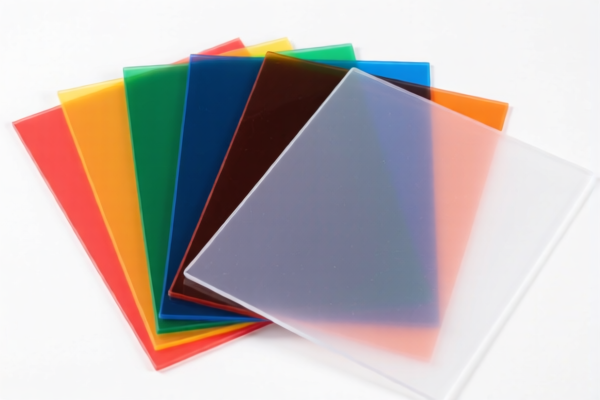
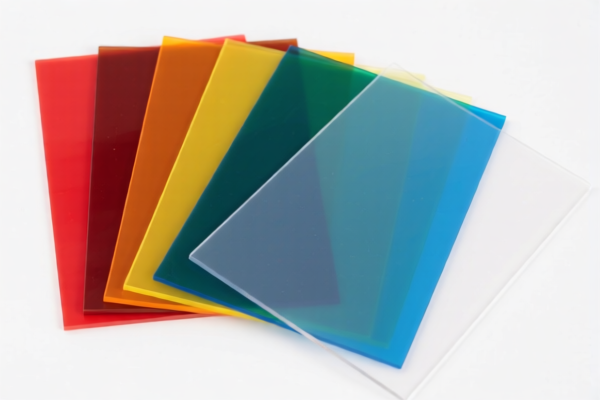

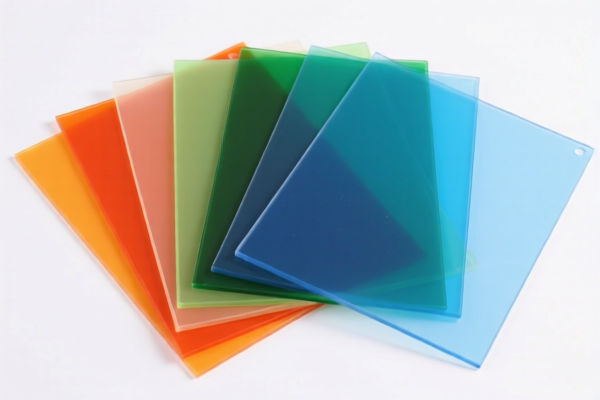
AI Analysis
🏗️ Bonding Sheet for Casting (Casting Mold/Core Binder)
🌐 HS Code Reference & Customs Clearance Guide | 2026 Latest Tariff Analysis | Professional Clearance Strategy
📌 I. Product Definition & Classification: What Exactly is "Bonding Sheet for Casting"?
Casting Bonding Sheets (often referred to as molded binders, pre-formed binders, or core sand binders in sheet form) are specialized chemical formulations used in metal foundries. They are applied to molding sands to create molds (molds) or cores (inserts) that maintain their shape under high-temperature molten metal.
In international trade, these products are classified based on their primary function and chemical composition:
- Mold/Core Binders (Chemical Adhesives): If the product’s primary purpose is to bind sand particles together for casting molds or cores, it is classified under Chapter 38 (Miscellaneous Chemical Products), specifically heading 3824.
- Metal Processing Auxiliaries: If the product is considered a general auxiliary agent for metal treatment rather than a specific binder for mold formation, it might fall under 3810.
- Coloring/Pigment Agents: If the "sheet" is primarily a dye or pigment concentrate used for coloring casting materials, it falls under Chapter 32 (Tanning or Dyeing Extracts; Dyes; Pigments...).
⚠️ Critical Distinction:
- If the product is explicitly stated as a "Binder for Molds or Cores" → Go to 3824.10.00.00 or 3824.99.29.00.
- If it is a general "Auxiliary Agent for Metal Processing" without specific mold-binding function → Go to 3810.90.20.00.
- If it is a "Coloring Agent/Pigment" → Go to 3206.49.60.50 or 3206.49.10.00.
📦 II. HS Code Classification Details (2026 Latest Tariff Authority对照)
| HS Code | Product Description | Application Scenario | Key Characteristic |
|---|---|---|---|
3824.10.00.00 |
Prepared Binders for Molds or Cores | Sand casting, investment casting, core making | 🎯 Highest Match: Specifically designed for binding mold/core sand. |
3824.99.29.00 |
Prepared Binders for Molds or Cores (Other) | Specialized chemical binders, organic/inorganic hybrids | 📝 Functional Match: Fits the description of "Prepared binders for casting purposes." |
3810.90.20.00 |
Prepared Pickling Preparations & Other Metal Auxiliaries | General metal surface treatment, non-specific casting aids | 🔄 Broad Category: "Other auxiliary preparations for metal." Less precise than 3824. |
3206.49.60.50 |
Other Coloring Matter & Preparations | Dyeing casting sands, colored pigments | 🎨 Material Attribute: Focuses on dye/chemical agent nature, not binding function. |
3206.49.10.00 |
Coloring Matter & Preparations (Concentrates) | Pigment dispersions for casting colorants | 🖌️ Chemical Attribute: Classified as chemical制剂 (preparations) for coloring. |
🔍 Key Reminder:
- The most accurate classification for "Bonding Sheet for Casting" is typically 3824.10.00.00 or 3824.99.29.00 because the product’s function is binding.
- Misclassifying a binder as a "metal auxiliary" (3810) or "pigment" (3206) may lead to customs disputes if the binding function is evident.
💰 III. 2026 Latest Tariff Rate Breakdown (Including Additional Taxes & Policy Surcharges)
✅ Applicable Country: United States (US)
✅ Origin: China (CN)
✅ Effective Date: From November 10, 2025 (including subsequent imports)
🎯 1. 3824.10.00.00 —— Prepared Binders for Molds or Cores
| Item | Content |
|---|---|
| Base Tariff | 6.0% (ad valorem) |
| USITC Additional Tax | +25.0% (Under USITC Footnote regarding Section 301 duties) |
| IEEPA Additional Tax | +10.0% (Against China/HK products, effective Nov 10, 2025) |
| Total Rate | 41.0% |
| Tax Calculation | CIF Value × 41.0% |
| De Minimis Exemption | ❌ Not Eligible (deny_de_minimis) |
| Legal Basis Path | IEEPA:9903.01.25 → IEEPA:9903.01.24 → USITC:3824.10.00.00 → FOOTNOTE:9903.88.01 |
📌 Explanation:
- The "25% USITC Additional Tax" comes from Section 301 of the U.S. Trade Act;
- The "10% IEEPA Tax" is the new surcharge under the International Emergency Economic Powers Act;
- Total 41%, a high tariff rate, must be anticipated in advance!
🎯 2. 3824.99.29.00 —— Other Prepared Binders for Molds or Cores
| Item | Content |
|---|---|
| Base Tariff | 6.5% (ad valorem) |
| USITC Additional Tax | +25.0% |
| IEEPA Additional Tax | +10.0% |
| Total Rate | 41.5% |
| Tax Calculation | CIF Value × 41.5% |
| De Minimis Exemption | ❌ Not Eligible |
| Legal Basis Path | Similar to above, referencing IEEPA:9903.01.24 and USITC:3824.99.29.00 |
📌 Note:
- This code covers binders that do not fit the specific sub-heading of 3824.10 but are still for molds/cores.
- The rate is nearly identical to 3824.10.00.00. Ensure the product description emphasizes "Casting/Mold/Core" function.
🎯 3. 3810.90.20.00 —— Other Prepared Metal Auxiliaries
| Item | Content |
|---|---|
| Base Tariff | 0.0% (ad valorem) |
| USITC Additional Tax | +25.0% |
| IEEPA Additional Tax | +10.0% |
| Total Rate | 35.0% |
| Tax Calculation | CIF Value × 35.0% |
| De Minimis Exemption | ❌ Not Eligible |
| Legal Basis Path | IEEPA:9903.01.24 → USITC:3810.90.20.00 |
📌 Caution:
- While the rate (35%) is lower than 3824 (41-41.5%), misclassification risk is high. Customs may reclassify as 3824 if they determine the product is a binder.
- Only use if the product is truly a general auxiliary and not a primary binder.
🎯 4. 3206.49.60.50 & 3206.49.10.00 —— Coloring Matters & Preparations
| Item | Content |
|---|---|
| Base Tariff | 3.1% (for 3206.49.60.50) / 5.9% (for 3206.49.10.00) |
| USITC Additional Tax | +25.0% |
| IEEPA Additional Tax | +10.0% |
| Total Rate | 38.1% (for 3206.49.60.50) / 40.9% (for 3206.49.10.00) |
| Tax Calculation | CIF Value × Rate |
| De Minimis Exemption | ❌ Not Eligible |
📌 Explanation:
- These codes apply if the "Bonding Sheet" is actually a pigment or dye concentrate used for coloring casting materials.
- If the product has binding properties, customs may reject this classification.
🛠️ IV. Customs Clearance Practical Advice (Battle-Tested Pitfall Guide)
✅ 1. Required Documentation Checklist (None Can Be Missing)
| Document | Required | Description |
|---|---|---|
| ✅ Product Specification Sheet | ✔️ | Must detail chemical composition, binding strength, curing time, and application method. |
| ✅ Technical Data Sheet (TDS) | ✔️ | Must explicitly state: "Used for sand casting mold/core preparation." |
| ✅ Product Photos | ✔️ | Clear images of the sheet, packaging, and label (including HS code if available). |
| ✅ Third-Party Test Report | ✔️ | MSDS/SDS is crucial. Test results showing binding properties (e.g., compressive strength of cured sand). |
| ✅ Commercial Invoice | ✔️ | Description must match HS code: e.g., "Prepared Binder for Sand Casting Molds." |
| ✅ Packing List | ✔️ | Detail net/gross weight. Ensure no confusion with raw chemicals. |
✅ 2. Declaration Tips (Key Mantra)
🔥 "Function First, Name Precise, Binders to 3824, Auxiliaries to 3810!"
| Scenario | Correct Declaration | Wrong Practice |
|---|---|---|
| Product is a binder for sand molds | 3824.10.00.00 or 3824.99.29.00 |
Declare as "Glue" or "Adhesive" (may lead to 35%+ rate if misclassified) |
| Product is a general metal cleaner | 3810.90.20.00 |
Declare as "Binder" → High risk of reclassification to 3824 (41%) |
| Product is a pigment for casting | 3206.49.60.50 |
Declare as "Binder" → Customs will reject based on function |
✅ 3. Special Situation Handling
| Situation | Handling Advice |
|---|---|
| OEM Custom Binders | Provide customer PO + technical specs. Avoid vague terms like "chemical sheet." Use "Prepared Binder for Casting." |
| Pre-formed Sheets vs. Liquid | If it’s a sheet, emphasize "Pre-formed" or "Sheet-form." This does not change the HS code but helps clarity. |
| Mixed Products (Binder + Pigment) | Declare the primary function. If binding is primary, use 3824. If coloring is primary, use 3206. Split shipment if functions are equal. |
| Origin Certification | If shipped from Vietnam/Mexico, claim IEEPA exemption. For China origin, expect full duties. |
🌍 V. Global Major Markets Clearance Comparison (2026 Latest)
| Country/Region | Recommended HS Code | Tariff Rate | Certification | Notes |
|---|---|---|---|---|
| 🇺🇸 USA | 3824.10.00.00 |
41.0% | SDS + Technical Data | High tariff due to Section 301 + IEEPA. |
| 🇨🇳 China | 3824.10.00.00 |
~6.5% | None | No additional surcharges. |
| 🇪🇺 EU | 3824.10.00 |
~4-6% | REACH Registration | No additional tariffs if REACH compliant. |
| 🇯🇵 Japan | 3824.90 |
~3-5% | None | No significant surcharges. |
📌 Conclusion:
- USA is the most challenging market due to the 41% total tariff.
- China, EU, Japan have significantly lower rates.
- For US imports, cost calculation must include the full 41%. Consider supply chain diversification if margins are tight.
📌 VI. Common Mistakes & Pitfall Guide (Blood-Teaching Lessons)
❌ Mistake 1: Declaring "Casting Binder" as "Chemical Adhesive" (Chapter 35)
👉 Consequence: Wrong HS Code → Customs reclassification → Delay + Fines + Back Taxes.
❌ Mistake 2: Omitting "For Casting Molds/cores" in description
👉 Consequence: Customs cannot determine function → May classify under general "Other Chemicals" (3824.99.90) → Different tax rate.
❌ Mistake 3: Assuming "Sheet Form" changes the classification
👉 Consequence: Shape does not determine HS code; function does. A binder sheet is still a binder.
❌ Mistake 4: Using "Pickling Preparation" (3810) for a Binder
👉 Consequence: 3810 rate is 35%, but if it’s a binder, it should be 41%. Wait, 35% is lower, so why is this a mistake?
👉 Correction: It’s a mistake because if Customs reclassifies it to 3824, you owe the difference + penalties. Better to classify correctly at 41% than risk audit findings.
✅ Correct Practice:
"Prepared Binder for Sand Casting Molds, Sheet Form, Chemical Composition: [X]% Organic Resin, [Y]% Additive. Function: Binding silica sand for metal casting."
🎯 VII. Conclusion: Professional Declaration, Save Time, Reduce Cost!
🎯 Remember the Mantra:
🔹 "Binders for Molds go to 3824, Rate 41%. Auxiliaries go to 3810, Rate 35%. Function decides fate!"
🔹 "HS Code determines tax, 41% vs 35% is huge. Declare correctly, avoid penalties!"
📌 Tips:
- If your bonding sheets are original from Vietnam, Mexico, Thailand, Malaysia, you may apply for IEEPA Exemption, reducing the rate to 0%~5% (plus base rate).
- It is highly recommended to apply for an Advance Ruling from US Customs (CBP) if you are importing large volumes, to lock in the HS code and avoid disputes.
📣 Immediate Action:
📞 Contact a professional customs broker + Provide Product TDS + Apply for HS Code Advance Ruling
🚀 Let your casting binders clear smoothly, export efficiently, and maximize profits!
✨ Professional Clearance, Starting with Accurate Classification!
💼 Every cent of your cost deserves precise calculation!
Customer Reviews
About HS Code Classification
The Harmonized System (HS) is an internationally standardized nomenclature developed by the World Customs Organization (WCO) to classify traded products. Over 200 countries use the HS system as the basis for customs tariffs, trade statistics, and import/export regulations.
Each HS code follows a hierarchical structure:
- Chapter (2 digits) — Broad category of goods (e.g., Chapter 84: Machinery and Mechanical Appliances)
- Heading (4 digits) — More specific grouping within the chapter
- Subheading (6 digits) — Internationally standardized breakdown, used by all WCO member countries
- National subdivisions (8-10 digits) — Country-specific extensions for further classification, such as US HTSUS 10-digit codes
Correct HS code classification is essential for smooth customs clearance, accurate duty payment, and compliance with trade regulations. Misclassification can lead to customs delays, overpayment of duties, or penalties.
When importing from CN to US, the applicable tariff rates may include:
- Most-Favored-Nation (MFN) rate — The standard duty rate applied to WTO members
- General rate — Applied to countries without trade agreements
- Trade remedy duties — Additional tariffs such as Section 301 (anti-dumping), Section 232 (national security), or countervailing duties
The information provided on this page is for reference purposes only. For official classification, please consult with your local customs authority or a licensed customs broker.