Book Cover
CN → US| HS Code | Tariff Rate | Origin | Destination | Doc |
|---|---|---|---|---|
| 4901990093 | 17.5% | CN | US | Official Doc |
| 4901990092 | 17.5% | CN | US | Official Doc |
| 4823902000 | 35.0% | CN | US | Official Doc |
| 4823908000 | 35.0% | CN | US | Official Doc |
Product Images
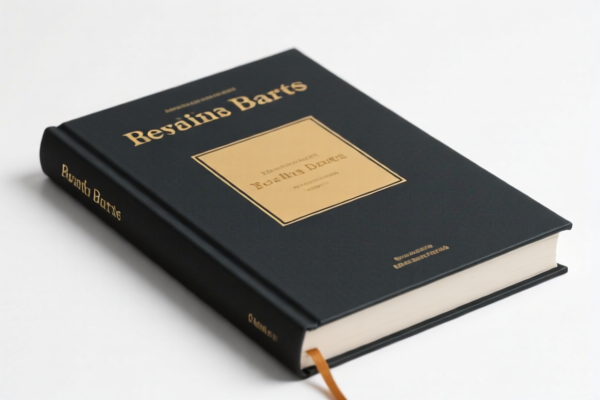
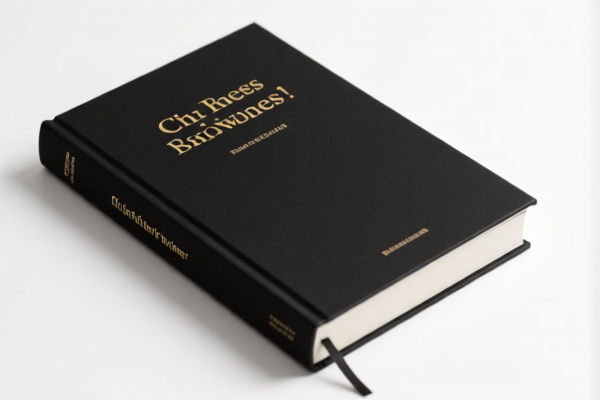


AI Analysis
📚 Book Cover (Printed Matter for Books)
🌐 HS Code Reference & Customs Clearance Guide | 2026 Latest Tariff Analysis | Professional Compliance Strategy
📌 I. Product Definition & Classification: What Exactly is a "Book Cover"?
A "Book Cover" in the context of international trade and customs classification rarely refers to the final retail product (which would be classified as a printed book). Instead, it usually refers to printed paper products used in bookbinding, packaging, or specific paper goods.
In the provided data, there is no specific HS Code for "Book Covers" as standalone binding materials (which might often fall under 4811 or 4823 depending on material). However, the data explicitly lists "Printed books... containing pages" and "Paper/Mâché articles."
⚠️ Critical Distinction:
- If the "Book Cover" is a printed sheet intended to be bound into a book with content (49+ pages or 5-48 pages), it is classified under Chapter 49 (Printed Books/Brochures).
- If the "Book Cover" is a molded paper pulp or papier-mâché article (e.g., a decorative box or rigid cover made of compressed paper), it falls under 4823.90.20.00.
- Note: The provided data does not include HS Codes for plain paper blanks (4811) or general paper boxes (4819). It strictly covers printed matter and papier-mâché articles.
📦 II. HS Code Classification Details (Based on Provided Data)
Since the term "Book Cover" is ambiguous, we must map it to the only relevant items in the provided.
| HS Code | Product Description | Applicable Scenario | Total Tax |
|---|---|---|---|
4901.99.00.93 |
Printed books... containing 49 or more pages each (excluding covers) | If the "cover" is part of a complete book publication with substantial content (e.g., hardcover textbooks, novels). | 7.5% |
4901.99.00.92 |
Printed books... containing 5 or more pages, but not more than 48 pages each (excluding covers) | If the "cover" is part of a thinner book, brochure, or catalog (e.g., picture books, manuals, thin catalogs). | 7.5% |
4823.90.20.00 |
Of papier-mâché | If the "book cover" is made of molded paper pulp/papier-mâché (e.g., decorative rigid boxes, display stands for books) and not just a printed paper sheet. | 25.0% |
🔍 Key Insight:
- Most standard printed book covers are considered integral parts of the "Book." Therefore, they are not classified separately but with the book itself.
- If you are importing standalone printed paper covers (unbound) that will be sent to a binder, Customs may still classify them under 4901 if they are printed matter, or 4823 if they are cut-to-shape paper articles.
- Never classify a printed book cover as "Paper Machinery Parts" or "General Paper" if it contains printed text/images related to book content; use 4901.
💰 III. 2026 Latest Tariff Rate Details (Including Additional Taxes)
✅ Applicable Country: United States (US)
✅ Origin: China (CN)
✅ Effective Date: Post-2025 (Current Trade Environment)
🎯 1. 4901.99.00.93 & 4901.99.00.92 —— Printed Books (Including Covers)
| Item | Content |
|---|---|
| Base Tariff | 0.0% (ad valorem) |
| Section 301 Additional Tariff | +7.5% |
| Total Tax Rate | 7.5% |
| Tax Calculation | CIF Value × 7.5% |
| De Minimis Exemption | ❌ No (Generally, printed matter under $800 may be exempt under de minimis, but commercial shipments above $800 are subject to tax. Note: The data shows a specific 7.5% total, implying commercial import). |
| Legal Basis | HTSUS 4901.99.00.92/93 + Section 301 Footnote |
📌 Explanation:
- The 7.5% rate is specific to "Other printed books/brochures" under Section 301.
- This is significantly lower than the 25% rate for other paper products.
- Crucial: Ensure the item is declared as "Printed Book/Brochure" and not "Paper Goods" to benefit from the lower rate.
🎯 2. 4823.90.20.00 —— Papier-Mâché Articles (e.g., Decorative Book Boxes/Covers)
| Item | Content |
|---|---|
| Base Tariff | 0.0% |
| Section 301 Additional Tariff | +25.0% |
| Total Tax Rate | 25.0% |
| Tax Calculation | CIF Value × 25.0% |
| De Minimis Exemption | ❌ No |
| Legal Basis | HTSUS 4823.90.20.00 + Section 301 Footnote |
📌 Explanation:
- If the "cover" is made of molded paper pulp (rigid, thick, structural) rather than flexible printed paper, it falls here.
- The rate is 3.33x higher than printed books.
- Misclassifying a papier-mâché box as a printed book could lead to underpayment penalties.
🛠️ IV. Customs Clearance Practical Advice (Real-World Pitfall Avoidance)
✅ 1. Documentation Checklist (Non-Negotiable)
| Document | Must Provide | Explanation |
|---|---|---|
| ✅ Commercial Invoice | ✔️ | Clearly state: "Printed Book Cover, Part of Printed Book" OR "Papier-Mâché Book Display Box" |
| ✅ Product Photos | ✔️ | Show the item with text/images to prove it's printed matter (for 4901) OR show the material texture (for 4823). |
| ✅ Page Count Statement | ✔️ | If claiming 4901, specify: "Part of a book with 120 pages" or "Part of a catalog with 40 pages". |
| ✅ Material Declaration | ✔️ | Specify: "Paper, offset print" (for 4901) vs. "Compressed paper pulp, molded" (for 4823). |
✅ 2. Classification Strategy (Key Mnemonic)
🔥 "Printed Text = Chapter 49 (7.5%); Molded Pulp = Chapter 48 (25%)"
| Scenario | Correct HS Code | Risk if Incorrect |
|---|---|---|
| Standard Book Cover (Attached to a book or intended for a book with 49+ pages) | 4901.99.00.93 |
Misclassifying as "Paper Goods" (4823) → 25% Tax (High Cost!) |
| Thin Book Cover (Intended for a book with <49 pages) | 4901.99.00.92 |
Same as above |
| Rigid Decorative Box (Made of molded paper for storing books) | 4823.90.20.00 |
Misclassifying as "Book" → Customs Seizure (False Declaration) |
| Plain Blank Covers (No print) | Not in Data | Likely 4811 or 4823.90.80.00 (25% tax). Note: Data does not provide 4811. |
📌 Warning:
- Do NOT declare printed covers as "Unprinted Paper" to avoid tax. If they are printed, they must go under 4901 or 4823.
- Do NOT group "Book Covers" with "Electronic Devices" or "Plastic Parts" to reduce tax. This is fraud.
✅ 3. Special Handling
| Situation | Handling Advice |
|---|---|
| OEM Book Covers (Blank, to be printed later) | If unprinted, they are NOT in the provided data. Likely 4823.90.80.00 (25%). |
| Digital Books with Covers? | No. Physical goods only. |
| Hybrid Materials (Paper cover + Plastic window) | If paper is dominant, use 4823. If plastic is dominant, use 3926 (Not in data). |
🌍 V. Global Market Comparison (2026 Latest)
| Country/Region | Recommended HS Code | Tariff | Notes |
|---|---|---|---|
| 🇺🇸 USA | 4901.99.00.93/92 |
7.5% | Lowest rate for printed matter. |
| 🇺🇸 USA | 4823.90.20.00 |
25.0% | For molded/pulp items. |
| 🇪🇺 EU | 4901.99.90 |
0%* | Generally duty-free for printed books. |
| 🇨🇳 China | 4901.99.00 |
10% | Import duty for foreign printed books. |
📌 Conclusion:
- USA imposes a 7.5% surcharge on printed books (Section 301).
- Molded paper products face a 25% surcharge in the USA.
- Strategy: If possible, ensure the product is classified as "Printed Matter" (4901) rather than "Paper Articles" (4823) to save 17.5% in tariffs.
📌 VI. Common Mistakes & Pitfalls (Lessons from Tears)
❌ Mistake 1: Declaring a printed book cover as "Paper Packaging" (4819)
👉 Consequence: If classified under 4823.90.80.00 (Other paper articles), tax is 25%.
✅ Fix: If it has printed text, it belongs to 4901 (7.5%).
❌ Mistake 2: Ignoring the page count distinction
👉 Consequence: Declaring a 50-page book cover under 4901.99.00.92 (≤48 pages) is incorrect.
✅ Fix: Use 4901.99.00.93 for 49+ pages.
❌ Mistake 3: Confusing "Book Cover" with "Book"
👉 Consequence: Declaring a loose, printed cover as a "Book" without content may be rejected.
✅ Fix: Declare as "Printed Paper Matter for Bookbinding" or ensure it is shipped as part of a complete book.
🎯 VII. Conclusion: Professional Declaration, Lower Costs!
🎯 Remember the Rule:
🔹 "Printed Content = 7.5% (4901); Molded Pulp = 25% (4823)"
🔹 "Don't let a 25% tax ruin a 7.5% product!"
📌 Pro Tip:
If your "Book Cover" is unprinted and made of regular paper, it is NOT covered in the provided data. You will likely face 25% tax under 4823.90.80.00. To avoid this, consider if it can be classified as a different article or negotiate pricing with the 25% tax in mind.
📣 Immediate Action:
📞 Verify Material: Is it printed paper (4901) or molded pulp (4823)?
📄 Declare Accurately: Specify "Printed" vs. "Unprinted" and "Page Count" if part of a book.
🚀 Save 17.5%: By correctly choosing 4901 over 4823!
✨ Professional Customs Clearance Starts with Accurate Classification!
💼 Every percentage point matters in global trade!
Customer Reviews
About HS Code Classification
The Harmonized System (HS) is an internationally standardized nomenclature developed by the World Customs Organization (WCO) to classify traded products. Over 200 countries use the HS system as the basis for customs tariffs, trade statistics, and import/export regulations.
Each HS code follows a hierarchical structure:
- Chapter (2 digits) — Broad category of goods (e.g., Chapter 84: Machinery and Mechanical Appliances)
- Heading (4 digits) — More specific grouping within the chapter
- Subheading (6 digits) — Internationally standardized breakdown, used by all WCO member countries
- National subdivisions (8-10 digits) — Country-specific extensions for further classification, such as US HTSUS 10-digit codes
Correct HS code classification is essential for smooth customs clearance, accurate duty payment, and compliance with trade regulations. Misclassification can lead to customs delays, overpayment of duties, or penalties.
When importing from CN to US, the applicable tariff rates may include:
- Most-Favored-Nation (MFN) rate — The standard duty rate applied to WTO members
- General rate — Applied to countries without trade agreements
- Trade remedy duties — Additional tariffs such as Section 301 (anti-dumping), Section 232 (national security), or countervailing duties
The information provided on this page is for reference purposes only. For official classification, please consult with your local customs authority or a licensed customs broker.