Book Set
CN → US| HS Code | Tariff Rate | Origin | Destination | Doc |
|---|---|---|---|---|
| 490110 | 0.0% | CN | US | Official Doc |
| 490199 | 0.0% | CN | US | Official Doc |
| 4901990093 | 17.5% | CN | US | Official Doc |
| 4901990092 | 17.5% | CN | US | Official Doc |
| 4820102010 | 35.0% | CN | US | Official Doc |
| 4820102060 | 35.0% | CN | US | Official Doc |
Product Images
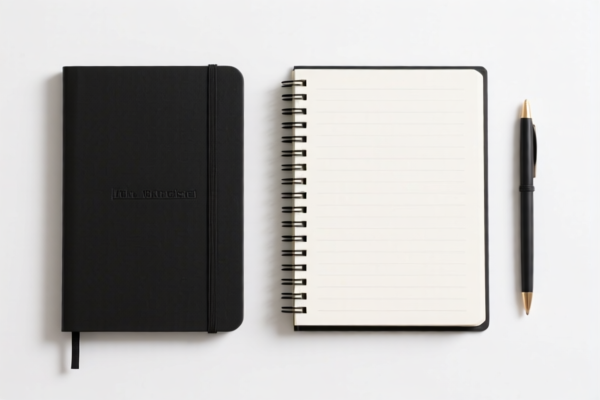
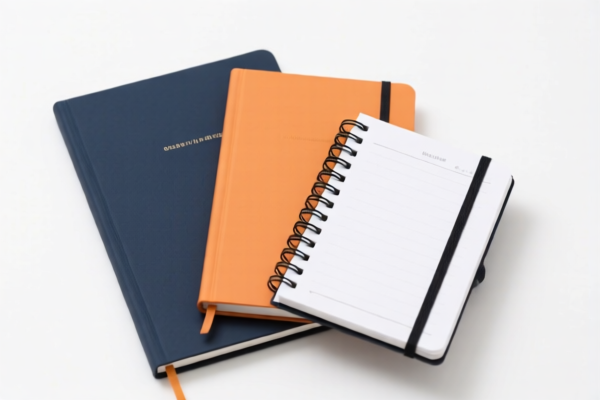
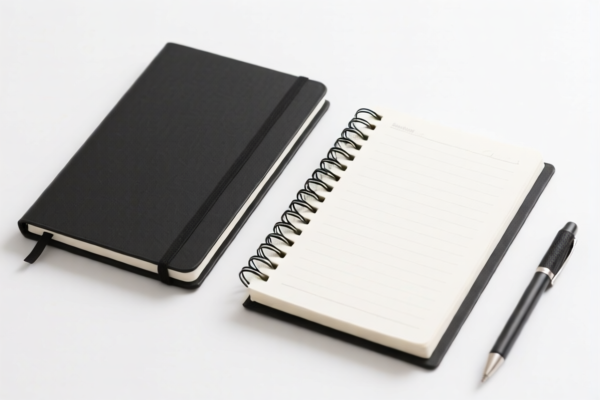

AI Analysis
📚 Printed Books & Book Sets (Paper-Based Stationery & Publications)
🌐 HS Code Reference & Customs Clearance Guide | 2026 Latest Tariff Analysis | Professional Clearance Strategy
📌 I. Product Definition & Classification: Do You Really Understand "Book Sets"?
Printed books, brochures, and book sets are foundational trade commodities in the paper and publishing industry. In international trade, they are strictly categorized by page count, binding type, and content nature. Misclassification often leads to significant tariff discrepancies due to the specific "48-page" threshold in US customs rulings.
Printed Matter (Books, Brochures, Leaflets): Typically classified under Chapter 49. Key differentiator is whether it is a "single sheet" or "bound," and specifically, the number of pages.
⚠️ Critical Distinction: - If the item contains 49 pages or more (excluding covers), it is classified as a "Book" (
4901.99.00.93). - If the item contains 5 to 48 pages (excluding covers), it is classified as a "Leaflet/Brochure" (4901.99.00.92). - If it is a Diary/Notebook with specific binding, it may fall under Stationery (4820.10) instead of Books (4901).
📦 II. HS Code Classification Details (2026 Latest Tariff Authority Comparison)
| HS Code | Product Description | Key Criteria | Tax Rate (China Origin) |
|---|---|---|---|
4901.99.00.93 |
Printed books, brochures, leaflets... Containing 49 or more pages each (excluding covers) | Bound printed matter, high page count. Includes book sets without electronic components. | 7.5% |
4901.99.00.92 |
Printed books, brochures, leaflets... Containing 5 or more pages each, but not more than 48 pages each (excluding covers) | Smaller printed matter, pamphlets, thin booklets. | 7.5% |
4820.10.20.10 |
Registers, account books, diaries... Diaries, notebooks and address books, bound; memorandum pads, letter pads... Diaries and address books | Stationery category. Specific diaries/addresses. | 25.0% |
4820.10.20.60 |
Registers, account books, notebooks... Diaries, notebooks and address books, bound... Other | Stationery category. Other bound notebooks/stationery not specified as diaries/addresses. | 25.0% |
4901.10 |
Books, brochures, and other printed matter... bound in covers of paper or paperboard, not containing electronic components | General bound books (Note: Tax retrieval failed in source data; see analysis below). | Error (See Notes) |
4901.99 |
Other printed books, including book sets, not specified elsewhere, bound in covers of paper or paperboard, excluding those with electronic components. | General "Other" category (Note: Tax retrieval failed in source data; see analysis below). | Error (See Notes) |
🔍 Important Note on
4901.10and4901.99:
The provided data indicates "Failed to retrieve tax information" for these broader codes. In practice, these are often parent categories for the more specific 10-digit codes (93and92). It is highly recommended to use the specific 10-digit codes (4901.99.00.93or4901.99.00.92) for accurate tariff calculation.📌 Key Reminder:
- Book Sets: If a set is bound together and exceeds 48 pages, use4901.99.00.93.
- Diaries vs. Books: A "notebook" used for writing (stationery) falls under4820(25% tax). A "printed book" for reading falls under4901(7.5% tax). Do not confuse them!
💰 III. 2026 Latest Tariff Rate Breakdown (Detailed Tax Clauses)
✅ Applicable Country: United States (US)
✅ Country of Origin: China (CN)
✅ Effective Date: Post-2025/2026 Trade Policies (Based on 301 Duties & Base Rates)
🎯 1. 4901.99.00.93 & 4901.99.00.92 —— Printed Books & Leaflets
| Item | Details |
|---|---|
| Product Type | Printed books (≥49 pages) / Leaflets (5-48 pages) |
| Base Tariff | 0.0% (Ad valorem) |
| Section 301 Additional Duty | +7.5% (Applied to Chinese origin goods in this category) |
| Total Tariff Rate | 7.5% |
| Tax Calculation | CIF Value × 7.5% |
| De Minimis Exemption | ❌ Not Applicable for Section 301 duties above the threshold (Note: Small packages may have different rules, but high-volume imports are subject). |
| Legal Basis | Harmonized Tariff Schedule of the United States (HTSUS) Chapter 49 |
📌 Explanation:
- Unlike many industrial goods which face 25% tariffs, printed paper products currently face a lower 7.5% additional duty.
- This rate applies regardless of whether the pages are 50 or 500, as long as they are "printed matter."
- Crucial: Ensure the item is purely printed (no e-books, no CDs/DVDs included). If electronic components are present, the classification changes entirely.
🎯 2. 4820.10.20.10 & 4820.10.20.60 —— Diaries, Notebooks, Stationery
| Item | Details |
|---|---|
| Product Type | Bound Diaries, Notebooks, Address Books, Memorandum Pads |
| Base Tariff | 0.0% (Ad valorem) |
| Section 301 Additional Duty | +25.0% (Standard 301 rate for many Chinese goods) |
| Total Tariff Rate | 25.0% |
| Tax Calculation | CIF Value × 25.0% |
| De Minimis Exemption | ❌ Subject to 301 Duties |
| Legal Basis | HTSUS Chapter 48 (Paper and Paperboard) |
📌 Critical Warning:
- If your "Book Set" is actually a Notebook Set or Diary Set (intended for writing, not reading), the tariff jumps from 7.5% to 25%.
- Do not misclassify a printed reading book as a notebook to avoid higher duties; this is customs fraud.
- However, if you are selling blanks notebooks (stationery), you must accept the 25% rate.
🛠️ IV. Customs Clearance Operational Advice (Practical Pitfall Guide)
✅ 1. Essential Documentation Checklist
| Document | Required? | Purpose |
|---|---|---|
| ✅ Product Specification Sheet | ✔️ | Must clearly state page count (including blank pages if bound in) and binding type. |
| ✅ Product Photos | ✔️ | Show the product bound. If it's a "Book Set," show how they are packaged (together or separate?). |
| ✅ Commercial Invoice | ✔️ | Description must be precise: e.g., "Printed Book, 200 pages, Hardcover" vs. "Blank Notebook, 100 pages." |
| ✅ Bill of Lading / Air Waybill | ✔️ | Weight and volume calculations must match the HS Code declaration. |
| ✅ No Electronic Components Declaration | ✔️ | Explicitly state "No e-readers, no audio CDs, no digital chips" to avoid Chapter 85 misclassification. |
✅ 2. Declaration Strategy (Key Mantra)
🔥 "Page Count is King! 49 is the Line! Binding Defines the Code!"
| Scenario | Correct HS Code | Risk of Wrong Code |
|---|---|---|
| Printed Novel, 300 pages | 4901.99.00.93 (7.5%) |
Declaring as 4820 (25%) → Overpay 17.5% |
| Promotional Brochure, 10 pages | 4901.99.00.92 (7.5%) |
Declaring as 4901.99.00.93 → Minor error, but check page count strictly. |
| Diary with Lock/Leather Cover | 4820.10.20.10 (25%) |
Declaring as 4901 (7.5%) → Underpayment, High Audit Risk! |
| Notebook Set (Blank Paper) | 4820.10.20.60 (25%) |
Declaring as 4901 (7.5%) → Fraud/Seizure Risk |
📌 Pro Tip:
- For "Book Sets" (multiple books in a box): If each book is ≥49 pages, use4901.99.00.93.
- If the set is a single bound volume containing multiple chapters (total ≥49 pages), use4901.99.00.93.
- If the set is a collection of thin booklets (<49 pages each), use4901.99.00.92.
✅ 3. Special Circumstances Handling
| Situation | Handling Advice |
|---|---|
| Book + USB Drive Included | ❌ Do NOT use 4901 codes. This may be classified as a multimedia product (e.g., Chapter 85 or 90). Tax and classification will change significantly. |
| Electronic Book Reader | ❌ Not 4901. Classify under 8528 (Monitors) or 8543 (Other Electrical Machines). |
| Custom Print-on-Demand | Provide proof of content to differentiate between "Reading Material" (4901) and "Blank Stationery" (4820). |
| Gift Sets (Books + Merchandise) | If books are <50% of value, customs may classify the whole set by the primary item. If it's a "Book + Toy," the toy might dictate classification. |
🌍 V. Global Market Clearance Comparison (2026 Latest)
| Country/Region | Recommended HS Code | Tariff (China Origin) | Key Certification | Notes |
|---|---|---|---|---|
| 🇺🇸 USA | 4901.99.00.93 |
7.5% | None | Low duty for printed matter. |
| 🇺🇸 USA | 4820.10.20.xx |
25.0% | None | High duty for notebooks/diaries. |
| 🇪🇺 EU | 4901 |
0% | None | Generally duty-free for books. |
| 🇨🇳 China | 4901 |
0% - 6% | None | Varies by specific sub-category. |
| 🇯🇵 Japan | 4901 |
0% - 6% | None | Often 0% for educational books. |
📌 Conclusion:
- USA is the only major market with significant duties on printed paper goods (7.5% for books, 25% for stationery).
- EU and Japan are generally more favorable (0-6%) for printed books.
- Cost Optimization: Ensure your "Notebooks" are clearly marketed and described as Stationery if they are blank, but be aware of the 25% duty. If you are importing Reading Books, the 7.5% duty is relatively low compared to electronics.
📌 VI. Common Errors & Pitfall Guide (Lessons Learned)
❌ Error 1: Counting cover pages in the "Page Count"
👉 Consequence: Customs may reclassify a 48-page book + cover as 49 pages, or vice versa. Always exclude covers in your internal count, but declare clearly "Excluding Covers."
❌ Error 2: Confusing "Book" with "Notebook"
👉 Consequence: Declaring a blank notebook as a "printed book" to save tax leads to seizure and heavy fines. The content (text vs. blank lines) is the deciding factor.
❌ Error 3: Ignoring Electronic Components in "Book Sets"
👉 Consequence: If a book set includes an QR code leading to audio/video, or an embedded chip, it is NOT simple printed matter. It may be classified under Chapter 85.
❌ Error 4: Using Broad Codes (4901.10) without 10-digit specificity
👉 Consequence: "Failed to retrieve tax information." Always use the 10-digit HTSUS code (4901.99.00.93 or 4901.99.00.92) for accurate duty calculation.
✅ Correct Practice:
"Printed Book Set: 'XYZ Series', Hardcover, 3 Volumes. Each volume: 250 pages, text-only, no electronics. HS: 4901.99.00.93."
🎯 VII. Conclusion: Professional Declaration, Cost Control!
🎯 Remember the Mantra:
🔹 "Pages ≥ 49? Use .93. Pages 5-48? Use .92. Diaries/Notebooks? Use .4820 (25%)!"
🔹 "No Electronics! Pure Paper! 7.5% Duty Wins!"
📌 Pro Tip:
If your "Book Set" is educational or religious, check for specific exemptions in your destination country. In the US, most printed books still face the 7.5% duty, but always verify the latest Section 301 Exclusions list for the current year.
📣 Immediate Action:
📞 Verify Page Count! Count every leaf of text.
📸 Document Content! Photos must show text vs. blank lines.
🚀 Declare Accurately! Avoid the 25% stationery trap for your reading books.
✨ Professional Clearance Starts with Precise Classification!
💼 Your Paper Profit Margin is Worth Protecting!
Customer Reviews
About HS Code Classification
The Harmonized System (HS) is an internationally standardized nomenclature developed by the World Customs Organization (WCO) to classify traded products. Over 200 countries use the HS system as the basis for customs tariffs, trade statistics, and import/export regulations.
Each HS code follows a hierarchical structure:
- Chapter (2 digits) — Broad category of goods (e.g., Chapter 84: Machinery and Mechanical Appliances)
- Heading (4 digits) — More specific grouping within the chapter
- Subheading (6 digits) — Internationally standardized breakdown, used by all WCO member countries
- National subdivisions (8-10 digits) — Country-specific extensions for further classification, such as US HTSUS 10-digit codes
Correct HS code classification is essential for smooth customs clearance, accurate duty payment, and compliance with trade regulations. Misclassification can lead to customs delays, overpayment of duties, or penalties.
When importing from CN to US, the applicable tariff rates may include:
- Most-Favored-Nation (MFN) rate — The standard duty rate applied to WTO members
- General rate — Applied to countries without trade agreements
- Trade remedy duties — Additional tariffs such as Section 301 (anti-dumping), Section 232 (national security), or countervailing duties
The information provided on this page is for reference purposes only. For official classification, please consult with your local customs authority or a licensed customs broker.