Bottle Bag
CN → USProduct Images
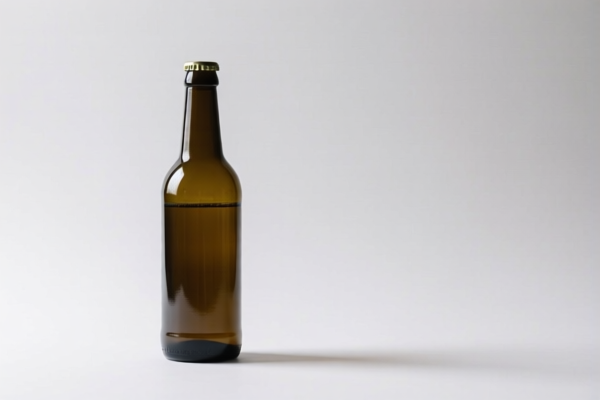
AI Analysis
🍾 Bottle Bag (Insulated Food or Beverage Bags & Similar Containers)
🌐 HS Code Reference & Customs Clearance Guide | 2026 Tariff Analysis | Professional Compliance Strategy
📌 I. Product Definition & Classification: What Exactly is a "Bottle Bag"?
In international trade, the term "Bottle Bag" is not a single HS Code but a functional description that maps to specific headings depending on material, insulation properties, and specific use. Based on the provided data, we identify three distinct categories:
- Insulated Beverage Bags: Specifically designed to keep drinks hot/cold, typically with outer surfaces of textile materials or plastics.
- General Plastic Articles (Handbags): Plastic bags or containers shaped like handbags, not necessarily insulated.
- General Textile/Plastic Containers: Non-insulated bags made of leather substitutes, plastics, or textiles for carrying bottles or other items.
⚠️ Key Distinction Point:
- Is it insulated? → Look at Heading 4202 (Traveling bags, insulated food/beverage bags).
- Is it plastic and shaped like a handbag? → Look at Heading 3926 (Articles of plastics).
- Is it a paper/cardboard packaging container? → Look at Heading 4819 (Though less common for reusable "bags," it covers "sacks and bags").
📦 II. HS Code Classification Matrix (Based on Provided Data)
| HS Code | Product Description | Material / Type | Key Feature |
|---|---|---|---|
4202.92.08.09 |
Insulated food or beverage bags, with outer surface of textile materials | Textile | Insulated |
4202.92.91.00 |
Other containers of man-made fibers (not jewelry boxes) | Man-made Fibers (Textile) | Non-insulated, general purpose |
3926.90.33.00 |
Handbags (Plastic articles) | Plastics | Shaped like handbags, plastic material |
4819.40.00.40 |
Other sacks and bags, of paper/paperboard | Paper/Cardboard | Disposable or semi-rigid packaging |
4819.50.40.60 |
Other packing containers, of paper/paperboard | Paper/Cardboard | Rigid boxes/containers |
🔍 Critical Note:
- Insulated bags (4202) generally enjoy 0% duty (under current data context), making them highly competitive.
- Plastic handbag-style bottles bags (3926) incur a 6.5% duty.
- Paper/Cardboard (4819) are subject to 25% additional tariffs if imported into specific markets (e.g., US under Section 301).
💰 III. 2026 Tariff Rate Detailed Breakdown
✅ Applicable Market Context: Based on the provided tax details (Base + Additional), these rates reflect US Import Duties from China (or similar markets with Section 301/IEEPA tariffs).
🎯 1. 4202.92.08.09 – Insulated Beverage Bags (Textile Outer)
| Item | Detail |
|---|---|
| Product | Insulated food or beverage bags, outer surface of textile materials, "Other" |
| Base Tariff | 0.0% |
| Additional Tariff | 0.0% |
| Total Effective Rate | 0.0% |
| Tax Detail | "基础关税: 0.0%, 加征关税: 0.0%" |
| Legal Basis | Heading 4202 (Traveling bags, insulated food or beverage bags...) |
📌 Explanation:
- This is the most favorable classification for reusable, insulated bottle bags made of fabric (e.g., neoprene, polyester with insulation).
- No additional tariffs apply in this specific data set, offering significant cost advantages.
- Recommendation: If your product is insulated, insist on this classification if possible.
🎯 2. 4202.92.91.00 – Other Containers of Man-Made Fibers
| Item | Detail |
|---|---|
| Product | Trunks, suitcases, etc. (Other containers), with outer surface of textile materials, of man-made fibers |
| Base Tariff | 0.0% |
| Additional Tariff | 0.0% |
| Total Effective Rate | 0.0% |
| Tax Detail | "基础关税: 0.0%, 加征关税: 0.0%" |
| Legal Basis | Heading 4202 (Non-insulated, textile containers) |
📌 Explanation:
- Applies to non-insulated tote bags or bottle carriers made of synthetic textiles.
- Also 0% total duty in this dataset.
- Caveat: Must not be primarily for jewelry boxes (excluded).
🎯 3. 3926.90.33.00 – Plastic Handbags (Bottle Bags)
| Item | Detail |
|---|---|
| Product | Other articles of plastics: Handbags (Beads, bugles, etc. excluded) |
| Base Tariff | 6.5% |
| Additional Tariff | 0.0% |
| Total Effective Rate | 6.5% |
| Tax Detail | "基础关税: 6.5%, 加征关税: 0.0%" |
| Legal Basis | Heading 3926 (Other articles of plastics) |
📌 Explanation:
- Applies to plastic bottle bags that resemble handbags (e.g., PVC clear tote bags for wine bottles).
- 6.5% is significantly higher than the 0% for textile/insulated bags.
- Risk: If misclassified as insulated textile, it could face audits.
🎯 4. 4819.40.00.40 & 4819.50.40.60 – Paper/Cardboard Packaging Bags
| Item | Detail |
|---|---|
| Product | Paper/Cardboard sacks, bags, or rigid containers |
| Base Tariff | 0.0% |
| Additional Tariff | 25.0% |
| Total Effective Rate | 25.0% |
| Tax Detail | "基础关税: 0.0%, 加征关税: 25.0%" |
| Legal Basis | Heading 4819 (Packing containers of paper) |
📌 Explanation:
- Applies to disposable paper bag bottles carriers or rigid cardboard wine boxes.
- Despite 0% base duty, the 25% additional tariff makes it costly.
- Common Use: Gift packaging, single-use retail carriers.
🛠️ IV. Customs Clearance Practical Advice
✅ 1. Documentation Requirements
| Document | Required? | Notes |
|---|---|---|
| Product Specification Sheet | ✅ Yes | Clearly state: "Insulated," "Material: Polyester/Nylon," "Lining: PEVA/Aluminum Foil" |
| Material Composition | ✅ Yes | For 4202: Textile outer + insulation core. For 3926: 100% PVC/Plastic. |
| Photos of Lining | ✅ Yes | Crucial to prove insulation for 4202.92.08.09. Without visible insulation, customs may downgrade to 3926 or 6307. |
| Commercial Invoice | ✅ Yes | Describe as: "Insulated Beverage Carrier, Textile Outer, for Wine Bottles" |
| Packing List | ✅ Yes | Show unit packaging. If sold in paper boxes, ensure the box is not the primary customs entry item. |
✅ 2. Classification Strategy & Risk Mitigation
🔥 "Insulation is Key, Material is King!"
| Scenario | Recommended HS Code | Duty Rate | Why? |
|---|---|---|---|
| Reusable, Fabric, Insulated Bag | 4202.92.08.09 |
0% | Best option. Fits "Insulated food or beverage bags." |
| Reusable, Fabric, Non-Insulated | 4202.92.91.00 |
0% | Fits "Other containers... of man-made fibers." |
| Plastic Clear Tote for Wine | 3926.90.33.00 |
6.5% | Plastic material, shaped like handbag. |
| Paper/Cardboard Carrier | 4819.40.00.40 |
25% | High tariff due to additional duties. |
| Cotton Towel Bag (Misclassification Risk) | 6307.90.98.91 |
14.5% | If made of cotton textile, might fall here if not "traveling bag." |
⚠️ Warning:
- Do not classify insulated bags as "Textile Articles" (6307) if they fit4202. The latter may have better or zero duties depending on the specific footnote.
- Ensure "Insulated" is explicitly mentioned in the product description and shown in photos. Customs officers often default to plastic (3926) or textile (6307) if insulation isn't visually apparent.
✅ 3. Common Mistakes to Avoid
| Mistake | Consequence | Solution |
|---|---|---|
| Calling it "Tote Bag" only | Customs may classify as 6307 (14.5%) or 4202.99 (variable) |
Use specific term: "Insulated Beverage Bag" |
| Hiding the insulation lining | Risk of downgrade to 3926 (6.5%) or 6307 |
Include clear photo of inner foil/PEVA lining |
| Mixing Paper Boxes with Bags | If declared together, the whole shipment may be taxed as paper (25%) |
Separate shipments or clearly distinguish primary item (bag) from secondary (box) |
| Ignoring "Handbag" definition | Plastic bags shaped like handbags are 3926, not 4202 |
Check material: Plastic = 3926; Textile/Insulated = 4202 |
🌍 V. Market Comparison (2026 Outlook)
| Market | Preferred HS Code | Duty Rate | Notes |
|---|---|---|---|
| 🇺🇸 USA | 4202.92.08.09 |
0% | Best for insulated textile bags. Avoid 4819 (25%). |
| 🇪🇺 EU | 4202.92 |
0-4% | Generally low duties for textiles. Check VAT rules. |
| 🇨🇳 China | 4202.92 |
~5-10% | Import duties apply. Check FTA benefits if from ASEAN. |
📌 Conclusion:
- Insulated Textile Bags (4202.92.08.09) are the most tariff-efficient in the US market (0% total).
- Plastic Bags (3926) are moderate (6.5%).
- Paper/Cardboard (4819) are expensive (25%) due to additional tariffs.
📌 VI. Expert Tips for Smooth Clearance
- Pre-Ruling: For high-volume shipments, consider applying for an Advance Ruling with US Customs (CBP) to confirm
4202.92.08.09classification. - Labeling: Ensure the product label says "Insulated Beverage Carrier" and lists material composition (e.g., "Outer: 600D Polyester, Lining: PEVA Foam").
- Sample Submission: If customs challenges classification, submit a physical sample demonstrating the insulation layer.
- Avoid "Handbag" for Textiles: If the bag is clearly for bottles and insulated, do not use "Handbag" in the description, as it might trigger
3926(if plastic) or4202.99(if textile, potentially higher duty than08.09).
🎯 VII. Final Summary
🎯 Key Takeaway:
🔹 Insulated + Textile =
4202.92.08.09(0% Duty) – OPTIMAL
🔹 Plastic + Handbag Style =3926.90.33.00(6.5% Duty) – MODERATE
🔹 Paper/Cardboard =4819.40.00.40(25% Duty) – AVOID IF POSSIBLE
📌 Action Item:
📞 Verify Insulation: Ensure your manufacturing specs include a visible insulation layer.
📦 Document Clearly: Invoice and packing list must specify "Insulated Beverage Bag."
🚀 Maximize Savings: Leverage the 0% duty rate for insulated textile bags to stay competitive in the US market.
✨ Professional Clearance, Precision Classification, Cost Efficiency!
💼 Don't let a 25% tariff erase your profit. Classify correctly today!
Customer Reviews
About HS Code Classification
The Harmonized System (HS) is an internationally standardized nomenclature developed by the World Customs Organization (WCO) to classify traded products. Over 200 countries use the HS system as the basis for customs tariffs, trade statistics, and import/export regulations.
Each HS code follows a hierarchical structure:
- Chapter (2 digits) — Broad category of goods (e.g., Chapter 84: Machinery and Mechanical Appliances)
- Heading (4 digits) — More specific grouping within the chapter
- Subheading (6 digits) — Internationally standardized breakdown, used by all WCO member countries
- National subdivisions (8-10 digits) — Country-specific extensions for further classification, such as US HTSUS 10-digit codes
Correct HS code classification is essential for smooth customs clearance, accurate duty payment, and compliance with trade regulations. Misclassification can lead to customs delays, overpayment of duties, or penalties.
When importing from CN to US, the applicable tariff rates may include:
- Most-Favored-Nation (MFN) rate — The standard duty rate applied to WTO members
- General rate — Applied to countries without trade agreements
- Trade remedy duties — Additional tariffs such as Section 301 (anti-dumping), Section 232 (national security), or countervailing duties
The information provided on this page is for reference purposes only. For official classification, please consult with your local customs authority or a licensed customs broker.