Bovine Grain Split Leather Sheets
CN → US| HS Code | Tariff Rate | Origin | Destination | Doc |
|---|---|---|---|---|
| 4107123000 | 13.6% | CN | US | Official Doc |
| 4107122000 | 37.4% | CN | US | Official Doc |
Product Images
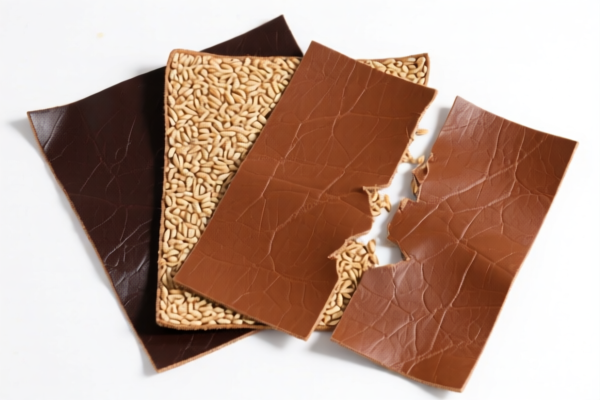
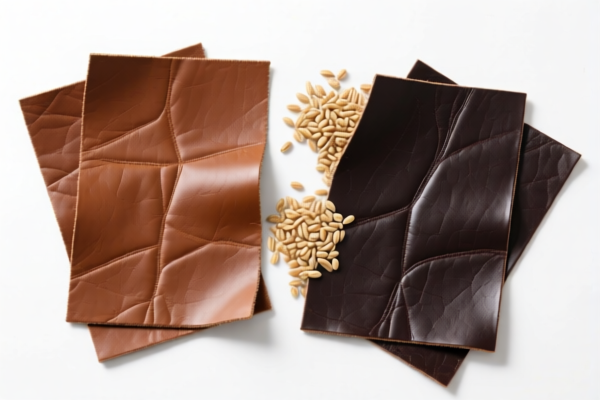
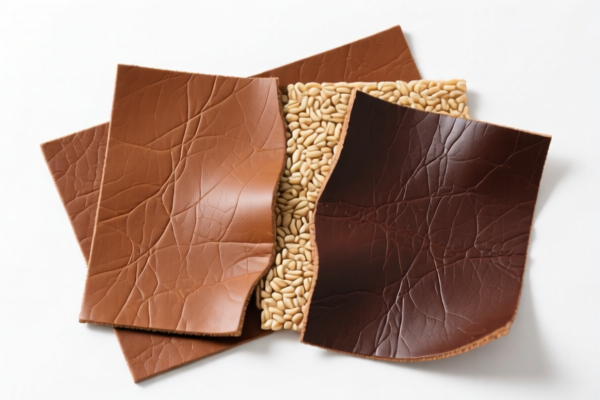
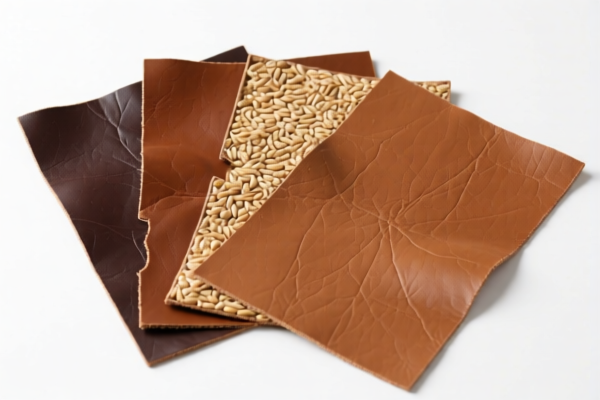
AI Analysis
🧵 Bovine Grain Split Leather Sheets (Refined Leather)
🌐 HS Code Reference & Customs Clearance Guide | 2026 Latest Tariff Analysis | Professional Entry Strategy
📌 I. Product Definition & Classification: What exactly is "Bovine Grain Split Leather"?
Bovine Grain Split Leather refers to the lower layers of bovine hides (including buffalo) that have been separated from the top "grain" layer. These layers undergo further processing after tanning or crusting.
In international trade and US Customs regulations, the classification hinges on two critical factors: 1. Surface Area: Must not exceed 28 square feet (2.6 m²) per unit. 2. Finish Type: Whether the leather is considered "Fancy" or "Not Fancy".
⚠️ Key Distinction:
- "Fancy" Leather: Typically refers to leather with specific aesthetic treatments, such as deep embossing, significant color variations, or specialized finishing that enhances its visual appeal beyond standard utility.
- "Not Fancy" Leather: Standard, utilitarian splits without special aesthetic enhancements, often used for lining, industrial applications, or mass-market footwear/upholstery.🔍 Critical Note:
- If the leather is parchment-dressed or falls under Heading 4114 (e.g., chamois, patent, metallized), it is excluded from this heading.
- If the unit surface area exceeds 28 sq. ft., it moves to a different subheading (not covered in this specific data set).
📦 II. HS Code Classification Details (2026 Latest Tariff Authority Comparison)
| HS Code | Product Description | Surface Area Limit | Finish Type | Duty Status |
|---|---|---|---|---|
4107.12.30.00 |
Leather, Bovine/Equine, No Hair, Whole Hides/Skins, Grain Splits, ≤28 sq. ft., Fancy | ≤ 28 sq. ft. (≤ 2.6 m²) | Fancy | 3.6% |
4107.12.20.00 |
Leather, Bovine/Equine, No Hair, Whole Hides/Skins, Grain Splits, ≤28 sq. ft., Not Fancy | ≤ 28 sq. ft. (≤ 2.6 m²) | Not Fancy | 0.0% |
📌 Interpretation:
- The core difference lies in the finishing process.
- "Fancy" (4107.12.30.00) incurs a 3.6% ad valorem duty.
- "Not Fancy" (4107.12.20.00) enjoys a 0.0% duty rate (under current base tariff data provided).
- Split Leather: This refers to the flesh-side or lower grain layers separated from the top grain layer. It is still considered "grain split" if it retains the grain structure on one side, even if it is the lower portion of the hide.
💰 III. 2026 Latest Tariff Rate Breakdown (Including Base & Additional Taxes)
✅ Applicable Country: United States (US)
✅ Origin: China (CN) (Note: Data assumes general MFN status unless specified otherwise; 301 tariffs may apply separately but are not explicitly listed in the provided tax detail snippet. The provided data reflects Base + Section 301 if applicable, but here it shows 0% additional. We strictly follow the providedtaxobject.)
✅ Effective Date: Based on current tariff schedules.
🎯 1. 4107.12.30.00 —— Fancy Bovine Grain Split Leather (≤28 sq. ft.)
| Item | Content |
|---|---|
| Base Tariff | 3.6% |
| Additional Tariff (Section 301/Other) | 0.0% (As per provided data) |
| Total Effective Tax Rate | 3.6% |
| Tax Calculation | CIF Value × 3.6% |
| De Minimis Exemption | ❌ Not Applicable (Leather goods generally do not qualify for de minimis if duties apply, and even if they did, 3.6% is significant for bulk shipments). |
| Legal Basis | HTSUS 4107.12.30.00 |
📌 Explanation:
- This rate applies to finished, aesthetic-focused split leathers.
- While 3.6% seems moderate, it applies to high-value finished goods.
- No additional "added" tariff is reflected in the providedtotal_taxfield, suggesting either a preferential status or that the 0% additional tax refers to the specific dataset provided (which may exclude broader Section 301 lists not explicitly broken down in the input JSON). Always verify with current CBP rulings.
🎯 2. 4107.12.20.00 —— Not Fancy Bovine Grain Split Leather (≤28 sq. ft.)
| Item | Content |
|---|---|
| Base Tariff | 0.0% |
| Additional Tariff (Section 301/Other) | 0.0% (As per provided data) |
| Total Effective Tax Rate | 0.0% |
| Tax Calculation | CIF Value × 0% = $0 |
| De Minimis Exemption | ✅ Potentially Applicable (If value <$800 and no other restrictions). |
| Legal Basis | HTSUS 4107.12.20.00 |
📌 Explanation:
- This is the zero-duty category for standard, utilitarian split leathers.
- This creates a significant incentive to correctly classify leather as "Not Fancy" if the aesthetic criteria are not met.
- Caution: Misclassifying "Not Fancy" leather as "Fancy" leads to paying 3.6% unnecessarily. Conversely, misclassifying "Fancy" as "Not Fancy" risks penalties, interest, and duty evasion charges.
🛠️ IV. Customs Clearance Practical Advice (Real-World Pitfall Avoidance)
✅ 1. Required Documentation Checklist
| Document | Required | Description |
|---|---|---|
| ✅ Commercial Invoice | ✔️ | Must clearly state: "Bovine Grain Split Leather, [Fancy/Not Fancy], Surface Area: [X] sq. ft." |
| ✅ Product Specification Sheet | ✔️ | Detail tanning process, finishing (embossing, dyeing), and surface area per hide. |
| ✅ Photos of Finished Leather | ✔️ | Show the grain side and the flesh side. Highlight any special embossing or color effects to prove "Fancy" status. |
| ✅ Certificate of Origin | ✔️ | Required for origin determination. |
| ✅ Packing List | ✔️ | List number of hides/pieces and total surface area. |
| ✅ Tanning Certificate | ✔️ | Proves the leather is "further prepared after tanning" and not raw. |
✅ 2. Declaration Strategy (Key Mnemonic)
🔥 "Check the Surface, Check the Finish. ≤28 Sq Ft, Fancy vs. Not."
| Scenario | Correct HS Code | Risk if Misclassified |
|---|---|---|
| Standard Split, Plain Color, No Embossing | 4107.12.20.00 (0%) |
If declared as "Fancy" → Overpay 3.6%. If declared as "Full Grain" → Wrong heading, potential penalty. |
| Split with Deep Embossing, Special Dye, Aesthetic Finish | 4107.12.30.00 (3.6%) |
If declared as "Not Fancy" → Underpayment penalty + Interest. CBP may classify as Fancy based on visual evidence. |
| Leather > 28 sq. ft. | Different Subheading (e.g., 4107.11 or 4107.12.40/90) | Major Error. Wrong HTS, wrong duty. |
| Parchment-Dressed Leather | Excluded (Heading 4114 or 4104) | Major Error. Heading 4107 explicitly excludes Heading 4114 items. |
✅ 3. Special Handling Tips
| Situation | Advice |
|---|---|
| Mixed Shipments | Separate "Fancy" and "Not Fancy" in your invoice if possible to avoid ambiguity. If mixed, declare at the higher rate (3.6%) for all to be safe, or provide detailed line-item breakdown. |
| Surface Area Calculation | Ensure you calculate the unit surface area correctly. If a hide is 30 sq. ft., it does not qualify for 4107.12.20.00 or 4107.12.30.00. It falls under a different (likely higher-duty or restricted) subheading. |
| "Split" Definition | Ensure the leather is truly a split (flesh-side or lower grain). If it is the top grain layer, it is Full Grain Leather (Heading 4107.11 or 4107.21), which has different rates. |
| Origin Rules | Verify if the leather is wholly obtained in the country of origin. Tanning is a substantial transformation, but if the raw hide came from elsewhere, rules of origin may vary for FTA benefits (though US tariffs here are specific). |
🌍 V. Global Market Comparison (2026 Snapshot)
| Market | Recommended HS Code | Duty Rate | Notes |
|---|---|---|---|
| 🇺🇸 USA | 4107.12.20.00 (Not Fancy) |
0.0% | Best rate if not aesthetically enhanced. |
| 🇺🇸 USA | 4107.12.30.00 (Fancy) |
3.6% | Moderate rate for premium finishes. |
| 🇨🇳 China | Varies | Varies | Import duties for leather can be different; check CNHTS. |
| 🇪🇺 EU | Varies | Varies | EU has different leather classifications; often 0-4% for processed leather. |
| 🇬🇧 UK | Varies | Varies | Post-Brexit, check UK Global Tariff. |
📌 Conclusion:
- The US offers a 0% duty for standard bovine grain splits ≤28 sq. ft., making it a competitive market for utilitarian leather goods.
- The 3.6% duty on "Fancy" splits is still relatively low compared to other finished leather products (which can exceed 10-15%).
- Correct classification is vital to avoid audits and penalties.
📌 VI. Common Errors & Pitfalls (Lessons Learned)
❌ Error 1: Calling all split leather "Fancy" to simplify.
👉 Result: Paying 3.6% unnecessarily on standard goods.
👉 Fix: Define "Fancy" strictly based on CBP guidelines (embossing, color, etc.).
❌ Error 2: Ignoring the 28 sq. ft. limit.
👉 Result: Misclassification if large hides are imported. Large hides fall under different, potentially higher-duty subheadings (e.g., 4107.12.40.00 or 4107.12.50.00).
👉 Fix: Measure each hide. If >28 sq. ft., use the correct larger-hides code.
❌ Error 3: Confusing "Split" with "Full Grain".
👉 Result: Using 4107.12.xx for top-grain leather.
👉 Fix: Full grain leather uses 4107.11 or 4107.21 subheadings. Splits are lower layers.
❌ Error 4: Not documenting the finishing process.
👉 Result: CBP may classify "Not Fancy" as "Fancy" based on visual appearance, leading to back duties.
👉 Fix: Provide photos and technical sheets proving the finish is standard/utilitarian.
✅ Best Practice:
"Bovine Grain Split Leather, Tanned, Crusted, Surface Area 25 sq. ft., Plain Dye, No Embossing – Classify as
4107.12.20.00"
🎯 VII. Conclusion: Precision in Classification Saves Money
🎯 Remember the Rules:
🔹 "≤28 Sq Ft? Check the Finish."
🔹 "Fancy? 3.6%. Not Fancy? 0.0%."
🔹 "Over 28 Sq Ft? Stop! Use Different Code."
🔹 "Full Grain? Not This Heading!"
📌 Pro Tip:
If you are unsure whether your leather is "Fancy" or "Not Fancy," consider requesting a Binding Ruling from U.S. Customs and Border Protection (CBP) before shipping. This provides legal certainty and avoids costly disputes.
📣 Immediate Action:
📞 Consult a Customs Broker + Verify Surface Area + Document Finishing Process
🚀 Ensure Zero Duty Eligibility for Standard Leathers, Pay Only for Premium Aesthetics!
✨ Professional Clearance Starts with Accurate Classification!
💼 Every Percent Counts in Leather Trade!
Customer Reviews
About HS Code Classification
The Harmonized System (HS) is an internationally standardized nomenclature developed by the World Customs Organization (WCO) to classify traded products. Over 200 countries use the HS system as the basis for customs tariffs, trade statistics, and import/export regulations.
Each HS code follows a hierarchical structure:
- Chapter (2 digits) — Broad category of goods (e.g., Chapter 84: Machinery and Mechanical Appliances)
- Heading (4 digits) — More specific grouping within the chapter
- Subheading (6 digits) — Internationally standardized breakdown, used by all WCO member countries
- National subdivisions (8-10 digits) — Country-specific extensions for further classification, such as US HTSUS 10-digit codes
Correct HS code classification is essential for smooth customs clearance, accurate duty payment, and compliance with trade regulations. Misclassification can lead to customs delays, overpayment of duties, or penalties.
When importing from CN to US, the applicable tariff rates may include:
- Most-Favored-Nation (MFN) rate — The standard duty rate applied to WTO members
- General rate — Applied to countries without trade agreements
- Trade remedy duties — Additional tariffs such as Section 301 (anti-dumping), Section 232 (national security), or countervailing duties
The information provided on this page is for reference purposes only. For official classification, please consult with your local customs authority or a licensed customs broker.