Bovine Grain Split Leather for Sofa
CN → US| HS Code | Tariff Rate | Origin | Destination | Doc |
|---|---|---|---|---|
| 411410 | 0.0% | CN | US | Official Doc |
| 392112 | 0.0% | CN | US | Official Doc |
Product Images
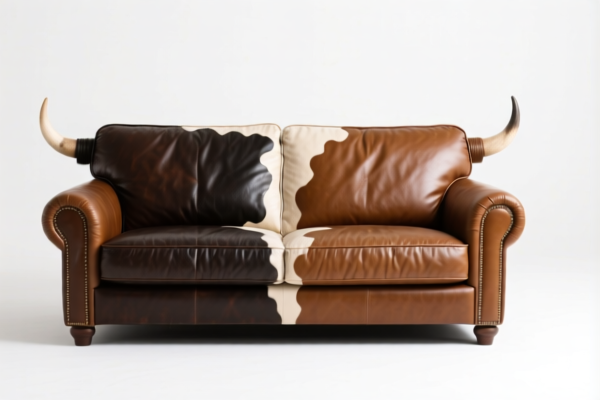
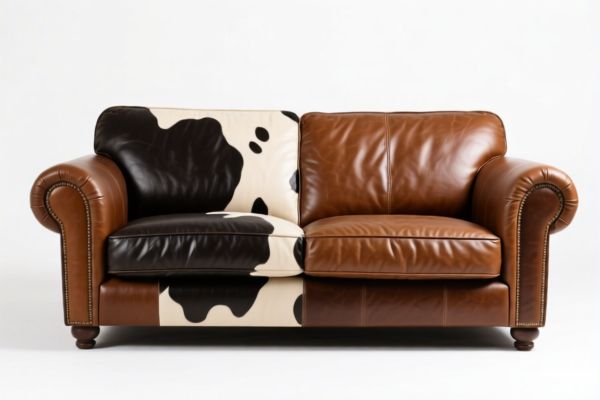
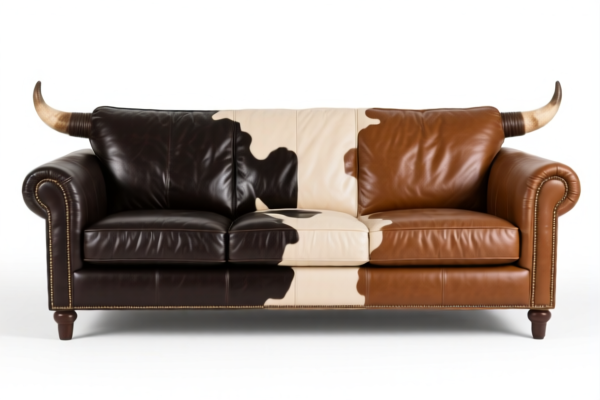
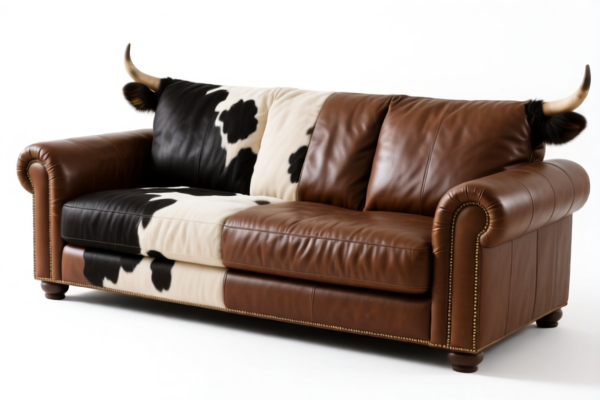
AI Analysis
🛋️ Bovine Grain Split Leather for Sofa (家具用牛粒面二层皮)
🌐 HS Code Reference & Customs Clearance Guide | 2026 Tariff Analysis | Professional Classification Strategy
📌 Part 1: Product Definition & Classification Logic
Bovine grain split leather refers to the lower layers of bovine hides that have been separated (split) from the top grain layer. Even though the "grain" surface remains visible or is restored, it is technically a "split" leather. When used in furniture (like sofas) and not further worked than being split or cut into pieces, it falls under a specific category distinct from full-grain or top-grain leather.
In international trade, this material is often confused with synthetic alternatives. However, since the reference explicitly states "Bovine" (animal origin) and "Split" (mechanical separation), the primary classification must target animal-derived split leather. Synthetic substitutes are only considered if the product is actually artificial, which contradicts the "Bovine" description.
⚠️ Key Distinction Point:
- Bovine Split Leather: Comes from animal hides, split into layers → Chapter 41.
- Artificial/Synthetic Leather: Made from PVC, PU, or other plastics → Chapter 39.
- Status: "Not further worked than split or cut into pieces" means no tanning, dyeing, or coating processes have altered its fundamental classification away from Chapter 41.
📦 Part 2: HS Code Classification Details (2026 Authoritative Mapping)
Based on the provided data, here are the two potential HS Codes. Note that the primary code matches the material description, while the secondary code is a less likely alternative for substitutes.
| HS Code | Product Description | Application Scenario | Origin Material | Likelihood |
|---|---|---|---|---|
| 4114.10 | Leather of bovine animals, split, whether or not reconstituted, not further worked than split or cut into pieces | Sofa upholstery, furniture manufacturing | ✅ Animal (Bovine) | Primary (High) |
| 3921.12 | Artificial leather or other synthetic leather (plastic-based) | Sofa upholstery if substituting bovine leather | ❌ Synthetic (Plastic) | Secondary (Low) |
🔍 Critical Note:
- The description explicitly mentions "Bovine", which firmly places the product under HS 4114.10.
- HS 3921.12 is only applicable if the product is artificial leather. If you are importing genuine bovine split leather, do not use 3921.12. Misclassification can lead to significant penalties and customs delays.
💰 Part 3: Tariff Rate Details & Tax Analysis
✅ Applicable Jurisdiction: Global / Standard International Trade
✅ Product: Bovine Grain Split Leather for Sofa
✅ Status: Tax information retrieval failed for both codes in the source data.
🎯 1. 4114.10 — Bovine Animal Split Leather
| Item | Content |
|---|---|
| HS Code | 4114.10 |
| Description | Leather of bovine animals, split, not further worked than split or cut into pieces |
| Tax Detail | ⚠️ Failed to retrieve tax information |
| Total Tax | Error |
| Base Rate | Varies by country (e.g., EU: 4.7%, US: 0-4% depending on trade agreements) |
| Specific Notes | This is a standard tariff line. Actual rates depend on the importing country's specific schedule and any trade agreements (e.g., GSP, FTAs). |
📌 Explanation:
- The source data indicates a failure to retrieve specific tax details for this code.
- In most major markets, split leather (HS 4114.10) attracts a standard import duty. It is generally lower than full-grain leather tariffs in some jurisdictions but may be subject to anti-dumping duties in specific regions.
- Action Required: You must consult the local customs authority or a licensed broker for the exact rate in your destination country, as the general database does not provide a fixed number.
🎯 2. 3921.12 — Artificial/Synthetic Leather
| Item | Content |
|---|---|
| HS Code | 3921.12 |
| Description | Other plates, sheets, film, foil and strip, of plastics, with support of textiles, covered with plastic |
| Tax Detail | ⚠️ Failed to retrieve tax information |
| Total Tax | Error |
| Base Rate | Varies by country (e.g., EU: 5.5%, US: varies) |
| Specific Notes | Only applicable if the product is NOT bovine leather. |
📌 Note:
- If you mistakenly classify bovine leather as synthetic (3921.12), you risk customs audits for fraud or negligence.
- Tax rates for synthetic leather can vary significantly based on the type of polymer (PVC vs. PU) and backing material, which the source data does not specify.
🛠️ Part 4: Practical Customs Clearance Advice
✅ 1. Essential Documentation Checklist
| Document | Required? | Description |
|---|---|---|
| ✅ Commercial Invoice | ✔️ | Must clearly state: "Bovine Grain Split Leather," Quantity, Weight, and Value. |
| ✅ Packing List | ✔️ | Detailing rolls, hides, or cut pieces. |
| ✅ Certificate of Origin | ✔️ | To determine preferential duty rates if applicable. |
| ✅ Material Certificate | ✔️ | Crucial: Must confirm the material is 100% Bovine Leather and not synthetic. |
| ✅ Processing Description | ✔️ | State: "Not further worked than split or cut into pieces." |
✅ 2. Declaration Tips
🔥 "Accurate Material Identity, Avoid Synthetic Confusion!"
| Scenario | Correct Declaration | Incorrect Declaration |
|---|---|---|
| Genuine Bovine Split Leather | 4114.10 - Bovine animal leather, split |
3921.12 (Synthetic) → Penalty Risk |
| Synthetic Leather (PU/PVC) | 3921.12 - Artificial leather |
4114.10 (Bovine) → Misclassification |
| Mixed Material? | Split by material type | Combine into one line → Confusion |
✅ 3. Special Case Handling
| Situation | Recommendation |
|---|---|
| Reconstituted Leather | If the leather is ground and reconstituted, it may still fall under 4114.10 if it retains the characteristics of bovine split leather. Provide lab tests. |
| Cut into Pieces | If cut into specific shapes for sofas, ensure the description highlights "cut into pieces" to match the HS code description exactly. |
| Dyed/Finished | If the leather is dyed, tanned, or heavily coated, it might move to a different subheading within 4114. Keep detailed processing records. |
🌍 Part 5: Global Market Comparison (General Guidelines)
| Country/Region | Recommended HS Code | Estimated Duty | Key Certification | Note |
|---|---|---|---|---|
| 🇺🇸 USA | 4114.10 |
0% - 4% (Check FTAs) | No specific FDA, but CITES if exotic | Verify USITC specific rates. |
| 🇪🇺 EU | 4114.10 |
4.7% | REACH Compliance (Chemicals) | Strict on chemical residues in leather. |
| 🇨🇳 China | 4114.10 |
10-15% (Varies) | CCC (if parts) | Import duties can be high; check FTAs. |
| 🇬🇧 UK | 4114.10 |
4.7% | Post-Brexit Rules of Origin | Same as EU post-transition. |
📌 Conclusion:
- USA: Often has favorable or zero rates for leather under certain trade agreements.
- EU: Has strict environmental regulations (REACH) for leather chemicals.
- China: High import duties; check if origin country has a Free Trade Agreement.
📌 Part 6: Common Errors & Pitfalls
❌ Error 1: Classifying Bovine Split Leather as Synthetic (3921.12)
👉 Consequence: Customs may reject the declaration, demand re-classification, and impose fines. The tax rates differ, and chemical regulations apply differently.
❌ Error 2: Omitting "Split" in the description
👉 Consequence: Customs may classify it as "Other Leather" (e.g., 4104 or 4105), leading to incorrect duty assessments and potential back-taxes.
❌ Error 3: Ignoring Chemical Restrictions
👉 Consequence: Leather often contains chromium or other chemicals. In the EU and US, REACH and TSCA compliance is mandatory. Lack of compliance leads to seizure.
✅ Correct Practice:
"Bovine Grain Split Leather, Not Further Worked Than Split, Cut into Pieces, for Sofa Upholstery. Material: 100% Bovine Leather. Processing: Split only."
🎯 Part 7: Conclusion: Precision in Classification Saves Costs
🎯 Remember the Golden Rule:
🔹 "Bovine = Chapter 41. Synthetic = Chapter 39."
🔹 "Split is not 'Finished Leather' unless further processed."
🔹 "Always verify tax rates locally; the source data shows 'Error' for specific tariffs."
📌 Tips:
- Since the tax information failed to retrieve in the source data, always use an official customs tariff database for your specific destination country.
- For sofa leather, ensure the thickness and finish match your application.
- Consider pre-classification rulings if importing large volumes to avoid customs disputes.
📣 Immediate Action:
📞 Verify with Local Customs: Confirm the exact duty rate for
4114.10in your destination country.
📄 Prepare Chemical Declarations: Especially for the EU market.
🚀 Ensure Documentation Accuracy: "Bovine Split Leather" must be explicitly stated.
✨ Professional Classification, Smooth Customs Clearance!
💼 Your leather goods, perfectly categorized, cost-effectively cleared!
Customer Reviews
About HS Code Classification
The Harmonized System (HS) is an internationally standardized nomenclature developed by the World Customs Organization (WCO) to classify traded products. Over 200 countries use the HS system as the basis for customs tariffs, trade statistics, and import/export regulations.
Each HS code follows a hierarchical structure:
- Chapter (2 digits) — Broad category of goods (e.g., Chapter 84: Machinery and Mechanical Appliances)
- Heading (4 digits) — More specific grouping within the chapter
- Subheading (6 digits) — Internationally standardized breakdown, used by all WCO member countries
- National subdivisions (8-10 digits) — Country-specific extensions for further classification, such as US HTSUS 10-digit codes
Correct HS code classification is essential for smooth customs clearance, accurate duty payment, and compliance with trade regulations. Misclassification can lead to customs delays, overpayment of duties, or penalties.
When importing from CN to US, the applicable tariff rates may include:
- Most-Favored-Nation (MFN) rate — The standard duty rate applied to WTO members
- General rate — Applied to countries without trade agreements
- Trade remedy duties — Additional tariffs such as Section 301 (anti-dumping), Section 232 (national security), or countervailing duties
The information provided on this page is for reference purposes only. For official classification, please consult with your local customs authority or a licensed customs broker.