Bovine Hide for Leather Manufacture
CN → US| HS Code | Tariff Rate | Origin | Destination | Doc |
|---|---|---|---|---|
| 4104115080 | 13.3% | CN | US | Official Doc |
| 4107112000 | 37.4% | CN | US | Official Doc |
| 4107123000 | 13.6% | CN | US | Official Doc |
| 4104415000 | 13.3% | CN | US | Official Doc |
| 4203290800 | 49.0% | CN | US | Official Doc |
Product Images
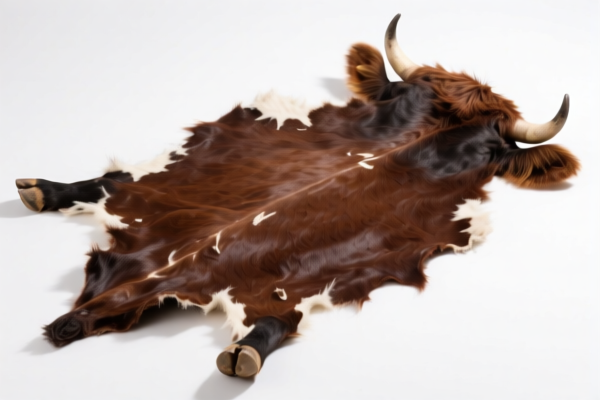
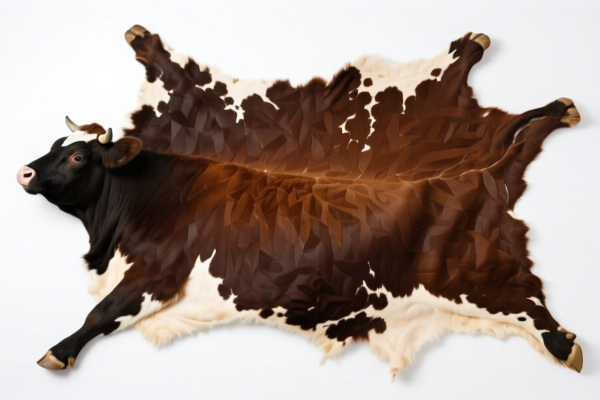

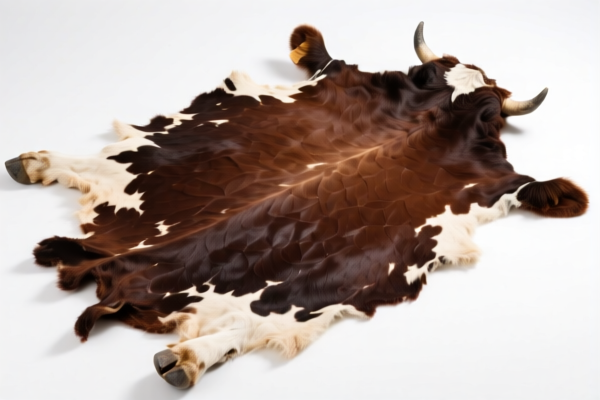
AI Analysis
🐂 Bovine Hide for Leather Manufacture (Raw/Hides & Skins)
🌐 HS Code Reference & Customs Clearance Guide | 2026 Latest Tariff Analysis | Professional Compliance Strategy
📌 I. Product Definition & Classification: Understanding "Bovine Hides"
Bovine hides are the raw skins of cattle, primarily classified based on their state (wet-salted, dry-salted, fresh) and preparation method before tanning. In international trade, specifically when importing into the United States from China, the classification hinges on whether the hide is classified as a raw material (Chapter 41) or if it is processed into a specific finished good like gloves (Chapter 42).
⚠️ Key Distinction Point:
- If the product is raw, salted, or cured leather (not yet tanned or just in the early stages) intended for further manufacturing → It falls under Chapter 41.
- If the product is finished leather gloves made from bovine leather → It falls under Chapter 42.
- Crucial Note: Even if marketed as "for leather manufacture," if the physical state is raw hide, it generally falls under Chapter 41. However, customs may challenge the classification if the description implies a finished good.
📦 II. HS Code Classification Details (2026 Latest Tariff Authority Comparison)
Based on the provided data, here are the specific HS Codes, their logical classification reasoning, and tax implications.
| HS Code | Product Description | Classification Logic (Summary) | Estimated Total Tax Rate |
|---|---|---|---|
4104.11.50.80 |
Other bovine leather, full grain, wet-salted | Matches bovine material & leather attributes; fits "Other" category requirements. | 13.3% |
4107.11.20.00 |
Further prepared leather, bovine, full grain | Based on bovine material & reasonable inference; fits the "Catch-all/Subsidiary" category. | 37.4% |
4104.12.30.00 |
Other bovine leather, split leather, wet-salted | Matches bovine material; follows "Other" category determination principles. | 13.6% |
4104.41.50.00 |
Other bovine leather, full grain, dry-salted | Matches bovine material & leather form; belongs to leather category. | 13.3% |
4203.29.08.00 |
Other leather gloves | Matches bovine material & inferred use as gloves (Finished Good). | 49.0% |
🔍 Critical Insight:
- Chapter 41 Codes (4104, 4107) apply to raw or semi-processed hides/leathers.
- Chapter 42 Code (4203) applies only if the goods are finished gloves.
- If you are importing raw hides but declare them as gloves, you risk severe penalties for misdeclaration. Conversely, if you are importing gloves but declare them as raw hides to avoid the 25% Section 301 tariff, Customs will detect the discrepancy via inspection.
💰 III. 2026 Latest Tariff Rate Breakdown (Including Additional Duties)
✅ Applicable Country: United States (US)
✅ Origin: China (CN)
✅ Effective Time: Current trade policy (including Section 301 and IEEPA measures)
🎯 1. 4104.11.50.80 & 4104.41.50.00 —— Bovine Leather (Full Grain, Wet/Dry Salted)
These codes represent standard bovine leather in wet-salted or dry-salted forms.
| Item | Content |
|---|---|
| Base Tariff | 3.3% (Ad Valorem) |
| Section 301 Additional Tariff | 0.0% |
| IEEPA Section 122 Tariff | 10.0% |
| Total Tax Rate | 13.3% |
| Tax Calculation | CIF Value × 13.3% |
| De Minimis Eligibility | ❌ No (Lumber/Leather products often excluded or subject to high scrutiny) |
| Legal Basis Path | HTSUS:4104.11 → FOOTNOTE:301 (if applicable) → IEEPA:122 |
📌 Explanation:
- The 3.3% is the standard MFN (Most Favored Nation) duty.
- 0% Section 301: These specific leather codes may not be listed under the highest bracket of Section 301 tariffs, or they fall into a lower tier.
- 10% IEEPA Tariff: This is the additional tariff imposed under the International Emergency Economic Powers Act, currently affecting many Chinese goods.
- Total 13.3% is relatively moderate compared to finished goods.
🎯 2. 4107.11.20.00 —— Further Prepared Leather (Catch-all)
This code is used when the leather doesn't fit specific subcategories but is clearly bovine and prepared.
| Item | Content |
|---|---|
| Base Tariff | 2.4% |
| Section 301 Additional Tariff | 25.0% |
| IEEPA Section 122 Tariff | 10.0% |
| Total Tax Rate | 37.4% |
| Tax Calculation | CIF Value × 37.4% |
| De Minimis Eligibility | ❌ No |
| Legal Basis Path | HTSUS:4107.11 → FOOTNOTE:301 (25%) → IEEPA:122 |
📌 Warning:
- The 25% Section 301 tariff significantly increases the cost. This code is riskier due to the high additional duty.
- Ensure the product truly fits this "other prepared leather" definition to avoid misclassification penalties.
🎯 3. 4104.12.30.00 —— Split Leather (Wet-Salted)
Split leather is the fibrous layer beneath the full-grain surface.
| Item | Content |
|---|---|
| Base Tariff | 3.6% |
| Section 301 Additional Tariff | 0.0% |
| IEEPA Section 122 Tariff | 10.0% |
| Total Tax Rate | 13.6% |
| Tax Calculation | CIF Value × 13.6% |
| De Minimis Eligibility | ❌ No |
📌 Note:
- Similar to full-grain wet-salted, this rate is lower (13.6%) because it avoids the 25% Section 301 tariff.
- Clearly distinguish between Full Grain and Split in documentation to avoid audits.
🎯 4. 4203.29.08.00 —— Leather Gloves (Finished Product)
⚠️ High Risk Area: If the import is raw hides, but declared as gloves, this is fraud. If the import is gloves, this is the correct code but comes with the highest tax.
| Item | Content |
|---|---|
| Base Tariff | 14.0% |
| Section 301 Additional Tariff | 25.0% |
| IEEPA Section 122 Tariff | 10.0% |
| Total Tax Rate | 49.0% |
| Tax Calculation | CIF Value × 49.0% |
| De Minimis Eligibility | ❌ No |
📌 Explanation:
- 14.0% Base Rate: Finished leather goods have higher base duties than raw materials.
- 25% Section 301: Finished goods are often targeted by trade restrictions.
- 10% IEEPA: Applies to all eligible Chinese-origin goods.
- Total 49% is extremely high. Only use this code if the product is definitively finished gloves.
🛠️ IV. Customs Clearance Practical Advice (Battle-Tested Pitfall Avoidance)
✅ 1. Documentation Checklist (Non-negotiable)
| Document | Required? | Notes |
|---|---|---|
| ✅ Product Specification Sheet | ✔️ | Must detail: Animal species (Bovine), State (Wet-salted/Dry), Type (Full Grain/Split), Dimensions, Weight. |
| ✅ Photos of Goods | ✔️ | Must show texture, salt residue, and any stamps/marks. Raw hides look very different from gloves. |
| ✅ Commercial Invoice | ✔️ | Clearly state "Raw Bovine Hides for Leather Manufacturing" OR "Leather Gloves". Do NOT mix descriptions. |
| ✅ Packing List | ✔️ | Itemize by type. Avoid generic "Leather Products." |
| ✅ Manufacturer's Declaration | ✔️ | Confirm origin and processing stage (Raw vs. Tanned vs. Finished). |
| ✅ Fumigation Certificate | ✔️ | Often required for raw animal products to prevent disease spread. |
✅ 2. Declaration Tips (Key Mantra)
🔥 "State is King, Finish is Queen, Raw Hides are Chapter 41, Gloves are Chapter 42!"
| Scenario | Correct Declaration | Incorrect Declaration | Consequence |
|---|---|---|---|
| Raw Wet-Salted Hides | 4104.11.50.80 |
4203.29.08.00 (Gloves) |
Misdeclaration Penalty + Back Taxes |
| Raw Dry-Salted Hides | 4104.41.50.00 |
4107.11.20.00 (Prepared Leather) |
Potential audit if "prepared" state is disputed |
| Finished Leather Gloves | 4203.29.08.00 |
4104.11.50.80 (Raw Hides) |
High Tax Risk (Saving 35.7%) is illegal |
| Split Leather (Raw) | 4104.12.30.00 |
4104.11.50.80 (Full Grain) |
Audit risk if visual inspection differs |
✅ 3. Special Case Handling
| Situation | Advice |
|---|---|
| "For Leather Manufacture" in Name | Use this only if declaring Raw Hides (Chapter 41). It justifies the use of Chapter 41 codes. If declaring Chapter 42 (Gloves), use "Leather Gloves" as the name. |
| Mixed Containers | If a container has both raw hides and gloves, they MUST be declared separately. Mixing categories can lead to whole-container delays. |
| Pre-Tanning Treatment | If hides are chemically treated beyond salting (e.g., limed), they may fall under 4107. Ensure the "Further Prepared" description matches the physical state. |
🌍 V. Global Market Customs Comparison (2026 Latest)
| Country/Region | Recommended HS Code | Tariff Rate | Certification Required | Remarks |
|---|---|---|---|---|
| 🇺🇸 USA | 4104.11.50.80 |
13.3% (Raw) / 49.0% (Gloves) | None (General) | High scrutiny on origin. IEEPA 10% + Section 301 applies. |
| 🇨🇳 China | 4104.11.50.80 |
~0-5% (Import) | N/A | Raw hides are often imported; finished goods exported. |
| 🇪🇺 EU | 4104.11.50 |
~5-7% | TIR/Carnet for transit | No Section 301 or IEEPA equivalent tariffs. |
| 🇬🇧 UK | 4104.11.50 |
~5-7% | Post-Brexit Rules of Origin | Similar to EU post-2021. |
| 🇦🇺 Australia | 4104.11.50 |
0-5% | Biosecurity Clearance | Strict biosecurity for raw animal products. |
📌 Conclusion:
- USA is the most expensive market for Chinese-origin leather goods due to IEEPA (10%) and Section 301 (0-25%) tariffs.
- Raw hides (Chapter 41) are cheaper to import than finished gloves (Chapter 42) into the US.
- Biosecurity is a major hurdle for raw hides in all countries (USA, Australia, EU).
📌 VI. Common Errors & Pitfall Guide (Blood-Lessons)
❌ Error 1: Declaring Finished Gloves as Raw Hides (4104 instead of 4203)
👉 Consequence: Underpayment of 35.7% in tariffs. Severe Penalty, Potential Criminal Charges.
❌ Error 2: Declaring Raw Hides as Finished Gloves (4203 instead of 4104)
👉 Consequence: Unnecessary payment of 49% instead of 13.3%. Lost Profit.
❌ Error 3: Ignoring Biosecurity for Raw Hides
👉 Consequence: Cargo held at port, fumigated, or destroyed if disease risks (e.g., Anthrax) are suspected.
❌ Error 4: Ambiguous Description "Leather Goods"
👉 Consequence: Customs exam required. Delays of 2-4 weeks.
✅ Correct Approach:
"Raw Bovine Hides, Wet-Salted, Full Grain, For Leather Manufacturing, Origin: China, Model: RH-001, Net Weight: 1000kg"
🎯 VII. Conclusion: Precise Classification Saves Money!
🎯 Remember the Mantra:
🔹 "Raw Hides = Chapter 41 (Lower Tax), Gloves = Chapter 42 (Higher Tax)."
🔹 "13.3% vs 49% is a 35.7% Gap. Define Your Product Correctly!"
🔹 "Biosecurity First, Documentation Second, Tariff Optimization Third."
📌 Pro Tip:
If you are importing raw hides, consider pre-classification rulings from US Customs and Border Protection (CBP) to confirm the exact subheading (4104.11 vs 4104.41).
For finished gloves, explore supply chain relocation (e.g., Vietnam, Mexico) to avoid Section 301 and IEEPA tariffs, reducing your tax burden from 49% to near 0-5%.
📣 Immediate Action:
📞 Contact a Licensed Customs Broker
📸 Provide Clear Photos of the Product (Raw vs. Finished)
📄 Request an Advance Ruling for high-value shipments
✨ Professional Clearance, Start with Accurate Classification!
💼 Every Percent of Tax Saved is Pure Profit!
Customer Reviews
About HS Code Classification
The Harmonized System (HS) is an internationally standardized nomenclature developed by the World Customs Organization (WCO) to classify traded products. Over 200 countries use the HS system as the basis for customs tariffs, trade statistics, and import/export regulations.
Each HS code follows a hierarchical structure:
- Chapter (2 digits) — Broad category of goods (e.g., Chapter 84: Machinery and Mechanical Appliances)
- Heading (4 digits) — More specific grouping within the chapter
- Subheading (6 digits) — Internationally standardized breakdown, used by all WCO member countries
- National subdivisions (8-10 digits) — Country-specific extensions for further classification, such as US HTSUS 10-digit codes
Correct HS code classification is essential for smooth customs clearance, accurate duty payment, and compliance with trade regulations. Misclassification can lead to customs delays, overpayment of duties, or penalties.
When importing from CN to US, the applicable tariff rates may include:
- Most-Favored-Nation (MFN) rate — The standard duty rate applied to WTO members
- General rate — Applied to countries without trade agreements
- Trade remedy duties — Additional tariffs such as Section 301 (anti-dumping), Section 232 (national security), or countervailing duties
The information provided on this page is for reference purposes only. For official classification, please consult with your local customs authority or a licensed customs broker.