Bovine Leather Belting
CN → US| HS Code | Tariff Rate | Origin | Destination | Doc |
|---|---|---|---|---|
| 4205001000 | 35.0% | CN | US | Official Doc |
| 4113903000 | 38.3% | CN | US | Official Doc |
| 4205008000 | 35.0% | CN | US | Official Doc |
| 5910009000 | 37.6% | CN | US | Official Doc |
| 4205000500 | 37.9% | CN | US | Official Doc |
Product Images
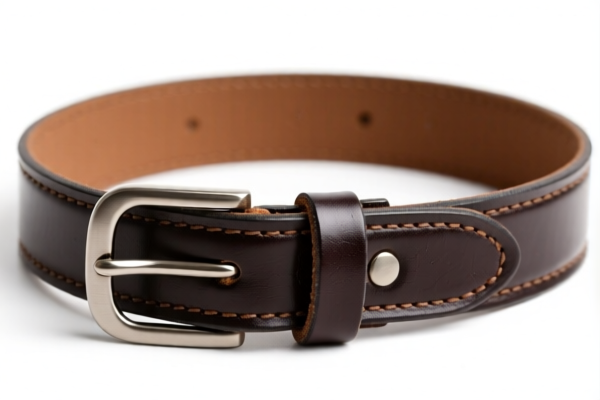
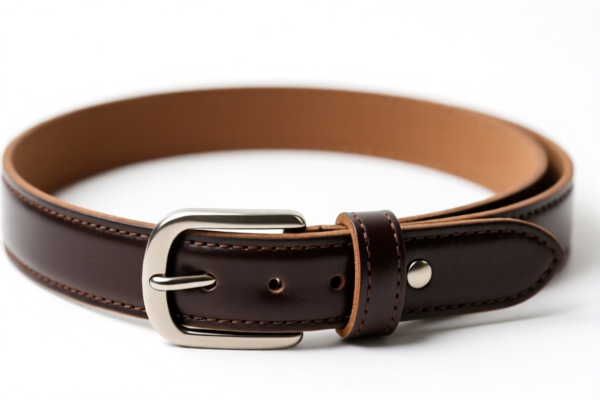
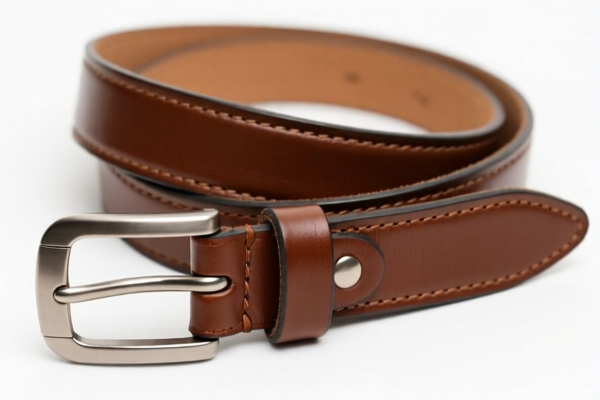
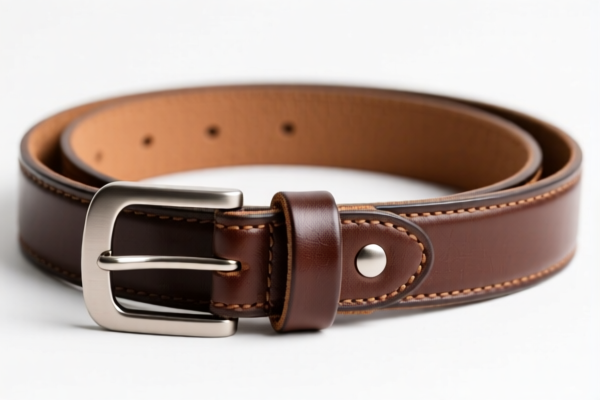
AI Analysis
🐄 Bovine Leather Belting (Cowhide Leather Belts/Ropes)
🌐 HS Code Reference & Customs Clearance Guide | 2026 Latest Tariff Analysis | Professional Clearance Strategy
📌 I. Product Definition & Classification: What Exactly is "Bovine Leather Belting"?
Bovine leather belting, commonly referred to as cowhide leather belts, ropes, or drive belts, is a versatile industrial and commercial product made from tanned or crust bovine hide. In international trade, its classification depends heavily on its final form and intended use:
Raw/Unprocessed Leather Belts: Crust leather or partially processed leather strips, not yet ready for specific machinery use.
Finished Leather Belting/Drive Belts: Tanned, finished, and shaped leather products used for power transmission, decoration, or general utility.
⚠️ Key Distinction Point:
- If the product is in a raw, crust, or semi-processed state (ready for further manufacturing) → Classified under Chapter 41 (Crust Leather).
- If the product is finished, shaped, or specifically designed as a belt/rope for end-use → Classified under Chapter 42 (Articles of Leather) or Chapter 59 (Industrial belts).
📦 II. HS Code Classification Details (2026 Latest Tariff Authority对照)
Based on the provided data, here are the specific HS codes and their corresponding tax breakdowns. Note that all listed codes are subject to significant US tariffs due to trade restrictions.
| HS Code | Product Description | Application/State | Total Tax Rate |
|---|---|---|---|
4205.00.10.00 |
Other articles of leather, specifically leather ropes/braided leather | Decorative leather cords, shoelaces, general leather ropes | 35.0% |
4113.90.30.00 |
Crust leather or unfinished leather articles | Cowhide belts in a tanned but unfinished state (crust) | 38.3% |
4205.00.80.00 |
Other articles of leather, specifically leather cords/ropes | General purpose leather belting, non-driven ropes | 35.0% |
5910.00.90.00 |
Transmission belts of leather | Industrial drive belts, conveyor belts made of leather | 37.6% |
4205.00.05.00 |
Other leather articles, specifically unfinished/primary form belts | Raw leather straps, unprocessed leather bands | 37.9% |
🔍 Critical Reminder:
- Industrial Use vs. Consumer Use: If the leather belt is used for power transmission (machinery), it often falls under 5910.00.90.00. If it is for decoration, packaging, or general utility, it typically falls under 4205 or 4113.
- State of Processing: "Crust" leather (tanned but not finished) is taxed differently than "finished" leather articles.
- US Tariffs Apply: All above rates include the 25% Section 301 tariff and 10% IEEPA tariff.
💰 III. 2026 Latest Tariff Rate Details (Including Additional Taxes & Policy Surcharges)
✅ Applicable Country: United States (US)
✅ Origin: China (CN)
✅ Effective Time: 2025 November 10 onwards (and subsequent imports)
🎯 1. 4205.00.10.00 & 4205.00.80.00 —— Leather Ropes/Articles (Finished)
| Item | Content |
|---|---|
| Base Tariff | 0% (ad valorem) |
| Section 301 Tariff | +25% (USITC Footnote 9903.88.01) |
| IEEPA Tariff | +10% (Against China/HK products, effective 2025-11-10) |
| Total Rate | 35.0% |
| Tax Calculation | CIF Value × 35% |
| De Minimis Exemption | ❌ Not Eligible (deny_de_minimis) |
| Legal Basis Path | IEEPA:9903.01.25 → USITC:4205.00.10.00 → FOOTNOTE:9903.88.01 |
📌 Explanation:
- These codes cover finished leather ropes, cords, and general leather articles.
- The 0% base tariff is common for many leather articles, but the 25% Section 301 and 10% IEEPA make the total 35%.
🎯 2. 4113.90.30.00 —— Crust/Unfinished Leather Articles
| Item | Content |
|---|---|
| Base Tariff | 3.3% |
| Section 301 Tariff | +25% |
| IEEPA Tariff | +10% |
| Total Rate | 38.3% |
| Tax Calculation | CIF Value × 38.3% |
| De Minimis Exemption | ❌ Not Eligible |
| Legal Basis Path | IEEPA:9901.25 → USITC:4113.90.30.00 |
📌 Note:
- This code applies to crust leather (tanned but not finished/dyed).
- Higher base rate (3.3%) compared to finished articles results in a higher total tax.
🎯 3. 5910.00.90.00 —— Transmission Belts (Industrial Use)
| Item | Content |
|---|---|
| Base Tariff | 2.6% |
| Section 301 Tariff | +25% |
| IEEPA Tariff | +10% |
| Total Rate | 37.6% |
| Tax Calculation | CIF Value × 37.6% |
| De Minimis Exemption | ❌ Not Eligible |
| Legal Basis Path | IEEPA:9903.01.24 → USITC:5910.00.90.00 |
📌 Critical for Manufacturers:
- If your leather belt is used for machinery drive systems, it is classified here.
- Higher base rate (2.6%) than decorative leather, but still subject to the same additional tariffs.
🎯 4. 4205.00.05.00 —— Unprocessed/Primary Form Leather Belts
| Item | Content |
|---|---|
| Base Tariff | 2.9% |
| Section 301 Tariff | +25% |
| IEEPA Tariff | +10% |
| Total Rate | 37.9% |
| Tax Calculation | CIF Value × 37.9% |
| De Minimis Exemption | ❌ Not Eligible |
| Legal Basis Path | IEEPA:9903.01.25 → USITC:4205.00.05.00 |
📌 Distinction:
- This code is for unfinished leather strips/belts that are not yet ready for final use but are more processed than crust leather (4113).
- It sits between crust and finished goods in terms of processing level.
🛠️ IV. Customs Clearance Practical Advice (Pitfall Avoidance Guide)
✅ 1. Documentation Checklist (Missing Any May Cause Delays)
| Document | Required | Notes |
|---|---|---|
| ✅ Product Specification Sheet | ✔️ | Must specify: Material (100% Bovine Leather), Process (Crust/Tanned/Finished), Usage (Industrial/Decorative) |
| ✅ Photos of Product | ✔️ | Clear images showing texture, cross-section, and any markings |
| ✅ Commercial Invoice | ✔️ | Must explicitly state "Bovine Leather Belting" and HS Code |
| ✅ Packing List | ✔️ | Weight, dimensions, and number of packages |
| ✅ Certificate of Origin (CO) | ✔️ | To prove country of origin (China) |
| ✅ Test Report (if applicable) | ✔️ | For durability, tensile strength (especially for industrial belts 5910) |
✅ 2. Declaration Tips (Key Mnemonics)
🔥 "Form Determines Code, Use Dictates Tariff!"
| Scenario | Correct HS Code | Wrong Practice | Consequence |
|---|---|---|---|
| Industrial Drive Belt | 5910.00.90.00 |
Declare as "Leather Rope" → 4205.00.80.00 |
Incorrect classification, potential penalties |
| Decorative Leather Cord | 4205.00.10.00 / 4205.00.80.00 |
Declare as "Crust Leather" → 4113.90.30.00 |
Overpaying tax (35% vs 38.3%) or underpaying if misdeclared |
| Raw Crust Leather Strip | 4113.90.30.00 |
Declare as "Finished Article" → 4205.00.05.00 |
Misclassification, delay for inspection |
| Unfinished Leather Strap | 4205.00.05.00 |
Declare as "Crust" → 4113.90.30.00 |
Tax difference (37.9% vs 38.3%) |
✅ 3. Special Handling Scenarios
| Situation | Recommendation |
|---|---|
| OEM Custom Belts | Provide customer order + design specs to prove intended use (industrial vs decorative) |
| Mixed Shipments (Leather + Metal) | Declare leather parts separately if they are significant components; otherwise, declare as "Leather Goods with Metal Fittings" |
| Samples for Testing | If value < $800, de minimis does NOT apply due to IEEPA Section 301. Pay full 35-38% tax. |
| Re-exporting from Mexico/Vietnam | If processed substantially in a third country, check for Rules of Origin compliance to potentially avoid IEEPA tariffs. |
🌍 V. Global Market Comparison (2026 Latest)
| Country/Region | Recommended HS Code | Tariff (China Origin) | Certification Required | Notes |
|---|---|---|---|---|
| 🇺🇸 USA | 4205.00.10.00 / 5910.00.90.00 |
35% - 38.3% | None specific for leather | High tariffs due to Section 301 & IEEPA |
| 🇨🇳 China | 4205.00.10.00 |
5% - 10% | CCC (if applicable) | Lower import duty, no additional tariffs |
| 🇪🇺 EU | 4205.00.10.00 |
4% - 6% | REACH (chemicals in tanning) | No additional tariffs, but strict chemical regulations |
| 🇬🇧 UK | 4205.00.10.00 |
4% - 6% | UKCA (if applicable) | Post-Brexit rules apply |
| 🇦🇺 Australia | 4205.00.10.00 |
5% | ABA (Agriculture Biosecurity) | Biosecurity inspection required |
📌 Conclusion:
- USA is the most challenging market due to the 25% Section 301 + 10% IEEPA tariffs.
- Total tariff burden (35-38.3%) significantly impacts profitability.
- Consider supply chain diversification (e.g., processing in Southeast Asia) if eligible for preferential tariffs.
📌 VI. Common Errors & Pitfalls (Lessons Learned)
❌ Error 1: Declaring industrial drive belts as "leather ropes"
👉 Consequence: Wrong HS code → Customs audit → Penalty + Back Taxes
❌ Error 2: Assuming de minimis ($800) applies to leather goods
👉 Consequence: De minimis is denied for China-origin goods under IEEPA → Full tax applies even for samples
❌ Error 3: Vague description "Leather Belt"
👉 Consequence: Customs cannot determine if it's 4113 (crust) or 4205 (finished) → Delay for inspection
❌ Error 4: Ignoring the "Transmission Belt" classification (5910)
👉 Consequence: If used for machinery, misclassification leads to compliance issues
✅ Correct Declaration Example:
"100% Bovine Leather Transmission Belt, Crust Tanned, Width 50mm, Used for Industrial Machinery Drive Systems, HS Code: 5910.00.90.00"
🎯 VII. Conclusion: Professional Declaration, Cost Control
🎯 Remember Mnemonics:
🔹 "Industrial? Go 5910. Decorative? Go 4205. Crust? Go 4113."
🔹 "US Tariffs 35-38%, No De Minimis, Plan Ahead!"
📌 Tips:
- If your leather goods are processed in a third country (e.g., Vietnam, Mexico), check if they qualify for USMCA or other trade agreements to avoid IEEPA tariffs.
- Apply for Advance Ruling from CBP if unsure about classification to avoid post-import audits.
📣 Take Action Now:
📞 Consult a licensed customs broker + Provide detailed product specs + Apply for HS Code Advance Ruling
🚀 Ensure smooth customs clearance, cost efficiency, and compliance!
✨ Professional Customs Clearance Starts with Accurate Classification!
💼 Every cent in tariff cost deserves precise calculation!
Customer Reviews
About HS Code Classification
The Harmonized System (HS) is an internationally standardized nomenclature developed by the World Customs Organization (WCO) to classify traded products. Over 200 countries use the HS system as the basis for customs tariffs, trade statistics, and import/export regulations.
Each HS code follows a hierarchical structure:
- Chapter (2 digits) — Broad category of goods (e.g., Chapter 84: Machinery and Mechanical Appliances)
- Heading (4 digits) — More specific grouping within the chapter
- Subheading (6 digits) — Internationally standardized breakdown, used by all WCO member countries
- National subdivisions (8-10 digits) — Country-specific extensions for further classification, such as US HTSUS 10-digit codes
Correct HS code classification is essential for smooth customs clearance, accurate duty payment, and compliance with trade regulations. Misclassification can lead to customs delays, overpayment of duties, or penalties.
When importing from CN to US, the applicable tariff rates may include:
- Most-Favored-Nation (MFN) rate — The standard duty rate applied to WTO members
- General rate — Applied to countries without trade agreements
- Trade remedy duties — Additional tariffs such as Section 301 (anti-dumping), Section 232 (national security), or countervailing duties
The information provided on this page is for reference purposes only. For official classification, please consult with your local customs authority or a licensed customs broker.