Bovine Leather Belts
CN → US| HS Code | Tariff Rate | Origin | Destination | Doc |
|---|---|---|---|---|
| 4203406000 | 35.0% | CN | US | Official Doc |
| 4205008000 | 35.0% | CN | US | Official Doc |
| 4203300000 | 37.7% | CN | US | Official Doc |
| 4203403000 | 39.9% | CN | US | Official Doc |
| 4205006000 | 39.9% | CN | US | Official Doc |
Product Images
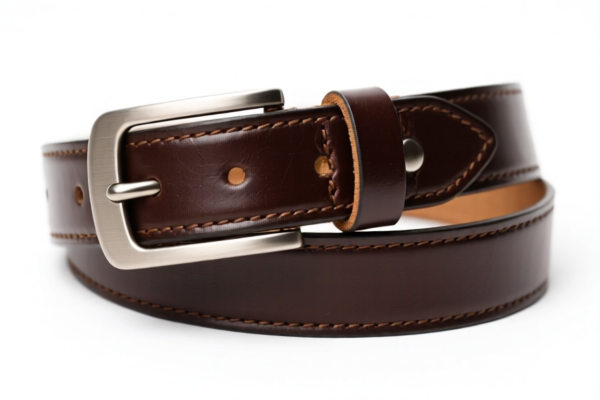
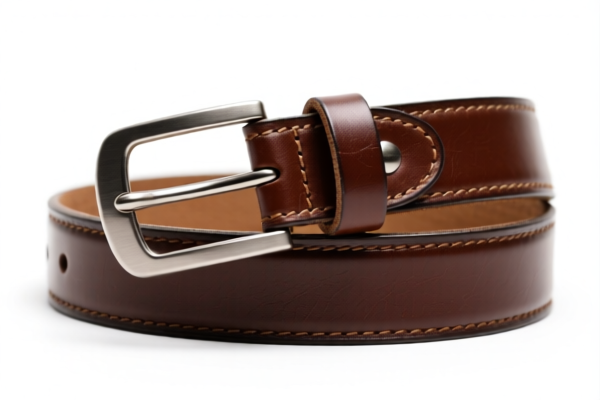
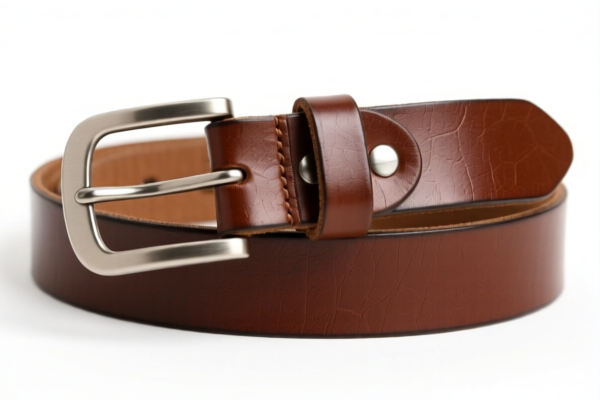
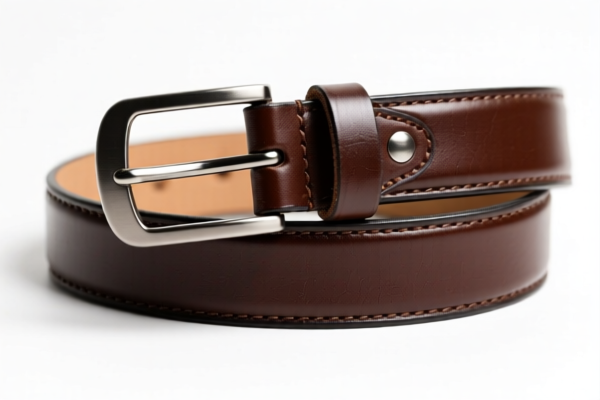
AI Analysis
🏇 Bovine Leather Belts: The Ultimate HS Code & Tariff Breakdown for US Imports
🌐 HS Code Reference & Customs Clearance Guide | 2026 Latest Tariff Analysis | Professional Entry Strategy
📌 I. Product Definition & Classification: Do You Truly Understand "Bovine Leather Belts"?
Bovine leather belts are a staple accessory in global fashion, categorized under Chapter 42 (Articles of leather or composite leather). However, their classification depends heavily on whether they are classified as "Wearing Apparel Accessories" (functional clothing items) or "Other Articles of Leather" (general leather goods). This distinction drastically affects the Base Tariff and the Total Effective Tax Rate.
⚠️ Key Distinction Point:
- If the belt is specifically designed as an attachment to clothing (e.g., functional waist belts, often with specific buckle types), it may fall under 4203.30 or 4203.40.
- If the belt is considered a general leather article (not strictly "wearing apparel" in the narrow sense, or falling into residual categories), it falls under 4205.00.
- Note: "Bovine Leather" implies genuine cowhide. If the leather is treated like exotic skins (e.g., crocodile-lookalike), it may shift to higher base rates.
📦 II. HS Code Classification Details (2026 Latest Tariff Authority)
| HS Code | Product Description | Application Scenario | Base Tariff | Total Tariff (with US Surcharges) |
|---|---|---|---|---|
4203.40.60.00 |
Other Accessories of Wearing Apparel: Leather belts (excluding belt buckles) | Standard bovine leather waist belts; classified as "Other clothing accessories" | 0.0% | 35.0% |
4205.00.80.00 |
Other Articles of Leather or Composition Leather: Not elsewhere specified | General leather belts not specifically defined as "clothing accessories" or "belt buckles" | 0.0% | 35.0% |
4203.30.00.00 |
Belt Buckles & Parts Thereof; Articles of Apparel Accessories: Leather belts (specifically buckled/attached) | Leather belts explicitly categorized as "apparel accessories with buckles" | 2.7% | 37.7% |
4203.40.30.00 |
Other Accessories of Wearing Apparel: Leather belts (exotic-like classification logic) | Belts classified under a logic similar to exotic skins (e.g., crocodile-embossed), meeting clothing accessory criteria | 4.9% | 39.9% |
4205.00.60.00 |
Other Articles of Leather: Leather articles (general category) | Broader category for leather goods, including belts, if not strictly "clothing accessories" | 4.9% | 39.9% |
🔍 Important Reminder:
- HS Codes 4203.40.60.00 and 4205.00.80.00 offer the lowest entry barrier with a 0% Base Tariff, but still incur surcharges.
- HS Codes 4203.40.30.00 and 4205.00.60.00 carry a 4.9% Base Tariff, leading to higher total costs.
- HS Code 4203.30.00.00 is a middle ground with a 2.7% Base Tariff.
- Why the difference? It depends on how the CBP (U.S. Customs and Border Protection) interprets "Accessory to Wearing Apparel" vs. "Other Article." Precise product description is critical.
💰 III. 2026 Latest Tariff Rate Breakdown (Including Surcharges & Policy Add-ons)
✅ Applicable Country: United States (US)
✅ Origin: China (CN)
✅ Effective Date: From November 10, 2025 onwards
🎯 1. 4203.40.60.00 & 4205.00.80.00 — Optimal Classification for Bovine Leather Belts
| Item | Detail |
|---|---|
| Base Tariff | 0% (ad valorem) |
| USITC Additional Tariff (Section 301) | +25% |
| IEEPA Additional Tariff (Section 122) | +10% |
| Total Tariff | 35.0% |
| Tax Calculation | CIF Value × 35% |
| De Minimis Eligibility | ❌ No (deny_de_minimis) |
| Legal Basis Path | IEEPA:9903.01.25 → USITC:4203.40.60.00 / 4205.00.80.00 → FOOTNOTE:301 |
📌 Explanation:
- Base Tariff 0%: These codes are classified as "Other" accessories/articles, avoiding higher base rates for specific apparel items.
- Section 301 (25%): Standard punitive tariff on Chinese leather goods.
- Section 122 (10%): Additional tariff under the International Emergency Economic Powers Act (IEEPA) for specific categories.
- Total 35%: This is the most favorable rate among the provided options.
🎯 2. 4203.30.00.00 — Belt Buckles/Accessories Classification
| Item | Detail |
|---|---|
| Base Tariff | 2.7% |
| USITC Additional Tariff (Section 301) | +25% |
| IEEPA Additional Tariff (Section 122) | +10% |
| Total Tariff | 37.7% |
| Tax Calculation | CIF Value × 37.7% |
| De Minimis Eligibility | ❌ No |
| Legal Basis Path | IEEPA:9903.01.25 → USITC:4203.30.00.00 |
📌 Note:
- Higher base rate (2.7%) compared to the 0% options.
- Suitable if the belt is explicitly defined as a "buckle attachment" or specific apparel accessory under Chapter 4203.30.
🎯 3. 4203.40.30.00 & 4205.00.60.00 — Exotic/General Leather Classification
| Item | Detail |
|---|---|
| Base Tariff | 4.9% |
| USITC Additional Tariff (Section 301) | +25% |
| IEEPA Additional Tariff (Section 122) | +10% |
| Total Tariff | 39.9% |
| Tax Calculation | CIF Value × 39.9% |
| De Minimis Eligibility | ❌ No |
| Legal Basis Path | IEEPA:9903.01.25 → USITC:4203.40.30.00 / 4205.00.60.00 |
📌 Warning:
- Highest cost among the options.
-4203.40.30.00may apply if the leather is embossed or treated to resemble exotic skins (like crocodile), triggering a higher base rate.
-4205.00.60.00applies to general leather articles not fitting specific apparel accessory definitions.
🛠️ IV. Customs Clearance Practical Advice (Avoiding Pitfalls)
✅ 1. Required Documentation Checklist (Non-Negotiable)
| Document | Required? | Notes |
|---|---|---|
| ✅ Product Specification Sheet | ✔️ | Must include: Material (100% Bovine Leather), Composition, Dimensions, Buckle Material |
| ✅ Product Photos | ✔️ | Clear shots of belt, buckle, inner lining, and brand tags |
| ✅ Commercial Invoice | ✔️ | Must specify: "Bovine Leather Belt," HS Code, Country of Origin (China) |
| ✅ Packing List | ✔️ | Quantity per carton, gross/net weight |
| ✅ Proof of Leather Origin | ✔️ | If claiming "Bovine," ensure no exotic skin claims unless documented |
| ✅ Free Sale Certificate (FSC) | ✔️ | Optional but recommended for brand verification |
✅ 2. Declaration Tips (Key Strategies)
🔥 "Declare Accurately, Avoid 'Other' Traps, Choose 4203.40.60 for Low Base Rate!"
| Scenario | Recommended HS Code | Reason |
|---|---|---|
| Standard Bovine Leather Belt | 4203.40.60.00 |
0% Base Rate. Best for cost optimization. Classified as "Other accessory." |
| General Leather Belt (No specific apparel link) | 4205.00.80.00 |
0% Base Rate. Safe alternative if 4203.40.60 is contested. |
| Belt with Specific Buckle Assembly | 4203.30.00.00 |
Only if explicitly classified under "Buckle parts." Higher base rate. |
| Exotic-Embossed Belt | 4203.40.30.00 |
Avoid if possible. 4.9% base rate increases cost. |
| Generic Leather Good | 4205.00.60.00 |
Last resort. Highest cost (39.9%). |
⚠️ Critical Warning:
- Do NOT describe the product vaguely as "Leather Goods."
- Use precise language: "Bovine Leather Waist Belt with Metal Buckle, For Men/Women."
- If CBP questions the "Accessory" status, be prepared to show it is worn with trousers/jeans as a functional item.
✅ 3. Special Circumstances Handling
| Situation | Recommendation |
|---|---|
| Belt Comes with Gift Box | Declare the belt as the primary item. The box is part of the set. |
| OEM Custom Belts | Provide OEM agreements and design specs to prove origin and classification. |
| Multiple HS Codes in One Shipment | Declare separately. Mixing codes can lead to audits, delays, or retroactive tax adjustments. |
| Dispute on "Bovine" vs. "Exotic" | Provide supplier’s leather certification. If it’s real cowhide, stick to 4203.40.60.00 or 4205.00.80.00. |
🌍 V. Global Market Comparison (2026 Update)
| Market | Recommended HS Code | Total Tariff (China Origin) | Key Certification | Notes |
|---|---|---|---|---|
| 🇺🇸 USA | 4203.40.60.00 |
35.0% | None specific | Highest surcharge (35%). No de minimis. |
| 🇨🇳 China | 4203.40.60.00 |
~5-10% | CCC (if applicable) | Lower base rates, no Section 301/122. |
| 🇪🇺 EU | 4203.30 or 4205.00 |
~4.5% | CE (if safety-related) | No Section 301/122. Standard MFN rates. |
| 🇬🇧 UK | 4203.40.60 |
~5-10% | UKCA | Post-Brexit rules apply. |
| 🇯🇵 Japan | 4203.40.60 |
~5-15% | JIS | No major surcharges on leather belts. |
📌 Conclusion:
- The US market is the most expensive for Chinese leather belts due to 35% total tariff.
- China, EU, and Japan offer significantly lower entry barriers.
- For US imports, cost optimization is critical. Consider supply chain diversification or value engineering.
📌 VI. Common Mistakes & Pitfalls (Lessons Learned)
❌ Mistake 1: Declaring as "Leather Garment"
👉 Consequence: Incorrect chapter (42 vs. 62). May lead to 10-20% higher base tariffs or rejection.
❌ Mistake 2: Using "Other" without justification
👉 Consequence: CBP may assign 4205.00.60.00 (39.9%) if "Other" is not properly supported by product details.
❌ Mistake 3: Ignoring Section 122 (10%)
👉 Consequence: Underpayment of taxes. CBP audits will recover back-taxes + penalties.
❌ Mistake 4: Misclassifying Exotic-Skin Belts as Bovine
👉 Consequence: If proven to be exotic, higher tariffs and potential fraud charges.
✅ Correct Approach:
"Bovine Leather Belt, 3cm width, Metal Pin Buckle, Model XYZ, Country of Origin: China, HS Code: 4203.40.60.00"
🎯 VII. Conclusion: Precision in Classification Saves Money!
🎯 Remember This Rule:
🔹 "Base Rate 0% is King! Choose 4203.40.60 or 4205.00.80."
🔹 "35% Total Tariff is the Floor for US Imports. Don’t Pay 39.9%!"
🔹 "Accurate Description = Faster Clearance + Lower Risk."
📌 Pro Tip:
- If your belts are not made in China (e.g., Vietnam, Italy, Turkey), you may qualify for 0% or reduced tariffs under preferential trade agreements (e.g., EU-Vietnam EVFTA, US FTA partners).
- Apply for an Advance Ruling from CBP if you have high-volume shipments. This provides legal certainty on the HS Code.
📣 Immediate Action:
📞 Consult with a licensed customs broker.
📸 Submit product photos and specs for HS Code pre-validation.
🚀 Secure your supply chain, optimize your tariffs, and boost your profit margins!
✨ Professional Customs Clearance Starts with Accurate Classification!
💼 Every percentage point counts in international trade.
Customer Reviews
About HS Code Classification
The Harmonized System (HS) is an internationally standardized nomenclature developed by the World Customs Organization (WCO) to classify traded products. Over 200 countries use the HS system as the basis for customs tariffs, trade statistics, and import/export regulations.
Each HS code follows a hierarchical structure:
- Chapter (2 digits) — Broad category of goods (e.g., Chapter 84: Machinery and Mechanical Appliances)
- Heading (4 digits) — More specific grouping within the chapter
- Subheading (6 digits) — Internationally standardized breakdown, used by all WCO member countries
- National subdivisions (8-10 digits) — Country-specific extensions for further classification, such as US HTSUS 10-digit codes
Correct HS code classification is essential for smooth customs clearance, accurate duty payment, and compliance with trade regulations. Misclassification can lead to customs delays, overpayment of duties, or penalties.
When importing from CN to US, the applicable tariff rates may include:
- Most-Favored-Nation (MFN) rate — The standard duty rate applied to WTO members
- General rate — Applied to countries without trade agreements
- Trade remedy duties — Additional tariffs such as Section 301 (anti-dumping), Section 232 (national security), or countervailing duties
The information provided on this page is for reference purposes only. For official classification, please consult with your local customs authority or a licensed customs broker.