Bovine Leather Cosmetic Bags
CN → US| HS Code | Tariff Rate | Origin | Destination | Doc |
|---|---|---|---|---|
| 4205006000 | 39.9% | CN | US | Official Doc |
| 4202329300 | 52.6% | CN | US | Official Doc |
| 4205008000 | 35.0% | CN | US | Official Doc |
| 4202329900 | 52.6% | CN | US | Official Doc |
| 4107117050 | 15.0% | CN | US | Official Doc |
Product Images
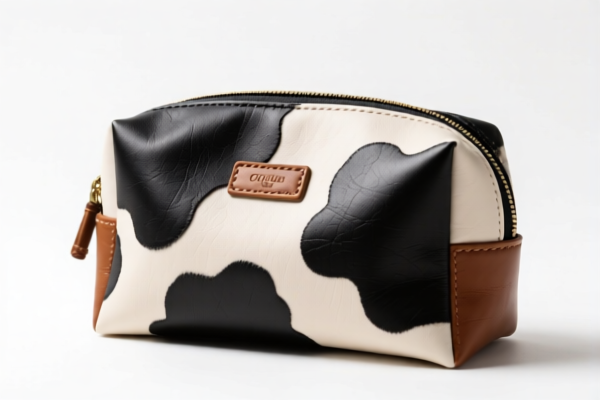
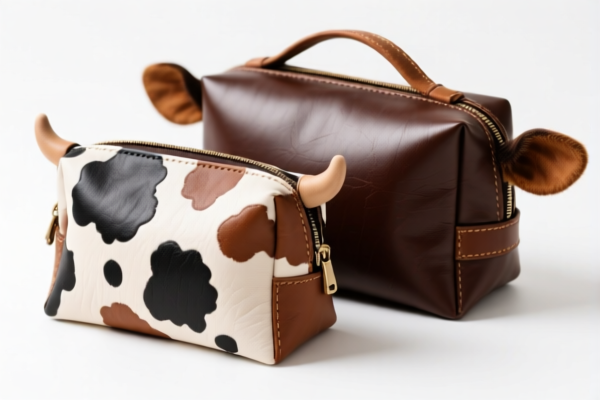
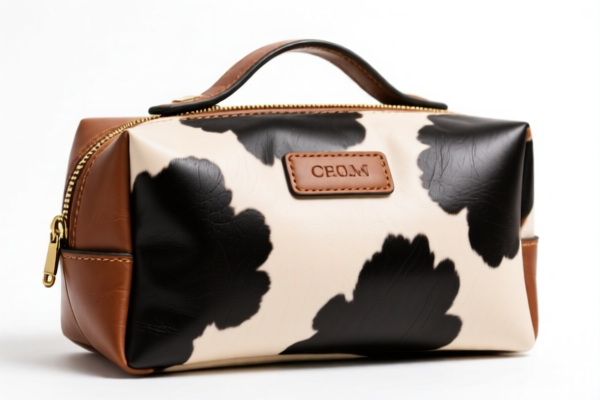
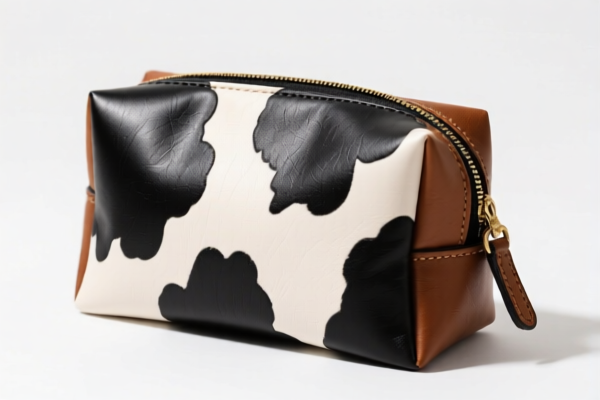
AI Analysis
👜 Bovine Leather Cosmetic Bags (Leather Goods for Personal Use)
🌐 HS Code Reference & Customs Clearance Guide | 2026 Latest Tariff Analysis | Professional Clearance Strategy
📌 Part I: Product Definition & Classification Strategy: What Exactly Are We Importing?
Bovine Leather Cosmetic Bags are specialized containers designed for carrying toiletries and personal care items. In international trade, classification hinges on two critical factors:
1. Material Composition: The outer surface material (specifically full-grain or corrected bovine leather).
2. Function/Form: Whether it is classified as a general leather article or a specific type of bag.
⚠️ Key Classification Distinction:
- If classified under Chapter 41 (Leather), it is treated as a raw/semi-processed leather good or general leather article (e.g., 4107.11.70.50).
- If classified under Chapter 42 (Articles of Leather), it is treated as a finished manufactured good (bag/container) (e.g., 4202/4205).
- Crucial Point: The distinction often lies in whether the item is considered a "bag" under Heading 4202 or a "general leather article" under 4205/4107. The provided data suggests multiple valid pathways depending on specific manufacturing details and customs interpretation.
📦 Part II: HS Code Classification Details (2026 Latest Tariff Authority Match)
| HS Code | Product Description | Application Scenario | Tax Rate (Total) | Key Tax Components |
|---|---|---|---|---|
4107.11.70.50 |
Full-grain bovine leather, suited for bags/suitcases | Best Case Scenario: High-value leather, specific match for "full-grain" material | 15.0% | Base: 5.0%, Addl: 0%, Sec 301: 10% |
4205.00.60.00 |
Other leather articles (incl. reptile skin) | Fallback Option: General leather goods, no specific bag definition | 39.9% | Base: 4.9%, Addl: 25%, Sec 301: 10% |
4205.00.80.00 |
Other leather articles (general) | Low Base Rate Option: Synthetic or general leather, low base duty | 35.0% | Base: 0.0%, Addl: 25%, Sec 301: 10% |
4202.32.93.00 |
Bags with textile outer surface | Textile Mix Scenario: If outer surface is textile (not pure leather) | 52.6% | Base: 17.6%, Addl: 25%, Sec 301: 10% |
4202.32.99.00 |
Other bags with textile outer surface | Generic Textile Scenario: Fallback for textile-based cosmetic bags | 52.6% | Base: 17.6%, Addl: 25%, Sec 301: 10% |
🔍 Critical Insight from Data:
- The "Bovine Leather" designation strongly points toward Chapter 41 or Chapter 42 (Leather sections).
- However, the data shows that if the customs authority deems it a "textile bag" (perhaps due to lining or mixed materials), the rate jumps to 52.6%.
- The lowest tax burden (15.0%) is achieved by classifying it specifically under 4107.11.70.50, which matches "Full-grain bovine leather" used for bags. This requires strong evidence of material composition.
💰 Part III: 2026 Latest Tariff Rate Breakdown (Including Add-on Taxes & Policies)
✅ Applicable Country: USA (US)
✅ Origin: China (CN)
✅ Effective Date: Nov 10, 2025 (and subsequent imports)
🎯 1. 4107.11.70.50 – Full-Grain Bovine Leather (Best Case)
| Item | Content |
|---|---|
| Base Duty | 5.0% (ad valorem) |
| USITC Add-on Duty (Section 301) | 0.0% (No additional 25% tariff for this specific subheading) |
| IEEPA Add-on Duty | +10% (For China/Hong Kong products, effective Nov 10, 2025) |
| Total Effective Rate | 15.0% |
| Tax Calculation | CIF Value × 15% |
| De Minimis Exemption | ❌ Not Available (deny_de_minimis) |
| Legal Basis Path | IEEPA:9903.01.25 → USITC:4107.11.70.50 → FOOTNOTE:9903.01.24 |
📌 Explanation:
- This is the most favorable classification if the product is definitively "full-grain bovine leather."
- The 25% Section 301 tariff does NOT apply to this specific subheading, saving 25% in duties.
- Only the 10% IEEPA tariff applies.
- Risk: Requires precise material documentation to prove it is not "textile" or "synthetic."
🎯 2. 4205.00.60.00 & 4205.00.80.00 – Other Leather Articles
| Item | Content |
|---|---|
| Base Duty | 4.9% (4205.00.60.00) or 0.0% (4205.00.80.00) |
| USITC Add-on Duty (Section 301) | +25% (Standard for Chapter 42 leather articles) |
| IEEPA Add-on Duty | +10% |
| Total Effective Rate | 39.9% (4205.00.60.00) or 35.0% (4205.00.80.00) |
| Tax Calculation | CIF Value × Total Rate |
| De Minimis Exemption | ❌ Not Available (deny_de_minimis) |
| Legal Basis Path | IEEPA:9903.01.25 → USITC:4205.00.60.00 → FOOTNOTE:9903.88.01 |
📌 Explanation:
- If the product is classified as a "general leather article" rather than a specific "bag," these codes apply.
- The 25% Section 301 tariff IS APPLICABLE.
-4205.00.80.00is slightly cheaper due to a 0% base duty, but the total burden is still high (35%).
🎯 3. 4202.32.93.00 & 4202.32.99.00 – Bags with Textile Surface
| Item | Content |
|---|---|
| Base Duty | 17.6% |
| USITC Add-on Duty (Section 301) | +25% |
| IEEPA Add-on Duty | +10% |
| Total Effective Rate | 52.6% |
| Tax Calculation | CIF Value × 52.6% |
| De Minimis Exemption | ❌ Not Available (deny_de_minimis) |
| Legal Basis Path | IEEPA:9903.01.25 → USITC:4202.32.93.00 → FOOTNOTE:9903.88.01 |
📌 Explanation:
- Highest Tax Burden.
- This classification applies if the outer surface is deemed textile (e.g., canvas, nylon) rather than leather, or if the product is classified as a "bag" under Heading 4202 with textile materials.
- Even if it contains leather, if the outer surface is not predominantly leather, this may apply.
- Avoid this classification if possible, as it results in a 52.6% total duty.
🛠️ Part IV: Customs Clearance Practical Advice (Avoiding Pitfalls)
✅ 1. Documentation Checklist (Non-Negotiable)
| Document | Required | Purpose |
|---|---|---|
| ✅ Product Composition Statement | ✔️ | Must explicitly state "100% Bovine Leather" or "Full-Grain Bovine Leather" for outer surface. |
| ✅ Material Certificate | ✔️ | Third-party lab test confirming leather content vs. synthetic/textile mix. |
| ✅ High-Resolution Photos | ✔️ | Close-ups of grain, stitching, and inner lining to prove material type. |
| ✅ Commercial Invoice | ✔️ | Clearly describe as "Bovine Leather Cosmetic Bag," NOT "Plastic Bag" or "Textile Pouch." |
| ✅ Packing List | ✔️ | Show item count and weight. |
| ✅ Country of Origin Certificate | ✔️ | To confirm China origin (subject to tariffs). |
✅ 2. Declaration Tips (Key Strategies)
🔥 Golden Rule: "Material Defines Duty; Form Defines Chapter!"
| Scenario | Correct Declaration | Incorrect Declaration | Consequence |
|---|---|---|---|
| Pure Leather Bag | 4107.11.70.50 (if eligible) or 4205.xxxx |
4202.32.99.00 (Textile) |
Tax Jump from 15% to 52.6% |
| Leather + Textile Mix | Declare based on Outer Surface Material | Declare as "Mixed" | Risk of reclassification to higher tax bracket |
| General Leather Item | 4205.00.80.00 |
4202.32.99.00 |
Save 17.6% in Base Duty |
| OEM/Private Label | Include Brand & Model | Generic "Cosmetic Bag" | Potential delays for brand verification |
📌 Critical Note:
- If the outer surface is leather, do NOT use Heading 4202 (which is often for textile/plastic bags).
- Try to push for Chapter 41 (4107.11.70.50) if the leather is high-quality/full-grain, as it avoids the 25% Section 301 tariff.
- If that is not possible, 4205.00.80.00 is the next best option (35% total).
✅ 3. Special Case Handling
| Case | Handling Advice |
|---|---|
| Synthetic Leather (PU/PVC) | Classify under 4205.00.80.00 or 4202.32.99.00. Do NOT claim "Bovine Leather." |
| Textile Cosmetic Bag with Leather Trim | Classify based on main outer surface. If textile, use 4202.32.99.00 (52.6%). |
| Set of Bags (Leather + Textile) | Declare the primary item. If leather bag is main, argue for 4107/4205. |
| High-Value Luxury Leather | Provide invoices proving value to support "Full-Grain" classification for 4107.11.70.50. |
🌍 Part V: Global Market Comparison (2026 Latest)
| Country/Region | Recommended HS Code | Total Tariff | Certification | Notes |
|---|---|---|---|---|
| 🇺🇸 USA | 4107.11.70.50 |
15.0% | None | Best rate for pure leather. Avoid 4202 (52.6%). |
| 🇨🇳 China | 4107.11.70.50 |
5.0% | None | No Section 301/IEEPA tariffs. |
| 🇪🇺 EU | 4205.00.80.00 |
~0-6% | REACH (if chemical treatments) | Low base duty. No US-style add-ons. |
| 🇬🇧 UK | 4205.00.80.00 |
~12-16% | UKCA | Post-Brexit duties apply. |
| 🇯🇵 Japan | 4205.00.80.00 |
~8-10% | None | Moderate duties. |
📌 Conclusion:
- USA is the most expensive market due to IEEPA (10%) and Section 301 (25%) tariffs.
- China Origin + USA Destination = High Risk.
- Strategy: Maximize chances for 4107.11.70.50 (15% total) by providing irrefutable proof of full-grain bovine leather.
- Fallback: Use 4205.00.80.00 (35% total) if 4107 is rejected.
- Worst Case: 4202.32.99.00 (52.6% total) – avoid at all costs by ensuring material description is accurate.
📌 Part VI: Common Mistakes & Pitfalls (Lessons Learned)
❌ Mistake 1: Declaring "Leather Bag" but using 4202.32.99.00 (Textile Code)
👉 Result: Paying 52.6% tax instead of 15-35%.
💡 Fix: Ensure HS Code matches Chapter 41 or 42 Leather section, not 4202 (unless truly textile).
❌ Mistake 2: Failing to provide material proof for 4107.11.70.50
👉 Result: Customs reclassifies to 4205.00.60.00 (39.9%) or worse.
💡 Fix: Submit lab test reports confirming "Bovine Leather."
❌ Mistake 3: Ignoring IEEPA 10% tariff
👉 Result: Underestimating landed cost by 10%.
💡 Fix: Always include IEEPA in cost calculations for China-origin goods to USA.
❌ Mistake 4: Using "Cosmetic Pouch" to imply small/low value
👉 Result: No exemption for de minimis. All shipments subject to tariffs.
💡 Fix: Accurate description: "Bovine Leather Cosmetic Bag."
🎯 Part VII: Conclusion: Strategic Classification Saves Money
🎯 Remember the Golden Rule:
🔹 "Leather Outersurface = Chapter 41/42 Leather. Textile Outersurface = Chapter 42 Textile."
🔹 "4107.11.70.50 is the Holy Grail: 15% Total. Avoid 4202.32.99.00: 52.6% Total."
🔹 "Documentation is King: Prove the leather to lower the tax."
📌 Pro Tip:
- If you are importing large volumes, consider Advanced Ruling (Binding Tariff Information) from CBP to lock in the 4107.11.70.50 classification.
- For small shipments, ensure the commercial invoice explicitly states "100% Bovine Leather" to avoid automatic reclassification to textile codes.
📣 Immediate Action:
📞 Contact Customs Broker: Provide material specs.
📄 Prepare Lab Reports: Confirm leather content.
🚀 Optimize HS Code: Aim for 15% (4107.11.70.50) or 35% (4205.00.80.00). Avoid 52.6% at all costs.
✨ Professional Customs Clearance Starts with Accurate Classification!
💼 Every Percentage Point Saved is Pure Profit!
Customer Reviews
About HS Code Classification
The Harmonized System (HS) is an internationally standardized nomenclature developed by the World Customs Organization (WCO) to classify traded products. Over 200 countries use the HS system as the basis for customs tariffs, trade statistics, and import/export regulations.
Each HS code follows a hierarchical structure:
- Chapter (2 digits) — Broad category of goods (e.g., Chapter 84: Machinery and Mechanical Appliances)
- Heading (4 digits) — More specific grouping within the chapter
- Subheading (6 digits) — Internationally standardized breakdown, used by all WCO member countries
- National subdivisions (8-10 digits) — Country-specific extensions for further classification, such as US HTSUS 10-digit codes
Correct HS code classification is essential for smooth customs clearance, accurate duty payment, and compliance with trade regulations. Misclassification can lead to customs delays, overpayment of duties, or penalties.
When importing from CN to US, the applicable tariff rates may include:
- Most-Favored-Nation (MFN) rate — The standard duty rate applied to WTO members
- General rate — Applied to countries without trade agreements
- Trade remedy duties — Additional tariffs such as Section 301 (anti-dumping), Section 232 (national security), or countervailing duties
The information provided on this page is for reference purposes only. For official classification, please consult with your local customs authority or a licensed customs broker.