Bovine Leather Decorative Material Pieces
CN → US| HS Code | Tariff Rate | Origin | Destination | Doc |
|---|---|---|---|---|
| 4107118000 | 12.4% | CN | US | Official Doc |
| 4107998000 | 12.4% | CN | US | Official Doc |
| 3926909989 | 22.8% | CN | US | Official Doc |
| 4205008000 | 35.0% | CN | US | Official Doc |
| 4205004000 | 36.8% | CN | US | Official Doc |
Product Images
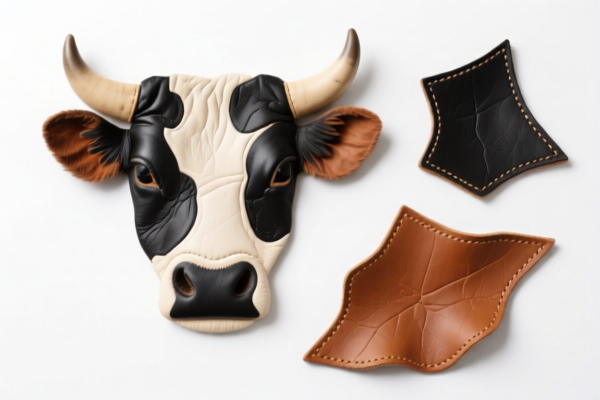
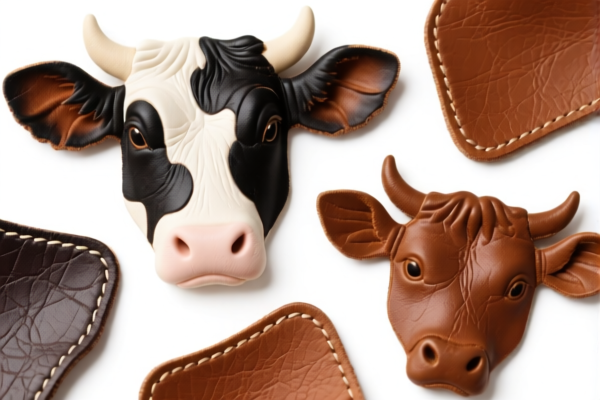
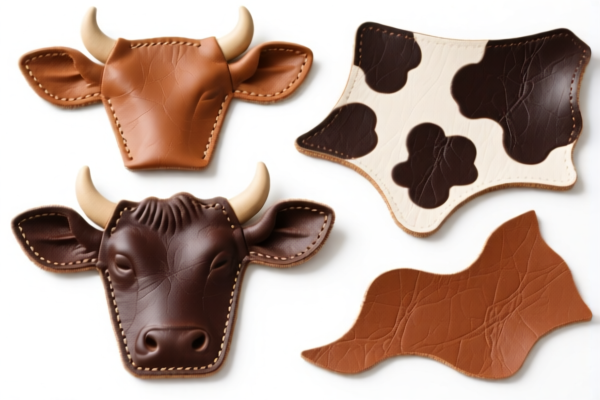
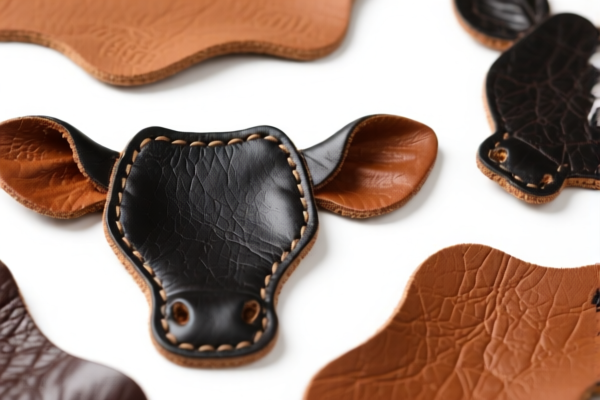
AI Analysis
🐄 Bovine Leather Decorative Material Pieces
🌐 HS Code Reference & Customs Clearance Guide | 2026 Latest Tariff Analysis | Professional Strategy
📌 I. Product Definition & Classification: What Exactly Is "Bovine Leather Decorative Material"?
"Bovine Leather Decorative Material Pieces" refer to cut, shaped, or processed sections of cowhide intended for decorative purposes, handicrafts, upholstery, or further manufacturing (such as belts or accessories). In international trade, the classification hinges on whether the leather is classified as "Leather" (Chapter 41) or processed into a specific "Article" (Chapter 42), or if it contains non-leather components that shift it to plastics/resins.
Key Distinction Criteria: * Chapter 41 (Leather): If the item is raw, tanned, or crust leather simply cut into shapes/pieces for decoration, it remains under Chapter 41. * Chapter 42 (Articles of Leather): If the pieces are part of a finished article (like a belt blank) or heavily processed into a specific form recognized as an "article," it may shift to Chapter 42. * Chapter 39 (Plastics): If the material is a synthetic leather substitute or mixed with significant organic/plastic components, it might fall under Chapter 39.
⚠️ Critical Clarification Point:
- If it is pure bovine leather cut into decorative shapes → Chapter 41.
- If it is a belt strip blank or specific leather article → Chapter 42.
- If it is a composite/plastic-based material labeled as "leather" → Chapter 39.
📦 II. HS Code Classification Details (2026 Latest Tariff Reference)
| HS Code | Product Description | Application Scenario | Material Status |
|---|---|---|---|
4107.11.80.00 |
Decorative bovine leather pieces; material is bovine leather; form is pieces; classified as fancy leather. | Pure cowhide cut into decorative shapes, veneers, or fancy cut leather. | ✅ Pure Leather |
4107.99.80.00 |
Decorative bovine leather pieces; material is bovine leather; form is piece/fancy leather; fits other/fancy leather classification. | Other types of tanned cowhide pieces not specifically listed in 4107.11. | ✅ Pure Leather |
3926.90.99.89 |
Bovine leather craft material pieces; material is leather/organic; form is other articles; fits catch-all attribute. | Synthetic leather, PU leather, or composite materials labeled as "leather pieces." | ❌ Plastic/Composite |
4205.00.80.00 |
Bovine leather craft material pieces; material is bovine leather; form is piece; classified as other leather articles. | Processed leather strips/pieces for crafts that are considered "other articles of leather." | ✅ Leather Article |
4205.00.40.00 |
Bovine leather craft material pieces; material is bovine leather; form is piece; classified as leather articles for belt strips. | Specifically shaped leather blanks intended for belt manufacturing. | ✅ Leather Article |
🔍 Key Reminder:
- Pure Leather goes to 4107 (lowest base duty).
- Leather Articles go to 4205 (higher duty due to processing).
- Synthetic/Composite goes to 3926 (moderate base duty, but high USITC tariff).
💰 III. 2026 Latest Tariff Rate Breakdown (Including Surtax & Policy Add-ons)
✅ Applicable Country: USA (US)
✅ Origin: China (CN)
✅ Effective Date: 2025/2026 (Current IEEPA & 301 Tariffs)
🎯 1. 4107.11.80.00 & 4107.99.80.00 —— Pure Decorative Leather Pieces
| Item | Content |
|---|---|
| Base Duty | 2.4% |
| USITC Surcharge (301) | 0.0% |
| IEEPA Surcharge | 10.0% |
| Total Tariff | 12.4% |
| Tax Calculation | CIF Value × 12.4% |
| De Minimis Exemption | ❌ Not Eligible (Deny De Minimis for China-origin goods under Section 301/IEEPA) |
| Legal Basis | IEEPA:9903.01.25 → USITC:4107.11.80.00 |
📌 Explanation:
- These codes fall under Chapter 41 (Leather).
- The 12.4% total rate consists of a low base duty (2.4%) plus the 10% IEEPA tariff specifically targeting Chinese goods.
- No 25% Section 301 tariff applies to these specific leather codes, making them relatively cost-effective compared to other categories.
🎯 2. 3926.90.99.89 —— Synthetic/Composite "Leather" Pieces
| Item | Content |
|---|---|
| Base Duty | 5.3% |
| USITC Surcharge (301) | 7.5% |
| IEEPA Surcharge | 10.0% |
| Total Tariff | 22.8% |
| Tax Calculation | CIF Value × 22.8% |
| De Minimis Exemption | ❌ Not Eligible |
| Legal Basis | IEEPA:9901.25 → USITC:3926.90.99.89 → FOOTNOTE:301 |
📌 Explanation:
- If the product is not pure leather but a plastic/composite, it falls under Chapter 39.
- This attracts a 7.5% Section 301 tariff + 10% IEEPA + 5.3% base.
- 22.8% is significantly higher than pure leather (12.4%). Misclassification here is costly.
🎯 3. 4205.00.80.00 —— Other Leather Articles (Craft Pieces)
| Item | Content |
|---|---|
| Base Duty | 0.0% |
| USITC Surcharge (301) | 25.0% |
| IEEPA Surcharge | 10.0% |
| Total Tariff | 35.0% |
| Tax Calculation | CIF Value × 35.0% |
| De Minimis Exemption | ❌ Not Eligible |
| Legal Basis | IEEPA:9901.25 → USITC:4205.00.80.00 → FOOTNOTE:301 |
📌 Explanation:
- If the pieces are considered "Articles of Leather" (Chapter 42), they trigger the maximum 25% Section 301 tariff.
- Even with 0% base duty, the 35.0% total rate is very high.
- Avoid this classification if the product can be justified as raw/fancy leather (Chapter 41).
🎯 4. 4205.00.40.00 —— Leather Articles for Belt Strips
| Item | Content |
|---|---|
| Base Duty | 1.8% |
| USITC Surcharge (301) | 25.0% |
| IEEPA Surcharge | 10.0% |
| Total Tariff | 36.8% |
| Tax Calculation | CIF Value × 36.8% |
| De Minimis Exemption | ❌ Not Eligible |
| Legal Basis | IEEPA:9901.25 → USITC:4205.00.40.00 → FOOTNOTE:301 |
📌 Explanation:
- Specifically for belt blanks.
- Highest tariff at 36.8% due to the combination of base duty (1.8%) + 25% Section 301 + 10% IEEPA.
- Only use if the product is explicitly identifiable as belt material.
🛠️ IV. Customs Clearance Practical Advice (Pitfall Avoidance Guide)
✅ 1. Documentation Checklist (Mandatory)
| Document | Required | Notes |
|---|---|---|
| ✅ Product Specification | ✔️ | Must clearly state: "100% Bovine Leather" or "PU Leather." |
| ✅ Material Composition Certificate | ✔️ | Crucial to distinguish between Chapter 41 (Leather) and Chapter 39 (Plastic). |
| ✅ Product Photos | ✔️ | Show texture, cut edges, and any finishing (glazed, embossed). |
| ✅ Commercial Invoice | ✔️ | Use precise terminology: "Bovine Leather Decorative Pieces" not just "Leather Sheets." |
| ✅ Packing List | ✔️ | Detail weight and dimensions accurately. |
✅ 2. Classification Strategy (Key Mnemonics)
🔥 "Pure Leather = Ch41 (12.4%), Article = Ch42 (35%+), Plastic = Ch39 (22.8%)."
| Scenario | Correct HS Code | Risk if Misclassified |
|---|---|---|
| Pure Cowhide Cut Pieces | 4107.11.80.00 or 4107.99.80.00 |
High Risk: Misclassified as Ch42 → Pay 35% instead of 12.4%. |
| Synthetic/PU "Leather" Pieces | 3926.90.99.89 |
Medium Risk: Misclassified as Ch41 → Penalty + Back Duty. |
| Belt Blanks | 4205.00.40.00 |
High Risk: If not explicitly belt blanks, may be reclassified to Ch41 or Ch42.80. |
| Craft Leather Strips (General) | 4205.00.80.00 |
High Risk: Higher tariff (35%) than Ch41. Justify as "Leather" not "Article" if possible. |
✅ 3. Special Handling Tips
| Situation | Handling Advice |
|---|---|
| Mixed Materials | If leather is backed with fabric or plastic, consult ruling. Likely Ch39 or Ch42. |
| Decorative Embellishments | If glued with non-leather decorations, it may become an "Article" (Ch42). |
| Origin Declaration | Ensure Country of Origin is clearly marked as China. No de minimis exemption applies. |
| IEEPA Impact | Remember the 10% IEEPA tariff applies to ALL these codes if originating from China. |
🌍 V. Global Market Comparison (2026 Update)
| Market | Recommended HS Code | Effective Tariff (China Origin) | Notes |
|---|---|---|---|
| 🇺🇸 USA | 4107.11.80.00 |
12.4% | Best for pure leather. Avoid Ch42 (35%+). |
| 🇺🇸 USA | 4205.00.80.00 |
35.0% | High cost for leather articles. |
| 🇪🇺 EU | 4107.11.00 |
0% | No IEEPA/301 tariffs. Very favorable for leather. |
| 🇨🇳 China | 4107.11.00 |
2.4% | Low import duty if re-exporting or domestic use. |
| 🇬🇧 UK | 4107.11.00 |
0% | Post-Brexit tariff likely aligned with EU for leather. |
📌 Conclusion:
- USA is the most costly market due to IEEPA (10%) and potential Section 301 (25% or 7.5%).
- Pure Leather (Ch41) is the safest bet for minimizing US tariffs (12.4%).
- Avoid Chapter 42 if possible, as it triggers the highest surcharges.
📌 VI. Common Mistakes & Pitfalls (Lessons Learned)
❌ Mistake 1: Classifying "Bovine Leather Pieces" as Leather Articles (4205)
👉 Consequence: Pay 35.0% instead of 12.4% → Extra 22.6% cost!
❌ Mistake 2: Using "Leather" description for Synthetic/PU Material
👉 Consequence: Customs reclassifies to 3926 → Pay 22.8% + Penalties for misdeclaration.
❌ Mistake 3: Assuming De Minimis (Section 321) Exemption
👉 Consequence: No Exemption! All China-origin goods under 100% are taxed. Shipments <$800 still face duties.
❌ Mistake 4: Vague Description: "Leather Pieces"
👉 Consequence: Customs may select the highest tariff code (4205.00.80.00) → 35.0%.
✅ Correct Declaration:
"Bovine Leather Decorative Pieces, Tanned, Cut to Shape, 100% Genuine Leather, Not Further Worked Than Cut, HS 4107.11.80.00"
🎯 VII. Conclusion: Precise Classification Saves Money!
🎯 Remember the Mnemonic:
🔹 "Pure Leather = 12.4%, Article = 35%, Plastic = 22.8%."
🔹 "China Origin = No De Minimis, IEEPA +10% Always Applies."
🔹 "If in Doubt, Stay in Chapter 41, Not 42!"
📌 Pro Tip:
If your product is pure bovine leather, ensure your invoice and specs explicitly state "100% Bovine Leather, Tanned, Cut Pieces" to justify HS 4107.11.80.00 (12.4%).
For synthetic materials, declare accurately as "Synthetic Leather/PU" to avoid fraud penalties, but be prepared for 22.8% duty.
📣 Immediate Action:
📞 Verify Material Composition before shipping.
📄 Request Pre-Ruling if the product is a hybrid (leather + fabric/plastic).
🚀 Optimize for HS 4107.11.80.00 to save up to 22.6% in tariffs!
✨ Professional Clearance Starts with Accurate Classification!
💼 Every Percent of Tariff Matters to Your Bottom Line!
Customer Reviews
About HS Code Classification
The Harmonized System (HS) is an internationally standardized nomenclature developed by the World Customs Organization (WCO) to classify traded products. Over 200 countries use the HS system as the basis for customs tariffs, trade statistics, and import/export regulations.
Each HS code follows a hierarchical structure:
- Chapter (2 digits) — Broad category of goods (e.g., Chapter 84: Machinery and Mechanical Appliances)
- Heading (4 digits) — More specific grouping within the chapter
- Subheading (6 digits) — Internationally standardized breakdown, used by all WCO member countries
- National subdivisions (8-10 digits) — Country-specific extensions for further classification, such as US HTSUS 10-digit codes
Correct HS code classification is essential for smooth customs clearance, accurate duty payment, and compliance with trade regulations. Misclassification can lead to customs delays, overpayment of duties, or penalties.
When importing from CN to US, the applicable tariff rates may include:
- Most-Favored-Nation (MFN) rate — The standard duty rate applied to WTO members
- General rate — Applied to countries without trade agreements
- Trade remedy duties — Additional tariffs such as Section 301 (anti-dumping), Section 232 (national security), or countervailing duties
The information provided on this page is for reference purposes only. For official classification, please consult with your local customs authority or a licensed customs broker.