Bovine Leather Decorative Pieces
CN → US| HS Code | Tariff Rate | Origin | Destination | Doc |
|---|---|---|---|---|
| 4113903000 | 38.3% | CN | US | Official Doc |
| 4205008000 | 35.0% | CN | US | Official Doc |
| 4205001000 | 35.0% | CN | US | Official Doc |
Product Images
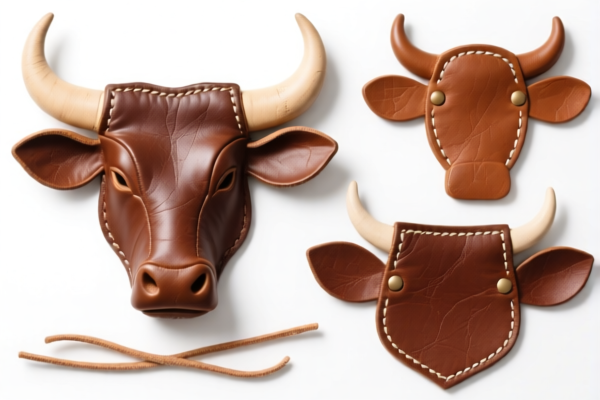
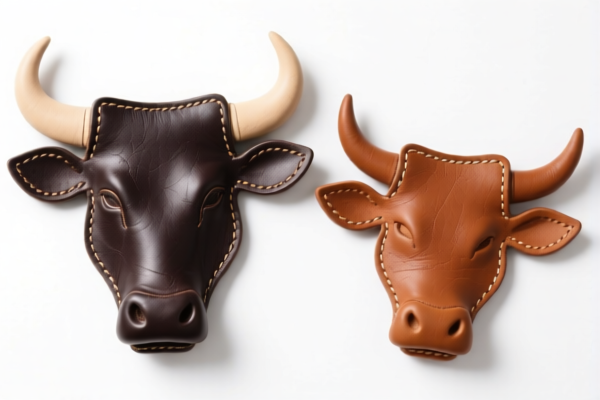
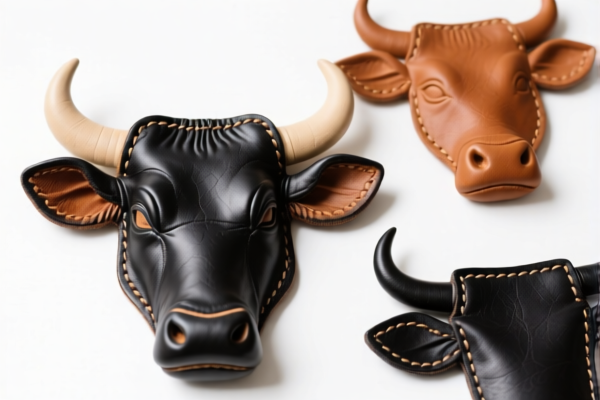
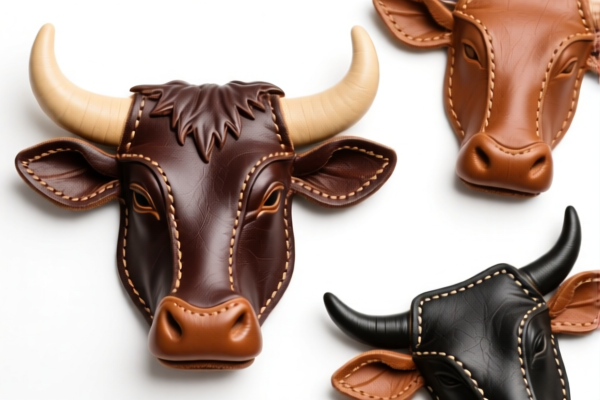
AI Analysis
🐂 Bovine Leather Decorative Pieces
🌐 HS Code Reference & Customs Clearance Guide | 2026 Latest Tariff Analysis | Professional Clearance Strategy
📌 I. Product Definition & Classification: What Are "Bovine Leather Decorative Pieces"?
Bovine leather decorative pieces refer to interior components or ornamental parts made from animal leather (specifically bovine/cowhide) that have undergone further processing. In international trade, these items are generally classified based on whether they retain the core characteristics of "leather" or are considered "articles of leather."
Key Distinction Points: 1. Further Processed Leather Goods (HS 4113): If the leather has been worked beyond simple tanning (e.g., embossed, painted, laminated, or shaped specifically for interior trim), it may fall under Chapter 41. 2. Articles of Leather (HS 4205): If the item is considered a finished article, component, or accessory made of leather (even if used for decoration/interior), it falls under Chapter 42.
⚠️ Critical Classification Logic:
- If the item is primarily "worked leather" prepared for specific industrial or decorative use but not yet a finished "article," it may be classified under 4113.
- If the item is a finished "article" (e.g., a trim strip, a molded part, a decorative panel) made of leather, it is classified under 4205.
📦 II. HS Code Classification Details (2026 Latest Tariff Authority Comparison)
Based on the provided data, there are three potential HS Codes for Bovine Leather Decorative Pieces. The classification depends on the specific material state and product form.
| HS Code | Product Description | Application Scenario | Classification Reason |
|---|---|---|---|
4113.90.30.00 |
Cowhide Material Decorative Pieces, matching animal leather material and further processed product forms. | Leather components that have undergone specific processing but are not yet finished "articles." | Focuses on "Further Processed Leather" rather than finished articles. |
4205.00.80.00 |
Cowhide Material Decorative Pieces, meeting core leather material requirements and article forms. | Finished leather goods, such as decorative trim, padding, or molded parts. | Focuses on "Articles of Leather" (Chapter 42). |
4205.00.10.00 |
Cowhide Material Decorative Pieces, meeting leather limitations and articles in the category of technical or decorative use. | Specialized decorative or technical leather articles. | Focuses on "Technical/Decorative Articles" (Chapter 42). |
🔍 Key Reminder:
- 4113 is for "worked leather" (material state).
- 4205 is for "articles of leather" (product state).
- You must determine if your product is a "processed material" or a "finished article" to choose the correct chapter.
💰 III. 2026 Latest Tariff Rate Details (Including Additional Taxes, Policy Surcharges)
✅ Applicable Country: United States (US)
✅ Origin: China (CN)
✅ Effective Time: Current rates apply (based on 301 & IEEPA provisions)
🎯 1. 4113.90.30.00 – Cowhide Decorative Pieces (Further Processed)
| Item | Detail |
|---|---|
| Base Tariff | 3.3% (ad valorem) |
| Section 301 Surcharge | +25.0% |
| Section 122 Surcharge | +10.0% |
| Total Tax Rate | 38.3% |
| Tax Calculation | CIF Value × 38.3% |
| De Minimis Exemption | ❌ Not Applicable |
| Legal Basis Path | Section 301: 25% + Section 122: 10% + Base: 3.3% |
📌 Explanation:
- This code attracts the highest total tariff among the three options due to the base rate of 3.3%.
- Section 122 Tariff (10%) applies specifically to certain imported goods, including some leather products.
- Section 301 Tariff (25%) is the standard additional duty for Chinese-origin goods in this category.
🎯 2. 4205.00.80.00 – Articles of Leather (General Decorative/Trim)
| Item | Detail |
|---|---|
| Base Tariff | 0.0% |
| Section 301 Surcharge | +25.0% |
| Section 122 Surcharge | +10.0% |
| Total Tax Rate | 35.0% |
| Tax Calculation | CIF Value × 35.0% |
| De Minimis Exemption | ❌ Not Applicable |
| Legal Basis Path | Section 301: 25% + Section 122: 10% + Base: 0.0% |
📌 Note:
- Base Tariff is 0%, making this 3.3% cheaper than4113.90.30.00.
- Suitable for standard leather decorative parts, trims, or accessories.
- Critical: Must clearly describe as "Articles of Leather" (e.g., trim, padding, molded part).
🎯 3. 4205.00.10.00 – Articles of Leather (Technical/Decorative)
| Item | Detail |
|---|---|
| Base Tariff | 0.0% |
| Section 301 Surcharge | +25.0% |
| Section 122 Surcharge | +10.0% |
| Total Tax Rate | 35.0% |
| Tax Calculation | CIF Value × 35.0% |
| De Minimis Exemption | ❌ Not Applicable |
| Legal Basis Path | Section 301: 25% + Section 122: 10% + Base: 0.0% |
📌 Note:
- Identical tariff to4205.00.80.00.
- Use this if the product is explicitly for technical or specialized decorative use (e.g., automotive interior leather trim, specialized furniture accents).
- Must provide documentation proving the "technical" or specific "decorative" nature.
🛠️ IV. Customs Clearance Practical Advice (Avoid Pitfalls)
✅ 1. Required Documentation Checklist
| Document | Required | Purpose |
|---|---|---|
| ✅ Product Specification Sheet | ✔️ | Details material (bovine leather), processing method, dimensions, and end-use. |
| ✅ Photos of Product | ✔️ | Show texture, stitching, finish, and any branding. |
| ✅ Commercial Invoice | ✔️ | Must clearly state "Bovine Leather Decorative Pieces" and HS Code. |
| ✅ Packing List | ✔️ | Itemize quantities and weights. |
| ✅ Material Declaration | ✔️ | Confirm 100% bovine leather or blend percentages. |
| ✅ Certificate of Origin | ✔️ | Required for origin verification (China). |
✅ 2. Declaration Tips (Key Mnemonic)
🔥 "Material vs. Article, Base Rate Makes Difference!"
- 4113 = "Processed Leather" → 3.3% Base → 38.3% Total
- 4205 = "Article of Leather" → 0% Base → 35.0% Total
| Scenario | Recommended HS Code | Risk |
|---|---|---|
| Finished trim, molded part, cushion cover | 4205.00.80.00 or 4205.00.10.00 |
Low if properly described as "article." |
| Leather sheets/panels for further assembly | 4113.90.30.00 |
High if misdeclared as "article." |
| Mixed materials (e.g., leather + plastic backing) | 4205.00.80.00 |
Verify "essential character" is leather. |
⚠️ Warning:
- Do not use generic terms like "Leather Goods" without specifying the HS Code.
- If the product is used for automotive interiors,4205.00.10.00may be more appropriate if it meets technical specifications.
- Section 122 Tariff (10%) is non-negotiable for these codes. Ensure it is included in cost calculations.
✅ 3. Special Case Handling
| Case | Recommendation |
|---|---|
| OEM Custom Parts | Provide design drawings to prove "article" status (Chapter 42). |
| Leather + Fabric Blend | If leather is essential character → Chapter 42. If fabric is essential → Different Code. |
| Small Quantity Samples | Still subject to 35–38.3% tariff; no de minimis exemption. |
| Re-export from Mexico/Vietnam | If processed in a third country, check rules of origin to avoid "China Origin" surcharges. |
🌍 V. Global Market Comparison (2026 Latest)
| Country/Region | Recommended HS Code | Tariff (China Origin) | Notes |
|---|---|---|---|
| 🇺🇸 United States | 4205.00.80.00 |
35.0% | Best option for finished articles. |
| 🇪🇺 European Union | 4205.00.80.00 |
~5–10% | No Section 301/122 taxes. |
| 🇨🇳 China (Import) | 4205.00.80.00 |
~5–10% | Different tariff schedule. |
| 🇯🇵 Japan | 4205.00.80.00 |
~5–10% | No Section 301/122 taxes. |
📌 Conclusion:
- The United States imposes high additional tariffs (Section 301 + Section 122).
- Chapter 42 (4205) is cheaper than Chapter 41 (4113) due to the 0% base rate.
- Always aim for 4205.00.80.00 if the product is a finished decorative item.
📌 VI. Common Mistakes & Pitfalls (Lessons Learned)
❌ Mistake 1: Declaring "Leather Trim" as "Raw Leather" (4113)
👉 Result: Higher tax (38.3% vs 35.0%).
✅ Fix: Prove it is a finished "article" to use Chapter 42.
❌ Mistake 2: Ignoring Section 122 Tariff (10%)
👉 Result: Under-declared tax → Penalties + Back Taxes.
✅ Fix: Always include 10% in cost calculations for these codes.
❌ Mistake 3: Using "De Minimis" for small shipments
👉 Result: Not eligible. All leather decorative pieces from China are subject to full tariffs.
✅ Fix: Factor in 35–38.3% into pricing, regardless of quantity.
🎯 VII. Conclusion: Professional Declaration, Cost Optimization
🎯 Key Takeaway:
"Choose Chapter 42 (4205) for 0% Base Rate → 35% Total. Avoid Chapter 41 (4113) for 3.3% Base Rate → 38.3% Total."
📌 Final Advice:
- If your product is a finished decorative piece (trim, part, accessory), classify under 4205.00.80.00.
- Ensure your commercial invoice clearly states "Article of Bovine Leather" to support Chapter 42 classification.
- Contact a customs broker to confirm the "essential character" of your product before shipment.
✨ Pro Tip:
If you are importing into the US, budget for 35% total tax. There are no exemptions for these goods from China. Consider supply chain diversification if margins are tight.
📣 Act Now:
📞 Confirm HS Code with Broker
📄 Prepare Product Specifications
💰 Calculate Landed Cost (CIF + 35%)
✨ Smart Classification, Lower Costs, Smooth Clearance!
💼 Your Leather Decorative Pieces Deserve the Best Customs Strategy!
Customer Reviews
About HS Code Classification
The Harmonized System (HS) is an internationally standardized nomenclature developed by the World Customs Organization (WCO) to classify traded products. Over 200 countries use the HS system as the basis for customs tariffs, trade statistics, and import/export regulations.
Each HS code follows a hierarchical structure:
- Chapter (2 digits) — Broad category of goods (e.g., Chapter 84: Machinery and Mechanical Appliances)
- Heading (4 digits) — More specific grouping within the chapter
- Subheading (6 digits) — Internationally standardized breakdown, used by all WCO member countries
- National subdivisions (8-10 digits) — Country-specific extensions for further classification, such as US HTSUS 10-digit codes
Correct HS code classification is essential for smooth customs clearance, accurate duty payment, and compliance with trade regulations. Misclassification can lead to customs delays, overpayment of duties, or penalties.
When importing from CN to US, the applicable tariff rates may include:
- Most-Favored-Nation (MFN) rate — The standard duty rate applied to WTO members
- General rate — Applied to countries without trade agreements
- Trade remedy duties — Additional tariffs such as Section 301 (anti-dumping), Section 232 (national security), or countervailing duties
The information provided on this page is for reference purposes only. For official classification, please consult with your local customs authority or a licensed customs broker.