Bovine Leather Document Bags
CN → US| HS Code | Tariff Rate | Origin | Destination | Doc |
|---|---|---|---|---|
| 4107117050 | 15.0% | CN | US | Official Doc |
| 4202110090 | 43.0% | CN | US | Official Doc |
| 4202110030 | 43.0% | CN | US | Official Doc |
| 4107127050 | 15.0% | CN | US | Official Doc |
Product Images
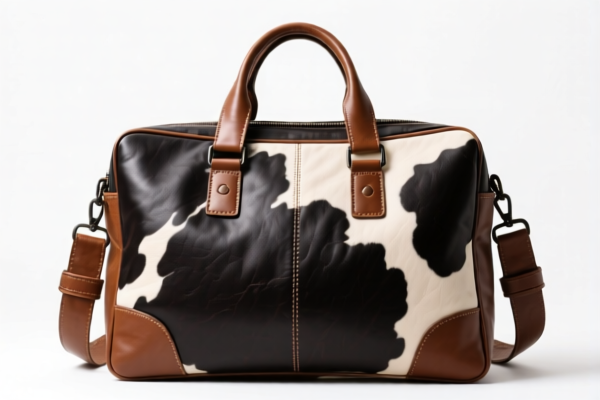
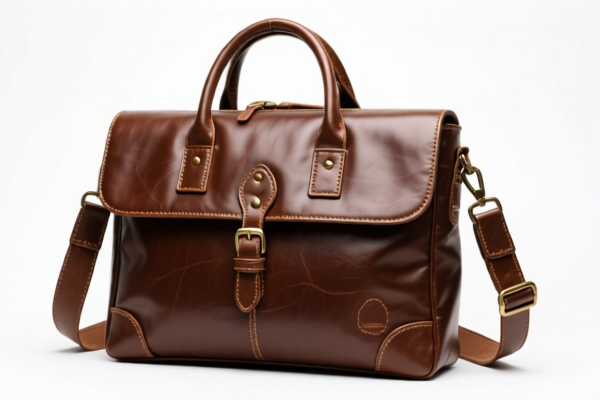
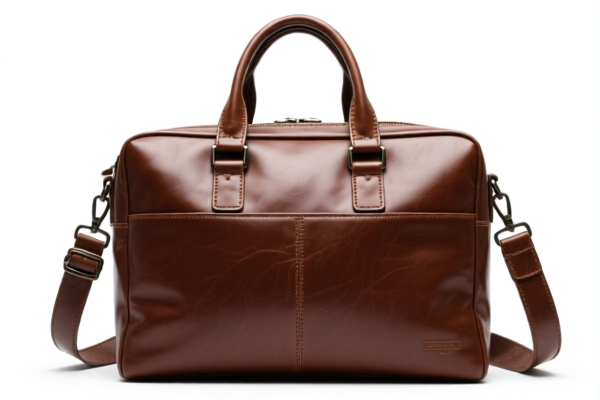

AI Analysis
🎒 Bovine Leather Document Bags & Containers: The Ultimate HS Code & Duty Guide (2026)
🌐 Global Trade Compliance & Customs Clearance | Mastering the "Leather Bag" Tax Minefield | Professional Strategy for US Imports
📌 I. Product Definition & Classification: What Exactly is a "Bovine Leather Document Bag"?
Bovine leather document bags are high-end luggage items specifically designed for professionals to carry documents, laptops, and business essentials. However, in the eyes of customs (US CBP), what the bag is made of and what it is designed to carry determine whether you pay 15% or 43% in duties.
The core distinction lies in the specific HS Code classification: * Category A (Raw Material Focus): Bags classified based on the type of leather (Bovine) intended for general use (e.g., general handbags, wallets). * Category B (Functional Focus): Bags explicitly classified as Document Bags, Briefcases, or Case Containers made of leather. This often attracts higher "Section 301" punitive tariffs.
⚠️ CRITICAL DISTINCTION: * If the item is a pure leather skin/cut (used to make bags) → HS 4107 (Duty ~15%) * If the item is a finished container/bag (like a briefcase, satchel, or document holder) → HS 4202 (Duty ~43%) * Even if made of the exact same leather, the finished product (4202) is taxed significantly higher than the raw material (4107).
📦 II. HS Code Classification Matrix (2026 US Tariff Schedule)
Based on the provided data, here is the authoritative breakdown for Bovine Leather Document Bags.
| HS Code | Product Description & Summary | Total Duty Rate | Classification Logic |
|---|---|---|---|
| 4107.11.70.50 | Bovine Leather (Raw/Prepared), For Use in Bags | 15.0% | Raw material classification. Applies to hides/skins prepared for manufacturing, not finished bags. |
| 4107.12.70.50 | Bovine Leather (Raw/Prepared), For Use in Bags | 15.0% | Same as above. Different sub-classification for the specific hide type, but same duty structure. |
| 4202.11.00.90 | Leather Goods, Bags & Containers (General) | 43.0% | Finished leather articles. Includes general leather bags, not specifically "briefcases" but falls under general containers. |
| 4202.11.00.30 | Leather Goods, Satchels, Document Bags, Briefcases | 43.0% | Most Common for Document Bags. Explicitly covers document cases, briefcases, and portfolio bags. |
🔍 Key Insight: * 4107 Series: If you are importing the leather hides to manufacture bags in the US, you pay 15%. * 4202 Series: If you are importing finished document bags (even if the summary says "leather material"), you pay 43%. This is the critical "gotcha" for importers of finished goods.
💰 III. 2026 Duty Breakdown: The Math Behind the 43% Nightmare
For the finished Bovine Leather Document Bags (HS Codes 4202.11.00.30 & 4202.11.00.90), the tax structure is aggressive.
🎯 Scenario: Importing Finished Leather Document Bags (CN Origin → US)
| Component | Rate | Source / Legal Basis | Explanation |
|---|---|---|---|
| Base Tariff | 8.0% | Standard MFN Rate | The baseline duty for leather handbags. |
| "Section 301" Add-on | 25.0% | USITC Footnote / 301 Action | Punitive tariff specifically targeting Chinese-made leather goods. |
| "Section 122" Add-on | 10.0% | IEEPA / Section 122 | Additional levy often applied to specific Chinese leather imports. |
| TOTAL EFFECTIVE DUTY | 43.0% | Sum of all above | This is your final cost multiplier on CIF value. |
📌 Calculation Example: If your Invoice Value (CIF) is $10,000: * Base Duty (8%): $800 * Section 301 Duty (25%): $2,500 * Section 122 Duty (10%): $1,000 * Total Duty Payable: $4,300 * Effective Tax Rate: 43%
⚠️ Why 15% vs 43%? If the shipment is misclassified as 4107 (raw hides "for use in bags") instead of 4202 (finished bags), you save 28% in duties. However, CBP will reject this if the goods are clearly finished bags with hardware, zippers, and handles. Misclassification leads to penalties and seizure.
🛠️ IV. Customs Clearance Strategy & Risk Mitigation
✅ 1. Essential Documentation Checklist
To prove your goods belong to 4202 (and avoid being questioned as raw hides, or vice versa): * Detailed Commercial Invoice: Must state "Finished Leather Document Bag, Bovine Leather, with handles, zippers, and lining." * Product Photographs: High-res photos showing hardware (zippers, buckles), interior lining, and structure. * Material Analysis Report: Certificate from a lab confirming 100% Bovine Leather (to justify 4202.11). * Bill of Materials (BOM): If manufacturing, show the finished assembly. * Country of Origin Certificate: Explicitly state "Made in China" (to trigger the correct 43% tax) or proof of eligible country for exemption.
✅ 2. Declaration Best Practices (The "Golden Rules")
🔥 Rule #1: Don't call it "Leather" alone. * ❌ Wrong: "Bovine Leather, 100 pcs" → CBP will guess or penalize. * ✅ Right: "Finished Leather Document Bags, Type 4202, Bovine Leather, with Metal Hardware."
🔥 Rule #2: Distinguish "Raw" vs. "Finished". * If importing skins/hides: Declare as 4107.11.70.50. (Tax: 15%). * If importing bags: Declare as 4202.11.00.30. (Tax: 43%). * Never try to classify finished bags as raw material to avoid the 301/122 tariffs.
✅ 3. Special Circumstances & Loopholes
- De Minimis Exception: Does not apply here. The value of leather bags often exceeds the $800 threshold, and they are subject to strict Section 301 rules.
- Origin Diversification: If you can source from Vietnam, Mexico, or Thailand, the 25% Section 301 and 10% Section 122 might be waived.
- Potential Savings: 35% drop in duty (from 43% to 8%).
- Pre-Ruling (Advance Ruling): Apply to US CBP before shipping. Ask: "Does this specific bag fall under 4202.11.00.30 or 4202.11.00.90?" Get a written ruling to protect against audits.
🌍 V. Global Market Comparison (2026)
| Market | HS Code for Leather Bags | Base Duty | Section 301 Add-on | Total Duty (CN Origin) |
|---|---|---|---|---|
| 🇺🇸 USA | 4202.11.00.30 | 8.0% | +35.0% (25+10) | 43.0% (🔴 High) |
| 🇪🇺 EU | 4202.11.00 | 12.0% | 0% | 12.0% |
| 🇯🇵 Japan | 4202.11.00 | 10.0% | 0% | 10.0% |
| 🇦🇺 Aus | 4202.11.00 | 10.0% | 0% | 10.0% |
📌 Conclusion: The US is currently the most expensive market for Chinese leather document bags due to the 301/122 punitive tariffs.
📌 VI. Common Pitfalls & How to Avoid Them
❌ Mistake 1: Misclassifying Finished Bags as Raw Hides * Scenario: Shipping finished bags but declaring HS 4107 to pay 15% instead of 43%. * Result: CBP audit, 40% penalty, seized goods, and back-taxes. * Fix: Always use the "Finished Article" code (4202) if the bag has handles, zippers, or is ready for sale.
❌ Mistake 2: Confusing "Document Bag" with "Wallet" * Scenario: Calling a large leather satchel a "wallet" to try for lower rates. * Result: CBP examines size/structure. If it's too big, it's a "Bag" (4202), not a "Wallet" (different subheading).
❌ Mistake 3: Ignoring the "122 Clause" (10%) * Scenario: Only calculating the 25% tariff and forgetting the 10% 122 clause. * Result: Under-budgeting for duties by $1,000 per $10k shipment.
🎯 VII. Final Verdict & Action Plan
For Bovine Leather Document Bags (Finished Goods): * Correct HS Code: 4202.11.00.30 (Specific for Document Bags/Briefcases) or 4202.11.00.90 (General Leather Bags). * Expected Duty: 43.0% (8% Base + 25% 301 + 10% 122). * Raw Material Alternative: If you import the leather first, declare as 4107.11.70.50 (15% duty), manufacture in the US, then re-export or sell domestically.
🚀 Pro Tip: If your profit margin cannot absorb 43%, consider: 1. Reshoring: Move final assembly to a non-China country (e.g., Vietnam). 2. Product Redesign: Classify as "Travel Goods" (if applicable) to see if a lower code exists. 3. Advance Ruling: Get a binding opinion from CBP to ensure your 4202 classification is bulletproof.
✨ Trade Compliance = Profitability. Don't let a hidden 28% duty difference destroy your Q4 margin. Classify correctly, declare accurately, ship safely.
Customer Reviews
About HS Code Classification
The Harmonized System (HS) is an internationally standardized nomenclature developed by the World Customs Organization (WCO) to classify traded products. Over 200 countries use the HS system as the basis for customs tariffs, trade statistics, and import/export regulations.
Each HS code follows a hierarchical structure:
- Chapter (2 digits) — Broad category of goods (e.g., Chapter 84: Machinery and Mechanical Appliances)
- Heading (4 digits) — More specific grouping within the chapter
- Subheading (6 digits) — Internationally standardized breakdown, used by all WCO member countries
- National subdivisions (8-10 digits) — Country-specific extensions for further classification, such as US HTSUS 10-digit codes
Correct HS code classification is essential for smooth customs clearance, accurate duty payment, and compliance with trade regulations. Misclassification can lead to customs delays, overpayment of duties, or penalties.
When importing from CN to US, the applicable tariff rates may include:
- Most-Favored-Nation (MFN) rate — The standard duty rate applied to WTO members
- General rate — Applied to countries without trade agreements
- Trade remedy duties — Additional tariffs such as Section 301 (anti-dumping), Section 232 (national security), or countervailing duties
The information provided on this page is for reference purposes only. For official classification, please consult with your local customs authority or a licensed customs broker.