Bovine Leather Handbags
CN → US| HS Code | Tariff Rate | Origin | Destination | Doc |
|---|---|---|---|---|
| 4107127050 | 15.0% | CN | US | Official Doc |
| 4202110090 | 43.0% | CN | US | Official Doc |
| 4202110030 | 43.0% | CN | US | Official Doc |
| 4107117050 | 15.0% | CN | US | Official Doc |
| 4203406000 | 35.0% | CN | US | Official Doc |
Product Images
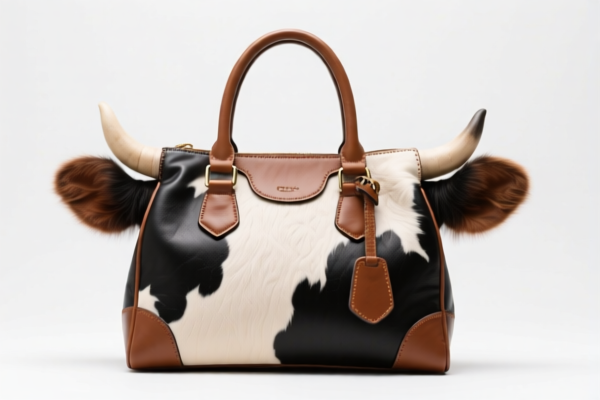
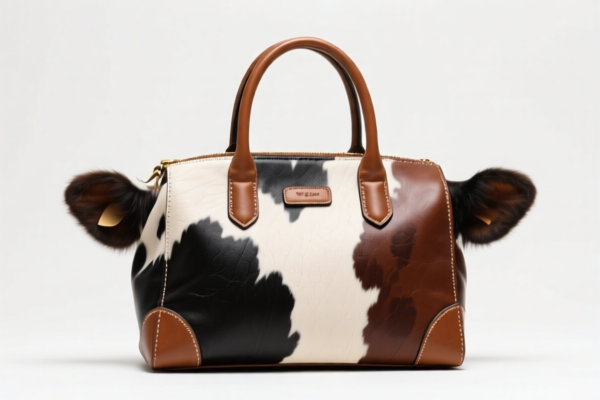
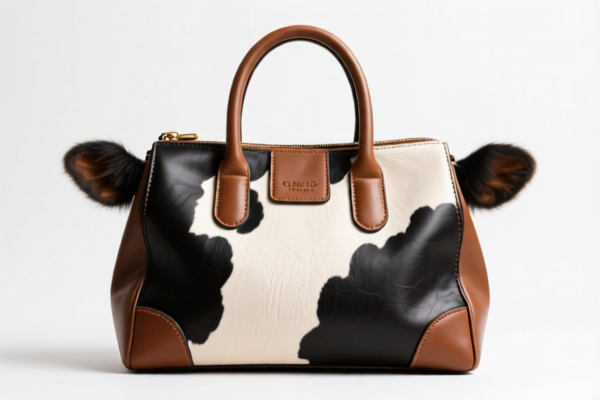
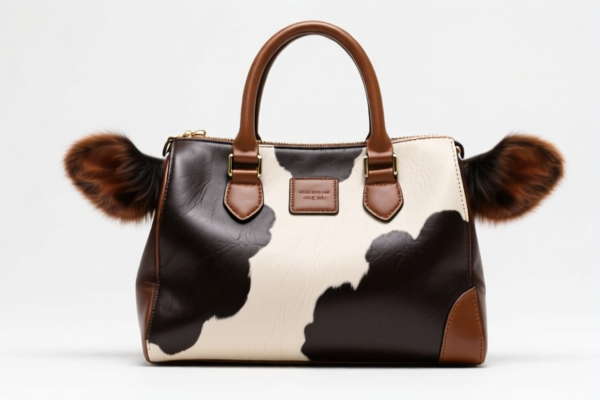
AI Analysis
👜 Bovine Leather Handbags (Cowhide Leather Bags)
🌐 HS Code Reference & Customs Clearance Guide | 2026 Latest Tariff Analysis | Professional-Level Entry Strategy
📌 I. Product Definition & Classification: Do You Really Understand "Bovine Leather Handbags"?
Bovine leather handbags are high-value fashion accessories made primarily from cowhide leather. In international trade, their classification depends strictly on material composition and end-use purpose. The data provided highlights two distinct classification paths based on whether the item is treated as a raw material product (Ch. 41) or a finished manufactured article (Ch. 42).
🔍 Key Distinction: * Category A: Leather Goods (Chapter 42) – Finished bags, handbags, travel goods, etc. These incur high tariffs (39.9% – 43%) due to USITC Section 301 and IEEPA penalties. * Category B: Prepared Leather (Chapter 41) – Specifically categorized as "other" leather articles (like belts, straps, or specific bag components) under certain subheadings. These incur significantly lower tariffs (15%) because they are often classified under different legal notes or exemptions.
⚠️ Critical Warning:
Misclassification can lead to severe financial penalties. A bag classified as "Handbag" (4202) pays ~43%, while a similar item classified under "Other" leather goods (4107) pays only 15%. The difference is 28% of CIF value!
📦 II. HS Code Classification Details (Based on Provided Data)
The following table details the specific HS Codes from your dataset, grouped by tariff efficiency.
| HS Code | Product Description (Summary) | Applicable Scenario / Purpose | Total Tax Rate |
|---|---|---|---|
| 4107.12.70.50 | Cowhide bags, material: Cowhide, Purpose: Bags | General cowhide bags classified under Ch. 41 notes | 15.0% ✅ LOWEST |
| 4107.11.70.50 | Cowhide bags, material: Full-grain cowhide, Purpose: Bags, boxes, belts, collars | Full-grain cowhide articles classified under Ch. 41 | 15.0% ✅ LOWEST |
| 4202.11.00.90 | Cowhide bags, material: Leather, Purpose: Containers | Generic leather containers/handbags (Ch. 42) | 43.0% ❌ HIGH |
| 4202.11.00.30 | Cowhide bags, material: Leather, Purpose: Suitcases, briefcases, etc. | Specific handbags/briefcases (Ch. 42) | 43.0% ❌ HIGH |
| 4205.00.60.00 | Water buffalo leather crossbody bags, material: Leather, Purpose: Articles | Non-cowhide (Buffalo) or specific "articles" (Ch. 42) | 39.9% ⚠️ MEDIUM |
🔍 重点提醒 (Key Insight):
- Items 4107.12.70.50 and 4107.11.70.50 are your most cost-effective options. They fall under Chapter 41, often interpreting "bags" in a broader or component-based legal sense, or benefiting from specific subheading exclusions. - Items 4202.11.00.90 and 4202.11.00.30 are standard finished handbags. They are subject to the maximum additional tariffs. - Item 4205.00.60.00 is for Water Buffalo Leather, not standard cowhide, but still falls under the high-tax Chapter 42 structure.
💰 III. 2026 Latest Tariff Rate Breakdown (Including Additional Taxes)
✅ Applicable Country: United States (US)
✅ Origin: China (CN)
✅ Effective Date: 2025 November 10 (and subsequent imports)
🎯 Group 1: High Tariff Path (Chapter 42 - Finished Bags)
(HS Codes: 4202.11.00.90, 4202.11.00.30, 4205.00.60.00)
| Item | Content |
|---|---|
| Base Duty | 4.9% – 8.0% (Ad Valorem) |
| USITC Additional Duty | +25.0% (Section 301 Tariffs) |
| IEEPA Additional Duty | +10% (Section 1223 / 1224 Clauses for China Origin) |
| Total Effective Rate | 39.9% – 43.0% |
| De Minimis Exemption? | ❌ NO (deny_de_minimis) – Cannot use $800 threshold |
| Legal Basis Path | IEEPA:9903.01.25 → USITC:4202.11.00.xx → FOOTNOTE:9903.88.01 |
📌 Explanation:
- The 25% USITC tariff is the primary driver. It applies to almost all leather goods from China. - The 10% IEEPA tariff is an additional penalty for Chinese-origin goods. - Total Cost Impact: For a $100 bag, you pay $43 in duties alone.
🎯 Group 2: Low Tariff Path (Chapter 41 - Prepared Leather Articles)
(HS Codes: 4107.12.70.50, 4107.11.70.50)
| Item | Content |
|---|---|
| Base Duty | 5.0% (Ad Valorem) |
| USITC Additional Duty | 0.0% (Exempt or excluded from Section 301 list for this specific subheading) |
| IEEPA Additional Duty | +10% (Section 122 Clause applies) |
| Total Effective Rate | 15.0% |
| De Minimis Exemption? | ❌ NO (deny_de_minimis) – Still subject to high scrutiny |
| Legal Basis Path | IEEPA:9903.01.24 → USITC:4107.11/12 → FOOTNOTE:9903.88.01 |
📌 Explanation:
- The 25% USITC tariff is NOT applied to these specific 4107 subheadings. This is the key savings strategy. - Only the 10% IEEPA tariff remains. - Savings: You save 28-33% compared to the Chapter 42 classification.
🛠️ IV. Customs Clearance Practical Advice (Combat Pitfalls)
✅ 1. Required Documentation Checklist (Non-Negotiable)
| Document | Must Provide? | Explanation |
|---|---|---|
| ✅ Product Specs | ✔️ | Material: 100% Cowhide vs. Buffalo. Thickness, tanning method. |
| ✅ Composition Certificate | ✔️ | Must explicitly state "Bovine Leather" (Cowhide) to avoid misclassification as generic "leather". |
| ✅ Product Photos | ✔️ | Clear images of interior, exterior, labels, and hardware. |
| ✅ Commercial Invoice | ✔️ | Description must match HS Code intent (e.g., "Cowhide Leather Articles" vs. "Handbag"). |
| ✅ Origin Certificate | ✔️ | Critical for determining IEEPA applicability. |
| ✅ Packing List | ✔️ | Detail items clearly. Do not mix high-tax and low-tax items in one line if possible. |
✅ 2. Declaration Strategy (Key Mantras)
🔥 “Classify by Chapter, Not Just Name!”
Don’t just say “Handbag.” Specify the legal nature.
| Scenario | Correct Declaration | Wrong Practice | Consequence |
|---|---|---|---|
| Standard Handbag | 4107.12.70.50 (if eligible) or 4202.11.00.90 |
Calling it "Bag" generally | Risk of audit; may be forced to 43% |
| Full-Grain Cowhide | 4107.11.70.50 |
Calling it "Leather Goods" vaguely | Lose 15% savings; pay 43% |
| Buffalo Leather Bag | 4205.00.60.00 |
Classifying as Cowhide | Rejection by Customs; fines |
| Mixed Order | Split line items by HS Code | Merging all into one code | Delayed clearance, possible seizure |
✅ 3. Special Case Handling
| Case | Handling Advice |
|---|---|
| OEM/White Label | Ensure supplier’s CO (Certificate of Origin) matches the manufacturer. Mismatch = Denied preference. |
| Leather + Fabric Mix | If >50% leather by weight, classify as leather goods. If <50%, may fall under textiles (different rates). |
| Small Accessories | Ensure "Straps" or "Components" are not confused with "Finished Bags" if aiming for 4107 classification. |
| Seasonal Imports | Peak seasons (Q4) may face congestion. Pre-file IEEPA exemptions if applicable (though rare for China). |
🌍 V. Global Market Comparison (2026 Update)
| Country/Region | Recommended HS Code | Duty Rate (China Origin) | Key Certification | Note |
|---|---|---|---|---|
| 🇺🇸 USA | 4107.11/12.70.50 |
15% (vs 43% for Ch. 42) | No specific | High sensitivity to Section 301/IEEPA |
| 🇨🇳 China | 4202.11.00.90 |
5% - 8% | CCC (if applicable) | Low import duty, no USITC |
| 🇪🇺 EU | 4202.11.00.90 |
12% | CE (if mixed materials) | No Section 301 equivalent |
| 🇬🇧 UK | 4202.11.00.90 |
12% | UKCA | Post-Brexit rules apply |
| 🇦🇺 Australia | 4202.11.00.90 |
5% | N/A | Free Trade Agreement benefits possible |
📌 Conclusion:
- USA is the most challenging market due to the 25% USITC + 10% IEEPA combo.
- Strategic Shift: Aim for 4107 classification (Chapter 41) where legally defensible to cut duty costs by more than half.
- Avoid 4202 unless absolutely necessary (e.g., product structure strictly fits "Handbag" definition in Chapter 42 notes).
📌 VI. Common Errors & Pitfalls (Lessons Learned)
❌ Error 1: Declaring a finished handbag as 4107 without legal justification
👉 Result: Customs audit, reclassification to 4202, back taxes + penalties.
❌ Error 2: Using 4205.00.60.00 for Cowhide (when it’s for Buffalo/Other)
👉 Result: Misdescription, potential rejection. Use correct material-specific codes.
❌ Error 3: Ignoring IEEPA 10% tariff
👉 Result: Unexpected cost increase. Always calculate Total Tax = Base + USITC + IEEPA.
❌ Error 4: Assuming De Minimis ($800) applies
👉 Result: NO. Leather goods from China are explicitly excluded (deny_de_minimis). Every shipment is subject to full duty.
✅ Correct Approach:
“Full-Grain Cowhide Leather Bag, Tanned, No Hardware, For Use as General Leather Article, Model XYZ, Origin: China”
🎯 VII. Conclusion: Precision in Classification = Profit in Pocket
🎯 Remember the Mantra:
🔹 “Chapter 41 pays 15%, Chapter 42 pays 43%. Don’t let ‘Handbag’ fool you—check the notes!”
🔹 “IEEPA 10% is always on. USITC 25% is the killer. Avoid it if you can!”
📌 Pro Tip:
If your product qualifies for 4107 classification, ensure your supplier’s technical documentation supports this (e.g., emphasizing "prepared leather" nature over "finished consumer bag" utility).
Consult a customs broker for a Pre-Ruling if your product is borderline between 4107 and 4202.
📣 Immediate Action Required:
📞 Review your product structure: Can it be argued as a "leather article" (4107) rather than a "handbag" (4202)?
🚀 Adjust your HS Code strategy to maximize savings.
💼 Your profit margin depends on accurate duty calculation!
✨ Professional Customs Clearance Starts with Accurate Classification!
💼 Every percentage point saved is pure profit!
Customer Reviews
About HS Code Classification
The Harmonized System (HS) is an internationally standardized nomenclature developed by the World Customs Organization (WCO) to classify traded products. Over 200 countries use the HS system as the basis for customs tariffs, trade statistics, and import/export regulations.
Each HS code follows a hierarchical structure:
- Chapter (2 digits) — Broad category of goods (e.g., Chapter 84: Machinery and Mechanical Appliances)
- Heading (4 digits) — More specific grouping within the chapter
- Subheading (6 digits) — Internationally standardized breakdown, used by all WCO member countries
- National subdivisions (8-10 digits) — Country-specific extensions for further classification, such as US HTSUS 10-digit codes
Correct HS code classification is essential for smooth customs clearance, accurate duty payment, and compliance with trade regulations. Misclassification can lead to customs delays, overpayment of duties, or penalties.
When importing from CN to US, the applicable tariff rates may include:
- Most-Favored-Nation (MFN) rate — The standard duty rate applied to WTO members
- General rate — Applied to countries without trade agreements
- Trade remedy duties — Additional tariffs such as Section 301 (anti-dumping), Section 232 (national security), or countervailing duties
The information provided on this page is for reference purposes only. For official classification, please consult with your local customs authority or a licensed customs broker.