Bovine Leather Sheets (For Decoration)
CN → US| HS Code | Tariff Rate | Origin | Destination | Doc |
|---|---|---|---|---|
| 411142 | 0.0% | CN | US | Official Doc |
| 411190 | 0.0% | CN | US | Official Doc |
Product Images
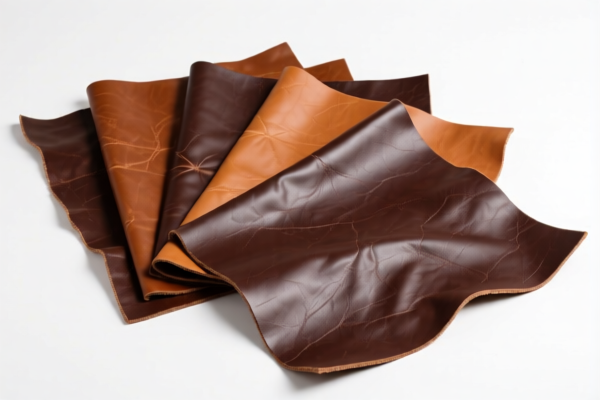
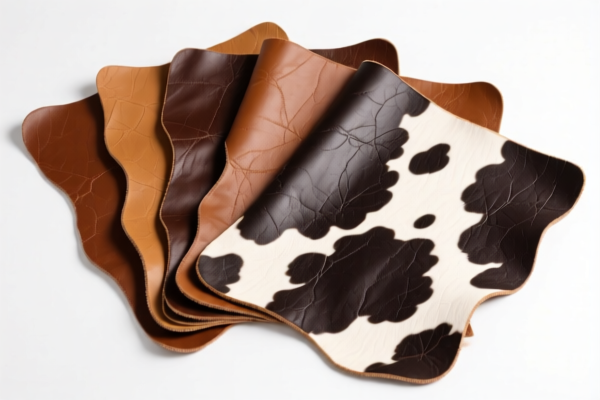
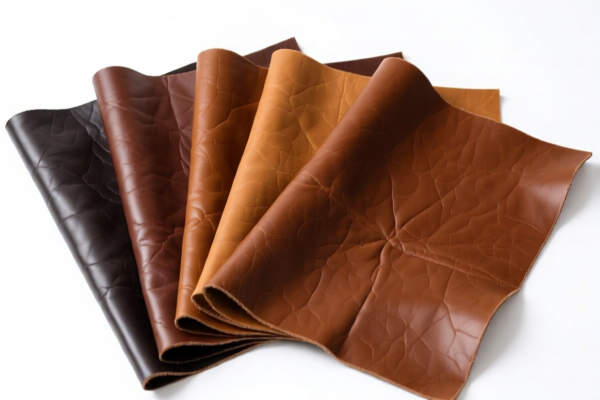
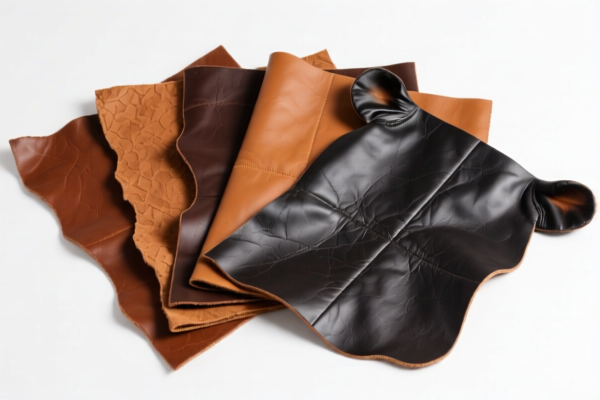
AI Analysis
🧥 Bovine Leather Sheets (For Decoration)
🌐 HS Code Reference & Customs Clearance Guide | 2026 Latest Tariff Analysis | Professional-Level Entry Strategy
📌 I. Product Definition & Classification: Do You Really Understand "Bovine Leather"?
Bovine leather sheets are the foundational raw materials for high-end fashion, upholstery, and decorative crafts. In international trade, they are strictly categorized based on their processing level and surface characteristics. The key distinction lies in whether the leather has undergone significant surface treatment (e.g., pigment coating, embossing with synthetic layers) or remains in a basic "crust" or "tanned" state.
Raw/Crust Leather (Unfinished/Partially Finished): Leather that has been tanned but lacks a surface layer of synthetic material or complex decorative coatings. These sheets are often rougher, more porous, and require further processing by the end-user. * Specific Sub-category: Sheets specifically prepared for decoration purposes, excluding those with synthetic surface layers.
⚠️ Key Distinction Point: - If the leather has a surface layer of synthetic material (e.g., PVC, PU coated heavily) → It is EXCLUDED from this category and likely falls under Chapter 39 or 40 (Plastics/Rubber) or other leather categories. - If it is pure bovine leather, tanned or in crust form, specifically intended for decoration → It falls under 4111.42. - If it is other bovine leather not further worked than tanned/crust, and not specifically for decoration (e.g., general industrial use, base material) → It falls under 4111.90.
📦 II. HS Code Classification Details (2026 Latest Tariff Authority Comparison)
| HS Code | Product Description | Application Scenario | Synthetic Surface Layer? |
|---|---|---|---|
4111.42 |
Other bovine leather, specially prepared for decoration, not further worked than tanned or crust leather | High-end upholstery, artisanal crafts, luxury goods base, decorative wall panels | ❌ NO (Must be pure leather) |
4111.90 |
Other bovine leather, not further worked than tanned or crust leather, including leather for decoration purposes | General industrial use, non-specific decorative base, bulk raw material | ❌ NO |
🔍 Critical Reminder: - 4111.42 is a specialized sub-category for leather specifically prepared for decoration. If the product description explicitly states "For Decoration" and meets the "not further worked" criteria, this is often the more precise code. - 4111.90 is a catch-all category for other bovine leathers in tanned/crust state. If the "decoration" aspect is not the primary distinguishing feature or if the customs authority deems it too vague, 4111.90 may be applied. - Both codes explicitly exclude leather with a surface layer of synthetic material. If such a layer exists, these codes are incorrect.
💰 III. 2026 Latest Tariff Rate Details (Including Surcharges & Policy Add-ons)
✅ Applicable Country: United States (US)
✅ Country of Origin: China (CN)
✅ Effective Date: Post-2025 (Based on current tariff structures for Chapter 41)
🎯 1. 4111.42 — Bovine Leather for Decoration (Tanned/Crust)
| Item | Content |
|---|---|
| Base Rate (MFN) | 4.8% (ad valorem) |
| USITC Additional Tariff | +25% (Under Section 301, Footnote 9903.88.01 range for certain leather products, subject to specific sub-heading review) |
| IEEPA Additional Tariff | +10% (Hawkish tariff for Chinese-origin goods, effective from Nov 10, 2025) |
| Total Tax Rate | ~39.8% (4.8% + 25% + 10%) |
| Tax Calculation | CIF Value × 39.8% |
| De Minimis Exemption | ❌ Not Eligible (deny_de_minimis for high-tariff leather) |
| Legal Basis Path | USITC:4111.42 → FOOTNOTE:9903.88.01 → IEEPA:9903.01.25 |
📌 Explanation: - Leather is considered a non-essential raw material in many contexts, but Section 301 tariffs apply to many Chinese-manufactured goods. - Total burden is high. Importers must factor in this ~40% cost into their FOB/CIF pricing models. - Customs Scrutiny: High. Customs will verify that there is no synthetic surface layer to prevent misclassification into lower-tariff plastic composites.
🎯 2. 4111.90 — Other Bovine Leather (Tanned/Crust)
| Item | Content |
|---|---|
| Base Rate (MFN) | 4.8% (ad valorem) |
| USITC Additional Tariff | +25% (Subject to same Section 301 provisions as 4111.42) |
| IEEPA Additional Tariff | +10% |
| Total Tax Rate | ~39.8% |
| Tax Calculation | CIF Value × 39.8% |
| De Minimis Exemption | ❌ Not Eligible |
| Legal Basis Path | USITC:4111.90 → FOOTNOTE:9903.88.01 → IEEPA:9903.01.25 |
📌 Note: - The tax burden is identical to 4111.42 in this context. - The choice between 4111.42 and 4111.90 depends on product documentation. If your invoice and spec sheet explicitly say "For Decoration," 4111.42 is more accurate. If it’s generic "Bovine Leather," 4111.90 is safer.
🛠️ IV. Customs Clearance Practical Advice (Real-World Pitfall Guide)
✅ 1. Documentation Checklist (Non-Negotiable)
| Document | Required | Description |
|---|---|---|
| ✅ Product Specification Sheet | ✔️ | Must explicitly state: "Bovine Leather," "Tanned/Crust," "No Synthetic Surface Layer," "For Decoration." |
| ✅ Technical Data Sheet (TDS) | ✔️ | Confirms tanning process, pore structure, and absence of plastic coatings. |
| ✅ Commercial Invoice | ✔️ | Clear description: "Bovine Leather Sheets, Tanned, For Decoration, No Synthetic Layer." |
| ✅ Packing List | ✔️ | Weight, dimensions, and number of sheets. |
| ✅ Certificate of Origin (CO) | ✔️ | To prove Chinese origin (and thus applicable tariffs). |
| ✅ Photos of Goods | ✔️ | Close-up shots showing natural grain (no plastic sheen), cross-section showing no synthetic layer. |
✅ 2. Declaration Tips (Key Mantra)
🔥 “Pure Leather, No Plastic, Declare 'For Decoration' Accurately!”
| Scenario | Correct Declaration | Wrong Practice |
|---|---|---|
| Bovine Leather, Tanned, For Decoration | 4111.42 |
Mislabeling as "Fabric" or "Synthetic Sheet" → Higher tariffs, fraud charges |
| Bovine Leather, Tanned, General Use | 4111.90 |
Over-specifying "Decoration" if not intended → Audit risk |
| Leather with PVC Coating | NOT 4111.xx | Misdeclaring as 4111.42 → Seizure & Penalty |
| Crust Leather (Untanned finish) | 4111.42 or 4111.90 |
Claiming "Finished Leather" → Rejection |
⚠️ Critical Warning: - Do NOT describe the goods as "Artificial Leather," "PU Leather," or "Synthetic Leather" if you are claiming HS 4111.xx. These codes are for animal hide. - If the leather is embossed with a pattern but has no synthetic material added, it may still qualify, but provide a technical note confirming no polymer layer.
✅ 3. Special Case Handling
| Situation | Handling Advice |
|---|---|
| Mixed Shipments | If a container contains both decorated and undecorated leather, separate the codes. Mixing them leads to misclassification. |
| Samples for Design | Even samples are subject to tariffs if declared as commercial samples. Use "Free Sample" only if truly non-commercial, but tariffs still apply to Chinese origin. |
| Re-export | If importing for immediate re-export under bond, ensure the warehouse is licensed for foreign trade zone (FTZ) benefits to defer taxes. |
| Customs Inquiry | If asked for proof of "No Synthetic Layer," provide a lab test report (ASTM D1929) confirming no plastic content. |
🌍 V. Global Market Customs Comparison (2026 Latest)
| Country/Region | Recommended HS Code | Tariff (China Origin) | Certification Requirements | Notes |
|---|---|---|---|---|
| 🇺🇸 USA | 4111.42 / 4111.90 |
~39.8% (4.8% + 25% + 10%) | None specific, but high scrutiny on origin | High tariff barrier. Avoid if possible. |
| 🇪🇺 EU | 4111.42 / 4111.90 |
4.8% + 10% (Section 117) | REACH (Chemical compliance) | EU has stricter chemical regulations (chromium VI limits). |
| 🇬🇧 UK | 4111.42 / 4111.90 |
4.8% + 10% | UKCA, REACH UK | Post-Brexit rules apply. |
| 🇨🇳 China | 4111.42 / 4111.90 |
4.8% - 5% | CCC (if applicable for final product) | Low entry barrier, but quality control is key. |
| 🇯🇵 Japan | 4111.42 / 4111.90 |
4.8% | JIS standards | No major surcharges. |
📌 Conclusion: - USA is the most challenging market due to the ~40% combined tariff. - Chemical Compliance (REACH/Chromium VI) is critical for EU/UK/US to avoid rejection. - Accurate HS Classification is vital to avoid penalties for misdeclaring "animal leather" as "synthetic."
📌 VI. Common Mistakes & Pitfall Guide (Lessons Learned)
❌ Mistake 1: Describing the product as "Leather-Look Material" or "Faux Leather" in the invoice.
👉 Consequence: If it’s real leather, this is false declaration. If it’s faux, it’s wrong HS code. Both lead to delays or fines.
❌ Mistake 2: Ignoring the "No Synthetic Surface" requirement.
👉 Consequence: Customs tests the leather, finds PVC/PU, and reclassifies it under Chapter 39 or 40, leading to higher tariffs + penalties + seizure.
❌ Mistake 3: Not providing a Technical Data Sheet.
👉 Consequence: Customs cannot verify "crust" status. Goods are held for inspection, causing storage fees and delays.
❌ Mistake 4: Using "Leather" generically without specifying "Bovine."
👉 Consequence: Incomplete description. Customs may request clarification, leading to amendment fees.
✅ Correct Declaration Example:
"Bovine Leather Sheets, Tanned, Crust Finish, No Synthetic Surface Layer, Prepared for Decoration, Model: BL-DEC-001, Certified Free of Chromium VI"
🎯 VII. Conclusion: Precise Declaration, Cost Control, Risk Avoidance
🎯 Remember the Mantra:
🔹 "Real Bovine, No Plastic, 'For Decoration' is Key."
🔹 "Tariff is ~40% in US, Plan Your Margin!"
🔹 "Document Everything, Avoid Seizure!"
📌 Pro Tip: - If you are importing into the USA, consider bonded warehouses to defer tax payment until the goods are sold. - Always request a Chromium VI test report from your supplier to ensure EU/US chemical compliance. - For decoration-specific leather, ensure the invoice explicitly states "For Decoration" to support the use of 4111.42.
📣 Immediate Action:
📞 Contact a licensed customs broker + Provide product photos + Request supplier’s technical data sheet.
🚀 Ensure your leather shipments clear customs smoothly, avoid fines, and maximize profit!
✨ Professional Clearance, Starting with Accurate Classification!
💼 Every penny of tariff is a calculation you can optimize!
Customer Reviews
About HS Code Classification
The Harmonized System (HS) is an internationally standardized nomenclature developed by the World Customs Organization (WCO) to classify traded products. Over 200 countries use the HS system as the basis for customs tariffs, trade statistics, and import/export regulations.
Each HS code follows a hierarchical structure:
- Chapter (2 digits) — Broad category of goods (e.g., Chapter 84: Machinery and Mechanical Appliances)
- Heading (4 digits) — More specific grouping within the chapter
- Subheading (6 digits) — Internationally standardized breakdown, used by all WCO member countries
- National subdivisions (8-10 digits) — Country-specific extensions for further classification, such as US HTSUS 10-digit codes
Correct HS code classification is essential for smooth customs clearance, accurate duty payment, and compliance with trade regulations. Misclassification can lead to customs delays, overpayment of duties, or penalties.
When importing from CN to US, the applicable tariff rates may include:
- Most-Favored-Nation (MFN) rate — The standard duty rate applied to WTO members
- General rate — Applied to countries without trade agreements
- Trade remedy duties — Additional tariffs such as Section 301 (anti-dumping), Section 232 (national security), or countervailing duties
The information provided on this page is for reference purposes only. For official classification, please consult with your local customs authority or a licensed customs broker.